 Bellingham Siding
 Window Installation for Columbia Homes
Columbia is one of Bellingham's older, established neighborhoods, and that means a lot of its housing stock is carrying original or early-replacement windows that were never built for the punishment Whatcom County weather delivers year after year. Salt-laden air off Bellingham Bay, wind-driven rain that comes in sideways during fall and winter storms, and a moss-and-mildew season that seems to stretch longer every year all work on window frames, seals, and sills in ways homeowners in drier climates never have to think about. A window that looks fine from the street can be quietly failing behind the trim.
We install windows in Columbia the way we'd want them installed in our own homes: with attention to flashing and water management first, and the finished look second. A window is only as good as the job behind the glass, and in this climate that job either holds water out for twenty-plus years or it doesn't.
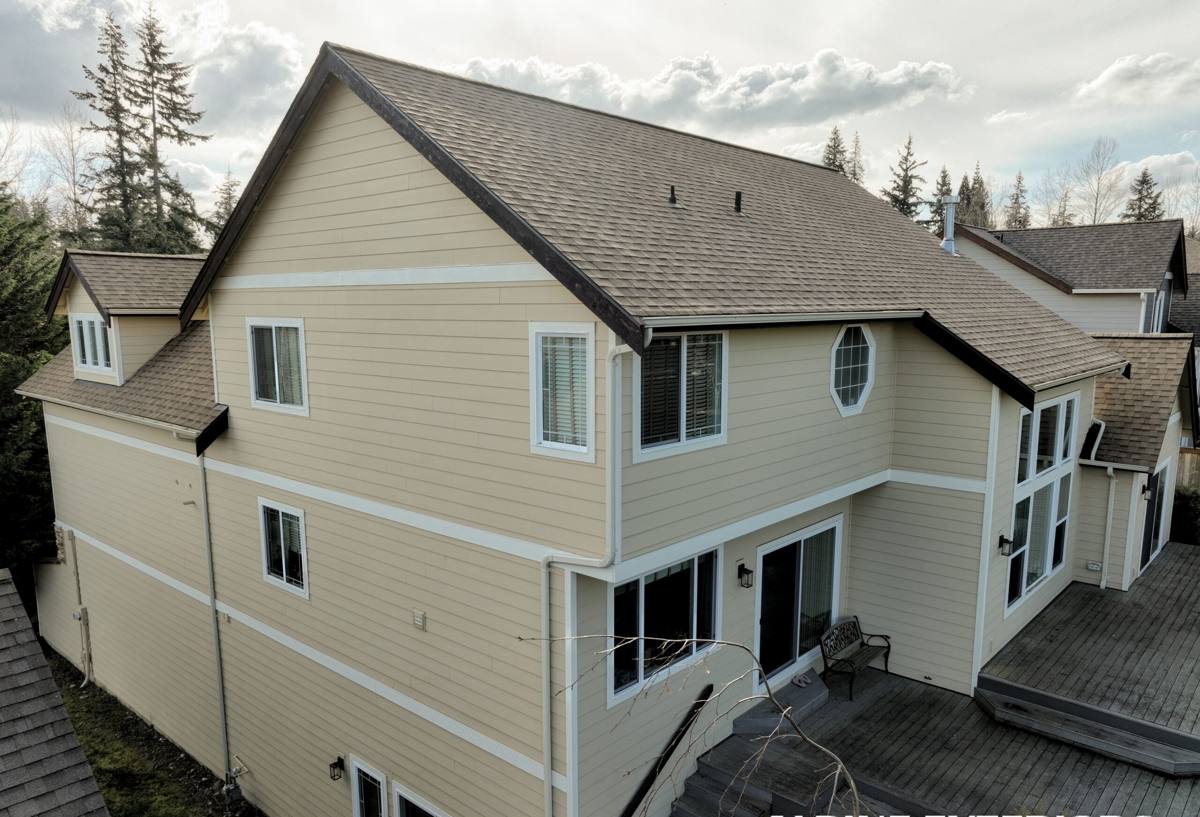
Why Bellingham's Climate Is Hard on Windows
Whatcom County sits in a marine climate zone, and Columbia's location near the bay means homes here get the full effect of it. A few specific stressors matter most for window performance:
Salt Air and Moisture
Airborne salt accelerates corrosion on metal hardware, screws, and lesser-quality window frame components. It also holds moisture against surfaces longer than plain rainwater would, which speeds up rot in any wood that's exposed or under-protected.
Driving, Wind-Driven Rain
Bellingham's storms rarely fall straight down. Wind pushes rain sideways and up under sills, around trim, and into any gap in the flashing. A window installed with proper sloped sill pans and correctly lapped weather-resistive barrier sheds that water automatically. A window installed without them collects it.
Extended Moss and Mold Season
Cool, damp conditions for much of the year mean anything that stays wet, stays wet a long time. Wood sills, sashes, and trim that don't fully dry out between rain events become an ideal environment for moss, algae, and eventually rot — especially on north-facing walls that get less sun.
None of this is unique to Columbia, but it's a bigger factor here than in most parts of the country, and it should shape every decision about window selection and installation method on a Whatcom County home.
Signs a Columbia Home Needs Window Replacement
Not every problem window needs full replacement, but several signs point toward it rather than a repair:
- Visible gaps, soft spots, or dark staining in the wood sill or jamb
- Fogging or a permanent haze between double-pane glass — the seal has failed and the gas fill is gone
- Windows that are difficult to open, close, or lock, often from swelling or frame warp
- Noticeable drafts or cold spots near the window even with it fully closed
- Paint that bubbles, peels, or won't hold near the frame — usually a sign of moisture working from inside out
- Condensation forming on the interior glass regularly during cold months
- Visible daylight or gaps around the frame from outside
A single failed seal or a sticky sash doesn't necessarily mean the whole house needs new windows. But if you're seeing two or three of these signs across multiple windows, especially on the sides of the house that take the most weather, it's worth a real assessment rather than patching each symptom as it appears.
What a Correct Window Installation Actually Involves
The window unit itself gets most of the attention when homeowners shop, but in this climate the installation method matters as much or more than the product. A quality installation includes:
Proper Removal and Opening Prep
Old windows come out carefully to avoid damaging the surrounding wall assembly. We check the rough opening for square, level, and any hidden rot in the framing or sheathing before anything new goes in — this is often where old problems get discovered.
Sloped Sill Pan Flashing
Any water that gets past the window itself needs somewhere to go, and that somewhere is out, not down into the wall. A sloped sill pan, properly lapped with the weather-resistive barrier, is non-negotiable on a house in this climate.
Correct Flashing Sequence
Flashing tape and building paper or house wrap get layered so that each piece overlaps the one below it, shingle-style. Water runs down and over every seam, never into one. This sequence is easy to get wrong and impossible to verify once the trim goes back on — it has to be done right the first time.
Air Sealing and Insulation
The gap between the window frame and the rough opening gets sealed with low-expansion foam or backer rod and sealant, not just packed with fiberglass. This controls drafts and keeps moist interior air from condensing inside the wall cavity.
Weatherproof Trim and Caulking
Exterior trim and caulk lines are the last line of defense and the first thing that shows wear. We use sealants rated for this climate's temperature swings and UV exposure, and we caulk joints that actually need it — over-caulking can trap moisture just as easily as under-caulking lets it in.
Our Installation Process
- On-site assessment: We walk the exterior and interior of each window, check for rot, measure openings, and note anything unusual about the home's construction or drainage.
- Product recommendation: Based on the window's orientation, exposure, and your budget, we recommend frame material and glass package — not a one-size-fits-all pitch.
- Written estimate: You get a clear scope of work and price before anything is scheduled, with no vague allowances.
- Careful removal and inspection: Old units come out, and any hidden sheathing or framing damage gets flagged and discussed before we proceed.
- Flashing and installation: Sill pan, flashing sequence, air sealing, and the new window go in per manufacturer specs and best practice for this climate.
- Trim, caulk, and cleanup: Exterior finish work is completed, the site is cleaned, and we walk you through the finished work.
Choosing the Right Window Type for This Climate
There's no single "best" window material — the right choice depends on exposure, budget, and how much upkeep you want to take on. Here's how the common options compare for a Bellingham home:
| Frame Material | Moisture Resistance | Maintenance | Typical Lifespan |
|---|---|---|---|
| Vinyl | Very good — won't rot, minimal expansion issues | Low — occasional cleaning | 20–30 years |
| Fiberglass | Excellent — highly stable in temperature and moisture swings | Low | 30+ years |
| Aluminum | Good, but prone to condensation without thermal breaks | Moderate — watch for corrosion near salt air | 20–30 years |
| Wood (clad exterior) | Good if exterior cladding is intact; interior wood needs protection | Higher — cladding seams and sills need periodic inspection | 20–40 years with upkeep |
| Solid wood | Weakest in this climate unless meticulously maintained | High — regular painting/sealing required | Varies widely with maintenance |
For most Columbia homes, we point people toward vinyl or fiberglass for exposed elevations, and reserve wood or wood-clad options for protected areas or where matching a historic look matters more than minimizing upkeep. This is a professional recommendation based on how these materials actually perform in wet, salt-air conditions — not a knock on wood windows generally, which can perform well when they're maintained and not directly exposed to driving rain.
What Affects the Cost of a Window Installation
Pricing varies enough between homes that we don't quote firm numbers without seeing the job, but these are the main factors that move the price up or down:
| Factor | Why It Matters |
|---|---|
| Frame material | Vinyl is typically the most budget-friendly; fiberglass and wood-clad cost more upfront |
| Window size and count | Larger openings and full-house replacements have per-unit efficiencies but higher total cost |
| Hidden rot or framing damage | Discovered during removal — adds material and labor to repair before the new window goes in |
| Glass package | Double vs. triple pane, low-E coatings, and gas fills all affect price and energy performance |
| Access and second-story work | Upper-floor or hard-to-reach windows take more time and equipment |
| Trim and exterior finish | Matching existing trim profiles or upgrading materials adds labor |
The biggest cost swing we see on Columbia homes specifically is hidden moisture damage found once the old window comes out. It's common enough in this climate that we always discuss the possibility upfront so it's not a surprise mid-project.
What to Look for in a Local Window Contractor
Whatcom County has plenty of contractors who install windows occasionally as part of broader remodel work. Fewer specialize in the flashing and moisture-management detail that this climate actually demands. Before hiring anyone, it's worth checking:
- Do they explain their flashing and sill pan method, or just talk about the window brand?
- Are they licensed and insured in Washington State, and willing to show proof without being asked twice?
- Do they provide a written scope of work, not just a total price?
- Will they walk you through what happens if hidden rot or damage is found during removal?
- Do they have experience specifically with homes in this region, not just general remodeling?
- Is the warranty on labor as clear as the warranty on the window product itself?
A window installed poorly can leak, rot the surrounding wall, and cost far more to fix later than it would have cost to do right the first time. The install matters at least as much as the product.
Why Local Experience in Columbia Matters
Every neighborhood in Bellingham has its own quirks — prevailing wind direction, tree cover, proximity to the water, typical home age and construction style. A crew that regularly works in Columbia already knows what kind of moisture issues tend to show up in homes here, what the older framing typically looks like once a window comes out, and how the wind and rain actually hit these houses through the year. That familiarity shows up in fewer surprises during the job and a better match between the window we recommend and the way your specific home actually takes weather.
We're not guessing at what Whatcom County winters do to a window installation — we see the results of good and bad installs across this region regularly, and we build every job around avoiding the failures we've seen elsewhere.
If your Columbia home has windows showing their age, or you're planning ahead of the next wet season, we're happy to take a look and give you an honest, no-pressure estimate. There's a form below — reach out and we'll get you scheduled.