 Bellingham Siding
 Roof Repair Built for Columbia's Weather
Most roof problems in Columbia don't start as emergencies. They start small — a granule-thin spot at the edge of a shingle, a hairline gap in the flashing around a chimney, a patch of moss quietly holding moisture against the deck longer than it should. Given enough time, and given the specific combination of salt-tinged marine air, wind-driven rain, and a moss season that can run for months, those small problems turn into interior water stains and soft decking. None of that means a roof in Columbia is doomed to fail early. It means repairs here have to be diagnosed and done by someone who understands exactly how this climate works a roof over time, not treated as a generic patch job.
This page is specifically about roof repair for homes in Columbia — not a full tear-off and replacement, and not a generic overview of roofing in general. It covers what tends to go wrong here, what a repair actually needs to include to hold up, how we decide whether a repair is the right call versus a replacement, and what our process looks like from the first inspection to the final walkthrough.
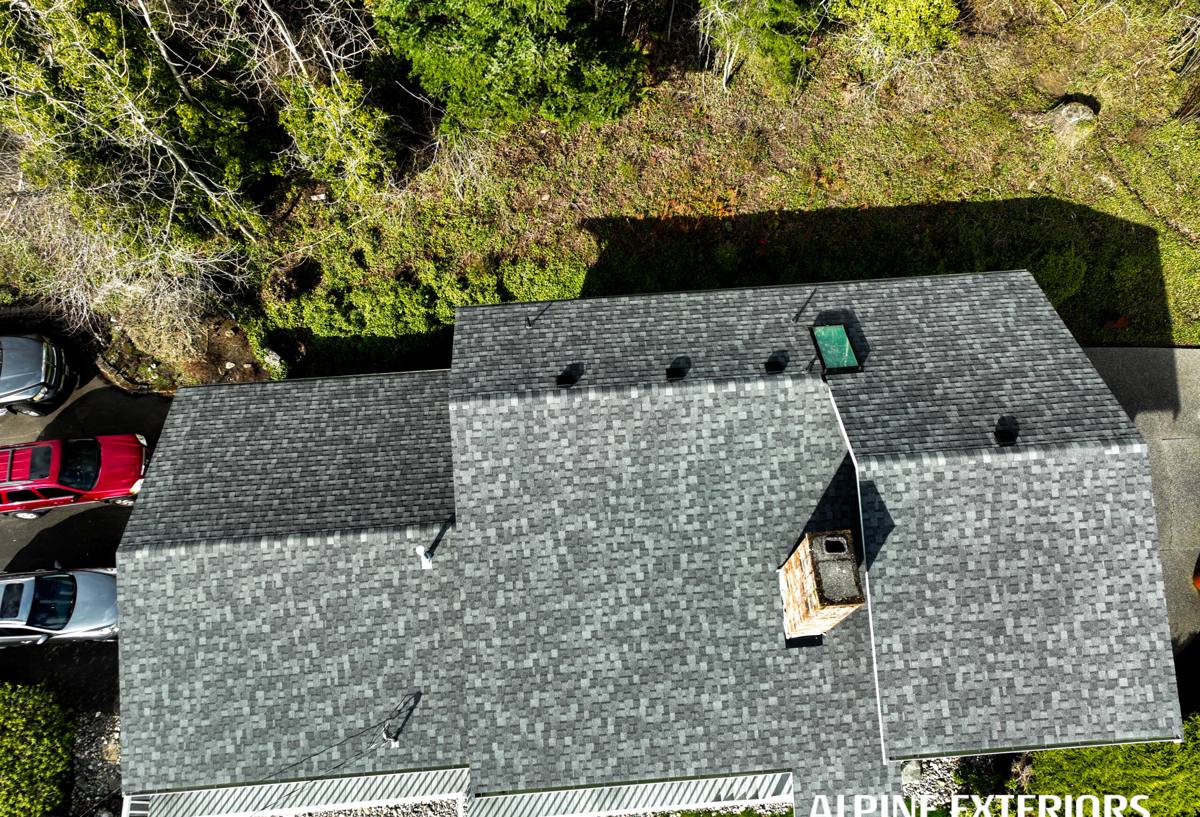
Why Columbia Roofs Develop Problems Sooner Than You'd Expect
Columbia sits close enough to the water and open enough to the weather that roofs here take on stresses that inland homes simply don't deal with in the same way. Salt-laden air corrodes exposed fasteners, flashing seams, and vent boots faster than dry-climate wear would suggest, often working on metal components for years before a leak shows up anywhere visible. Rain in this part of Whatcom County doesn't always fall straight down — it gets pushed sideways and driven upward under shingle tabs and around flashing edges during the wetter stretches of the year, finding gaps that would never see water in a calmer climate. And on roof planes that stay shaded through fall, winter, and much of spring, moss and algae take hold and hold moisture against the shingles and deck long after the rest of the roof has dried out.
Individually, none of these factors is unusual for a coastal Pacific Northwest home. Combined, and left unaddressed, they're exactly the reason a roof that looks fine from the street can already have a developing problem underneath.
The Three Forces Working Against a Columbia Roof
- Salt air corrosion: Steadily degrades unprotected metal flashing, nail heads, and vent boot collars, especially on roofs facing open exposure.
- Wind-driven rain: Gets forced under shingle edges and around flashing laps rather than simply running off, which is why leaks often show up far from where the water actually entered.
- Extended moss season: Holds moisture against shaded roof sections for weeks at a time, accelerating granule loss and, eventually, deck-level rot if left unmanaged.
Common Roof Repair Issues We See in Columbia
Repair calls in this area tend to fall into a handful of recurring categories. Knowing what they typically look like helps you catch them earlier, before they turn into a bigger job.
Flashing Failures
Flashing around chimneys, skylights, vent pipes, and wall-to-roof transitions is the single most common source of leaks we find on repair calls in Columbia. Metal flashing that's corroded, under-lapped, or sealed with caulk instead of properly integrated with the underlayment will eventually let water through, and it often does so quietly, tracking along framing members before it shows up as a stain on a ceiling well away from the actual entry point.
Wind and Storm Damage
Lifted, cracked, or missing shingles after a windstorm are a straightforward repair when caught quickly, but an exposed section left through even one more heavy rain event can let water reach the underlayment and deck. Storm damage repairs are also where we most often find that the original installation was already marginal — thin nailing patterns or under-driven fasteners that a stronger install would have held through the same wind.
Moss and Algae Damage
Moss doesn't just look bad — its root structure works into shingle granules and seams, and the moisture it holds against the roof surface accelerates wear well beyond what sun and rain alone would cause. Repair in these cases usually means removing the growth carefully (not scraping or pressure-washing, which can strip granules and shorten shingle life further), replacing any shingles that have already degraded underneath, and addressing the ventilation or shade conditions that let the moss take hold in the first place.
Deck and Underlayment Damage
When a leak has been running for a while before it's noticed, the plywood or OSB decking underneath can soften or rot, and the underlayment beneath the shingles can fail in that same area. This is where repair scope grows — a proper fix means opening up the affected section, replacing damaged decking, installing new underlayment, and reinstalling shingles to match, not just sealing over the surface and hoping the problem doesn't return.
Aging Pipe Boots and Vent Seals
Rubber pipe boot collars are one of the shorter-lived components on any roof, and in a climate with this much sun and rain cycling, they tend to crack and fail well before the shingles around them show comparable wear. A cracked boot is a small, inexpensive repair on its own, but it's also one of the more common sources of a slow, hard-to-trace leak if it goes unnoticed.
Repair or Replace? How We Make That Call
Not every roof problem in Columbia calls for a full replacement, and we don't default to recommending one. The honest answer depends on the roof's age, how localized the damage is, and what condition the decking and underlayment are in once we actually get eyes on the problem.
| Situation | Usually a Repair | Usually a Replacement |
|---|---|---|
| Roof age | Under roughly 15 years, in otherwise sound condition | Approaching or past the shingle's rated lifespan |
| Extent of damage | Isolated to one section, flashing point, or penetration | Spread across multiple roof planes or recurring in several spots |
| Deck condition | Solid, with damage limited to the surface layers | Widespread soft spots or rot found during inspection |
| Shingle matching | Comparable shingles are available to blend with the existing roof | Original product is discontinued or too weathered to match visually |
| Repair history | First or infrequent repair on this roof | Third or fourth repair in a short span, pointing to a system-level issue |
When a roof is genuinely a good repair candidate, we'll say so and explain exactly what the repair covers. When it isn't, we'll explain why in plain terms — usually because the underlying decking or the shingle system itself is too far gone for a patch to hold, not because a bigger job is more profitable for us.
What a Correct Roof Repair Actually Involves
A repair that lasts follows the same care as a full install, just scoped to the affected area. Cutting corners on any of these steps is exactly how a "fixed" roof develops the same leak again within a year or two.
Diagnosis Before Anything Gets Touched
We start by tracing the leak or damage to its actual source, which is frequently not directly above the interior stain or soft spot. Water travels along framing and underlayment before it drips, so an accurate diagnosis from the attic side and the roof surface together matters more than most homeowners expect going in.
Matching Materials, Not Just Covering the Spot
Shingles, flashing, and underlayment used in a repair need to match or properly integrate with what's already on the roof — both for a consistent appearance and, more importantly, so the repaired section sheds water the same way the rest of the roof does. A mismatched patch can create its own new water path at the seam between old and new material.
Flashing Done as a System, Not Sealed Over
Where the repair involves flashing, it gets properly lapped and integrated with the underlayment and shingle courses around it. We don't rely on a bead of caulk to do a flashing detail's job — caulk breaks down under UV and temperature cycling far faster than a correctly built flashing system does, and it's one of the most common reasons a "repaired" leak returns.
Fastening to Hold Against Wind
Replacement shingles go in with the correct nailing pattern and count, not a faster shortcut, so the repaired section holds up under the same wind loads as the rest of the roof rather than becoming the next spot to lift in a storm.
Checking Ventilation While We're Up There
If we're already inspecting the attic side of a repair, we'll flag ventilation issues we notice, since poor attic airflow contributes to both moss growth and premature shingle wear. It's not always part of the repair scope, but it's worth knowing about.
Cost Factors for Roof Repair in Columbia
Repair pricing varies more than replacement pricing does, because the range of possible scope is wider. Here's what typically drives the number on a given job.
| Factor | What It Affects |
|---|---|
| Size of the affected area | Labor and material quantity for shingles, underlayment, and flashing |
| Deck condition underneath | Whether plywood or OSB replacement is needed in addition to surface repair |
| Flashing complexity | Simple field repairs cost less than chimney, skylight, or valley flashing rebuilds |
| Shingle availability | Matching an existing roof is straightforward with common products, harder with discontinued ones |
| Roof pitch and access | Steep or hard-to-reach areas take longer and require more staging |
| Moss or algae remediation | Careful removal adds time compared to a straightforward shingle swap |
Ask any contractor for a written estimate that separates these components rather than a single flat number for "roof repair." It's the only way to compare bids that may look very different on paper but aren't actually scoped the same way.
How Our Repair Process Works
- In-person inspection: We walk the roof and check the attic side ourselves, since accurate diagnosis is the foundation of a repair that actually holds.
- Honest repair-versus-replace assessment: We tell you plainly which category your roof falls into and why, based on what we actually find.
- Written estimate: A clear, itemized scope covering the affected area, materials, flashing work, and any deck repair — not a vague single-line quote.
- Scheduling around weather: We build reasonable flexibility into timing, since wet-season delays are a normal part of working in this region.
- The repair itself: Damaged materials come out, decking gets addressed if needed, and new materials go in to manufacturer specification.
- Final walkthrough: We review the completed repair with you and do a site cleanup, including a magnetic sweep for stray fasteners, before calling the job done.
Why Hiring a Crew That Already Works in Columbia Matters
A crew that regularly repairs roofs in and around Columbia has already seen how salt air eats through underspecified flashing metal, how wind-driven rain finds its way past a shortcut repair, and which roof orientations hold moss longest through the wet months. That's practical knowledge that shows up in the small decisions made on every repair — decisions a crew unfamiliar with this specific stretch of coastline is less likely to think to make.
It matters after the repair is finished, too. A workmanship warranty on a repair is only as good as the company standing behind it, and a contractor with an ongoing, established presence in the area is one you can actually reach if the same section acts up again, rather than a name that's already moved on.
A Practical Checklist Before You Hire a Roof Repair Contractor
- Do they inspect the attic side, not just the roof surface, before diagnosing the problem?
- Does the estimate specify exactly what's being repaired — shingles, flashing, decking — rather than a vague "leak fix"?
- Do they explain honestly whether a repair or a replacement is the better call, and why?
- Is flashing work built as a system, or is caulk being used to paper over a shortcut?
- Do they carry current WA contractor licensing, liability insurance, and workers' compensation?
- Can they point to recent, real repair work in or near Columbia?
Signs Your Columbia Roof May Need a Repair Soon
Catching these signs early is usually the difference between a modest repair and a much larger job once water has had time to work into the deck.
- Water staining on ceilings or in the attic, especially after a heavy or wind-driven rain event
- Granules building up in gutters or downspouts, signaling shingle wear beyond normal weathering
- Visible moss or dark algae streaking on shaded roof planes
- Curling, cracking, or missing shingles, particularly after a storm
- Cracked or gapped pipe boots and vent seals around roof penetrations
- Daylight visible through the roof deck when viewed from inside the attic
If any of that sounds familiar, it's worth having the roof looked at before the next stretch of weather rather than waiting for the leak to force the decision.
If you'd like an honest, no-pressure look at your Columbia roof and a written estimate that spells out exactly what's involved, we're glad to come take a look. Use the form below to request a free estimate.