 Bellingham Siding
 Deck Building for Cordata Homes: What the Climate Actually Demands
Cordata sits in north Bellingham, and like the rest of Whatcom County, it deals with a climate that's genuinely tough on outdoor wood structures — even though most homeowners don't think about it until their deck starts showing problems. Salt-tinged air drifting in off the water, rain that's frequently driven sideways by wind rather than falling straight down, and a moss season that stretches from fall through spring all put steady, cumulative stress on any deck. None of it looks dramatic in any given week. It's the accumulation over several wet seasons that separates a deck built correctly for this area from one that starts failing years ahead of schedule.
We build and repair decks throughout Cordata and the surrounding Bellingham area, and every part of how we frame, fasten, and finish a deck is shaped by this specific combination of moisture, salt exposure, and shade — not a generic approach borrowed from a drier climate.
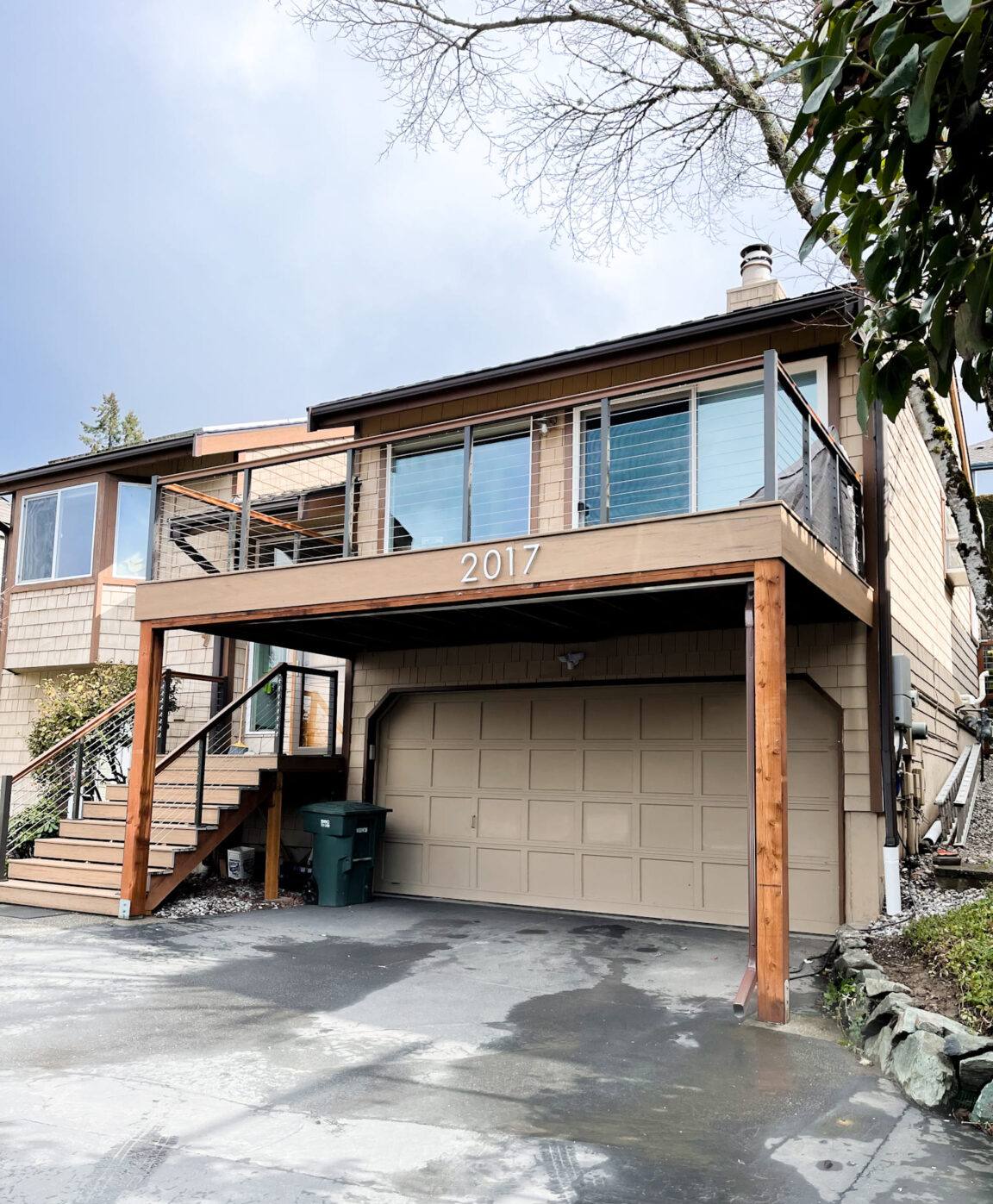
What Salt Air, Driving Rain, and Moss Actually Do to a Deck
Fasteners and Hardware
Salt-laden air speeds up corrosion on exposed screws, joist hangers, and structural connectors far faster than it would inland. A fastener that's rated for general outdoor use but not specifically for coastal, high-moisture exposure can start rusting and losing holding strength well before the decking boards around it show any wear at all — and a deck is only as strong as the hardware holding its frame together.
Decking Boards and Framing
Wind-driven rain doesn't just fall on a deck's surface — it gets pushed under railings, into board gaps, and against the house at the ledger connection, which is the single most water-vulnerable point on most decks. Framing lumber that stays wet longer than it should, whether from poor spacing, inadequate ventilation underneath, or a ledger that wasn't flashed correctly, is framing lumber that starts to rot from the inside before any visible surface damage appears.
Shaded Areas and Moss
Decks under tree cover or on the shaded side of a house stay damp for extended stretches through the fall, winter, and much of spring — exactly the conditions moss needs to take hold. Beyond the slip hazard moss creates on walking surfaces, sustained dampness against wood decking is a real durability issue, softening fibers and accelerating rot at board edges and fastener points long before the deck reaches the end of its expected life.
Choosing the Right Decking Material for Cordata's Climate
There's no single right answer for every homeowner — budget, appearance preference, and how much upkeep someone wants to take on all factor into the decision. What matters is going into that decision with an honest picture of how each option actually performs once it's dealing with a full Whatcom County wet season, not just how it looks on install day.
| Decking Material | Moisture Behavior Here | Typical Long-Term Maintenance |
|---|---|---|
| Pressure-treated lumber | Chemically treated to resist rot, but cut ends, fastener holes, and board gaps need ongoing attention in sustained damp conditions | Moderate to high — periodic sealing or staining, moss treatment on shaded boards |
| Cedar | Naturally rot-resistant compared to untreated wood, but still absorbs moisture and grays or checks without upkeep | High — regular sealing to preserve both appearance and moisture resistance |
| Capped composite decking | Doesn't absorb moisture into the board core, holds up well against sustained damp and won't feed rot the way wood can | Low — periodic cleaning, no sealing or staining required |
This isn't a claim that wood decking is a poor choice — plenty of homeowners want the look and feel of real wood and are glad to keep up with the maintenance it takes. It's simply a matter of knowing what upkeep a given material actually requires in this climate before committing to it, so there aren't surprises three or five years in.
What Correct Deck Construction Actually Involves Here
A deck holds up in Cordata's climate when the details underneath the decking boards are handled correctly, not just when the visible surface looks good on completion day. That starts with the ledger board — the point where the deck attaches to the house — which needs proper flashing to keep water from tracking behind it and into the home's wall structure, a problem that can go unnoticed for years if it isn't detailed correctly the first time.
Footings need to be set below frost depth and sized correctly for the load they're carrying, joists need spacing and hardware rated for sustained wet exposure rather than general-purpose fasteners, and the space underneath the deck needs enough airflow that framing lumber can actually dry out between rain events instead of staying damp for weeks at a stretch. Skipping or shortcutting any one of these steps can undercut how long the whole structure lasts, no matter how good the decking material on top happens to be.
Permits and Structural Requirements
Most new deck construction and many significant deck replacements require a building permit, and for good reason — a deck is a structure people stand, sit, and gather on, and the local building department's inspection process exists to confirm the footings, framing, and ledger attachment were actually done to code before the decking goes down and covers all of it up. Requirements can vary by project size, deck height, and whether it's attached to the house, so it's worth having a contractor who handles the permitting and inspection process as a normal part of the job rather than treating it as an afterthought.
Guardrails, stair dimensions, and structural connections all have code requirements behind them for real safety reasons, not just paperwork. We build to those requirements as a baseline on every project, not as an upsell.
Our Deck Building Process for Cordata Homeowners
- On-site visit: We walk the property, talk through how you actually plan to use the deck, and assess site conditions — grade, drainage, sun and shade exposure, and how the deck will tie into the house.
- Design and material discussion: We go over layout, size, and decking material options honestly, including the maintenance trade-offs of each, so the decision fits both your budget and how much upkeep you actually want to take on.
- Permitting: We handle the permit application and coordinate required inspections so the structural work is verified at the right stages, not just at the end.
- Construction: Footings, framing, ledger flashing, and decking are built in that order, with attention to the moisture and drainage details that matter most in this climate.
- Final walkthrough: We go over the finished deck together, including what maintenance it needs going forward, before calling the job complete.
Maintaining a Deck Through a Long Moss Season
A well-built deck still needs some ongoing attention in this climate, especially if it's shaded or sits close to trees. A little regular upkeep goes a long way toward avoiding bigger repairs later:
- Sweep leaves and debris out of board gaps regularly, especially in fall — trapped organic matter holds moisture against the wood
- Check shaded and north-facing sections for early moss growth and clean it off before it spreads
- Look for soft spots or slight give underfoot, particularly near the ledger board and stair stringers
- Inspect visible fasteners and hardware for rust or corrosion once a year
- Reseal or restain wood decking on the schedule the product actually calls for, not just when it looks faded
- Confirm the gap between the deck and the house siding at the ledger stays clear and isn't trapping water
Signs Your Cordata Deck May Need Attention or Replacement
Most homeowners reach out because something specific caught their attention, not because they've been tracking every detail of their deck's condition. It's worth knowing what to look for:
- Soft or spongy boards, especially near the house or at stair landings
- Persistent moss or dark staining that keeps coming back after cleaning
- Visible rust streaks below fasteners or connectors
- Noticeable bounce or movement when walking across the deck
- Gaps between boards that have widened significantly or boards that are cupping
- Any sign of water staining or soft siding on the house directly above the ledger connection
Any one of these on its own doesn't necessarily mean the whole deck needs to be replaced. But they're worth having a professional actually look at, since moisture-related damage in this climate tends to get worse steadily rather than stay the same.
Why a Crew That Already Works Cordata Matters
A lot of what makes a deck hold up here comes down to judgment calls a crew unfamiliar with this specific area might not think to make: how much wind-driven rain a given orientation actually takes on, where shade from mature trees is likely to keep a deck damp longer than the rest of the yard, how much ventilation the framing needs given how consistently the ground stays damp through the wet months, and how the ledger flashing needs to be layered so it performs through an entire Bellingham winter rather than just looking right on install day.
A crew that builds decks across Whatcom County regularly starts to recognize these patterns from one property to the next, and that familiarity shows up in decisions homeowners rarely notice directly but absolutely feel in how the deck performs over the years that follow.
If you're planning a new deck in Cordata or dealing with an aging one that needs an honest assessment, we're glad to take a look. Reach out using the form below to schedule a free, no-pressure estimate.