 Bellingham Siding
 Building Decks in Fairhaven's Marine Climate
Fairhaven sits close enough to Bellingham Bay that homes here deal with a different set of conditions than a deck built a few miles inland. Salt-laden air off the water, long stretches of drizzle, and heavy tree cover on many lots all work against outdoor wood and hardware. A deck that isn't built with that combination in mind can start showing rust streaks, soft spots, and slick green moss within a couple of seasons — well before it should.
We've built and repaired decks throughout Bellingham and Whatcom County long enough to see the pattern clearly. A deck framed and fastened to a generic, inland spec doesn't fail on day one. It fails quietly, a few years in, starting with the fasteners and framing details that never get inspected once the decking boards go down.
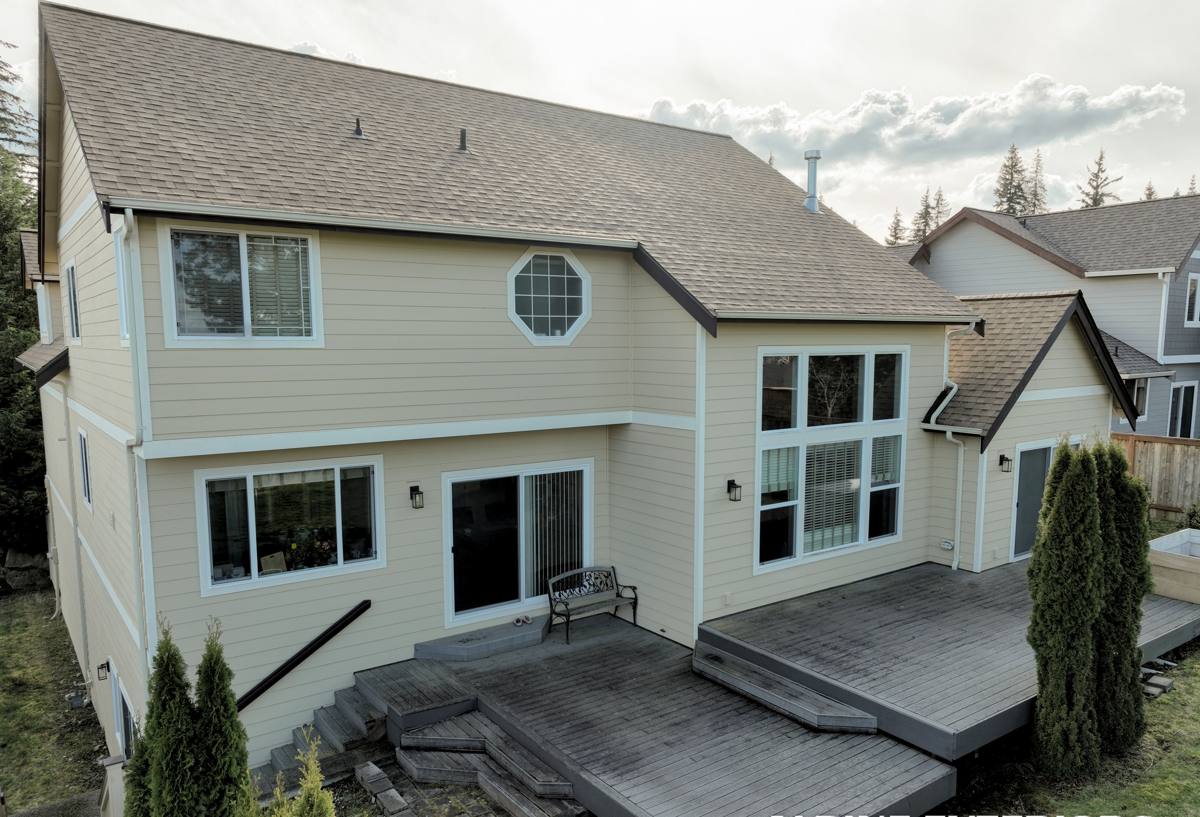
What Salt Air, Rain, and Moss Actually Do to a Deck
It helps to understand the specific mechanisms at work, because they point directly to how a deck should be built differently here.
Corrosion You Can't See
Airborne salt accelerates corrosion on any metal that isn't rated for it. On a deck, that means joist hangers, structural screws, bolts, and post bases — the parts holding the structure together, hidden under the decking boards. Standard coated deck screws can start corroding within a few years this close to the water, and by the time rust stains show up on the surface, the fastener underneath may already be compromised.
Moisture That Doesn't Get a Chance to Dry
Western Washington's rainy season is long, and Fairhaven's tree cover and marine air keep humidity elevated even between storms. Wood and composite decking both need a chance to dry out between wet spells. When a deck is built with tight board spacing, poor airflow underneath, or no gap at the house connection, moisture gets trapped instead of shed — exactly the environment mold, rot, and moss need to take hold.
Moss Season Is Longer Than People Expect
In much of Whatcom County, conditions favor moss and algae growth for a large part of the year, not just a few winter months. On a deck, that shows up first as a green film on shaded boards, then as a genuinely slick, slippery surface — a real fall hazard on stairs and landings, not just a cosmetic issue.
Material Choices That Hold Up Near the Bay
Fasteners and Structural Hardware
This is the detail that matters most and shows the least. For decks in Fairhaven and other coastal-facing parts of Bellingham, we use stainless steel or high-grade coated fasteners rated for corrosive, coastal-exposure environments — not the bargain coated screws that are fine sixty miles inland but start failing here. The same goes for joist hangers, post bases, and structural bolts: hardware rated for ground contact and coastal exposure costs more up front and avoids replacing a deck's connections in eight years instead of twenty-five.
Decking Surface Options
There's no single right answer for decking material — it depends on budget, maintenance appetite, and how much shade and salt exposure the specific lot gets. Here's how the common options compare for a marine, high-moss climate:
| Material | Moisture & Salt Air Behavior | Maintenance | Typical Lifespan Here |
|---|---|---|---|
| Cedar | Naturally rot-resistant but still absorbs moisture; needs to breathe and drain well | Annual cleaning and re-sealing to keep moss and graying in check | 15-20 years with upkeep |
| Pressure-Treated Fir/Pine | Treated for rot resistance but more prone to cupping and checking in wet-dry cycles | Regular sealing; more prone to moss in shaded areas | 10-15 years |
| Composite | Doesn't absorb water or rot, but can still grow surface moss or algae if not cleaned | Occasional washing; no sealing or staining | 25-30 years |
| PVC | Fully moisture-resistant, best resistance to mold and algae staining | Lowest maintenance of the group | 25-30+ years |
We're upfront that composite and PVC decking cost more per square foot than wood. In a neighborhood with this much moisture and shade, though, the lower long-term maintenance often makes them worth it — especially on a deck that's hard to reach for yearly sealing, like a raised or multi-level design.
Framing and Drainage Details That Matter More Here
The parts of a deck nobody sees are what determine whether it's still solid in fifteen years. A few details we treat as non-negotiable on every Fairhaven build:
- Ledger flashing: the board that attaches a deck to the house is the single most common source of hidden rot. We flash it properly so water is directed away from the house framing, not channeled behind it.
- Joist protection: wrapping the tops of joists helps keep standing water from soaking into end grain, which is where rot typically starts first.
- Airflow underneath: adequate clearance and ventilation below the deck lets framing dry out between rain events instead of staying damp for weeks at a time.
- Drainage and slope: a slight, consistent slope away from the house keeps water moving off the surface instead of pooling against the ledger or in low spots where moss takes hold fastest.
None of this is visible once the project is finished, which is exactly why it matters to hire a crew that does it right the first time rather than one that's just matching the look of the last deck they built.
Design That Fits Fairhaven's Character and Terrain
Fairhaven has a mix of established, older homes and hillside lots with grade changes, and both bring their own design questions. A sloped lot often calls for a multi-level deck or one built on taller posts, which means more engineering attention to bracing and post footings than a simple ground-level deck needs. Older homes may have framing that wasn't originally designed with a modern deck attachment in mind, so we look at what's actually behind the siding before finalizing a ledger attachment plan, rather than assuming standard new-construction framing is there.
Many homeowners here are also thinking about water views or at least maximizing what natural light gets through the tree cover. That usually shapes railing choices — cable or glass rail systems preserve sightlines, while a more traditional wood or composite rail fits homes with a more classic look. We talk through these trade-offs during design rather than defaulting to one style.
Our Process, Start to Finish
- On-site assessment: we look at the existing structure or ground conditions, note the sun/shade pattern and drainage, and talk through how the space will actually be used.
- Design and material selection: we put together a layout and walk through decking, railing, and hardware options with honest cost and maintenance trade-offs for each.
- Permitting: we handle the permit application and required inspections so it's built to code, not just to look right.
- Construction: framing first, with all the moisture-management details built in before decking goes down, then the visible finish work.
- Final walkthrough: we go over the finished deck together, including basic care guidance specific to the materials chosen.
Permits and Code Considerations in Bellingham and Whatcom County
Most decks attached to a house, or built above a certain height off the ground, require a building permit locally, along with inspections during construction. Guardrails are typically required once a deck reaches a modest height above grade, with code-specified spacing on balusters to keep the rail safe for kids and pets. Footings generally need to reach below the local frost depth for stability. Requirements can vary depending on the specific site and jurisdiction, so we confirm what applies to your property rather than assuming a one-size-fits-all answer — and we pull the permit as part of the job rather than leaving it to the homeowner.
A Maintenance Checklist for Coastal-Climate Decks
Whatever material you choose, a little regular attention goes a long way in this climate. We give every client a version of this list:
- Rinse off salt residue and debris periodically, especially after windy weather off the bay
- Sweep leaves and needles out of gaps between boards before they trap moisture
- Scrub visible moss or algae with a deck-safe cleaner as soon as it appears, rather than waiting for it to spread
- Reseal or re-stain wood decking on the schedule recommended for the specific product, typically every one to two years
- Check exposed fasteners and hardware once a year for early rust or corrosion
- Confirm gaps and drainage paths under the deck stay clear so water keeps moving instead of pooling
Why Local Experience Matters for This Job
A deck built to a generic national spec will still pass a basic inspection. Whether it's still solid and safe in fifteen years depends on details specific to this climate: the fastener grade, the flashing, the airflow underneath, the material's tolerance for shade and moisture. A crew that works in Fairhaven and the surrounding Bellingham neighborhoods regularly has already seen which decks hold up and which ones don't, and builds accordingly from the start rather than learning it on your project.
If you're planning a new deck or replacing one that's showing its age, we're happy to take a look and put together a free, no-pressure estimate — just fill out the form below to get started.