 Bellingham Siding
 Fairhaven Decks Face a Tougher Climate Than Most
Fairhaven sits close enough to Bellingham Bay that salt-laden air is a real factor in how a deck ages, not just a talking point. Add Whatcom County's long, wet fall-through-spring stretch and the shaded, moisture-holding conditions common in this neighborhood's tree-lined lots, and you get a set of wear patterns that show up faster and differently than they would on a deck built inland or on a sunnier, more exposed site. Salt air accelerates corrosion in fasteners and metal connectors. Driving rain off the water pushes moisture into joints, end grain, and ledger connections that a drier climate would never test as hard. And the region's long moss season means organic growth gets a real foothold on decking boards, stair treads, and anywhere water sits or shade lingers, holding moisture against the wood or composite surface for months at a time.
None of that means a deck in Fairhaven is doomed to fail early. It means the details that get overlooked elsewhere — flashing, fastener choice, drainage, gaps for airflow — matter more here, and a repair that ignores them tends to come back.
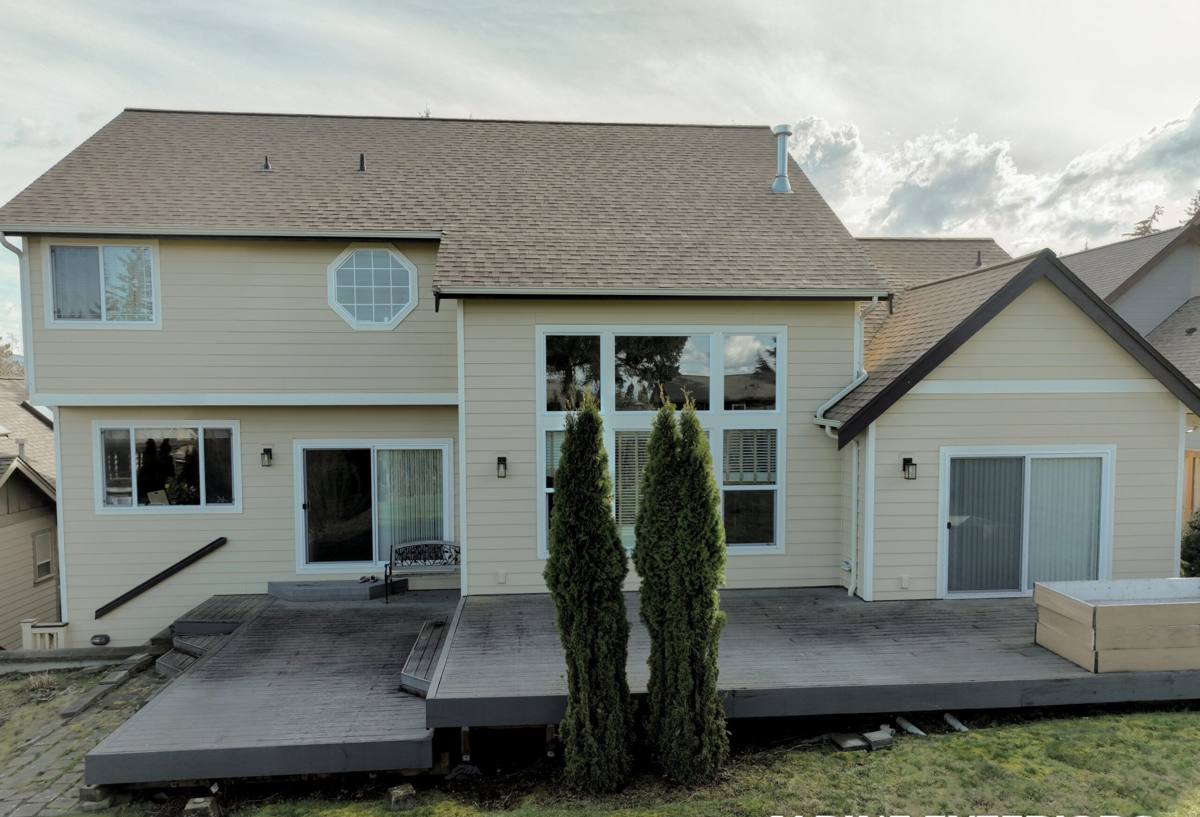
Signs Your Deck Needs Repair — Not Just a Pressure Wash
A lot of deck problems in this area get treated as cosmetic when they're structural, or vice versa. Knowing which is which saves money and, more importantly, keeps the deck safe to use.
Cosmetic and Surface-Level
- Graying, weathered wood surface with no soft spots underneath
- Moss or algae film on boards, especially in shaded corners or under overhangs
- Loose or rusting screws where the board itself is still sound
- Faded or peeling finish on an otherwise structurally solid deck
Structural Warning Signs
- Soft, spongy, or springy spots underfoot, especially near the ledger board or stair stringers
- Visible gaps or rust staining where the deck attaches to the house
- Wobble in the railing or posts when pushed firmly
- Cracked, split, or delaminating joists visible from underneath
- Stair treads that flex or feel loose at the stringer connection
If you're seeing anything in the second list, that's a repair-now situation, not a maintenance-later one. Structural failures on decks are rarely dramatic until they suddenly are.
What a Correct Deck Repair Actually Involves
A repair that only replaces the board you can see, without checking what's underneath, is a repair that gets redone in two or three years. Here's what we check and address on every deck repair, regardless of how small the visible problem looks.
Ledger Board and Flashing
The ledger board — where the deck bolts to the house — is the single most common source of hidden failure on decks in wet climates like ours. Water that gets behind inadequate or missing flashing rots the ledger, the rim joist, and sometimes the framing inside the wall itself, all while the deck surface looks fine. Any repair job that touches the ledger area gets flashing corrected as part of the work, not skipped to save time.
Framing and Structural Members
Joists, beams, and posts get inspected for rot, splitting, and connector corrosion. In a salt-air environment, galvanized hardware that would last decades elsewhere can show pitting and weakening sooner. We replace compromised structural members and upgrade fasteners and connectors to hardware rated for coastal exposure where the original installation used standard-grade material.
Decking Boards and Fasteners
Individual board replacement is straightforward, but matching board spacing correctly matters more here than in a dry climate — gaps that are too tight trap moisture and accelerate rot in the new board and its neighbors; gaps that are too wide let debris and moss establish faster. Fasteners get chosen for the specific material and exposure, not just whatever's on the truck.
Railings and Guard Posts
Railing posts anchor into the frame, and if that connection has softened from years of moisture intrusion, tightening the visible hardware does nothing for the real problem. We check post anchoring as part of any railing repair, since a railing that looks solid but is anchored into rotted framing is a safety issue, not a cosmetic one.
Repair or Replace: How We Help You Decide
Not every deck problem needs a full rebuild, and not every deck is worth chasing with patch repairs indefinitely. The honest answer usually comes down to how much of the structure — versus the surface — is affected.
| Factor | Repair Is Usually Right | Replacement Is Usually Right |
|---|---|---|
| Ledger board condition | Sound, flashing correctable | Rotted or repeatedly compromised |
| Extent of framing damage | Isolated joists or posts | Widespread rot across the frame |
| Decking surface | Scattered board replacement | Most boards cupped, splitting, or soft |
| Deck age | Under 15-20 years, built to code | Older, undersized, or non-permitted framing |
| Railing and stairs | Hardware or isolated post issues | Multiple anchor points compromised |
We'll tell you plainly which category your deck falls into. If a repair is the honest answer, that's what we'll recommend — we don't push a full rebuild on a deck that doesn't need one.
Our Process for a Fairhaven Deck Repair
1. On-Site Inspection
We look underneath the deck, not just at the walking surface — checking the ledger, joists, posts, and footings for moisture damage and structural soundness before quoting anything.
2. A Clear, Written Plan
You get a specific scope: what's being replaced, what's being reinforced, what hardware and materials are used, and why. No vague "repair as needed" line items.
3. The Repair Itself
Structural work first, then decking, railings, and finish work. Flashing and drainage get corrected wherever the ledger or framing is opened up, even if that wasn't the original complaint.
4. Protecting the Work
Where finish or sealant is part of the job, we use products suited to this region's rain exposure and explain a realistic maintenance interval — not a one-and-done promise.
Materials: What We Use and Why
Both wood and composite decking can perform well here if they're installed correctly for the conditions. Our recommendations come down to trade-offs, not brand preference.
Wood decking — typically cedar or pressure-treated lumber in this region — looks natural and is straightforward to repair board-by-board, but it needs periodic cleaning and refinishing to shed moisture and resist moss growth, especially in shaded Fairhaven lots.
Composite decking costs more upfront and resists rot and moss buildup better on the surface, but it still requires correct spacing, ventilation underneath, and proper fastening — composite boards installed without attention to airflow can trap moisture against the framing below just as easily as wood. We install composite when a homeowner wants lower surface maintenance and understands the upfront cost, and we're upfront that composite framing and structure still need the same wood-protection details underneath.
We don't install materials or use installation shortcuts that trade long-term performance for a lower bid — a repair that fails again in three years because of moisture behavior we could have anticipated isn't a repair we're willing to put our name on.
Keeping a Fairhaven Deck Ahead of the Weather
Between repairs, a few habits go a long way toward slowing down moss growth and moisture damage in this climate.
- Sweep leaves and debris off the deck surface regularly through fall — trapped organic matter feeds moss and holds moisture
- Rinse or gently scrub visible moss and algae before it establishes a deep hold, especially in shaded corners
- Check for standing water after heavy rain — pooling usually means a drainage or slope issue worth addressing before it causes rot
- Inspect the ledger board area and any spots where the deck meets the house once a year
- Re-tighten visible hardware and check railings for movement each spring
- Reseal or refinish wood decking on the schedule appropriate to the product — don't wait until the finish has fully failed
Why Hiring a Crew That Already Works in Fairhaven Matters
A deck repair crew that mostly works drier, inland conditions can miss the details that matter most here — flashing details for driving rain off the bay, hardware choices that hold up against salt air, and the moisture patterns that come with Fairhaven's shaded, tree-covered lots. We work in Bellingham and across Whatcom County regularly, so these aren't edge cases to us — they're the baseline conditions we plan for on every deck repair, from the first inspection through the hardware we choose.
If your deck has soft spots, moss buildup, a loose railing, or you're just not sure whether it needs a repair or a rebuild, we're glad to take a look. Reach out for a free, no-pressure estimate using the form below — we'll give you a straight answer either way.