 Bellingham Siding
 Fairhaven's Location Makes Siding a Different Problem Than Inland Bellingham
Fairhaven sits close to Bellingham Bay, and that proximity to salt water changes what a home's exterior has to deal with every year. Salt-laden air moves off the water and settles on siding, trim, and fasteners. Combine that with the driving rain that comes through Whatcom County off the Salish Sea, and you get a wall assembly that spends a large part of the year wet, salted, and shaded by evergreens and older street trees. None of that is unique to Fairhaven, but the combination — waterfront exposure plus an older, historically dense neighborhood with mature landscaping — is more concentrated here than in newer subdivisions further inland.
Add in the region's long moss season, which in this part of Washington can run from fall through spring, and you have three separate stresses acting on the same wall at once: moisture intrusion, salt corrosion, and organic growth. Siding that handles one of those well but not the other two will show problems within a handful of years, usually as staining, soft trim, or paint failure.
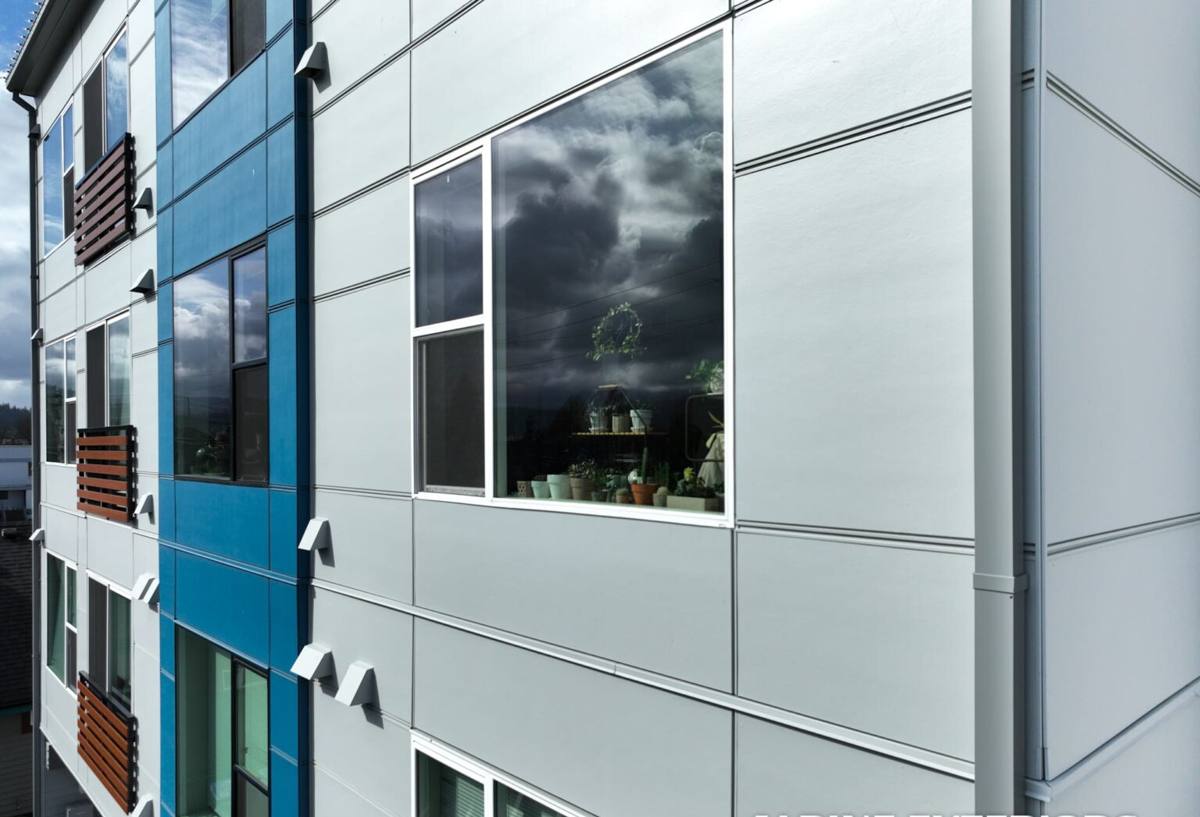
What Fairhaven's Housing Stock Actually Needs
A lot of homes in and around Fairhaven were built well before modern water-management details became standard practice. That means original sheathing, older window flashing, and siding installed with fewer drainage provisions than a house built today. When we get a call here, we're often not just replacing siding — we're correcting decades-old moisture pathways that were never designed to shed water the way current codes and manufacturer specs require.
That history matters when choosing a replacement product. A home near the water needs siding that:
- Resists moisture absorption at the plank itself, not just at the surface finish
- Holds its factory finish without repeated repainting, since repainting a salt-exposed wall every few years is a real, recurring cost
- Accepts corrosion-resistant fastening without splitting or cracking
- Can be detailed to match the trim proportions common on older Fairhaven homes without looking out of place
This is the reason we don't treat every siding job the same way regardless of location — a house three blocks from the water gets different attention to flashing and fastener choice than one further up the hill, even within the same neighborhood.
Why We Only Install James Hardie
We install James Hardie fiber cement siding exclusively. We don't offer vinyl, LP SmartSide, Cemplank, Allura, or primed wood species like spruce or cedar as alternatives, and we're upfront about why: those products each carry trade-offs — moisture sensitivity, finish maintenance, or installation tolerances — that we're not willing to build a business around in a climate like this one. James Hardie's fiber cement composition doesn't swell, rot, or feed insects the way wood-based products can, and it's non-combustible, which matters more each fire season in the Pacific Northwest.
Just as important for a property like this is Hardie's factory-applied ColorPlus finish. It's baked on under controlled conditions rather than field-painted, so it holds color and resists the chalking and fading that salt air accelerates on site-painted surfaces. Hardie backs the product with a strong, transferable limited warranty — worth something to a buyer down the road in a neighborhood where homes change hands and history matters to resale.
The HZ5 Engineered Line
James Hardie engineers its siding by climate zone, and the Pacific Northwest falls under the HZ5 system, formulated for moisture-prone, humid climates rather than hot, dry ones. For a Fairhaven project this typically means:
- HardiePlank lap siding for the main field of the wall — the workhorse product for most of the house
- HardieShingle for gable ends or accent areas, useful where a home's original character included shingle detailing
- HardieTrim for corners, window and door casings, and fascia, matched in profile to what an older home originally had
- HardiePanel where a smooth or vertical panel look fits the structure, such as porches or garage faces
Choosing the right mix of these products is part of getting a historic-character home to look right after the reside, not just weathertight.
What a Correct Installation Actually Involves Here
Fiber cement siding is only as good as the water-management system behind it. On a salt-air, high-rainfall property, a few details matter more than usual:
Drainage and the Water-Resistive Barrier
We install a proper water-resistive barrier with a drainage gap behind the siding, not just a housewrap stapled flat to the sheathing. That gap lets any moisture that does get behind the cladding drain and dry instead of sitting against the wall assembly — important in a climate where the siding rarely gets a long stretch of dry weather to fully dry out.
Flashing at Every Penetration
Windows, doors, hose bibs, and vents all need correctly lapped flashing so water is directed out and down, never behind the barrier. On older Fairhaven homes we frequently find these details missing or degraded, which is often the real source of a "siding problem" that actually started at a window.
Fastening and Clearance
Salt air corrodes standard fasteners faster than an inland environment, so we use fasteners rated for the exposure and follow Hardie's specified nailing pattern rather than whatever spacing speeds up the job. We also hold proper clearance between the siding's bottom edge and grade, decks, and roof lines, since tight clearances are one of the most common causes of premature rot and moss buildup at wall bases.
Caulking and Joints
Butt joints, trim seams, and penetrations get sealed with a high-quality, paintable sealant rated for the exposure — and only where Hardie's details call for sealant, since over-caulking can trap moisture just as easily as under-caulking lets it in.
Our Process for a Fairhaven Project
- On-site assessment — we check sheathing condition, existing flashing, and moisture readings, paying particular attention to water-facing walls and shaded, moss-prone areas
- Tear-off and prep — old siding comes off, sheathing is repaired or replaced where we find rot or soft spots, and the wall is prepped for a correct water-resistive barrier
- Barrier and flashing — drainage gap, housewrap, and flashing go in at every window, door, and penetration before any siding is hung
- Hardie installation — lap, shingle, panel, and trim products installed to manufacturer fastening specs, with corrosion-resistant fasteners
- Finish detail — trim profiles and reveal matched to the home's existing character where that matters, especially on older Fairhaven properties
- Cleanup and walkthrough — site cleared of debris, and we walk the finished job with the homeowner before calling it done
Cost Factors on a Fairhaven Siding Project
Every home is different, so we don't quote prices sight unseen, but these are the factors that most often move the number:
| Factor | Why It Affects Cost |
|---|---|
| Home size and number of stories | More wall area and taller walls mean more material, staging, and labor time |
| Condition of existing sheathing | Rot repair discovered during tear-off adds material and labor not visible from the outside |
| Trim and detail complexity | Older, detailed trim profiles take longer to replicate correctly than a simple modern elevation |
| Siding and accent mix | Combining lap, shingle, and panel products costs more than a single product across the whole house |
| Site access | Tight lots, slopes, or limited staging area near the water can slow crew efficiency |
| Existing siding removal and disposal | Extra layers or heavier original materials add tear-off and disposal time |
Maintaining Hardie Siding in a Salt Air, High-Moss Climate
Correctly installed Hardie siding is low-maintenance compared to wood or vinyl, but "low-maintenance" doesn't mean "no maintenance," especially this close to the water. A short seasonal routine goes a long way:
- Rinse siding periodically to clear salt residue and airborne grime before it builds up
- Keep gutters and downspouts clear so overflow doesn't run down the wall and feed moss growth
- Trim back vegetation and tree limbs near walls to improve airflow and reduce prolonged dampness
- Check caulked joints and trim seams once a year for cracking or separation
- Watch shaded, north-facing walls for early moss growth and remove it gently before it spreads
- Inspect fastener heads and trim edges periodically for early signs of corrosion or moisture staining
Why Local Experience in Fairhaven Matters
A crew that only occasionally works this close to the water can miss the details that separate a siding job that lasts from one that doesn't. Working in Fairhaven regularly means we already know to expect corroded original fasteners, undersized clearances at grade, and moss patterns on the shaded sides of older homes before we even start tear-off. It also means we're used to matching trim and reveal to the kind of historic character common in this part of Bellingham, rather than defaulting to whatever's fastest to install. That familiarity shows up in fewer surprises during the project and a finished result that fits the neighborhood.
If you're weighing a siding replacement on a Fairhaven home, we're happy to take a look and walk you through what your specific house needs — no pressure, no obligation. Reach out for a free estimate using the form below.