 Bellingham Siding
 Window Replacement in Fairhaven Isn't a Generic Job
Fairhaven sits right up against Bellingham Bay, which means homes here deal with a different set of conditions than a house a few miles inland in Whatcom County. Salt-laden air off the water, wind-driven rain, and a marine layer that keeps things damp for months at a stretch all put extra stress on a window's frame, hardware, and seals. A lot of the housing stock in and around Fairhaven is older too — original wood windows, single-pane glass, and trim details that were never designed with modern energy codes in mind. Replacing those windows well means understanding both the building and the climate they've been sitting in for decades.
This page is about one thing: energy-efficient window replacement for homes in Fairhaven specifically. Not a general overview of window brands, and not a page written for a dry inland climate. What follows is what we've learned installing and servicing windows in this exact kind of weather.
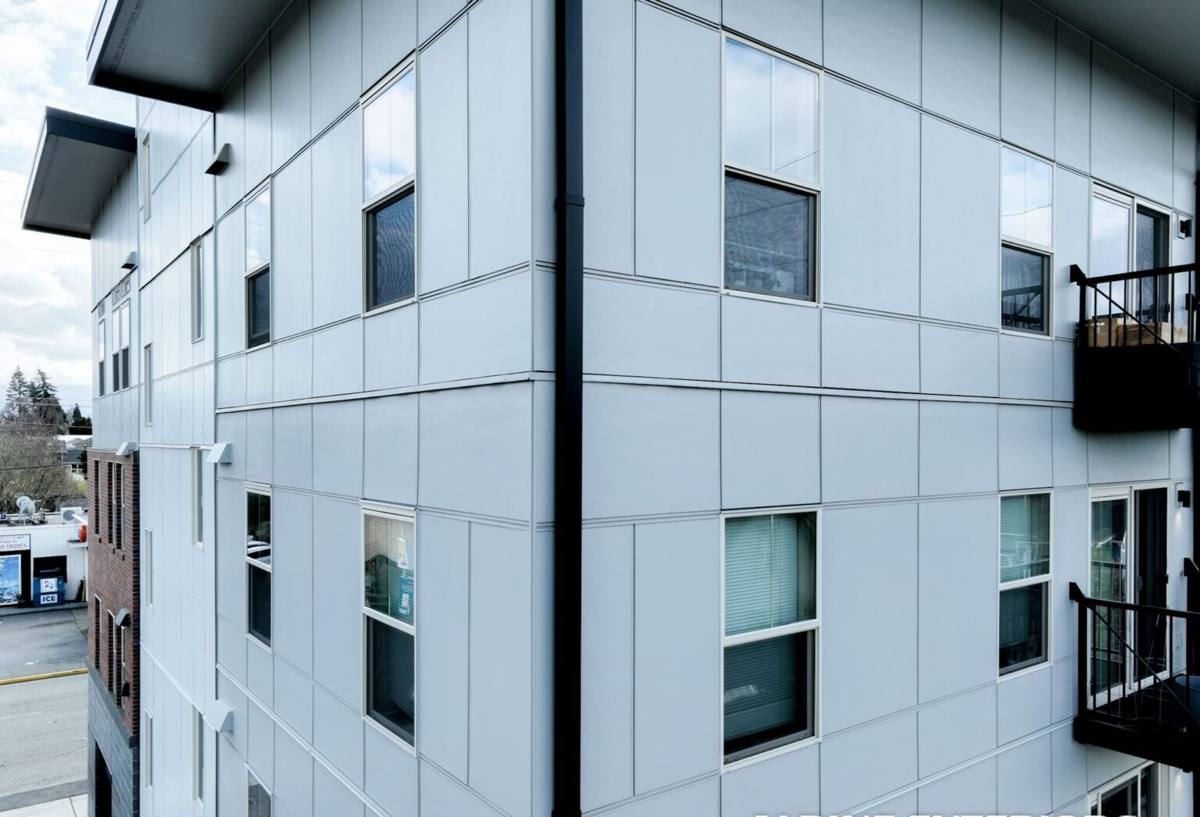
What Salt Air and Driving Rain Do to Windows Over Time
Salt Air and Hardware Corrosion
Even a few blocks from the water, airborne salt settles on exterior surfaces and works its way into anything metal. Window hardware — hinges, cranks, locks, and especially lower-grade aluminum components — corrodes faster near the bay than it would twenty miles east. Corroded hardware doesn't just look bad; it stops sealing tightly, which lets in both air and moisture. This is one reason frame and hardware material selection matters more here than it would in a lot of other parts of the state.
Driving Rain and Water Intrusion
Storms off the Salish Sea tend to come in sideways, not straight down. That driving rain finds any weak point in a window's flashing or seal and pushes water behind the siding rather than just running down the glass. A window that would hold up fine in a calmer climate can leak here if it wasn't flashed and sealed correctly, and once water gets behind the exterior cladding, the damage is often hidden until it's already serious — soft sheathing, stained interior trim, or a musty smell near the window.
Moss, Mildew, and the Long Wet Season
Bellingham's wet season runs long, and anything that stays damp — wood sills, weep holes, weatherstripping — becomes a place where moss, algae, and mildew can take hold. On older wood windows this often shows up as soft spots at the bottom corners of the sash and sill first, since that's where water sits the longest. Clogged weep holes on vinyl or aluminum windows can trap moisture inside the frame cavity itself, which shortens the life of the window from the inside out where you can't see it happening.
What "Energy-Efficient" Actually Means for a Window
"Energy-efficient" gets used loosely in window marketing, but it actually refers to a handful of measurable performance ratings, all listed on the National Fenestration Rating Council (NFRC) label that comes on every code-compliant window. Understanding these ratings matters more here than in a mild, sunny climate, because Fairhaven's combination of cool wet winters and mild summers puts different demands on a window than, say, a desert climate would.
| Rating | What It Measures | Why It Matters in This Climate |
|---|---|---|
| U-Factor | How well the window resists heat loss (lower is better) | Keeps heated indoor air from escaping through the frame and glass during our long heating season |
| SHGC (Solar Heat Gain Coefficient) | How much solar heat passes through the glass | A moderate SHGC lets in welcome winter sun without overheating rooms during summer |
| Air Leakage (AL) | How much air passes through the window assembly | Lower air leakage matters directly for comfort in a windy, wind-driven-rain climate |
| Condensation Resistance | How well the window resists interior condensation | Reduces fogging, mildew growth, and sill damage during our high-humidity months |
For this part of Washington, we generally steer homeowners toward windows that carry the ENERGY STAR Northern Climate Zone rating, which sets a stricter U-factor threshold than the national default. It's a useful shorthand when comparing products, but the label alone doesn't guarantee a good outcome — installation quality affects real-world performance just as much as the rating on the sticker.
Frame Material Options for Fairhaven's Climate
There's no single "best" frame material for every house — it depends on your home's age, your budget, and how much maintenance you want to take on. Here's how the common options hold up specifically against salt air, moisture, and our wet-season conditions.
| Frame Material | Salt Air / Moisture Behavior | Maintenance | Good Fit For |
|---|---|---|---|
| Vinyl | Won't corrode or rot; performs consistently near the bay | Low — occasional cleaning | Most standard replacements, budget-conscious projects |
| Fiberglass | Excellent moisture and salt resistance; very stable dimensionally | Low | Homes wanting long-term durability and a paintable finish |
| Wood-clad | Good if the cladding is intact; exposed wood is vulnerable | Moderate to high | Historic-character homes where interior wood trim matters |
| Aluminum | Prone to corrosion and thermal transfer near salt air unless thermally broken | Moderate | Limited residential use; better suited to commercial applications |
We don't push one material on every homeowner. What we do is explain honestly where each option is likely to struggle in this specific location, so the choice is made with the climate in mind rather than discovered the hard way five years later.
What a Correct Installation Actually Involves
The window unit itself is only part of the equation. A high-performance window installed poorly will underperform and can even fail faster than a mid-grade window installed correctly. In a climate with driving rain and salt air, the installation details matter more, not less.
Removal and Inspection
Before a new window goes in, the old one comes out and the rough opening gets inspected — sheathing, framing, and sill for any rot or moisture damage that built up behind the old unit. This step gets skipped by crews trying to move fast, and it's exactly where hidden problems from years of wind-driven rain tend to surface.
Flashing and Water Management
The window needs to be integrated into the wall's water-resistive barrier correctly, with flashing that directs any water that gets behind the siding back out, not into the wall cavity. This is the single most important step for preventing the kind of hidden rot that shows up years later.
Sealing and Insulating the Gap
The gap between the window frame and the rough opening needs to be air-sealed and insulated, not just caulked around the outside trim. A window that's beautifully sealed on the exterior but has an open, uninsulated gap behind the trim will still leak air and lose heat.
Interior and Exterior Finish Work
Trim gets reset or replaced, caulk lines get run clean, and hardware gets tested for smooth operation before we consider the job finished. On older Fairhaven homes we pay particular attention to matching existing trim profiles so the new window doesn't look out of place against original woodwork.
Our Process, Start to Finish
- On-site assessment — We look at your existing windows, the condition of the framing around them, and how exposed your home is to wind and rain off the bay.
- Product selection — We walk through frame material and performance ratings based on your home, budget, and how much maintenance you want going forward.
- Written estimate — Clear pricing, no pressure, and no vague allowances that turn into surprise costs later.
- Preparation — Work areas are protected, and we confirm measurements against the actual rough openings, not just the old window sizes.
- Removal and install — Old units come out, openings are inspected and repaired if needed, and new windows are flashed, sealed, and insulated properly.
- Finish and cleanup — Interior and exterior trim work is completed, hardware is tested, and the site is cleaned up before we leave.
- Final walkthrough — We go over every window with you before calling the job done.
Older and Historic Homes in Fairhaven: Special Considerations
A good number of homes in and around Fairhaven have real architectural character — older wood-sash windows, distinct trim profiles, and proportions that were part of the original design. Replacing those windows isn't just a performance upgrade; it's also about not flattening the character of the house in the process. We pay attention to matching sightlines, grille patterns, and trim details so a new, efficient window doesn't look like an obvious mismatch against the rest of the home.
Some properties in and near Fairhaven also fall within a designated historic district, where exterior changes — including window replacement — can be subject to design review. If that applies to your home, it's worth finding out before ordering windows, and we're glad to talk through what we know and help you plan around it rather than finding out after the fact.
Signs Your Current Windows Are Costing You Money
Not every window problem is obvious from across the room. Here are the signs we hear about most often from Fairhaven homeowners once they start paying attention:
- Drafts you can feel near the frame, especially during windstorms off the bay
- Condensation building up between panes, which usually means a failed seal
- Wood sills that feel soft, spongy, or show dark staining at the corners
- Windows that are difficult to open, close, or lock — often a sign of frame movement or corroded hardware
- Visible daylight or gaps around the frame when the window is closed
- A noticeable rise in heating costs compared to similar-sized homes nearby
- Musty odors near window openings after heavy rain
Any one of these on its own might just mean a minor repair. Several of them together, especially on windows that are original to an older home, usually mean it's time to look at replacement rather than continuing to patch the same problems.
Why Hiring a Crew That Already Works in Fairhaven Matters
Window replacement done by a crew unfamiliar with this specific stretch of coastline tends to make the same mistakes: underestimating how much wind-driven rain a wall assembly needs to handle, choosing hardware that corrodes faster than expected, or missing the moisture already sitting behind an older window before the new one goes in. A crew that regularly works in Fairhaven and along the Bellingham waterfront has already seen how these homes age in this specific climate, and that shows up in the details — the flashing choices, the hardware recommendations, the way trim gets handled on an older house.
It also means fewer surprises during the estimate. We're not guessing at what Whatcom County's marine climate does to a window over ten or twenty years — we're basing recommendations on what we've actually seen holding up, and what hasn't, in homes just like yours.
Get a Free, No-Pressure Estimate
If your windows are drafty, fogging up, hard to operate, or just original to a house that's overdue for an upgrade, we're happy to take a look and walk you through honest options for your specific home and budget. Use the form below to request a free estimate — no pressure, no obligation.