 Bellingham Siding
 Storm Damage Roof Repair in Fairhaven — What Homeowners Need to Know
Fairhaven sits close to Bellingham Bay, which means its roofs take on a specific combination of stresses that inland neighborhoods don't deal with in the same way. Wind coming off the water, salt-laden air, and long stretches of wet weather all act on a roof at once, and storm damage here rarely shows up as one clean, obvious problem. It's usually a mix of things — a few lifted shingles here, a soft spot of moss buildup there, a flashing seam that's been slowly working loose for a season or two before a storm finally pushes water through it.
We repair storm-damaged roofs across Bellingham and Whatcom County, and Fairhaven is one of the areas we're in regularly. That matters more than it might sound like, because a repair that's "correct" on paper can still fail here if it doesn't account for how this specific micro-climate behaves. This page is about what a proper storm damage repair looks like for a Fairhaven home, not a generic roofing checklist.
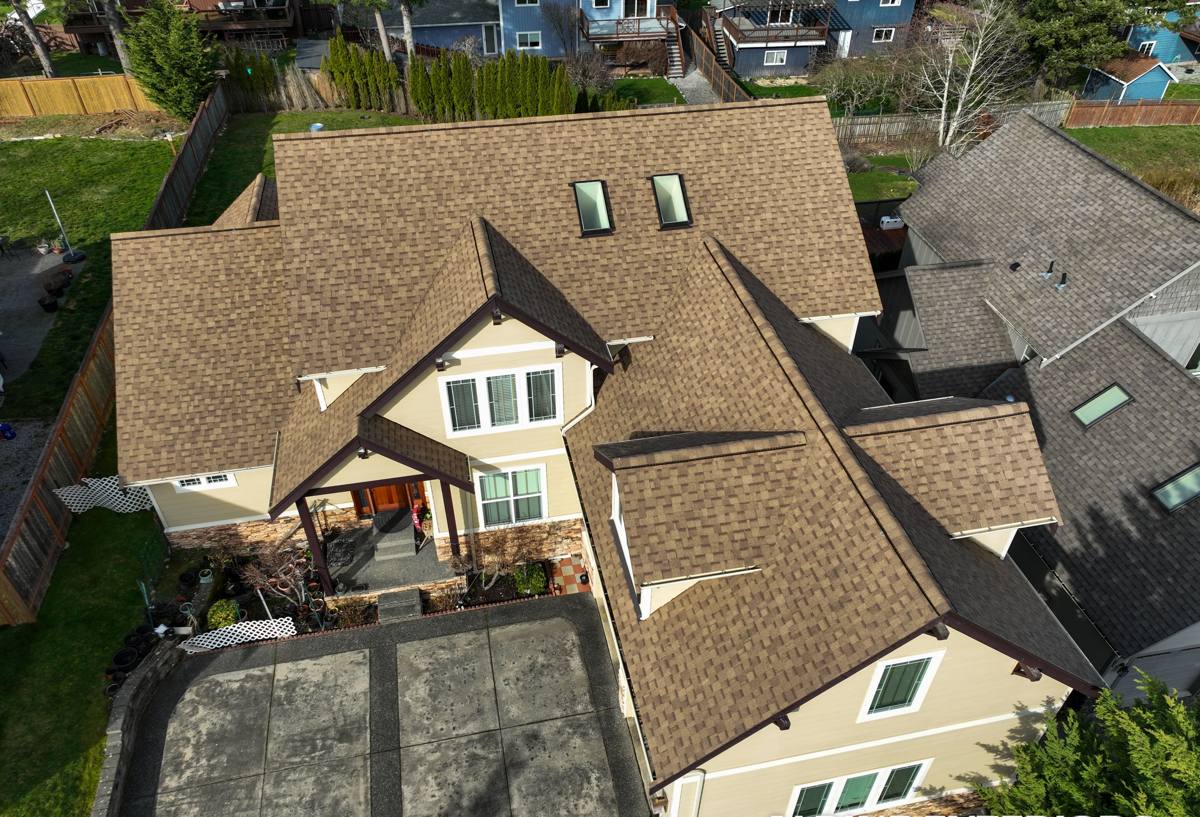
Why Fairhaven's Climate Wears Down Roofs Faster
Salt Air
Proximity to Bellingham Bay means airborne salt is a constant, low-level factor on Fairhaven roofs. It doesn't destroy a roof by itself, but it accelerates corrosion on exposed metal — flashing, fasteners, gutter hangers, vent caps — faster than you'd see on a home even a few miles inland. Corroded fasteners back out slightly over time, and a fastener that's already loosened by salt exposure is far more likely to let go in a windstorm.
Driving Rain
Storms off the water tend to bring rain sideways rather than straight down, which pushes water into places a roof isn't necessarily built to shed it from — under shingle tabs, behind step flashing, into vent boots that are aging out. A roof that's held up fine against years of ordinary vertical rain can still take on water during one hard, wind-driven storm if a seam or lap has any weakness at all.
A Long Moss Season
Between the shade from mature trees common in Fairhaven and the region's extended damp season, moss and algae get a long runway to establish themselves on north-facing and shaded roof slopes. Moss holds moisture against the roofing material, works its way under shingle edges as it grows, and adds weight and organic debris that clogs valleys and gutters right when storm runoff needs to move fastest.
Common Types of Storm Damage We See on Fairhaven Roofs
- Wind-lifted or torn shingles — tabs cracked or missing along ridges and edges, often on the side of the roof facing the bay
- Moss-related lifting — shingles pushed up at the edges by moss mats, creating entry points for wind-driven rain
- Flashing failures — step flashing, chimney flashing, and skylight flashing that's corroded or worked loose, often the actual source of a leak even when shingles look fine
- Gutter and downspout damage — pulled fasteners, overflow staining, and debris dams from wind-blown branches and moss buildup
- Tree limb impact — punctures or bruised shingles from branches down during high wind, common on lots with mature tree cover
- Vent boot and pipe collar cracking — rubber and plastic collars that degrade with age and salt exposure, then split during a storm's temperature and moisture swings
What a Correct Storm Damage Repair Actually Involves
A Full Assessment, Not Just the Obvious Spot
If a homeowner points us to a stain on a ceiling, we don't stop at patching the shingle directly above it. Water travels under roofing material before it shows up inside, so the actual entry point is often a foot or more away — at a flashing lap, a nail pop, or a valley. We check the whole slope and adjacent penetrations before calling a repair done.
Matching Materials, Not Just Covering the Hole
A patch that doesn't match the existing shingle's profile, granule color, or exposure will shed water differently than the surrounding roof and can create a new weak point instead of fixing the old one. We source matching materials wherever possible, and when an exact match isn't available, we place the repair where the mismatch won't compromise water flow.
Flashing and Underlayment Get Checked, Not Assumed
Given how much flashing corrosion we see from salt exposure in this area, any repair near a chimney, skylight, valley, or wall intersection includes a flashing check — not just a shingle swap. Underlayment condition gets checked too, since a shingle can be replaced perfectly and still leak if the underlayment beneath it has already failed.
Moss and Debris Removal Before, Not After
We clear moss and organic debris from the repair area and surrounding valleys before closing anything up. Sealing a repair over existing moss just traps moisture against the new work and shortens its life.
Our Process From Call to Completion
Inspection and Documentation
We walk the roof (and the attic or interior where relevant) to identify every point of damage, not just the one the homeowner noticed. We photograph and document what we find, which is useful both for explaining the repair plan in plain terms and for insurance purposes if a claim is being filed.
A Clear, Written Scope
Before any work starts, the homeowner gets a plain-English explanation of what's damaged, what needs to happen to fix it correctly, and what it will cost. No pressure to upsell into a full replacement if a targeted repair is genuinely the right call.
The Repair Itself
Work is done to match the existing roof system — same fastening pattern, correct flashing technique for the specific roof geometry, and underlayment integrated properly with the surrounding material rather than just caulked over.
Cleanup and Walkthrough
Debris, old materials, and nails are cleared from the property, gutters and downspouts near the repair are checked for flow, and we walk the homeowner through what was done before we consider the job finished.
Repair or Replace? Cost Factors to Weigh
Not every storm-damaged roof needs a full replacement, and not every roof is a good candidate for another round of patching. These are the factors that actually decide it:
| Factor | Favors Repair | Favors Replacement |
|---|---|---|
| Roof age | Under 12–15 years, otherwise sound | Near or past expected service life |
| Extent of damage | Isolated to one or two areas | Widespread across multiple slopes |
| Moss/algae history | Minor, recently cleaned | Long-term buildup with granule loss underneath |
| Underlayment condition | Intact where checked | Degraded or missing in multiple spots |
| Flashing condition | Sound or easily replaced in place | Corroded throughout, original to an older roof |
| Insurance scope | Claim approved for repair only | Adjuster scopes full slope or full roof |
We'll give a straight answer on which side of that table your roof falls on — including telling you when a repair is genuinely the smarter move, even though a replacement is a bigger job for us.
Materials and Workmanship Standards We Hold To
For storm repair work in a salt-air, high-moisture environment like Fairhaven, we lean toward flashing and fastener materials with better long-term corrosion resistance, and we're deliberate about sealant choice and application — the wrong sealant in the wrong spot fails quietly and shows up as a "mystery leak" a year later. When a homeowner asks about a cheaper repair shortcut, our answer is usually about trade-offs rather than a flat no: a lower-cost patch might hold for a season, but if the underlying flashing or underlayment issue isn't addressed, the same storm damage tends to reappear in the next windstorm season. We'd rather explain that trade-off up front than have a customer pay twice.
Insurance Claims After a Storm
Many storm damage repairs in this area go through homeowners insurance, especially after a named windstorm event. A few things help that process go smoother:
- Photograph visible damage (from the ground — no need to get on the roof yourself) as soon as it's safe to do so
- Get an inspection and documented estimate before the insurance adjuster visits, so you have an independent record to compare
- Ask whether the recommended scope is a spot repair or a full slope, since adjusters sometimes scope narrower than what's actually needed to restore the roof properly
- Keep any tarping or emergency mitigation receipts — insurers generally expect reasonable steps to prevent further damage
We're glad to provide a documented inspection report that a homeowner can bring to their insurance conversation, whether or not we end up doing the repair work.
Why Hire a Crew That Already Works in Fairhaven
A roof repair company that works this neighborhood regularly already knows which slope orientations take the worst of the bay wind, how aggressively moss establishes itself under the tree cover common here, and which flashing details tend to be the weak point on the housing stock in this part of Bellingham. That's not a substitute for a careful inspection of your specific roof, but it does mean fewer surprises and a faster, more accurate diagnosis when you call about storm damage.
It also means we're not driving a long distance for a follow-up if something needs a second look after the next storm — we're already in the area.
After a Storm: A Quick Homeowner Checklist
- Check the yard and gutters for granules, shingle pieces, or flashing fragments — a sign of roof material that's been dislodged
- Look inside for new ceiling stains, especially near chimneys, skylights, and where roof planes meet
- Note any visible sagging, missing shingles, or exposed underlayment from the ground
- Avoid getting on the roof yourself after a storm — wet, damaged roofing is not safe to walk
- Have a tarp placed over any obvious breach only if it can be done safely, or call a professional to do it
- Get an inspection promptly — small storm damage left through a second storm often turns into a much larger repair
If a recent storm has left your Fairhaven roof with missing shingles, a new leak, or damage you're not sure how to size up, we're happy to take a look. Estimates are free, there's no pressure to commit to anything, and you'll get a straight answer about what's actually needed — just fill out the form below.