 Bellingham Siding
 Why Board & Batten Fits Fairhaven
Fairhaven has a look that's different from most of Bellingham — brick storefronts, older homes with real architectural character, and a lot of craftsman and farmhouse-style construction mixed in among newer builds near the waterfront. Board and batten siding, with its clean vertical lines and visible seams, fits that character better than a lot of siding profiles do. It reads as intentional and historic rather than generic, which matters in a neighborhood where curb appeal and architectural fit carry real weight.
But board and batten isn't just a style choice. The profile itself — wide vertical boards with narrower strips covering the seams — behaves differently on a house than horizontal lap siding, especially in a climate like this one. Getting it right in Fairhaven means understanding both the look homeowners want and the specific punishment the local weather puts on a vertical siding system.
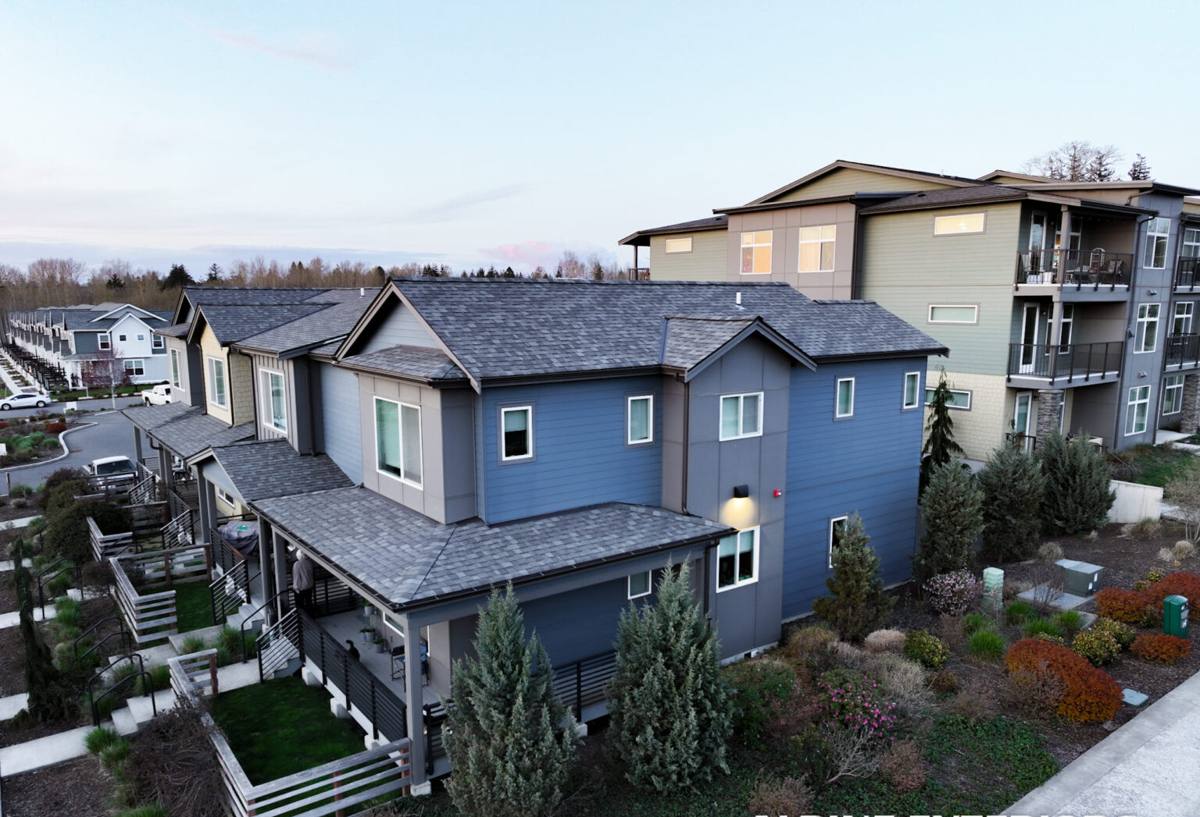
What Bellingham Bay's Climate Does to Vertical Siding
Fairhaven sits close to Bellingham Bay, which means homes here deal with a combination of exposures that inland Whatcom County properties don't face in the same way: salt-laden air, wind-driven rain coming off the water, and long stretches of damp, low-sun weather that keep surfaces wet for days at a time.
Salt Air
Airborne salt accelerates corrosion on fasteners, flashing, and any metal trim components. On a board and batten installation, the battens themselves are typically face-nailed or blind-nailed at close intervals, which means there are more fastener penetrations per square foot than on standard lap siding. If those fasteners aren't corrosion-resistant and properly set, salt exposure will find the weak points first.
Driving Rain
Wind off the bay doesn't just fall as rain — it drives it sideways into wall assemblies. Board and batten's vertical seams, if not detailed correctly, give that wind-driven moisture a more direct path toward the seam than a lapped horizontal profile does. The batten strip has to actually shed water, not just cover a gap decoratively.
Moss and Prolonged Dampness
Whatcom County's moss season runs long, and any siding material that holds moisture at the surface or lacks a way to dry out between wet spells will stay damp longer than it should. That sustained dampness is what causes swelling, delamination, and paint failure over time — problems that show up faster on north-facing walls and shaded sides of a lot, which is common in Fairhaven's tree-lined streets.
Why We Install James Hardie — Not Cedar, LP, or Vinyl — for This Profile
Board and batten is traditionally a wood siding look, and a lot of contractors will offer it in cedar, engineered wood like LP SmartSide, or even vinyl panel systems designed to mimic the profile. We don't install any of those, and it's worth being straight about why.
Cedar board and batten looks great on day one, but real wood in a marine climate needs consistent refinishing to keep water out of end grain and seams — skip a cycle or two and moisture gets in where it's hardest to reverse. LP SmartSide is an engineered wood product with a resin-treated core; it holds up better than raw cedar but is still an engineered wood substrate, meaning cut edges and fastener penetrations need consistent sealing to perform over the long term. Vinyl board and batten sheds water fine but is a thin plastic panel system — it doesn't hold paint, it becomes brittle in cold snaps, and it doesn't carry the same fire performance or resale perception as a fiber cement product.
James Hardie fiber cement gives us a board and batten system that's non-combustible, dimensionally stable in wet-dry cycling, and factory-finished with ColorPlus so the color coat is baked on rather than field-applied — which matters a lot on a profile with this many seams and fastener points to maintain.
The James Hardie Board & Batten System
For this profile we use James Hardie's vertical panel and batten components, engineered as a matched system rather than mixed materials from different manufacturers. Depending on the home's design and existing wall assembly, that means either wide HardiePanel vertical siding with HardieTrim battens over the seams, or the Artisan line where a more refined, tighter-reveal look is called for. Both are manufactured in Hardie's HZ5 formulation, engineered specifically for Pacific Northwest moisture exposure rather than a one-size-fits-all national spec.
| Material | Moisture Behavior | Maintenance Burden | Fit for Salt/Rain Exposure |
|---|---|---|---|
| Cedar | Absorbs and releases moisture; prone to cupping and checking | Refinish every few years | Requires diligent upkeep near the bay |
| LP SmartSide | Resin-treated engineered wood; edges vulnerable if unsealed | Moderate — seal cuts, repaint cycle | Workable with strict detailing |
| Vinyl Panel | Sheds water but doesn't breathe; can trap moisture behind it | Low, but limited lifespan in cold/UV | Weak long-term seam performance |
| James Hardie Fiber Cement | Dimensionally stable, non-combustible, engineered for wet climates | Low — factory finish, occasional wash | Built for marine and high-rain exposure |
What a Correct Installation Actually Involves
The material is only half the equation. Board and batten fails prematurely almost as often from installation shortcuts as from material choice, and the seam-heavy nature of the profile leaves little room for error.
- A drainage plane and rain screen gap behind the panels, so any moisture that does get past the surface has somewhere to go instead of sitting against the sheathing
- Correct flashing at every window, door, and horizontal transition — not caulk substituting for flashing
- Battens fastened per Hardie's specification, with corrosion-resistant fasteners sized and spaced to hold in wind-driven rain conditions
- Proper gapping at panel joints and around penetrations to allow for expansion without forcing water behind the cladding
- Factory-primed or ColorPlus-finished cut edges sealed in the field wherever a cut is made on site
- Clearance from grade, decks, and roof lines maintained so the bottom edge of the siding isn't sitting in standing water or splashback
Skip any one of these and you don't necessarily see a problem in year one — you see it in year five or six, usually as a soft spot, staining, or a batten that's started to separate.
Our Process for Fairhaven Projects
Because Fairhaven's lot conditions vary — some homes sit close to the water with direct salt exposure, others are set back under tree cover with more moss and shade issues — we start every project with a walk of the specific exposures on that property rather than a generic estimate.
1. Assessment
We look at wall orientation, existing moisture damage, roofline drainage, and how close the home sits to salt air and prevailing wind. This shapes fastener spec, flashing detail, and sometimes the choice between HardiePanel and Artisan.
2. Tear-off and Prep
Old siding comes off, sheathing gets inspected for hidden rot (common on older Fairhaven homes with decades of siding layered over original wall assemblies), and any damaged sheathing is replaced before anything new goes up.
3. Weather Barrier and Rain Screen
A proper drainage plane goes on before a single panel is hung — this is the step that gets skipped most often industry-wide, and it's the one that determines whether the siding survives driving rain long-term.
4. Installation
Panels and battens go up to Hardie's fastening schedule, with flashing integrated at every transition, not caulked over afterward.
5. Final Walkthrough
We check seams, fastener lines, and clearances before calling the job done, and walk the homeowner through what routine maintenance (which is minimal) actually looks like.
Cost Factors for Board & Batten Projects
Board and batten typically costs somewhat more than a straightforward lap siding job on the same house, mainly due to labor — more fastener points, more precise reveal spacing, and battens as a separate installation step. Rough cost drivers include:
| Factor | Why It Matters |
|---|---|
| Wall complexity | Dormers, gables, and multiple roof lines add cutting and flashing time |
| Existing sheathing condition | Rot found during tear-off adds repair scope before siding can go on |
| Panel vs. Artisan line | Artisan's tighter, more refined reveal costs more than standard panel and batten |
| Color and finish | ColorPlus factory finishes vary in price by color selection |
| Access and site conditions | Tight lots, mature trees, and grade near the home affect staging and labor time |
We give firm numbers only after seeing the specific house — anyone quoting a board and batten job sight-unseen is guessing.
Maintenance and Longevity
Once installed correctly, a James Hardie board and batten system is genuinely low-maintenance in this climate — an occasional gentle wash to keep salt residue and moss spores from building up on the surface is about all it needs. There's no refinishing cycle like cedar requires, and no brittleness concern like vinyl in cold snaps. The ColorPlus finish is backed by its own finish warranty separate from the substrate warranty on the fiber cement itself, which is worth understanding before you sign anything — ask any contractor to walk you through both.
Hiring a Crew That Knows This Neighborhood
Fairhaven's mix of older homes, waterfront exposure, and tree cover means every property has its own moisture story. A crew that's worked this specific area already knows which walls tend to hold moss, which lots catch the worst of the wind off the bay, and how older sheathing in this part of Bellingham tends to hold up under a tear-off. That local pattern recognition is worth more than a generic siding quote, and it's the difference between a board and batten job that looks right for five years and one that performs right for thirty.
If you're weighing board and batten siding for a Fairhaven home, we're happy to walk the property, look at your specific exposure, and give you a straight, no-pressure estimate — fill out the form below to get started.