 Bellingham Siding
 Fairhaven Roofs Work Harder Than Most
Fairhaven sits close enough to Bellingham Bay that salt-laden air, wind-driven rain, and heavy tree cover all land on the same roof at the same time. A lot of the neighborhood's homes are older character homes and craftsman-era bungalows mixed in with newer construction, and both age groups run into the same problem eventually: a roof system that was fine for the first fifteen or twenty years starts losing the fight against moisture, moss, and salt air corrosion. When that happens, patch repairs stop being a real fix and a full new roof installation becomes the honest answer.
This page is specifically about installing a new roof for a Fairhaven property in Bellingham, Whatcom County — not a general roofing overview. The goal is to explain what this climate actually does to a roof, what a correct installation looks like in response, and why local experience matters more here than it might in a drier part of the state.
What Salt Air, Driving Rain, and Moss Actually Do to a Roof
Salt Air and Metal Components
Homes near the water deal with airborne salt that settles on every exposed metal surface — flashing, fasteners, vent caps, gutter hangers. Over years, that accelerates corrosion on lower-grade metal, especially at fastener heads and cut edges where protective coatings are thinnest. It's rarely the shingles themselves that fail first near the water; it's the metal details holding the system together.
Driving Rain and Wind-Driven Water
Storms coming off the water don't just fall straight down — wind pushes rain sideways and up under laps, edges, and poorly sealed penetrations. A roof built for a calmer inland climate can look fine in a light rain and still leak in a real Whatcom County storm because the water is arriving from an angle the original installation never accounted for.
Moss, Shade, and a Long Wet Season
Bellingham's moss season isn't a short spring nuisance — shaded, north-facing slopes and roofs under mature trees can stay damp for most of the year. Moss holds moisture directly against roofing material, works into shingle laps and butt joints, and lifts edges enough for wind-driven rain to get underneath. Left long enough, moss growth shortens the useful life of an otherwise sound roof by years.
Signs a Roof Needs Replacement, Not Another Repair
Not every roof problem calls for full replacement, but there's a point where repeated repairs are just delaying an inevitable, more expensive failure. Before recommending a new roof, we look for a pattern like this:
- Granule loss heavy enough that you can see bare, shiny patches on shingle surfaces
- Shingles that are cupping, curling, or cracking across multiple slopes, not just one spot
- Moss or algae staining that keeps returning within a season or two of cleaning
- Soft spots, sagging, or spongy decking felt underfoot during inspection
- Leaks appearing in more than one location, or in new spots each storm season
- Flashing around chimneys, skylights, or valleys that's rusted, lifted, or repeatedly re-sealed
- A roof already past or close to its expected material lifespan with visible wear
If a roof shows two or three of these at once, patch repairs usually just move the leak somewhere else. A full replacement resets the clock and lets us correct any underlying issues rather than build another repair on top of them.
What a Correct New Roof Installation Involves
Tear-Off and Deck Inspection
We remove the old roofing down to the deck rather than layering over it. That's the only way to actually see the condition of the sheathing underneath — and in a wet climate like Bellingham's, hidden rot at valleys, eaves, or old penetration points is common enough that skipping this step is how new roofs end up failing early. Any soft or damaged decking gets replaced before anything new goes down.
Underlayment and Ice-and-Water Barrier
A synthetic underlayment goes down across the full deck as the primary water barrier beneath the roofing material. In vulnerable areas — eaves, valleys, around chimneys and skylights — we add a self-adhering ice-and-water membrane. In a driving-rain climate, these are the spots where wind-blown water is most likely to work its way in, so this layer matters more here than in calmer regions.
Flashing Built for Wind-Driven Water
Flashing at valleys, walls, chimneys, and roof-to-wall transitions gets installed with laps and fastener placement oriented for water moving sideways, not just down. We use corrosion-resistant metal at these points specifically because of the salt air exposure closer to the water — this is one of the areas where using a lighter-duty material saves a little upfront and costs a lot more in ten years.
Ventilation Matched to a Damp Climate
Proper intake and exhaust ventilation keeps the attic space from trapping moisture, which matters in a region where the air itself stays damp for long stretches. Poor ventilation traps humidity against the underside of the deck, which can accelerate rot and give moss and mildew an easier foothold from underneath, not just on the surface.
Choosing a Roofing Material for Fairhaven's Conditions
There's no single "best" roofing material for every home — it depends on the roof's slope, sun exposure, budget, and how much long-term maintenance an owner wants to take on. Here's how the common options compare specifically against salt air, driving rain, and moss:
| Material | Moss Resistance | Salt Air Durability | Typical Lifespan | Relative Cost |
|---|---|---|---|---|
| Architectural asphalt shingle | Moderate — needs periodic cleaning | Good with corrosion-resistant flashing/fasteners | 25-30 years | $ |
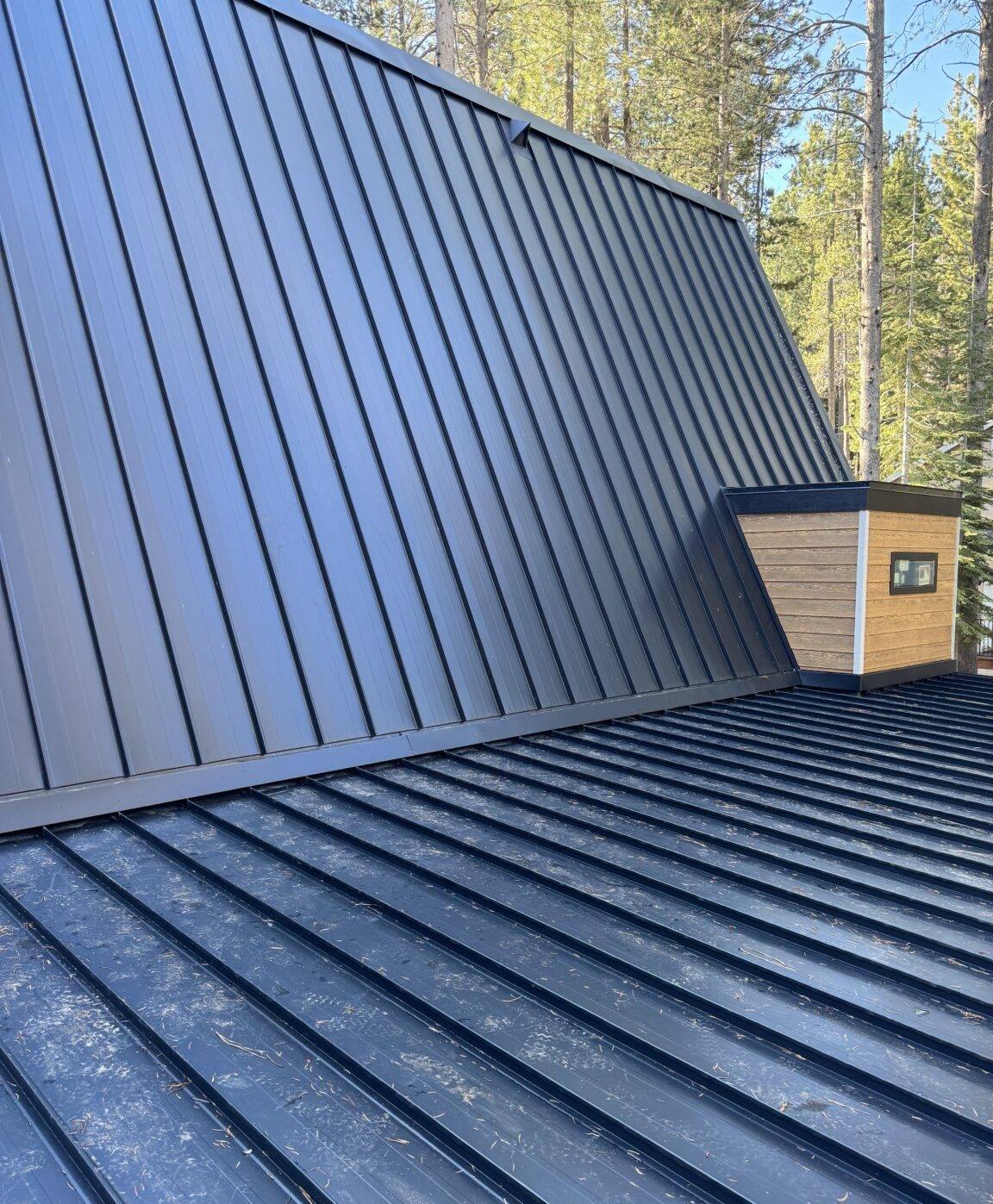
| Standing seam metal | Strong — sheds moisture, little for moss to grip | Excellent with marine-grade coatings | 40-50+ years | $$$ |
| Synthetic/composite shingle | Good — resists moisture absorption | Good | 30-40 years | $$ |
For homes under heavy tree cover, we're honest that no material eliminates moss risk entirely — good ventilation, sun exposure, and gutter maintenance matter as much as the material choice itself. Metal roofing is often the strongest long-term performer this close to the water, but it's not the right fit or budget for every home, and asphalt done correctly with the right underlayment and flashing details still performs well for decades.
Our Installation Process
- On-site inspection and estimate. We look at the current roof, attic ventilation, and decking condition, and give a written estimate with no pressure to decide on the spot.
- Material and detail selection. We walk through material options against your budget and the specific exposure of your roof — sun, shade, slope, and how close you are to the water.
- Permitting. We handle the local permit process so the work is documented and inspected correctly.
- Tear-off and deck repair. Old roofing comes off, decking gets inspected, and any damaged sections are replaced before moving forward.
- Underlayment, flashing, and material installation. Water barriers and flashing go in first, then the roofing material, following manufacturer specifications for the product installed.
- Ventilation check. Intake and exhaust ventilation is confirmed adequate for the attic space, adjusting if needed.
- Site cleanup. Old materials, nails, and debris are cleared from the property, including a magnetic sweep of the yard.
- Final walkthrough and warranty paperwork. We review the finished roof with you and go over workmanship and manufacturer warranty coverage.
Why a Crew That Already Works Fairhaven Matters
Roofing work in this neighborhood isn't identical to roofing work twenty miles inland. A crew that regularly works Fairhaven and the surrounding Bellingham area already understands things that take other contractors a job or two to figure out: which older homes are more likely to have original plank decking instead of modern sheathing, how much heavier moss growth runs on shaded, tree-covered lots versus open ones, and how to schedule installation around the wetter stretches of the year so materials go down dry and cure properly.
Some properties in and around Fairhaven also carry neighborhood character or design considerations that are worth checking on before committing to a material or color — a local crew is more likely to already know when that's relevant and when it isn't, rather than finding out partway through a project. None of that replaces a proper inspection, but it does mean fewer surprises and a smoother process overall.
Protecting Your New Roof After Installation
A correctly installed roof still benefits from basic upkeep in this climate, especially given the length of the moss season and how much rain the region sees. Keeping gutters clear so wind-driven rain has somewhere to go, trimming back overhanging branches to cut down on shade and debris, and having moss growth addressed early rather than left to spread all extend the life of the investment. We're glad to walk through a simple maintenance schedule at the time of installation so you know what to watch for and how often.
If your current roof is showing wear, letting in water, or just old enough that you're wondering whether it's worth another repair, we're happy to take a look and give you a straight answer either way. Reach out for a free, no-pressure estimate using the form below.