 Bellingham Siding
 Window Installation Built for Fairhaven's Coastal Climate
Fairhaven sits close enough to the water that its homes take a different kind of weathering than houses further inland in Whatcom County. Salt-laden air off Bellingham Bay accelerates corrosion on hardware and fasteners. Driving rain, pushed sideways by wind off the water, tests every seal and flashing detail a window has. And the long, damp moss season that runs from fall through spring keeps exterior surfaces wet for weeks at a time, which is exactly the condition that finds every weak point in a window installation. A window that would perform fine in a drier climate can fail here in a fraction of the time if it wasn't installed with these conditions in mind.
That's the difference between a generic window swap and a window installation done specifically for Fairhaven. The window unit itself matters, but in our experience the installation details — flashing sequence, sealant choice, how the rough opening is prepped — decide whether a window lasts fifteen years or thirty in this environment.
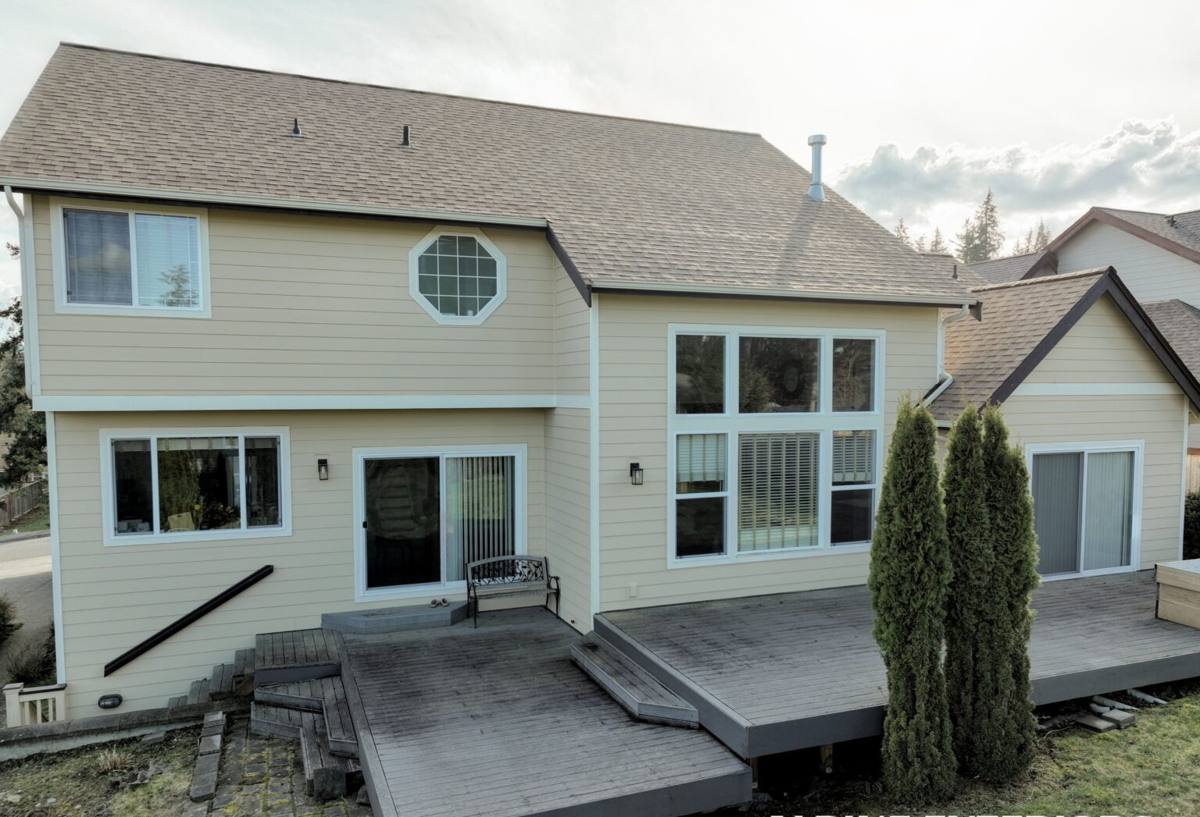
Signs Your Fairhaven Home's Windows Are Failing
Older windows don't always announce themselves with an obvious problem. In a lot of Fairhaven homes, the signs show up gradually and get written off as normal aging. Worth a closer look if you're seeing any of the following:
- Fogging or a persistent haze between panes of a double-pane window — the seal has failed and the insulating gas or air gap is gone
- Soft, discolored, or spongy wood on the interior sill or exterior trim near the window
- A draft you can feel with your hand near the frame on a windy day
- Difficulty opening, closing, or latching a window that used to operate smoothly
- Visible gaps between the window frame and the siding or trim
- Green or black staining on the exterior casing, especially on north- and west-facing walls that see the most driving rain
- A noticeably higher heating bill compared to similar-sized homes nearby
Any one of these on its own might not mean much. Two or three together, especially on a wall that takes direct weather off the bay, usually means moisture has been getting past the window assembly for a while.
What a Correct Window Installation Actually Involves
The Rough Opening Comes First
Before a new window ever goes in, the rough opening needs to be checked for square, level, and soundness. If there's rot in the framing or sheathing from a prior leak, that gets addressed before the new window goes in — installing a good window into a compromised opening just hides the problem for a few more years.
Flashing Is the Real Waterproofing
The window unit is not what keeps water out of your wall — the flashing is. A correct installation integrates flashing tape or a pan flashing at the sill, side flashing that laps over it, and a head flashing or drip cap at the top, all layered so water sheds outward and downward, never inward. Skipping or shortcutting this sequence is the single most common cause of hidden rot we find in older Fairhaven homes.
Sealant Is a Backup, Not the Primary Defense
Caulk plays a role, but it's a wear item — it degrades under UV exposure and the sustained damp of moss season faster than most homeowners expect. A window that relies on a bead of caulk instead of proper flashing to stay dry is a window that will eventually leak.
Insulation and Air Sealing Around the Frame
The gap between the window frame and the rough opening needs to be insulated and air-sealed correctly — not packed too tight, which can bow the frame, and not left open, which invites drafts and condensation. Low-expansion foam or backer rod and sealant, applied properly, keeps the assembly performing the way it's designed to.
Choosing Window Materials for a Salt-Air, High-Moisture Climate
Every frame material handles Fairhaven's conditions a little differently. There's no single "best" choice for every home — it depends on your home's style, budget, and how much maintenance you want to take on.
| Frame Material | How It Handles Salt Air & Moisture | Maintenance | Typical Cost Tier |
|---|---|---|---|
| Vinyl | Won't rust or corrode; performs well in coastal air | Low — occasional cleaning | Budget-friendly |
| Fiberglass | Excellent dimensional stability; resists moisture and salt exposure very well | Low | Mid-range to premium |
| Aluminum-clad wood | Attractive exterior finish, but hardware and any exposed metal need attention near the bay | Moderate | Premium |
| Solid wood | Classic look, but the least forgiving of sustained moisture and moss-season dampness without diligent upkeep | High | Premium |
For homes closest to the water, we generally steer customers toward vinyl or fiberglass frames specifically because they don't corrode and hold up to repeated wetting and drying without the ongoing maintenance that wood or clad-wood assemblies demand. That's a professional recommendation based on how these materials behave in this climate, not a judgment on how any of them look — plenty of Fairhaven homes have architectural character that calls for a specific frame style, and we'll talk through what fits your house.
Our Window Installation Process
Every home is different, but the sequence we follow doesn't change:
- On-site assessment of existing windows, framing condition, and any signs of past water intrusion
- Measurement and window selection based on your home's style, orientation, and exposure to weather
- Careful removal of the old window with attention to what's underneath — this is where hidden rot gets found
- Repair of any damaged framing or sheathing before the new window goes in
- Installation of sill pan and flashing in the correct shingle-lap sequence
- Setting the window plumb, level, and square, then securing per manufacturer specifications
- Air-sealing and insulating the gap between frame and rough opening
- Exterior trim, sealant, and finish work to match your home's existing look
- Final walkthrough and operation check on every window installed
We don't skip steps to move faster. A rushed installation is exactly how moisture problems get built into a wall for the next decade.
Mistakes We Find From Past Installations
A fair amount of the window work we do in Fairhaven is correcting problems from a previous installation rather than replacing windows because they're simply old. The patterns repeat:
- Windows sealed with caulk alone, with no flashing behind the trim — invisible from outside until rot sets in
- Foam insulation packed so tightly around the frame that it bowed the window and affected operation
- Nailing fins face-nailed without any flashing tape underneath, leaving a direct path for wind-driven rain
- Reusing old, compromised flashing instead of replacing it during the window swap
- Mismatched sealant that wasn't rated for the temperature swings and UV exposure of this climate
None of these mistakes are visible from the curb. They show up years later as soft trim, interior staining, or a musty smell near the window — often well after the original installer is long gone.
Why a Crew That Already Works Fairhaven Matters
Fairhaven's mix of older homes, coastal exposure, and Bellingham's building requirements means a window installation here benefits from knowing the neighborhood, not just knowing windows in general. A crew that regularly works this area already understands which walls take the worst of the driving rain, how older framing in this part of Whatcom County tends to be built, and what flashing details actually hold up through a full moss season rather than just looking good on install day.
That local familiarity also means fewer surprises mid-project. Older homes near the water sometimes have framing quirks or prior repairs that aren't obvious until the old window comes out — a crew that's seen it before knows how to handle it without turning a planned one-day job into a drawn-out ordeal.
Keeping New Windows Performing Through Moss Season
A correctly installed window is largely maintenance-free, but a little seasonal attention extends its life even further in this climate:
- Rinse pollen, salt residue, and grime off frames and glass a couple of times a year
- Check exterior caulking annually for cracking or separation, especially after the first winter
- Keep gutters and downspouts clear so runoff isn't sheeting directly across window trim
- Clear moss or organic buildup from nearby trim and siding promptly — trapped moisture against wood trim is what starts rot
- Operate every window a few times through the year so mechanisms don't seize from disuse
None of this is a lot of work, but skipping it is how small issues turn into bigger ones by the time the next moss season rolls around.
If you're noticing drafts, fogged glass, or trim that doesn't look right around your windows, we're happy to take a look. We offer free, no-pressure estimates for window installation in Fairhaven and the surrounding Bellingham area — use the form below to get started.