 Bellingham Siding
 Why Sudden Valley Siding Takes a Different Kind of Beating
Sudden Valley sits in a wooded, lake-adjacent pocket of Whatcom County, and that setting shapes what happens to a home's exterior over time. Mature tree canopy means many lots stay shaded for large parts of the day, which keeps siding damp long after a storm has passed. Add Bellingham's driving rain and the salt-tinged marine air that moves through this part of Western Washington, and you get a climate that never really lets siding fully dry out between weather systems. That combination is exactly what drives moss, algae, and slow moisture damage on homes throughout the area.
None of this means Sudden Valley homes are doomed to constant siding trouble. It means the repairs need to account for the actual conditions on the ground — not just patch what's visible and hope the underlying cause doesn't come back in a year.
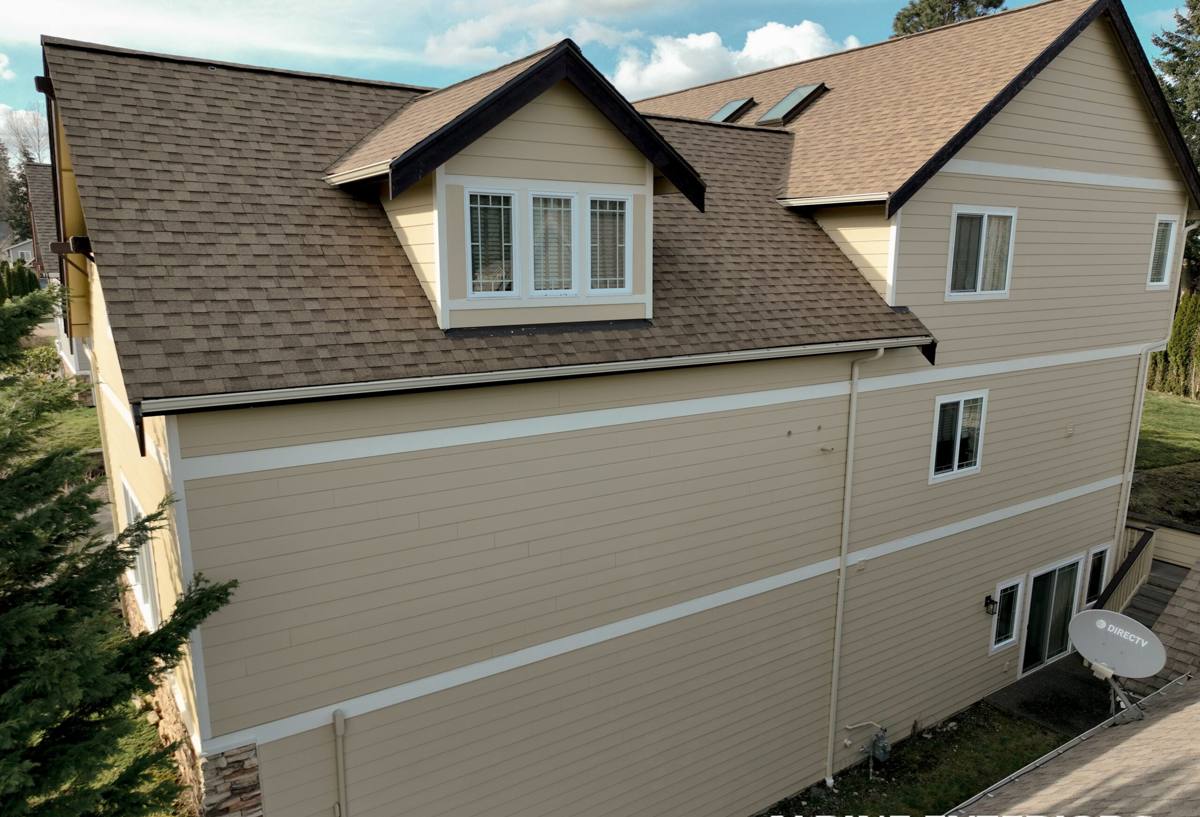
The Siding Problems We See Most Often in This Neighborhood
Every siding material fails differently, but a few patterns show up again and again on homes in shaded, moisture-heavy settings like Sudden Valley:
- Moss and algae staining on north-facing walls and anywhere shaded by trees, which holds moisture against the siding surface
- Caulk failure and gapping at trim, seams, and butt joints, letting water track behind the siding instead of running off it
- Cracked, split, or warped boards from freeze-thaw cycling and long-term moisture absorption, especially on older wood or engineered wood siding
- Delamination and swelling at panel edges on siding products that were never rated for the Pacific Northwest's wet cycle
- Rot at trim, corners, and butt joints where water has been quietly getting behind the siding for months or years before it becomes visible
- Nail pops and loose fasteners from seasonal expansion and contraction of both the siding and the substrate behind it
The tricky part is that most of these problems look cosmetic on the surface. A stained board or a cracked panel corner is usually just the visible symptom of something happening underneath — trapped moisture, a failed flashing detail, or a water barrier that was never properly lapped.
What a Correct Siding Repair Actually Involves
A repair that only addresses what's visible from the driveway is not a real repair — it's a temporary cover-up. Done correctly, siding repair on a Sudden Valley home involves a few non-negotiable steps:
Diagnose Before You Patch
Before any board comes off, the damaged area needs to be opened up enough to see what's actually going on behind it. That means checking the weather-resistive barrier (the house wrap or building paper), the flashing at windows, doors, and butt joints, and the condition of the sheathing underneath. If the siding failed because water was getting behind it, replacing the board without fixing the entry point just resets the clock on the same problem.
Match the Material and the Finish
A repair that doesn't match the surrounding siding in profile, exposure, and color sticks out immediately and can also create new water paths at the seams. On a home clad in James Hardie fiber cement, that means sourcing the correct plank width, texture, and ColorPlus factory finish rather than a close approximation from a different product line.
Reseal and Reflash Properly
Every repair is an opportunity to correct a detail that was done wrong the first time — proper flashing above trim and windows, correctly lapped house wrap, and sealant only where Hardie's installation instructions actually call for it (fiber cement performs best when it's allowed to shed water, not when every seam is caulked shut).
Why We Only Repair With — and Recommend — James Hardie Fiber Cement
We install and repair exclusively with James Hardie fiber cement siding, and that standard applies to repair work too. When a home already has vinyl, LP SmartSide, cedar, or primed spruce siding, repairing it means working within that product's limitations: vinyl can't structurally match old, sun-faded panels; engineered wood siding is sensitive to moisture at cut edges and joints; natural wood requires ongoing painting and sealing to keep water out. None of those are defects so much as trade-offs, but they matter a great deal in a climate that stays wet as long as Bellingham's does.
Fiber cement doesn't absorb water the way wood-based products can, it won't warp or buckle from moisture cycling, and it holds paint and factory-applied ColorPlus finishes far longer than primed wood siding. For a shaded, moisture-prone setting like Sudden Valley, that durability is the difference between a repair that lasts and one you're revisiting in a few years. When homeowners are already dealing with siding damage on a non-Hardie product, we'll talk honestly about whether a targeted repair makes sense or whether it's time to start transitioning toward a material built for this climate.
Patch Repair vs. Full Section Replacement
Not every siding problem needs the same level of intervention. The right approach depends on how much of the wall is affected and what's found once the damaged area is opened up.
| Factor | Patch Repair | Full Section Replacement |
|---|---|---|
| Extent of damage | Isolated to one or two boards | Multiple courses or a whole wall section |
| Underlying cause | Confirmed to be surface-level (impact damage, isolated caulk failure) | Moisture intrusion, rot, or a failed water barrier over a larger area |
| Color matching | Straightforward if the original ColorPlus batch or a close match is available | Easier — an entire section is refinished or replaced together |
| Long-term cost | Lower upfront, but only if the root cause was correctly identified | Higher upfront, lower risk of repeat repairs |
| Best for | Newer siding with isolated, well-understood damage | Older siding, widespread moisture history, or repeated past repairs in the same area |
Actual cost depends on the size of the damaged area, how many courses are affected, and whether hidden rot or sheathing damage turns up once the wall is opened. We'll always tell you plainly which category your situation falls into before any work starts.
Our Siding Repair Process
- On-site inspection — we look at the visible damage and check surrounding areas for signs of a related problem, not just the spot you called about
- Open and assess — the affected area is opened enough to inspect the house wrap, flashing, and sheathing before we quote a fix
- Honest scope and options — you get a plain explanation of what caused the damage, what a patch would and wouldn't solve, and whether a full section replacement is the smarter call
- Correct materials — matching Hardie plank profile, exposure, and ColorPlus finish, with proper flashing and house wrap detailing behind it
- Install to spec — fastener placement, clearances, and sealant use follow James Hardie's installation requirements, not shortcuts
- Cleanup and walkthrough — job site cleared of debris and old material, with a final look at the repair together before we call it done
Signs Your Sudden Valley Home Needs a Siding Inspection
- Visible moss or dark algae streaking on shaded or north-facing walls
- Cracked, split, or bulging siding panels
- Caulk that's cracked, shrunk, or pulled away from trim and joints
- Soft or spongy spots when you press gently on the siding or trim
- Paint or finish that's peeling, bubbling, or discoloring unevenly
- A musty smell near an exterior wall inside the home
- Siding that feels damp to the touch well after the rain has stopped
Any one of these on its own might be minor. Several appearing together, especially in a shaded or lake-facing part of the house, usually means moisture has been finding its way behind the siding for a while.
Why It Matters to Hire a Crew That Already Works Sudden Valley
Siding repair isn't one-size-fits-all, and a crew that regularly works this neighborhood already knows what to expect: which wall orientations hold moss the longest, how shaded lots change the drying time after a storm, and what condition to expect from siding of a given age given the amount of tree cover on a lot. That familiarity means fewer surprises once a wall is opened up, and a repair plan built around how this specific area actually behaves — not a generic checklist.
It also matters for access and logistics. Wooded, sloped lots common around Sudden Valley and the greater Bellingham area sometimes call for different staging and equipment placement than a flat, open lot elsewhere in Whatcom County. A crew that's done this work here before plans for that from the start instead of figuring it out on arrival.
Get a Straight Answer About Your Siding
If you're seeing moss, cracked panels, or soft spots on your Sudden Valley home, it's worth getting a real diagnosis before deciding between a patch and something more involved. We offer free, no-pressure estimates — we'll look at what's actually going on, explain it in plain terms, and give you an honest recommendation, whether that's a targeted repair or a longer-term plan. Fill out the form below to get started.