 Bellingham Siding
 Why Windows Wear Differently in Sudden Valley
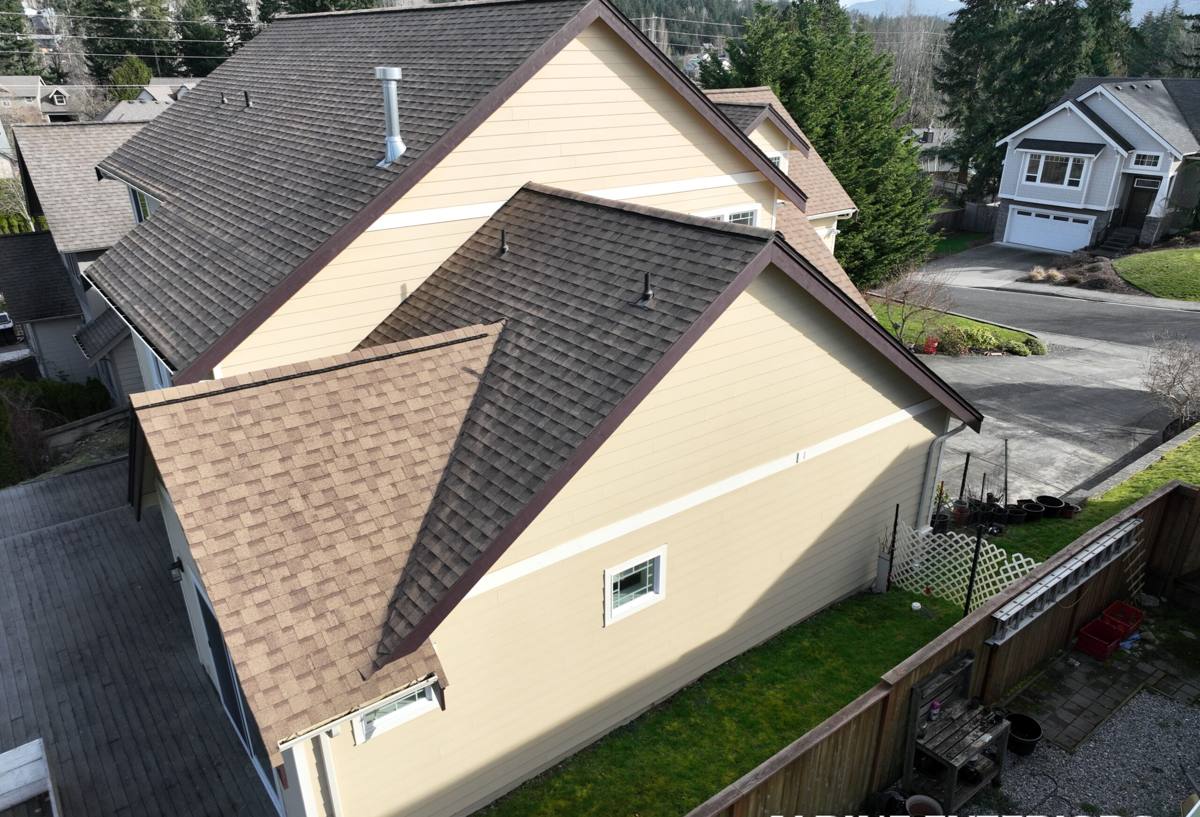
Sudden Valley sits in a pocket of Whatcom County that behaves a little differently than the rest of Bellingham. Most of the neighborhood is built into forested, sloped lots around Lake Whatcom, and that tree canopy changes everything about how a house dries out after weather moves through. In town, a west-facing wall gets a few hours of direct sun to bake off moisture after a storm. On a shaded Sudden Valley lot, that same wall might stay damp for days. Add in the lake's own humidity and the long stretch of gray months that define our regional climate, and you get windows that hold moisture against their frames far longer than a typical suburban home.
That matters because window failure is almost never about the glass. It's about what happens at the frame, the sill, and the flashing underneath — the parts that never get seen until something goes wrong. A window that would last 20 years on an open, sunny lot in south Bellingham can start showing rot, fogging, or soft trim in half that time on a shaded Sudden Valley property if it wasn't installed with that moisture load in mind.
What the Local Climate Actually Does to a Window
Driving Rain and Wind-Driven Moisture
Whatcom County storms don't just fall straight down — wind off the water pushes rain sideways into wall assemblies, and older or poorly flashed windows take that hit directly at the top and side jambs. Over time, water finds any gap in the seal and works its way behind the trim.
A Long Moss and Algae Season
Shaded, damp surfaces are exactly what moss and algae need to take hold, and Sudden Valley's tree cover gives them a long runway — often eight or nine months of the year with enough moisture to sustain growth on siding, trim, and window sills. Moss holds water against wood and vinyl surfaces, which accelerates rot and finish breakdown right at the window perimeter.
Condensation from Shade and Humidity
Homes tucked under heavy tree cover also see more interior condensation on older, single-pane or poorly sealed windows, since the glass stays colder longer without direct sun. That condensation runs down the glass and pools on the sill, which is often the first place we find soft wood on an older Sudden Valley home.
Signs a Sudden Valley Home Needs Window Replacement
Because so much of the damage happens out of sight, most homeowners notice a problem only after it's been building for a while. Look for these signs before scheduling a closer inspection:
- Fogging or a milky haze between the panes of a double-pane window — the seal has failed and the gas fill is gone
- Soft, spongy, or darkened wood at the sill or lower corners of the frame
- Visible moss or dark green staining creeping onto the window trim itself, not just the siding around it
- Drafts you can feel with a hand near the frame on a windy day, even with the window latched
- Difficulty opening, closing, or locking a window that used to operate smoothly
- Paint or finish peeling in a pattern that follows the frame outline rather than the whole wall
- A noticeably colder room in winter compared to others with similar sun exposure
Any one of these on its own might just need a repair. Several together, especially on a shaded or lake-facing wall, usually mean the window assembly has been taking on water for a while and full replacement is the more honest fix.
What a Correct Window Replacement Actually Involves
Removal and Hidden Damage Inspection
Pulling the old window is where we learn the most. This is the point where we can see the actual condition of the framing, sheathing, and any existing flashing — not just the visible trim. On shaded Sudden Valley homes, this step regularly turns up moisture damage that wasn't visible from outside, and it's far cheaper to address it now than to seal a new window over a wet, rotting cavity.
Flashing and Water Management
This is the single most important part of the job in our climate. Proper flashing directs any water that gets past the window — and some always will, eventually — back out of the wall instead of down into it. We integrate flashing tape and drainage planes so the assembly sheds water even during driving, wind-blown rain, which is exactly the condition Sudden Valley's exposed and lakeside lots see regularly.
Insulation and Air Sealing
Gaps around the rough opening get properly insulated and air-sealed, not just stuffed with fiberglass. This cuts drafts and also reduces the cold-glass condensation problem that's more common on shaded walls that never get a direct sun assist in drying things out.
Finish Work That Matches the House
Trim, caulking, and paint or stain get finished to match the home, with attention to keeping horizontal surfaces sloped so water sheds away from the sill rather than sitting on it.
Choosing a Window Frame for a Shaded, Damp Lot
Frame material matters more here than it would on a dry, sunny lot elsewhere in the county. Every material has real trade-offs, and our job is to be straight with you about them rather than push whatever has the best margin.
| Frame Material | How It Handles Shade & Moisture | Maintenance | Typical Trade-Off |
|---|---|---|---|
| Vinyl | Won't rot; performs well in constant damp | Low — occasional cleaning | Less structural rigidity for very large openings |
| Fiberglass | Excellent moisture and temperature stability | Low | Higher upfront cost than vinyl |
| Wood-clad | Attractive interior wood look, but exterior cladding must be sealed perfectly to keep moisture from reaching the wood core | Higher — finish and seal need periodic attention | More installation-sensitive in a shaded, wet setting |
| Aluminum | Durable but conducts cold, increasing condensation risk on shaded walls | Low | Least energy-efficient of the common options |
For most Sudden Valley homes, we lean toward vinyl or fiberglass frames precisely because they don't give moisture a foothold the way an exposed wood component can. Wood-clad windows can still be the right call for a specific architectural look, but we'll walk you through what that means for long-term upkeep on a lot that doesn't get much sun.
Glass Package Considerations
Low-E coatings and argon or krypton gas fills help with energy performance everywhere, but on a shaded lot they also help reduce the interior surface from getting cold enough to sweat. That's a meaningful benefit here, not just an efficiency upsell — less condensation on the glass means less water finding its way to the sill and trim over time.
Our Process for Sudden Valley Projects
- Free on-site assessment — we walk the exterior and interior of each window with you, checking for the signs listed above and noting shade exposure and drainage around the foundation.
- Honest scope and written estimate — you'll know up front which windows genuinely need replacement versus which could hold with a repair, and why.
- Precise measurement and ordering — we measure for the actual rough openings on your home rather than assuming standard sizes, since older Sudden Valley homes often have settled or non-standard framing.
- Careful removal and structural check — as noted above, this is where hidden moisture damage gets caught and addressed.
- Installation with full flashing and air-sealing detail — done to handle wind-driven rain, not just installed to pass a quick visual check.
- Finish work and cleanup — trim, caulking, and site cleanup so the job looks finished, not just functional.
- Walkthrough — we go over operation and care with you before we consider the job done.
What Affects the Cost of a Sudden Valley Window Job
There's no honest way to quote a firm price without seeing the home, but these are the factors that consistently move the number up or down:
| Factor | Why It Matters |
|---|---|
| Number and size of windows | Larger openings and whole-house projects have different labor and material scaling than a single-window swap |
| Frame material chosen | Vinyl, fiberglass, and wood-clad carry different material costs, as shown above |
| Condition of the existing framing | Hidden rot found during removal adds carpentry time before the new window can go in |
| Access and site conditions | Sloped, wooded lots and limited driveway or staging space can add time compared to a flat, open lot |
| Second-story or hard-to-reach openings | Additional equipment and safety setup adds labor |
| Trim and exterior finish work | Matching existing wood trim or siding detail takes more time than a plain, simple reveal |
We'd rather walk your property and give you real numbers than throw out a broad range that doesn't reflect your actual home.
Why Local Experience in Sudden Valley Matters
Sudden Valley isn't like a flat, open subdivision. Many lots are wooded and sloped, driveways and staging areas are tighter, and the private roads that serve the community mean access and parking need to be planned rather than assumed. A crew that has already worked in the neighborhood knows how to stage material and equipment without turning your project into a logistics headache for you or your neighbors.
Local experience also means we've already seen how these specific homes age under Whatcom County's wet, shaded conditions — which framing details tend to fail first, which walls take the worst of the wind-driven rain, and where moss gets a grip fastest. That's the kind of pattern recognition that only comes from doing this work on Sudden Valley homes specifically, not just siding and window jobs somewhere else in Bellingham.
Keeping New Windows Performing Through Moss Season
A correctly installed window shouldn't need much attention, but a little seasonal care goes a long way on a shaded lot:
- Rinse sills and trim during the wetter months to keep moss and algae from establishing on the frame itself
- Clear gutters and downspouts near windows so overflow doesn't run down the wall and pool at the sill
- Trim back branches or foliage that keep a window in constant shade and damp, if that's practical on your lot
- Check and refresh exterior caulking every couple of years, especially on any wood-clad trim
- Watch for condensation patterns each winter — a sudden increase can be an early sign a seal is starting to fail
None of this is heavy maintenance. It's the same basic upkeep any home in our climate benefits from, just with a little more attention paid to the shaded sides of the house.
Get a Straight Answer for Your Home
Every Sudden Valley property handles shade, moisture, and moss a little differently depending on tree cover, orientation, and how it was originally built. Rather than guess from a photo or a general price range, we'd rather walk the property with you, look at what's actually happening at your windows, and give you a clear, honest assessment of what's needed and what it costs. If you'd like that conversation, use the form below to request a free, no-pressure estimate.