 Bellingham Siding
 Building Decks for Sudden Valley's Wooded, Lakeside Terrain
Sudden Valley sits on the eastern shore of Lake Whatcom, tucked into forested, hilly lots that are part of what makes the community so desirable — and part of what makes deck-building here different from a flat, open lot on the valley floor. Mature tree canopy, sloped yards, and proximity to the lake mean decks in this neighborhood deal with more shade, more standing moisture, and more organic debris than decks built out in open Bellingham subdivisions. A deck built with generic, one-size-fits-all specs will show its age here faster than it should.
We build and replace decks throughout Whatcom County, and Sudden Valley is one of the areas where the difference between "built to code" and "built for this specific lot" shows up clearly within the first few wet seasons. This page covers what that actually means in practice — material choices, structural details, and the maintenance realities specific to shaded, lakeside properties.
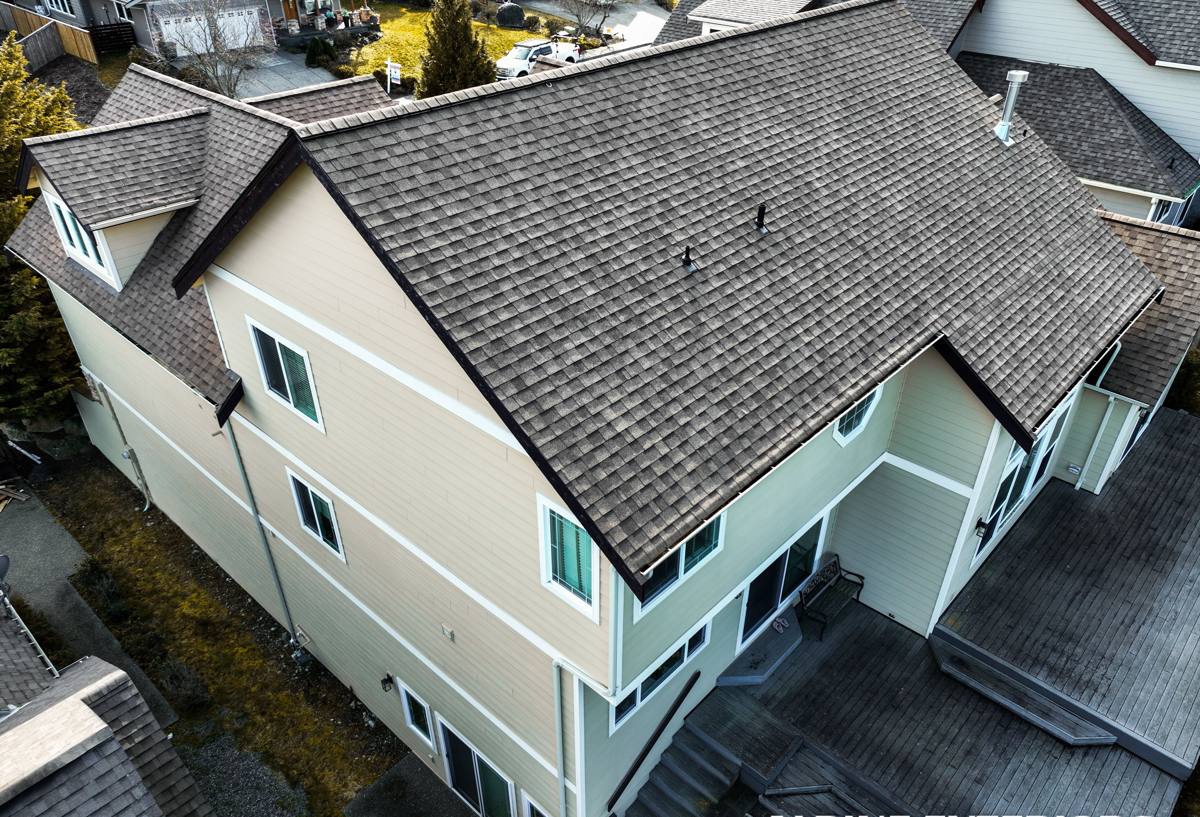
What Sudden Valley's Climate and Terrain Do to a Deck
Bellingham and greater Whatcom County get a long, wet fall-through-spring stretch, with driving rain that isn't always vertical — wind off the Sound and the Cascades foothills pushes moisture sideways into structures, and salt-tinged marine air adds to the corrosion load on any exposed metal. Sudden Valley layers a few extra site-specific factors on top of that regional baseline:
- Heavy shade from mature trees slows drying time after every rain, keeping deck boards and framing damp for days at a stretch instead of hours.
- Long moss season — moss and algae take hold fastest on shaded, north-facing, or tree-covered decking, and once established they hold moisture against the wood surface even between storms.
- Organic debris — needles, leaves, and cone litter collect in gaps between boards and around posts, which traps moisture and accelerates rot if it isn't cleared.
- Sloped lots common throughout Sudden Valley often mean taller support structures, more complex footings, and drainage that has to be engineered rather than assumed.
- Proximity to the lake raises ambient humidity near the water, which extends the number of days per year that a deck surface sits damp.
None of this means a deck can't hold up beautifully in Sudden Valley — it means the build has to account for slower drying, more organic contact, and structural loads a flat, sunny lot doesn't have to deal with.
Decking Material: What Holds Up Under Shade and Moss Pressure
Composite and PVC Decking
For most shaded Sudden Valley lots, we lean toward composite or PVC decking. Modern composites are engineered to resist moisture absorption and won't rot, splinter, or feed fungal growth the way wood fibers can — but they aren't maintenance-free. Moss and algae still grow on any decking surface that stays damp and shaded long enough, composite included. The difference is that composite surfaces are far easier to clean without damaging the material, and they don't need annual staining or sealing to stay protected.
Wood Decking
Cedar and pressure-treated wood remain solid choices for homeowners who want a traditional look, and they cost less upfront. The trade-off in a shaded, moss-prone setting is maintenance discipline: wood decking in these conditions needs more frequent cleaning, more attentive sealing, and closer inspection for soft spots where moss has been sitting against the grain. We're honest with clients about this trade-off up front — wood can absolutely work in Sudden Valley, but it asks more of the homeowner over the years than composite does.
A Straightforward Comparison
| Factor | Wood (Cedar / PT) | Composite / PVC |
|---|---|---|
| Upfront cost | Lower | Higher |
| Moss/algae resistance | Needs regular sealing to resist | Won't absorb moisture into the board itself |
| Cleaning in shaded areas | Careful pressure-washing or scrubbing | Easier, more forgiving cleaning |
| Annual maintenance | Cleaning + periodic staining/sealing | Periodic cleaning only |
| Expected lifespan (well-maintained) | 15–20 years | 25+ years |
| Look | Natural wood grain | Wood-look, more color/finish consistency |
There's no universally "right" answer — it depends on how much upkeep a homeowner wants to commit to and what look matters most. We walk through this trade-off honestly on every Sudden Valley estimate rather than pushing one material as a default.
Framing and Fasteners: Where Corrosion and Rot Actually Start
Most deck failures don't start at the decking surface — they start underneath, at the framing, ledger connections, and fasteners, where moisture sits unseen for years. In a shaded, damp environment like Sudden Valley, this matters more than usual.
- Ledger board attachment — where the deck ties into the house is the single most important structural connection and the most common point of moisture intrusion if flashed incorrectly. We flash this connection properly rather than relying on caulk or sealant alone.
- Joist and beam material — pressure-treated framing rated for ground contact where soil or vegetation contact is likely, given how close some Sudden Valley yards sit to natural landscaping and tree cover.
- Fasteners and hardware — coated or stainless structural screws and connectors rated for treated lumber and marine-influenced air, so galvanic corrosion doesn't quietly weaken joist hangers and post bases over a decade.
- Post footings — set below frost depth and sized for the actual slope and soil conditions of the lot, not a generic footing spec.
This is the part of a deck build that's invisible once the project is finished — which is exactly why it's the part worth getting right the first time.
Drainage and Airflow: The Details That Prevent Moss and Rot
On a shaded, sloped, tree-covered lot, how water moves off and away from a deck matters as much as what the deck is built from. A few details we treat as non-negotiable on Sudden Valley builds:
- Proper board spacing so water and debris drain through rather than pooling on the surface.
- Adequate clearance and airflow underneath the deck so the underside can dry between rain events instead of staying perpetually damp.
- Grading and, where needed, simple drainage solutions around footings so water isn't channeling toward the structure from higher ground on a sloped lot.
- Positioning and railing choices that account for shade patterns, so at least part of the deck gets enough sun exposure to dry reasonably well.
A deck that's built without these details might look fine on installation day and start showing moss, soft boards, or staining within the first one or two wet seasons — which is a common story we hear from homeowners calling about a deck that's only a few years old.
Railings and Structure on Sloped Lots
Because so many Sudden Valley properties sit on grade changes, deck height and railing requirements come up more often here than on flat lots elsewhere in Bellingham. Taller decks trigger different code requirements for guardrail height, baluster spacing, and stair geometry, and taller support structures need more careful bracing against wind and seasonal ground movement. We design the structure to the actual site — the slope, the soil, and the elevation change — rather than adapting a standard flat-lot plan after the fact.
Our Deck Building Process
- On-site assessment — we walk the actual lot, note sun and shade patterns, slope, tree cover, and how water currently moves across the yard.
- Design and material discussion — honest conversation about wood versus composite trade-offs for your specific shade and maintenance tolerance, sizing, and layout.
- Permitting — Whatcom County and applicable HOA requirements (Sudden Valley has its own community association standards) are handled as part of the project, not left for the homeowner to sort out.
- Footings and framing — footings set to depth and load, framing and hardware selected for moisture and corrosion resistance.
- Ledger flashing and structural connections — the invisible work done correctly, inspected before decking goes down.
- Decking and railing installation — spacing, fastening, and railing detail work finished to spec.
- Final walkthrough — we go over basic maintenance expectations for your specific material and site conditions before we consider the job done.
What to Expect Cost-Wise
Deck costs vary widely based on size, height, material, and site complexity — a flat, easy-access lot costs less to build on than a sloped, tree-covered one with a taller substructure. Composite decking costs more upfront than wood but less over its lifetime once you factor in sealing and staining. Rather than quoting a number that won't reflect your actual lot, we provide a firm, itemized estimate after seeing the site, so you know exactly what you're paying for and why.
Maintaining a Deck in Sudden Valley's Conditions
Whatever material you choose, a few habits go a long way toward getting the full expected lifespan out of a Sudden Valley deck:
- Sweep leaves, needles, and debris off the surface and out of board gaps regularly, especially in fall.
- Rinse or soft-wash moss and algae off the surface before it has a chance to establish, rather than after it's already discolored the wood or composite.
- Trim back overhanging branches where reasonable to let more light and airflow reach the deck surface.
- For wood decking, reseal on the manufacturer's recommended schedule — don't stretch it a season or two "because it still looks okay."
- Check the underside and ledger connection once a year for early signs of moisture staining or soft wood.
Why Local Experience with Sudden Valley Lots Matters
A crew that mostly builds decks on flat, sunny lots elsewhere in Bellingham can still build a structurally sound deck in Sudden Valley — but they're more likely to miss the details that matter here: how much drainage a sloped, shaded lot actually needs, how much airflow clearance a tree-covered deck needs to dry out between storms, and how HOA and site conditions specific to this community affect the plan. We work in Whatcom County day in and day out, and Sudden Valley's mix of slope, shade, and lake-adjacent humidity is a known quantity for us, not a surprise we're solving for the first time on your project.
If you're planning a new deck or replacing one that's showing moss, soft spots, or age in Sudden Valley, we're happy to come take a look and give you a straightforward, no-pressure estimate using the form below.