 Bellingham Siding
 Roofing in Sudden Valley: A Different Set of Conditions
Sudden Valley sits up against Lake Whatcom, tucked into tree cover on rolling terrain east of Bellingham. That combination — lake-effect moisture, heavy shade from mature conifers, and Whatcom County's long wet season — puts a different kind of load on a roof than a house out in the open. Shingles here spend more hours per day damp than shingles on a treeless lot across town, and that changes how a roof ages, where it fails first, and what a correct installation needs to account for.
We install and replace asphalt shingle roofs for homeowners throughout the Bellingham area, and Sudden Valley is one of the neighborhoods where the difference between a roof that's "installed" and a roof that's installed correctly for the site really shows up. This page covers what that means in practice.
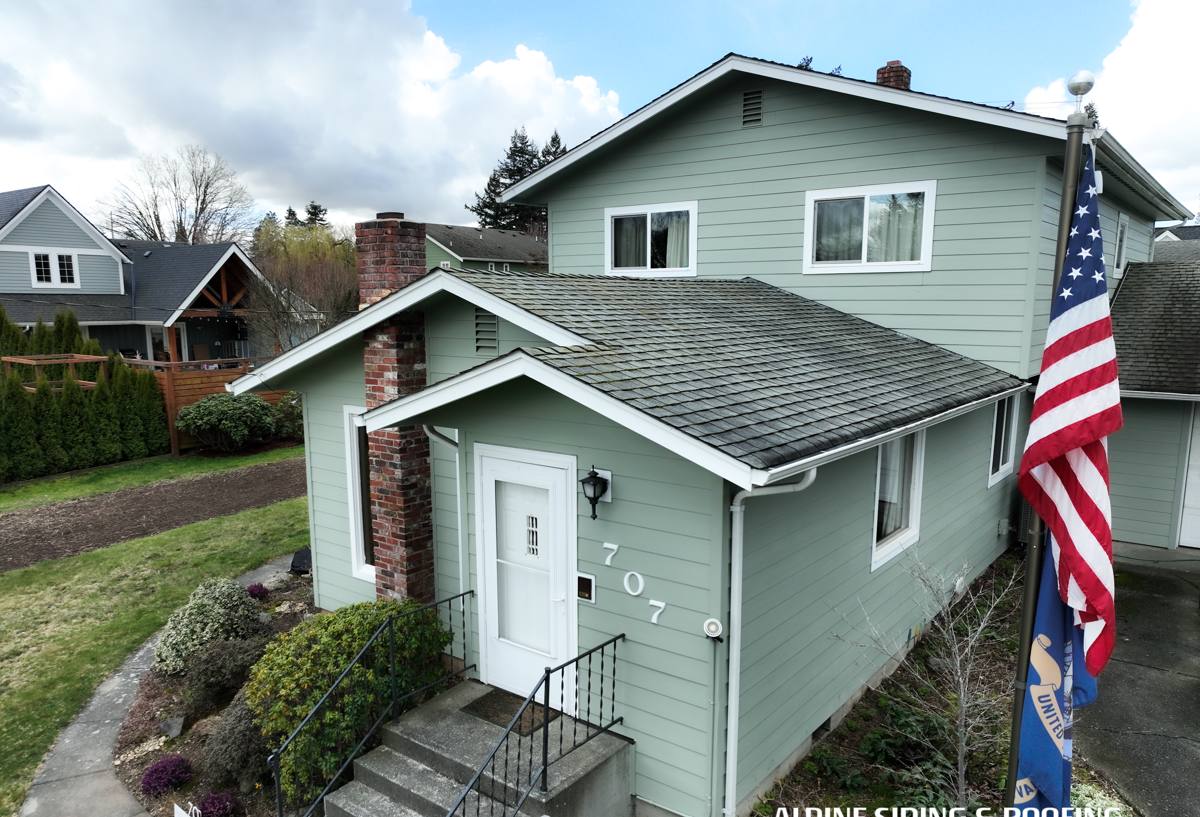
What the Local Climate Actually Does to a Shingle Roof
Shade and Moss
Tree cover keeps a lot of Sudden Valley roofs shaded most of the day, which sounds like a benefit until you consider what shade does to drying time. A roof in full sun sheds moisture within a few hours of a rain event. A shaded roof under a canopy of firs and cedars can stay damp for a day or more, especially on north-facing slopes. That extended dampness is exactly what moss and algae need to take hold, and once moss establishes itself under shingle tabs, it lifts them slightly and holds water against the mat — which is how granule loss and premature aging start.
Driving Rain and Wind-Driven Moisture
Storms coming off the water can push rain sideways rather than straight down, which forces water up and under shingle edges, around flashing, and into any gap that a fair-weather installation would get away with. This is less about total rainfall and more about direction and force — details like starter strip placement, nail patterns, and flashing laps matter more here than they would on a roof that only ever sees straight-down rain.
Salt Air
Being near Bellingham Bay and the Puget Sound air system means metal roof components — flashing, drip edge, nail heads, vent stacks — are exposed to a mild but steady dose of salt-laden air. Lower-grade or improperly coated metal will show corrosion years before it would inland. It's not severe like a beachfront property further south, but it's enough that we don't treat metal component choice as an afterthought.
How This Shows Up on Sudden Valley Roofs Specifically
- Moss buildup concentrated on shaded, north- and east-facing roof slopes, often worse near tree lines
- Granule loss in valleys and low-slope sections where water sits longer before draining
- Soft or discolored decking under areas where moss has been left to grow for multiple seasons
- Rust starting at cut edges of flashing or at exposed nail heads before the rest of the metal shows wear
- Gutter and downspout strain from needle and leaf debris common on wooded lots, which backs water up under the shingle edge if it isn't kept clear
None of this means Sudden Valley homes need exotic materials. It means the standard asphalt shingle assembly needs to be built with these specific stressors in mind, not just installed to a generic spec.
What a Correct Asphalt Shingle Job Includes Here
Deck Inspection Before Anything Goes Down
We don't shingle over a deck we haven't looked at. On homes with any history of moss or slow drainage, we check for soft spots, delamination, and nail pull-through before the new underlayment goes on. Catching a damaged section of decking now is far cheaper than dealing with it as a leak later.
Underlayment Suited to Wet-Shade Conditions
A synthetic underlayment with good water-holdout, backed by self-adhered membrane at eaves, valleys, and any low-slope transitions, gives the roof a second line of defense for the days when wind-driven rain gets past the shingle surface. This matters more on shaded, tree-covered roofs than on open, sun-exposed ones.
Flashing and Metal Components
We use corrosion-resistant flashing at all penetrations, valleys, and wall transitions, with attention to how each piece laps so wind-driven rain can't work its way backward under a joint. Given the salt-air exposure in this area, cutting corners on metal quality is one of the first places a roof shows its age.
Ventilation That Matches the Site
Shaded, moisture-heavy roofs benefit from balanced intake and exhaust ventilation to help the deck dry from underneath, not just the shingle surface drying from above. Poor ventilation traps moisture in the attic, which accelerates the same problems — moss, rot, granule loss — from the inside out.
Shingle Selection
Algae-resistant (AR) shingle lines, which use copper-containing granules to slow moss and algae growth, are worth the modest upcost on shaded lots like most of Sudden Valley. We'll walk through the realistic trade-offs — AR shingles reduce staining and slow moss regrowth but don't eliminate the need for occasional roof cleaning, and they cost somewhat more than standard granule lines.
Cost Factors for a Sudden Valley Roof Replacement
Every quote depends on the specific roof, but the factors that move the number most in this neighborhood tend to be the same handful:
| Factor | Why It Matters Here |
|---|---|
| Tree cover and access | Overhanging branches often need trimming or protection before tear-off; steep, wooded driveways can affect equipment staging |
| Roof pitch and complexity | Valleys, dormers, and multiple roof planes all add flashing work, which matters more under driving-rain conditions |
| Existing moss/moisture damage | Soft decking found during tear-off adds replacement material and labor not visible from the ground |
| Shingle grade (standard vs. AR) | Algae-resistant shingles cost more per square but reduce moss-related maintenance on shaded slopes |
| Ventilation upgrades | Adding or correcting intake/exhaust venting is easier to price during a full re-roof than after |
| Number of layers to remove | Tear-off of multiple existing layers adds disposal and labor cost versus a single-layer strip |
We give straightforward, itemized estimates rather than a single lump number, so you can see exactly what's driving the cost on your specific roof.
Our Process for a Sudden Valley Roofing Project
- On-site inspection. We walk the roof and check the attic where accessible, looking specifically for moss concentration, soft decking, and ventilation issues common to shaded, lake-adjacent lots.
- Written estimate. A clear breakdown of materials, labor, and any deck repair or ventilation work identified — no surprise change orders for conditions we should have caught up front.
- Tear-off and deck check. Full removal of old roofing, with the deck inspected board by board before anything new goes down.
- Underlayment and flashing installation. Self-adhered membrane at vulnerable areas, synthetic underlayment across the field, corrosion-resistant metal at every penetration and transition.
- Shingle installation. Correct nailing pattern and exposure for the pitch and wind exposure of your specific roof, not a one-size approach.
- Final walkthrough. We review the completed roof with you, including basic guidance on moss prevention and what to watch for given your tree cover.
Maintenance That Actually Extends Roof Life Here
A well-installed roof in Sudden Valley still benefits from a bit of seasonal attention, given the tree cover and moisture:
- Keep gutters and downspouts clear of needles and leaves, especially heading into fall storms
- Have moss growth removed gently (no pressure washing directly on shingles) before it spreads under tabs
- Trim back branches that overhang the roof to reduce shade and debris buildup
- Check attic ventilation isn't blocked by insulation or storage that's crept into soffit vents
- Have a roof inspected after any major windstorm, particularly if debris hit the roof directly
Why Local Experience Matters for This Job
A roofing crew that mostly works drier, sunnier parts of Whatcom County can still install a technically sound roof — but they may not default to the underlayment coverage, flashing grade, or ventilation approach that a shaded, lake-adjacent, salt-air-exposed roof actually needs unless they're used to seeing these conditions regularly. We work throughout the Bellingham area, including Sudden Valley and other Lake Whatcom-adjacent neighborhoods, and we build our specs around what we've seen hold up here versus what tends to need early attention.
That's really the whole case for hiring a crew with local reps under a similar climate: it's not a different roof, it's the same roof built with the right defaults for the site it's going on.
Ready to Talk Through Your Roof?
If you're dealing with moss buildup, a roof that's due for replacement, or just want an honest read on how many years you have left before it needs attention, we're happy to take a look. Reach out for a free, no-pressure estimate using the form below — we'll walk the roof, explain what we find in plain terms, and give you a clear, itemized quote with no obligation.