 Bellingham Siding
 Roof Repair Built for the Sudden Valley Microclimate
Sudden Valley sits in a pocket of Whatcom County that behaves a little differently than the rest of Bellingham. The tree canopy is heavier, the lake air stays damp longer into the day, and a lot of rooflines here spend a good part of the year in partial shade. That combination changes how a roof ages. It's not just about withstanding a storm — it's about surviving months of low sun angle, standing moisture, and organic buildup that never fully dries out between rain events.
We've repaired roofs across Bellingham and the surrounding Whatcom County communities long enough to know that a roof problem in Sudden Valley usually isn't the same problem you'd find on an open, sun-exposed lot closer to downtown. Moss takes hold faster here. Needle and leaf litter from surrounding conifers and deciduous trees collects in valleys and behind chimneys. And the driving rain that comes through the region during fall and winter storms finds every weak seam, nail pop, or lifted shingle edge and turns it into a leak path. Salt-laden air moving inland off the Sound adds a slower, steadier problem: corrosion on exposed metal flashing, fasteners, and vent boots over time.
A roof repair that ignores this local reality — patching the visible symptom without addressing the moss, moisture, or ventilation issue underneath — tends to fail again within a season or two. That's the gap we aim to close.
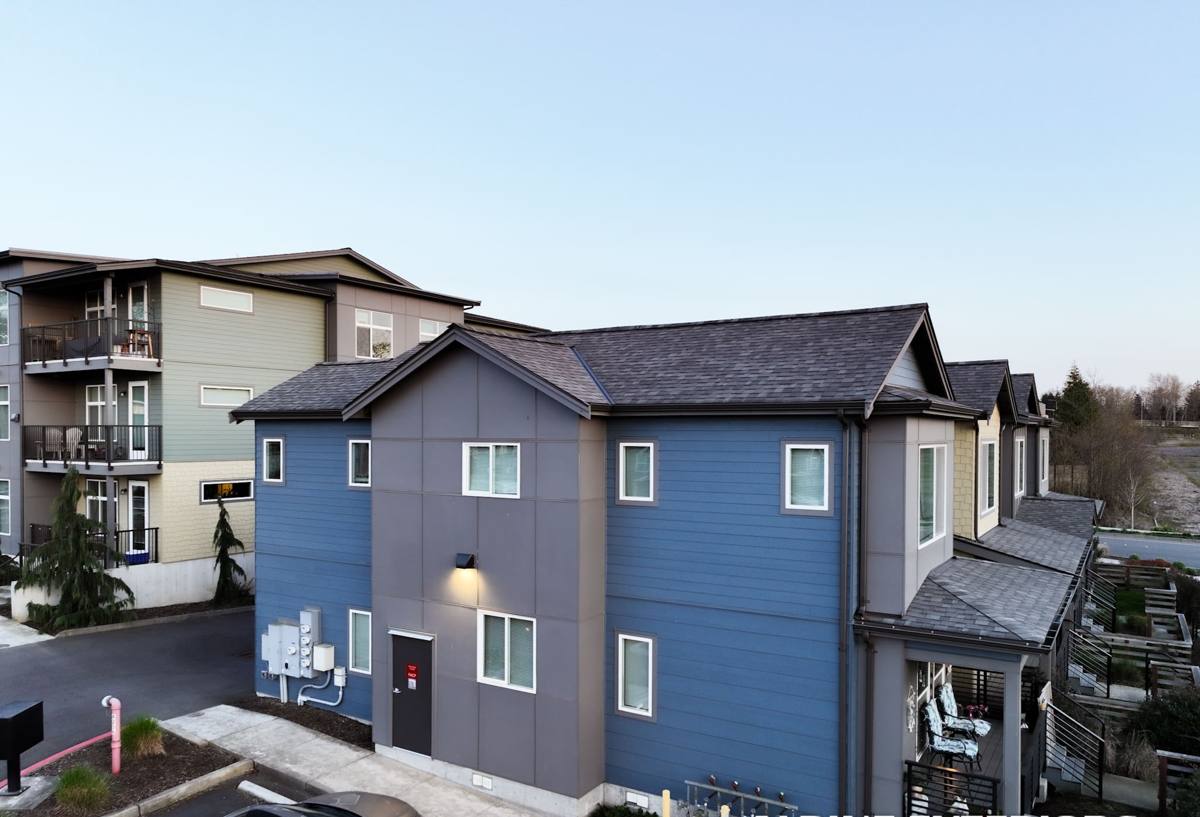
Signs Your Sudden Valley Roof Needs Repair
Most roof damage doesn't announce itself with a dramatic leak. It shows up gradually, and homeowners in shaded, tree-heavy areas often miss the early signs because the roof "looks fine" from the ground.
- Moss or algae streaking on shaded slopes, especially north-facing sections and areas under overhanging branches
- Granules collecting in gutters or at downspout outlets — a sign shingles are wearing thin
- Soft or discolored ceiling patches, particularly near chimneys, skylights, or where two rooflines meet
- Curling, cupping, or lifted shingle edges, often first visible near ridges and eaves
- Rust staining or visible corrosion around flashing, vent pipes, or metal valleys
- Debris buildup in valleys that holds water against the roof surface for days after a storm
- Daylight visible through the attic roof deck, or damp insulation near the eaves
If you're seeing more than one of these, it's worth having someone look at the whole roof system, not just the spot that's bothering you — moss and moisture problems rarely stay confined to one section.
What's Actually Causing Most of the Damage
Moss and Organic Growth
Shaded, moisture-retentive roof sections are exactly where moss thrives, and Sudden Valley's tree cover creates a lot of that kind of surface. Moss isn't just cosmetic — its root structures work into shingle layers and lift tabs, breaking the seal that keeps water out. Left long enough, it holds moisture against the roof deck around the clock, which accelerates rot underneath.
Debris in Valleys and Gutters
Needles, cones, and leaf litter collect fastest in roof valleys and behind chimneys — the same low points where water is supposed to drain freely. When debris dams that flow, water backs up under shingles instead of running off, especially during the region's heavier fall and winter rain events.
Salt Air and Metal Fatigue
Whatcom County's proximity to the Sound means airborne salt reaches inland further than most homeowners expect. Over years, it accelerates corrosion on exposed fasteners, flashing, and vent boot collars. A flashing seam that's corroding quietly is a much more common leak source than most people assume.
Ventilation Gaps
Homes with heavy shade and cooler ambient air can trap more moisture in the attic than sun-exposed homes, simply because less solar heat drives that moisture back out. Poor ventilation compounds every other issue on this list — it's often the reason a "small" leak turns into deck rot faster than expected.
What a Correct Roof Repair Involves
A roof repair done right isn't just swapping out a few shingles. It's a diagnostic process first, then a targeted fix.
- Full-slope inspection — not just the reported problem area. We check valleys, flashing, boots, ridge lines, and the attic side of the deck.
- Source identification — tracing water stains back to their actual entry point, which is often several feet from where the stain appears inside.
- Moss and debris removal — cleared by hand, not pressure-washed, since high-pressure washing strips granules and shortens shingle life.
- Deck assessment — checking for soft spots or rot once the surface layer is pulled back, before anything new goes down.
- Repair execution — replacing shingles, resealing or replacing flashing, correcting fastener issues, and restoring proper water shedding at valleys and transitions.
- Ventilation check — confirming intake and exhaust venting are working, since a repair on a poorly ventilated roof is a shorter-term fix.
- Cleanup and haul-away — old material and debris removed from the property, not left in a pile by the garage.
Repair or Replace? Honest Cost Factors
Not every roof problem in Sudden Valley calls for a full replacement, and we're not going to tell you it does just because that's a bigger job. Here's how we actually weigh it:
| Factor | Leans Toward Repair | Leans Toward Replacement |
|---|---|---|
| Age of roof | Under 15 years, damage is localized | Near or past manufacturer's expected lifespan |
| Extent of moss/moisture damage | Confined to one or two slopes | Widespread across most of the roof |
| Deck condition | Solid, no soft spots found | Rot or soft decking found in multiple areas |
| Shingle granule loss | Minor, isolated wear | Significant bald spots across many shingles |
| Flashing and valley condition | Sound, minor corrosion only | Rusted through or repeatedly failing |
| Number of past repairs | First or second repair on this roof | History of repeated patch jobs in the same areas |
When a roof is a genuine repair candidate, we say so — and we'll explain our reasoning either way so you're deciding with real information, not a sales pitch.
How Our Process Works
1. Inspection and Estimate
We walk the roof (weather permitting) and check the attic side where accessible. You get a clear, written estimate before any work starts — no vague allowances, no surprise change orders for anything we could have identified up front.
2. Scheduling Around Whatcom County Weather
Roof repair work depends on dry conditions. We plan around the forecast rather than rushing a repair between rain bands, because a shingle seal or flashing job done in wet conditions doesn't hold the way it should.
3. The Repair Itself
We match materials as closely as possible to your existing roof, address the root cause we identified in the inspection — not just the visible symptom — and photograph problem areas (for our own documentation and your records) before closing everything back up.
4. Walkthrough and Cleanup
Before we leave, we walk you through what was found and what was done. The property is cleared of debris, old material, and any stray fasteners — a magnetic sweep of the ground below the work area is standard practice.
Materials We Use, and Why
For asphalt shingle repairs, we match the existing product line and profile as closely as the market allows, since mismatched shingles are both a cosmetic and a performance issue — different products shed water and age differently. For flashing, we favor corrosion-resistant materials suited to this region's salt-air exposure over cheaper alternatives that look fine for a year or two and then start rusting at the seams. We don't push specialty coatings or moss-prevention chemicals as a substitute for proper cleaning and ventilation — those products can help as maintenance tools, but they're not a fix for an underlying moisture or airflow problem, and we'll tell you plainly when that's the case rather than selling an add-on that won't solve it.
Why Local Experience in Sudden Valley Matters
A roofing crew that mostly works sunnier, open-lot neighborhoods can still do competent work, but they won't necessarily recognize how fast moss reestablishes on a shaded Sudden Valley slope, or which valleys collect the most debris given the surrounding tree line. Knowing the area means we show up already anticipating where the real problems tend to hide — not just responding to where the stain happens to be inside the house. It also means realistic scheduling around this area's rain patterns and a clear sense of what "normal wear" looks like here versus what's an actual defect.
Maintenance Between Repairs
A repair holds longer when the roof gets a little routine attention in between. This isn't about upselling a maintenance contract — it's a short list that genuinely extends the life of the work we do:
- Clear valleys and gutters of needle and leaf debris at least twice a year, more often under heavy tree cover
- Trim back branches that overhang the roofline to reduce shade, debris, and physical abrasion
- Have moss removed by hand before it spreads past a light surface dusting
- Check attic ventilation isn't blocked by insulation or debris
- After major windstorms, do a visual check from the ground for lifted or missing shingles
- Address small leaks immediately rather than waiting for a bigger, more obvious one
Get a Straight Answer on Your Roof
If you're seeing moss buildup, a stain on the ceiling, or you just haven't had your roof looked at in a while, we're happy to come take a look. We'll tell you honestly whether you're looking at a repair or something bigger, and what it would involve either way. Reach out for a free, no-pressure estimate using the form below.