 Bellingham Siding
 Siding Repair in Lynden: Built for Whatcom County Weather
Lynden sits a little inland from Bellingham Bay, but that distance doesn't buy a home much protection from what Whatcom County weather does to exterior siding. The same wet season that soaks the rest of the county rolls through Lynden too — long stretches of steady, wind-driven rain from fall through spring, followed by a moss and algae season that can linger on shaded, north-facing walls well into summer. Marine-influenced moisture off the Salish Sea still reaches inland on windier weather systems, adding a faint salt component to the air that speeds up corrosion on fasteners, flashing, and any exposed metal trim.
For siding, the real threat isn't what you can see on the surface. It's what happens behind it — moisture that gets past a failed caulk joint, a cracked panel, or an open seam and then has nowhere to go. On rural and semi-rural Lynden properties, larger lots and more open exposure often mean more direct wind-driven rain hitting walls at an angle, which pushes water into gaps that would stay dry on a more sheltered in-town lot. A correct repair has to address that moisture path, not just the cosmetic damage on top of it.
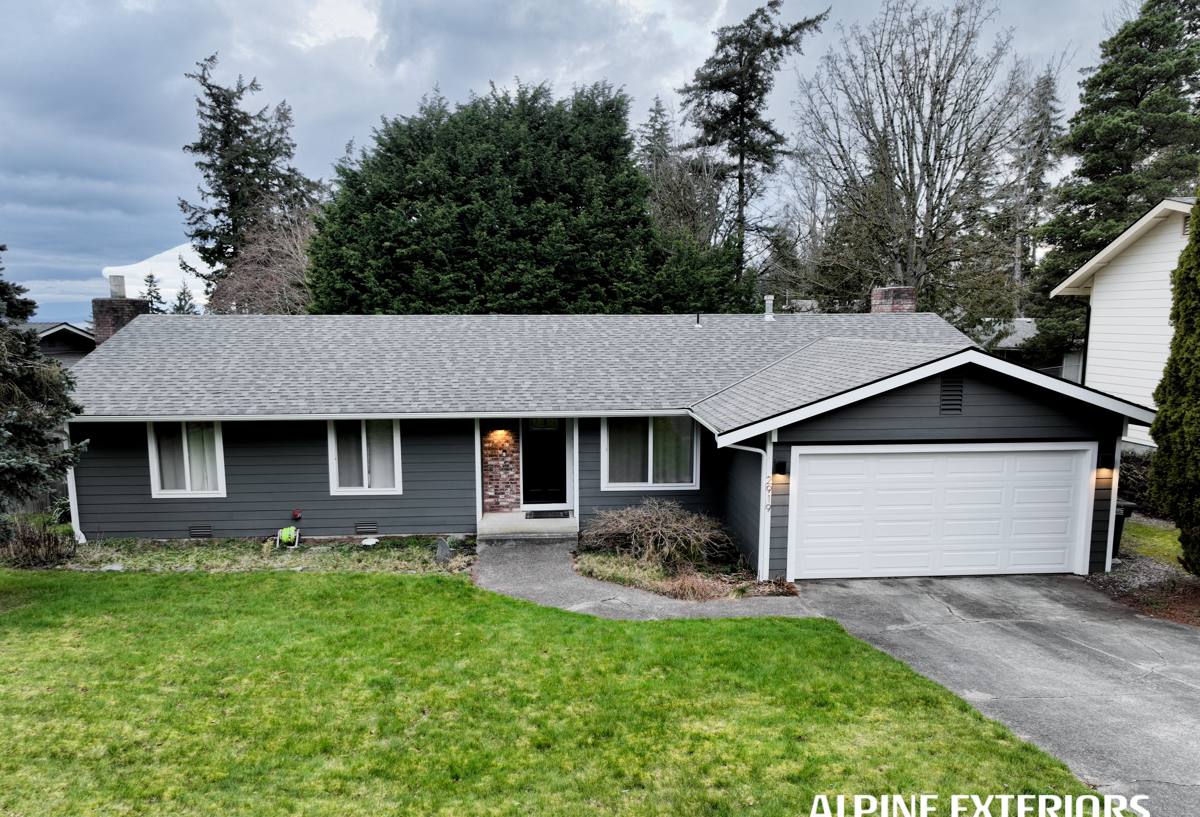
Signs Your Lynden Home Needs Siding Repair
Most siding problems don't announce themselves right away. By the time damage is obvious from the ground, there's usually been moisture intrusion happening for a while underneath. Walk your home's exterior a couple of times a year and look for these warning signs:
- Soft, spongy, or bubbling panels when pressed — a strong sign of trapped moisture
- Peeling or bubbling paint, especially on north- and west-facing walls that stay shaded and wet longest
- Dark staining or streaking below windows, seams, or trim joints
- Visible moss, algae, or black mildew growth on siding surfaces
- Cracked, shrunken, or missing caulk at joints, corners, and trim
- Warped, buckled, or separated boards, particularly near ground level or roof lines
- Small holes or crumbling wood texture, which can point to insect or rot activity
- A noticeable jump in heating bills, which can mean air and moisture are moving through gaps in the wall assembly
Any one of these on its own might be minor. Several together, especially in the same area of the house, usually means water has been getting behind the siding for longer than it looks.
What a Correct Siding Repair Actually Involves
A repair that only replaces the damaged board and repaints it isn't really a repair — it's a cover-up. Done correctly, siding repair in a climate like Whatcom County's starts with figuring out why that section failed in the first place.
Diagnosis before repair
That means pulling the damaged siding back far enough to check the condition of the water-resistive barrier (house wrap) underneath, the flashing at windows, doors, and butt joints, and the sheathing itself. If the sheathing has softened or the house wrap has torn, patching the visible siding without fixing what's underneath just sets up the same failure again in a year or two.
Matching material and profile
Siding comes in different exposures, profiles, and thicknesses even within the same product line, so a patch has to match not just the color but the reveal and butt-joint pattern of the surrounding wall. Mismatched profiles are one of the most common signs of a rushed repair — they're visible from the street even after the paint dries.
Fastening and sealing to spec
Fiber cement and most siding materials have manufacturer-specified nailing patterns, gaps, and sealant requirements. Skipping those specs to save time is a common shortcut that shows up later as cracking, popped fasteners, or renewed moisture intrusion at the exact spot that was just repaired.
Repair or Replace? How to Think About It
Not every damaged section needs a full re-side, and not every repair is worth doing on siding that's already near the end of its service life. The table below covers the factors that usually decide which direction makes sense.
| Factor | Repair Usually Makes Sense | Replacement Usually Makes Sense |
|---|---|---|
| Extent of damage | Isolated to one or two wall sections | Spread across multiple elevations |
| Underlying moisture barrier | Intact once opened up for inspection | Torn, missing, or degraded in multiple spots |
| Age of existing siding | Under roughly half its expected service life | Near or past its expected service life |
| Material match availability | Same product/profile still available | Discontinued profile or mismatched material |
| Cause of failure | One-time event (impact, flashing failure) | Systemic issue (original install error, wrong product for climate) |
We'll always give you a straight answer on which side of that table your home falls on before we recommend a scope of work.
Our Process for Lynden Siding Repairs
We keep the process simple and honest, especially since repair calls often start with a homeowner unsure whether they're looking at a quick fix or a bigger problem.
- Inspection. We look at the damaged area and the surrounding wall, checking for related issues nearby before assuming the visible damage is the whole story.
- Diagnosis. If moisture intrusion is suspected, we open up the affected section to check the house wrap, flashing, and sheathing condition.
- Honest scope and estimate. You get a clear explanation of what's actually wrong, what repair or replacement will involve, and a written estimate before any work starts.
- Repair the cause, not just the symptom. Flashing gets corrected, house wrap gets patched or replaced, and any soft sheathing gets addressed before new siding goes back on.
- Install to spec. Fastening, gapping, and sealing follow manufacturer requirements so the repair holds up under the same conditions that caused the original damage.
- Cleanup and walkthrough. We leave the site clean and walk you through what was done and why.
Why We Repair and Replace with James Hardie Materials
We install James Hardie fiber cement siding exclusively — we don't install vinyl, LP SmartSide, or other fiber cement brands, and that standard carries over into how we approach repairs. Fiber cement doesn't absorb and swell the way wood-based products can, which matters directly in a climate that stays wet for months at a stretch. Hardie's HZ5 product line is engineered for the freeze-thaw and moisture cycling common to the Pacific Northwest, which is a meaningfully different climate profile than the hot, dry regions some siding products are formulated for.
When we repair an existing Hardie installation, matching color is straightforward if the ColorPlus factory finish is still available in that line and shade — factory-applied finish holds color more consistently than field-applied paint, which matters when a homeowner wants a repaired section to blend in rather than stand out. When we're asked to patch non-Hardie siding — old cedar, primed wood, or another fiber cement brand — we'll be upfront that we can't guarantee the same moisture performance or finish match, and in many cases a full re-side with Hardie ends up being the more durable and cost-effective answer than repeated patch work on a product that's already showing systemic wear.
Why Hiring a Crew That Already Works Lynden Matters
Siding repair is a trade where local familiarity actually changes the outcome. A crew that regularly works Whatcom County homes knows which wall orientations take the worst of the driving rain and moss buildup in this area, what common flashing and installation shortcuts show up on older builds, and how rural and semi-rural properties around Lynden differ from tighter in-town lots when it comes to wind and rain exposure.
That familiarity also means faster, more accurate diagnosis. A contractor who's opened up a dozen similar wall assemblies in this region isn't guessing at what's likely behind a damaged panel — they've seen the pattern before. And because we're a local crew rather than a traveling repair outfit, we're available for a follow-up visit or warranty question without the delay of coordinating a trip back to the area.
What to Expect: Timeline and Warranty
Most isolated siding repairs are completed in a single day; larger repairs involving multiple sections or moisture remediation behind the wall can take a few days depending on scope. Weather windows matter in this climate, so we schedule repair work around dry stretches when possible to make sure sealants and finishes cure properly.
James Hardie backs its products with a manufacturer warranty, and we back our installation work with our own workmanship warranty. Before any repair starts, you'll know in writing what's covered and for how long — no vague promises, no surprises later.
If you're seeing early signs of siding trouble on your Lynden home, or you just want a second opinion before committing to repair versus replacement, we're happy to take a look. Reach out for a free, no-pressure estimate using the form below.