 Bellingham Siding
 Board & Batten Siding for Lynden's Farm Country
Lynden is one of Whatcom County's oldest farming communities, and board and batten siding has deep roots in that kind of landscape. The pattern started as a practical solution for barns, dairy sheds, and grain buildings long before it became a popular residential look, and that history is part of why it sits so naturally on homes and outbuildings around Lynden today. Whether it's going on a farmhouse-style residence, a detached shop, or a newer home built to match the character of the surrounding countryside, board and batten fits the visual language of this town in a way it doesn't always fit a dense city block.
The same open, rural setting that makes board and batten look right here also puts real demands on it. Salt air carried inland from the Salish Sea, driving rain with little to slow it down across open fields, and a long moss season on shaded walls all take a toll on a siding profile built entirely out of vertical seams. We install James Hardie fiber cement board and batten exclusively in Lynden, detailed to the fastening, flashing, and clearance standards this specific combination of exposure calls for.
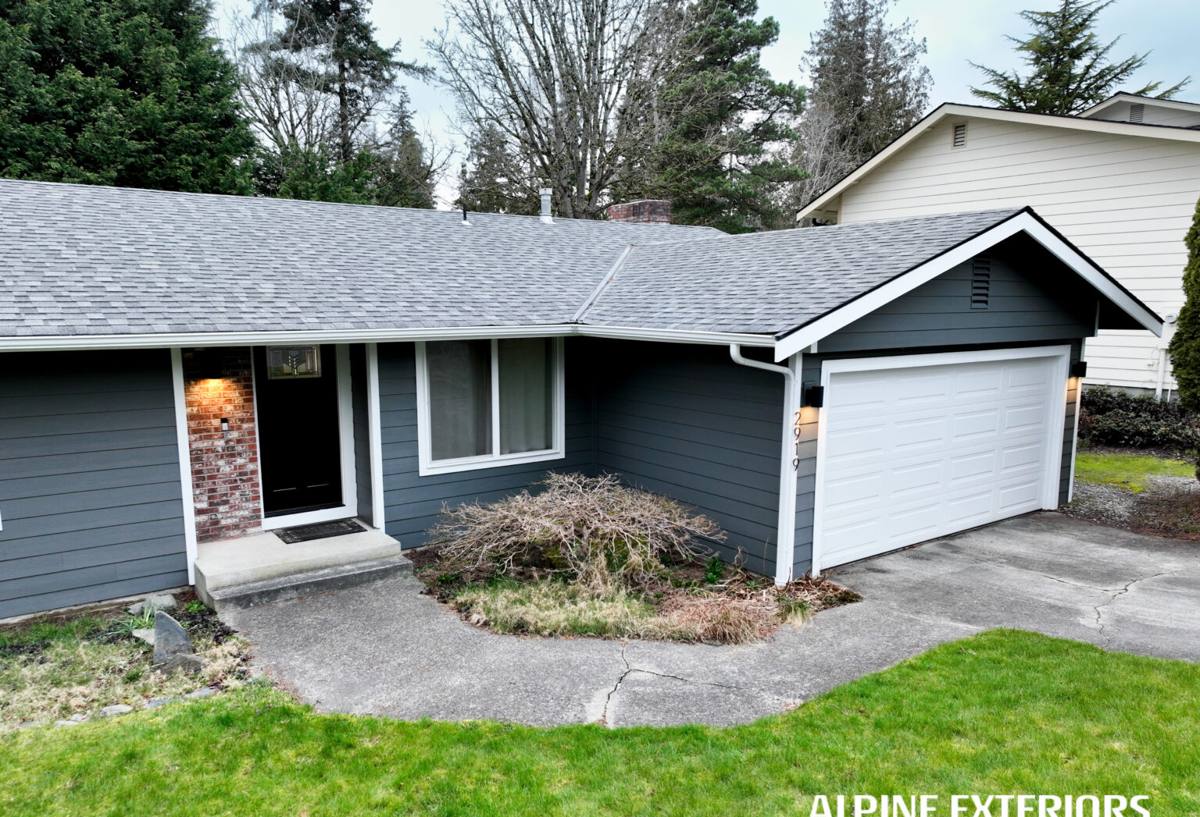
What Lynden's Climate Does to a Vertical Wall
Driving Rain With Nothing to Break It Up
A lot of Lynden properties sit on open, flat farmland without the hills or dense tree cover that shelter some in-town lots elsewhere in Whatcom County. That means wind-driven rain can hit a wall straight on, with less natural buffering before it reaches the siding. Board and batten has more seam length per square foot than a standard lap profile, so every one of those seams is a place water can try to work its way behind the wall if the batten clearance and lapping aren't handled correctly.
Salt Air That Still Reaches This Far Inland
Lynden sits back from the water compared to towns directly on Bellingham Bay or the Blaine waterfront, and the salt exposure here is genuinely lighter than a bayfront property faces. But marine air still moves through the Whatcom County lowlands and reaches inland communities like Lynden, and it's easy for that to get dismissed as a non-issue simply because a property isn't waterfront. Corrosion-resistant fasteners and properly sealed metal flashing aren't optional just because the ocean isn't visible from the porch.
Moss Along Tree Lines, Hedgerows, and Shaded Elevations
Many Lynden properties have mature trees, windbreaks, or hedgerows bordering fields and yards, and those features shade one side of a house or outbuilding for much of the year. Combined with the region's mild, damp climate, that shade turns into extended moss and mildew growth on north-facing and tree-lined walls. Ground-level moisture from irrigation, livestock areas, or simply a low-lying lot can add to it near the base of a wall, which is exactly where board and batten's vertical run meets grade and where trapped moisture does the most damage.
Why This Profile Punishes a Cut Corner Faster
Board and batten amplifies whatever weaknesses a siding material already has, because there are more seams and more exposed edges than a lap profile has. On a Lynden property, that risk often gets multiplied: rural lots tend to run larger, and it's common for the same board and batten look to cover not just the house but a detached shop, garage, or barn as well, which means more total linear footage of vertical seams exposed to the same weather. A shortcut that costs a homeowner a repair bill on one wall costs a lot more when it's repeated across several structures.
That's part of why we don't install LP SmartSide, vinyl, Cemplank, Allura, primed spruce, or cedar board and batten. Those are legitimate products and other contractors install them competently, but on a profile with this many joints, in a climate that combines open-field wind exposure, inland salt air, and a long moss season, we standardized on one fiber cement system we trust completely rather than offering an alternative with trade-offs we'd have to explain away later.
| Material | Behavior at Batten Seams | Maintenance in This Climate | Realistic Lifespan |
|---|---|---|---|
| James Hardie fiber cement | Dimensionally stable; doesn't swell or cup at the joint | Low; factory finish resists moss and fading | 30+ years with proper install |
| LP SmartSide (engineered wood) | More sensitive to moisture at cut edges and fastener holes | Moderate; edge sealing needs regular upkeep | 15-25 years, climate-dependent |
| Vinyl | Can gap or warp at battens under sun and cold; less rigid seams | Low, but hidden moisture problems are hard to spot | 20-30 years, variable |
| Cedar | Absorbs moisture readily at every exposed seam without sealing | High; refinishing on a recurring cycle | 15-25 years with consistent upkeep |
Fiber cement's dimensional stability is the property that matters most on a profile built entirely from vertical joints. James Hardie's factory-applied ColorPlus finish also means field-primed cut edges are the exception rather than the rule, unlike a material where the whole wall's finish depends on paint quality holding up outdoors year after year.
What a Correct Board & Batten Installation Involves
The finished look of board and batten is simple, but a correct install has a lot going on behind that surface, especially on a wall facing open-field wind and sustained dampness:
- House wrap or weather-resistive barrier installed and properly lapped before any siding goes up
- A drainage gap or rainscreen behind the siding so moisture that gets past the surface can dry out instead of sitting against the wall
- Boards fastened with corrosion-resistant fasteners at the manufacturer's specified spacing, not just enough to hold the material up
- Battens set with the clearance James Hardie's install spec calls for, rather than caulked tight, so the wall can shed water instead of trapping it
- Properly flashed transitions at windows, doors, corners, and the base of the wall, where a vertical profile meets grade or a horizontal surface
- Cut boards primed on any field-cut edge so the factory-cured ColorPlus finish isn't compromised at the one place it's vulnerable
Skip any one of these and the wall can still look fine for a season or two. The problems that come from skipping them — staining at seams, soft spots near the base, paint failure along battens — usually take a few wet seasons to surface, which is exactly why they're easy for a rushed install to get away with until the homeowner is the one dealing with it.
Siding the Whole Property, Not Just the House
A lot of board and batten work we do in and around Lynden isn't limited to the main house. Detached shops, garages, and outbuildings are common on properties out here, and it's common for homeowners to want the same board and batten look tying the whole property together visually. Those structures often sit more exposed than the house itself, with less tree cover or windbreak nearby, so they can take a harder hit from driving rain and moss than the residence does. We hold outbuildings to the same installation standard as the house, because a shop that's sided as an afterthought tends to be the first place moisture problems show up.
Our Process for a Lynden Board & Batten Project
Walkthrough and Assessment
We start by looking at the specific walls and structures involved on the property: which elevations take the most direct wind and rain, which stay shaded and slow to dry near tree lines or hedgerows, and whether the existing wall assembly already has moisture issues that need addressing before new siding goes up. Board and batten over a wall with hidden rot just buries the same problem under new material.
Planning the Details Before Install Day
We work out batten spacing, corner details, and how the siding will meet windows, trim, and rooflines before crews start cutting material, on the house and on any outbuildings included in the scope. Working these details out on paper first avoids field improvisation, which is where corners tend to get cut on a profile with this many seams.
Installation to Manufacturer Spec
Every fastener, clearance, and flashing lap follows James Hardie's published installation requirements for this climate zone, not a generic national standard. That's what keeps the manufacturer's warranty intact and what keeps the wall performing for decades instead of years.
Final Walkthrough
We walk the finished job with you, cover what the minimal maintenance actually looks like for this material, and make sure you know what to check if you ever want to look the wall over yourself.
Cost Factors for Board & Batten in Lynden
| Factor | Why It Matters |
|---|---|
| Total wall area, including outbuildings | Rural properties often mean more structures sided in the same material, not just the house |
| Existing wall condition | Moisture or rot found during tear-off needs repair before new siding goes up |
| Batten spacing and reveal | Tighter spacing uses more material and more fastening labor |
| Trim and window detailing | More openings mean more flashing and finish work around each one |
| Site access | Long driveways, working farm equipment, or livestock areas can affect staging and scheduling |
We'll walk your specific property and give you real numbers rather than a rough estimate off square footage alone. Two properties with similar house sizes can have very different totals once outbuildings and access are factored in.
Why Hire a Crew That Already Works in Lynden
Board and batten rewards experience with this specific setting, because the failure points here are subtle and slow to show up. A crew that's installed this profile across Lynden's farm properties has already seen which elevations take the worst of the open-field wind, how much batten clearance actually holds up against a long, damp moss season, and how to schedule and stage work around a property that's still a working farm, not just a residential lot. That's the kind of judgment that doesn't show up on a spec sheet, and it's the difference between a wall that still looks and performs the same in fifteen years and one that's showing seam staining by year five.
Signs Your Lynden Property Needs Siding Attention
- Moss or dark staining along tree lines or on north-facing walls that returns quickly after cleaning
- Soft or spongy siding near the base of a wall, especially close to grade, irrigation, or livestock areas
- Paint failure or staining concentrated along batten seams rather than spread evenly across the wall
- Gaps or visible movement at batten joints after wind events
- An outbuilding or shop showing more wear than the main house, a sign it wasn't detailed to the same standard
- Rising heating bills that may point to a wall assembly no longer sealing properly
If you're weighing board and batten for a home, shop, or outbuilding in Lynden, we're glad to walk the property, talk through what your specific structures need given their orientation and exposure, and give you a straightforward, no-pressure estimate. There's a form below — reach out and we'll set up a time to take a look.