 Bellingham Siding
 Building Decks for Lynden's Weather, Not Just Its View
Lynden sits in the farm country of north Whatcom County, close to the Canadian border, but it still gets the same weather pattern that shapes every outdoor structure in this part of Washington: long stretches of driving rain, salt-tinged marine air pushed inland off the Sound, and a moss season that can start in October and still be going strong in May. A deck built to a generic national spec doesn't plan for any of that. A deck built for this climate does, from the footings up.
We've framed, decked, and repaired decks throughout Whatcom County long enough to know which construction details actually matter here and which ones are just cosmetic upgrades. This page covers what a deck project in Lynden really involves, what separates a deck that's still solid at year fifteen from one that starts rotting at year five, and how we run the job from first call to final walkthrough.
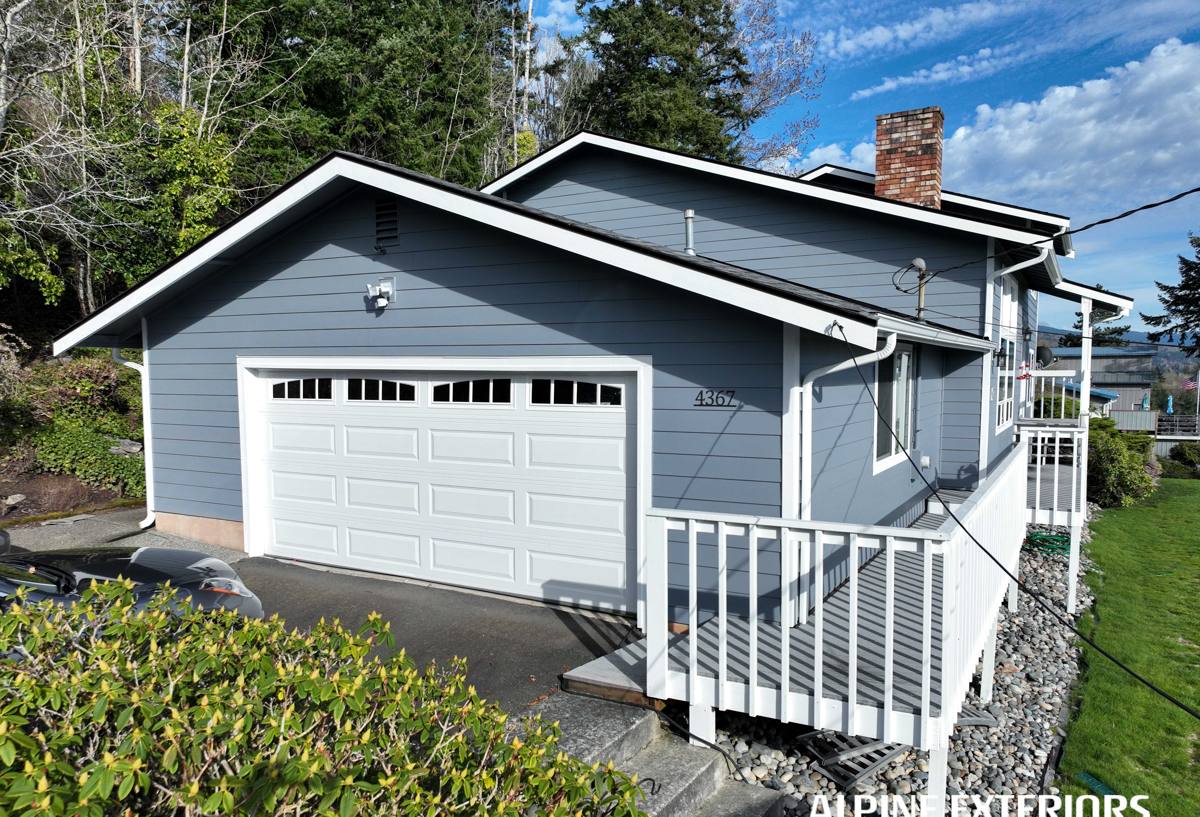
What Local Homes Actually Need From a Deck
Framing That Doesn't Trap Moisture
Most deck failures we see start underneath the boards, not on top of them. Undersized joists, ledger boards attached without proper flashing, and framing lumber that was never rated for ground contact all shorten a deck's life dramatically once they're exposed to a wet season that can run six or more months a year. We frame to hold up under sustained moisture, not just to pass a quick visual check.
A Surface That Stays Safe Underfoot
Moss and algae grow fast on any deck surface that stays damp and shaded, and a slick deck is a real fall hazard in winter. Board spacing, surface texture, and how much sun and airflow a deck gets all affect how quickly moss takes hold. We factor this into layout and material choice rather than leaving it as a problem for the homeowner to scrub away every spring.
Drainage That Moves Water Away From the House
A deck attached to a house creates a new place for water to collect against the siding and foundation if it isn't sloped and flashed correctly. Ledger board flashing, proper slope away from the structure, and gaps that let water drain through rather than pool are not optional details in a climate that gets this much rain — they're the difference between a deck that protects your house and one that slowly damages it.
Decking Material Options, Compared Honestly
There's no single "best" decking material — there's a best material for your budget, your maintenance tolerance, and how much sun or shade your yard gets. Here's how the common options actually perform in Whatcom County's wet, mossy conditions.
| Material | Upfront Cost | Maintenance | Moss & Moisture Behavior | Typical Lifespan |
|---|---|---|---|---|
| Pressure-treated wood | Lowest | Annual cleaning and periodic sealing | Absorbs moisture; needs airflow and upkeep to resist rot and moss | 10-15 years with regular care |
| Cedar | Moderate | Sealing every 1-2 years to hold color and resist moisture | Naturally rot-resistant but still needs cleaning to prevent moss buildup | 15-20 years with maintenance |
| Composite decking | Higher | Occasional washing, no sealing or staining | Doesn't absorb water or rot, but moss can still grow on the surface film if shaded and damp | 25-30 years |
| PVC decking | Highest | Lowest of all options | Fully moisture-resistant surface; easiest to keep moss from taking hold | 25+ years |
Wood costs less to install but asks more of the homeowner every year. Composite and PVC cost more upfront but trade that for far less annual upkeep — a real consideration in a climate where moss and moisture never really take a season off. We'll walk through the honest trade-offs for your specific yard and budget rather than pushing whatever has the best margin.
Our Deck Building Process
Design and Layout
We start by looking at how the deck will actually be used, how much sun and shade the spot gets through the year, and how it ties into your house's drainage and grade. Layout decisions made here affect moss growth and water management for the life of the deck.
Permitting and Site Prep
Deck permitting requirements depend on size, height, and whether the property is inside Lynden city limits or in unincorporated Whatcom County, so we confirm what's required before any digging starts. Site prep includes locating utilities and making sure the ground can properly support footings once it's saturated in winter.
Footings and Framing
Footings go below frost depth and are sized for the soil conditions on your lot, not a one-size-fits-all number. Framing uses fasteners and connectors rated to resist corrosion in damp, salt-influenced air, with ledger flashing installed correctly the first time.
Decking, Railing, and Stairs
Once the frame is set and inspected, we install the decking surface, railings, and stairs to code, with attention to board spacing and drainage gaps that help the surface dry out between rain events instead of holding water.
Final Walkthrough
We walk the finished deck with you, cover basic care for whatever material you chose, and make sure everything is solid underfoot before we call the job done.
Problems We Commonly Find on Older Lynden Decks
When we're called out to repair or replace an existing deck in this area, the same handful of issues show up again and again:
- Ledger boards attached directly to siding without flashing, letting water track behind the wall
- Undersized or shallow footings that have shifted or heaved after repeated wet-dry and freeze-thaw cycles
- Joists and beams that were never rated for ground contact, now soft or rotting at connection points
- Heavy moss buildup on shaded boards that's turned the surface slick and started breaking down the wood underneath
- Railings that have loosened because the posts were only fastened to the decking, not tied into the structural frame
None of these are unusual — they're what happens when a deck is built to minimum standards in a climate that doesn't forgive shortcuts. Catching them early is far cheaper than waiting for a board to give way.
Permits and Code Basics in Whatcom County
Whether your deck needs a permit generally comes down to its height above grade and its size, and the exact requirements differ depending on whether the property sits inside Lynden or in the unincorporated county. Structural elements like footings, framing, and guardrails also need to meet current building code regardless of permit status. We handle the permitting conversation as part of the project so you're not left figuring out local requirements on your own.
Railings, Stairs, and Guarding Against Moss
Guardrails and stair railings aren't just a code requirement — they're where a lot of deck injuries happen when moss and algae build up on a horizontal surface. We pay attention to how railings and stair treads are finished and spaced so they shed water and resist the same moss growth that affects the main deck surface. On stairs especially, a slick tread in a January rain is a real hazard, and it's worth getting right at construction rather than adding traction strips later as a patch.
A Maintenance Checklist for Your New Deck
A well-built deck still needs some seasonal attention in this climate. Here's what we recommend to homeowners after a new deck goes in:
- Sweep leaves and debris off the deck regularly in fall — trapped organic matter is what feeds moss and mildew
- Rinse or wash the surface at least once or twice a year, more often in heavily shaded areas
- Check that drainage gaps between boards stay clear and aren't clogged with debris or moss
- Inspect railings and stair connections annually for looseness
- For wood decking, reseal or restain on the schedule appropriate to the product — don't wait until it's visibly weathered
- Look underneath the deck once a year for any signs of moisture damage near the ledger board or footings
Why Hire a Crew That Already Works in Lynden
A deck built by a crew unfamiliar with this climate tends to look fine for the first year or two before the details that were skipped — flashing, fastener choice, drainage, moss-resistant layout — start showing up as problems. We build and repair decks throughout Bellingham and the surrounding Whatcom County communities, including Lynden, and we bring what we've learned from fixing other contractors' shortcuts into every new build we do. That means fewer surprises for you five or ten years down the road.
If you're planning a new deck or need an honest look at one that's showing its age, we're happy to come take a look. Reach out for a free, no-pressure estimate using the form below.