 Bellingham Siding
 Lynden's Climate and What It Does to a Roof
Lynden sits inland from the Salish Sea, but the marine air that moves through Whatcom County still finds its way into the valley — cool, damp, and persistent for much of the year. Combine that with the agricultural humidity that settles over the surrounding farmland, and you get long stretches where roofs simply don't dry out between rain events. That moisture, paired with shaded north-facing slopes and mature tree cover common on Lynden lots, is exactly the recipe moss and algae need to take hold.
None of this means a roof here is doomed to fail early. It means the installation has to account for drainage, airflow, and material choice from day one, rather than treating this as a generic reroof job. A roof built the same way you'd build one in a dry inland climate will show problems in Lynden years before it should.
Signs Your Lynden Home Needs a New Roof, Not Another Repair
Homeowners often ask us to patch a leak, only to find the roof is past the point where patching makes sense. A few honest indicators that replacement is the smarter move:
- Granule loss heavy enough that you're finding shingle grit in gutters and downspouts every season
- Shingles that are cupping, curling, or cracking across multiple slopes, not just one isolated spot
- Moss or algae staining that keeps returning within a year of cleaning, even after treatment
- Soft spots or sagging in the decking, usually found once a repair crew opens up the roof
- A roof already past 20-25 years old, regardless of how it looks from the ground
- Multiple past repairs in different locations — a sign the roof is failing broadly, not locally
If only one or two of these apply and the roof is otherwise sound, a repair is the honest recommendation. We'll tell you that. But when the underlying material and structure are wearing out together, spending money on repeated patches usually costs more over time than doing the job right once.
What Goes Into a Correct New Roof Installation
A new roof is more than laying new shingles over what's there. Done correctly, it involves several layers working together, and skipping any one of them is where premature failures come from:
Tear-Off and Deck Inspection
We remove the existing roofing down to the deck rather than layering over old material. This is the only way to actually see the plywood or plank sheathing underneath — which is where hidden rot from years of trapped moisture usually shows up. Any soft or delaminated decking gets replaced before anything new goes down.
Underlayment and Water Protection
In a climate that sees as much sustained rain as Whatcom County, underlayment isn't a formality. We use synthetic underlayment across the field and self-adhered ice-and-water membrane at the vulnerable points — eaves, valleys, and roof-to-wall transitions — where wind-driven rain is most likely to work its way underneath the shingle layer.
Flashing and Transitions
Most roof leaks that show up years after installation trace back to flashing, not the shingles themselves. Chimneys, skylights, dormers, and sidewall transitions all need properly formed and sealed flashing, not just a bead of caulk covering a shortcut.
Ventilation
Intake at the eaves and exhaust at the ridge need to be balanced so air actually moves through the attic. Ventilation affects moss growth, shingle lifespan, and moisture buildup in the attic itself — we cover this in more detail below because it's one of the most overlooked parts of a reroof.
Choosing a Roofing Material That Holds Up Here
There isn't one "best" roofing material for every Lynden home — it depends on the roof's slope, exposure, budget, and how much maintenance you're willing to keep up with. Here's how the common options compare for this specific climate:
| Material | Typical Lifespan | How It Handles Moisture & Moss | Relative Cost |
|---|---|---|---|
| Standard 3-tab asphalt shingle | 15-20 years | Adequate with good ventilation; more prone to moss in shaded areas | Lowest |
| Architectural (laminate) shingle | 25-30 years | Better water shedding due to thicker profile; still needs airflow and periodic cleaning | Moderate |
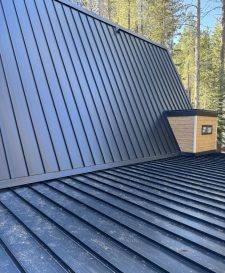
| Standing seam metal | 40-50+ years | Sheds moisture fast, very little surface for moss to grip; performs well on steep or shaded slopes | Higher upfront, lower lifetime cost |
| Cedar shake | 20-30 years with upkeep | Attractive but moisture-sensitive; requires regular treatment and is more labor-intensive to maintain in a wet climate | High, plus ongoing maintenance |
We install architectural shingles and metal roofing as our standard recommendations for this area. Cedar shake can look great on the right home, but we're upfront that it demands a maintenance commitment most homeowners underestimate once they're dealing with a busy household in a climate this damp — that's a trade-off worth knowing before you commit, not after the first moss bloom.
Ventilation and Moss: The Two Issues We See Most in Lynden
If we had to name the two things that separate a roof that lasts from one that doesn't in this area, it's ventilation and moss management — and they're related.
Poor attic ventilation traps warm, moist air against the underside of the roof deck. In winter, that moisture can condense and soak into the sheathing from the inside, which is a completely different failure path than the moss and rain damage happening on the outside. A correctly vented roof pulls cool air in low and pushes warm, moist air out high, keeping the deck dry from both directions.
Moss, meanwhile, is a maintenance issue more than an installation defect — but installation choices affect how bad it gets. Shingle profile, slope, and shade all play a role, and zinc or copper strips near the ridge can help suppress regrowth on shaded sections. We'll flag high-risk areas of your roof during the estimate and talk through realistic upkeep, rather than pretending any roof in Whatcom County will stay moss-free without any attention at all.
Our New Roof Installation Process
- On-site inspection and estimate — we walk the roof (weather permitting) and the attic, note ventilation, decking condition, and any problem areas, and give you a written scope and price.
- Material selection — we go over the options relevant to your roof's slope and exposure, including the honest trade-offs of each.
- Permitting and scheduling — we handle the permit and work around Whatcom County's weather windows rather than rushing a job into a forecast that won't cooperate.
- Tear-off and deck repair — old material comes off, decking is inspected and replaced where needed.
- Underlayment, flashing, and ventilation installation — the layers that actually determine how the roof performs.
- New roofing installed to manufacturer specification — correct nailing pattern, exposure, and fastening for the material chosen.
- Cleanup and final walkthrough — magnetic sweep for stray fasteners, debris hauled off, and a walkthrough so you can see the finished work and ask questions before we consider the job done.
Why a Crew That Already Works in Lynden Makes a Difference
Roofing crews that split time across very different climates tend to build the same roof everywhere. A crew that regularly works Whatcom County knows which slopes in this area hold moss, how much ventilation a typical Lynden attic actually needs, and how to plan around the region's rain patterns so a tear-off doesn't sit exposed overnight. That familiarity shows up in fewer callbacks, not in the sales pitch.
It also matters for permitting and local building requirements — knowing the county's process ahead of time keeps a project moving instead of stalling on paperwork. And when a homeowner calls two years after installation with a question about moss or a minor issue, a local crew that's still in the area is far easier to reach than one that was passing through.
A Homeowner's Checklist Before You Sign a Roofing Contract
Whoever you hire for a new roof, these are worth confirming before signing anything:
- Current Washington contractor license, bonding, and liability insurance — ask to see proof, not just take it on their word
- A written scope of work detailing tear-off, decking repair terms, underlayment type, and flashing approach
- Ventilation plan spelled out, not left as an assumption
- Manufacturer certification if you want the extended warranty tied to a specific shingle or metal system
- Clear terms for decking repair costs discovered mid-tear-off, before work starts
- A plan for debris removal and yard protection, especially around landscaping and driveways
- Warranty terms in writing — both the manufacturer's material warranty and the contractor's workmanship warranty
If your roof is showing its age or you're just weighing your options before winter rains set in, we're happy to take a look and give you a straight answer — whether that's a repair, a replacement, or simply a timeline for when to plan for one. Reach out for a free, no-pressure estimate using the form below.