 Bellingham Siding
 Siding Installation Built for How Lynden Actually Weathers
Lynden sits inland from Bellingham Bay in the Nooksack River valley, surrounded by open farmland, drainage ditches, and a marine-influenced climate that keeps the air damp for a good chunk of the year. That combination — flat, open exposure plus a long wet season — puts a different kind of stress on exterior siding than you'd see on a tightly built city lot. Homes here deal with driving rain off open fields, standing humidity that lingers after storms move through, and a moss season that can run from fall through spring if surfaces stay damp too long. Siding installation in Lynden isn't just about picking a product homeowners like the look of. It's about installing something that can handle that specific combination of moisture exposure, year after year, without the maintenance turning into a second job.
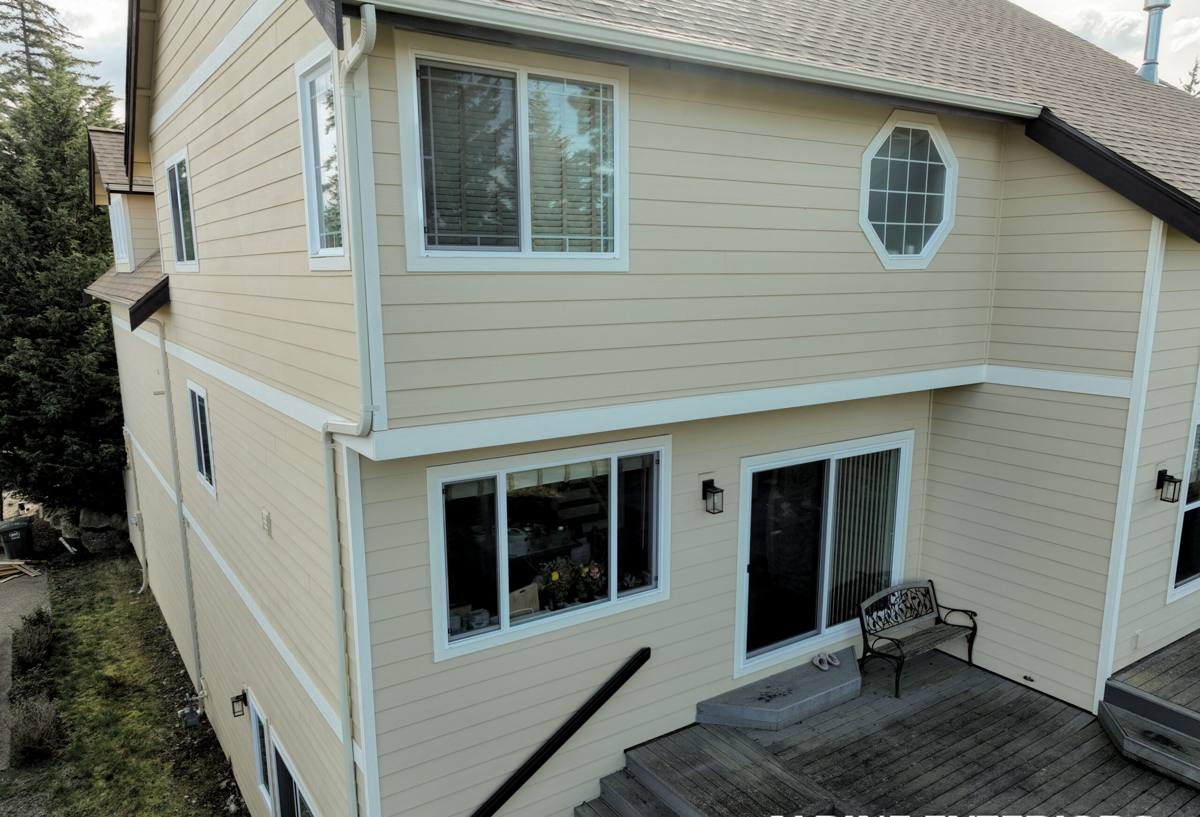
What Whatcom County's Climate Actually Does to Siding
Moss, Algae, and Prolonged Dampness
Northwest Washington's moss season isn't a minor cosmetic issue — it's a moisture problem wearing a green coat. When siding stays damp for extended stretches, moss and algae get a foothold, and once established they hold water directly against the siding surface. On wood-based products, that sustained moisture is exactly the condition that leads to swelling, delamination, and rot at seams and butt joints. On vinyl, moss growth mostly stays cosmetic, but it still traps grime and shortens the interval between cleanings. The real question for any siding material in Lynden isn't whether moss will grow — it will, on nearly any exterior surface eventually — it's how the material and the installation handle sustained dampness underneath that growth.
Wind-Driven Rain and Open Exposure
Because much of Lynden is open agricultural land rather than dense tree cover or tight urban lots, homes here often get more direct wind and rain exposure on at least one elevation than a comparable house tucked into a Bellingham neighborhood. Wind-driven rain doesn't just fall — it gets pushed sideways and upward under laps, around trim, and into any gap the installer left. That's why flashing detail and lap coverage matter more here than the siding brand printed on the box. A premium product installed with shortcuts on flashing will still let water in; a mid-grade product installed correctly, with proper laps and sealed penetrations, will outperform it.
Freeze-Thaw and Seasonal Swings
Whatcom County doesn't get brutal winters, but it does get repeated freeze-thaw cycling — cold snaps followed by thaw, over and over, through the winter months. Any moisture that's already trapped behind or within siding gets a push from that cycling: water expands as it freezes, working joints and fastener holes wider each time. Materials that absorb and hold moisture are the ones that show freeze-thaw damage first. This is a slow, cumulative process, which is exactly why it goes unnoticed until a wall section is already compromised.
Why Siding Installation Is a System, Not Just Panels
Homeowners often shop for "siding" the way they'd shop for a countertop — pick a color and material, get it installed. But the panels themselves are only one part of what keeps water out of a wall. A correct siding job is a layered system, and every layer has to do its job for the whole thing to work.
| System Layer | What It Does | Why It Matters in Lynden |
|---|---|---|
| Water-resistive barrier (house wrap) | Stops bulk water that gets past the siding from reaching the sheathing | Backstop against wind-driven rain and long wet stretches |
| Flashing at windows, doors, penetrations | Directs water away from openings and seams | Most local water intrusion starts at poorly flashed openings |
| Proper lap and fastener placement | Keeps panels tight and prevents wicking at joints | Loose laps trap moisture that feeds moss and rot |
| Rainscreen/ventilation gap (where used) | Lets moisture that does get behind siding dry out | Critical in a climate where surfaces rarely get long dry stretches |
| Siding material itself | Sheds bulk water, resists moisture absorption, holds finish | The visible layer, but not the only one keeping water out |
Skip or shortcut any one of these layers, and it doesn't matter how good the siding material is. This is why we treat every installation as a full system job, not a panel-swap.
Our Installation Process for Lynden Homes
Every job starts with an honest look at what's actually happening behind the existing siding, not just what's visible from the driveway.
- On-site assessment. We check for soft sheathing, existing moisture damage, and problem areas around windows, roof lines, and grade-level trim before quoting anything.
- Tear-off and sheathing inspection. Once the old siding is off, we inspect the sheathing itself. Any rot or soft spots get repaired before a single new panel goes up — covering damaged sheathing just seals the problem in.
- Water-resistive barrier and flashing. A new weather barrier goes on correctly lapped, and all windows, doors, and penetrations get properly flashed and integrated with that barrier.
- Hardie panel installation to manufacturer spec. Correct fastener type, spacing, and lap dimensions — not shortcuts to save labor time.
- Trim, caulking, and touch-up. Factory-finished edges get field-touched where cut, and joints get sealed with products rated for the exposure.
- Final walkthrough. We go over the finished job with the homeowner before calling it done.
Comparing Siding Options for a Lynden Property
We only install James Hardie fiber cement, but homeowners deserve an honest comparison of what else is out there and why we made that call.
| Material | Moisture Behavior | Maintenance | Longevity in This Climate |
|---|---|---|---|
| James Hardie fiber cement | Doesn't absorb water like wood-based products; factory-cured finish resists moisture damage | Occasional wash; ColorPlus finish holds color without repainting for years | Engineered specifically for Pacific Northwest moisture exposure (HZ5 line) |
| Vinyl siding | Sheds water well but seams and J-channels can trap moisture; can warp under heat | Low, but color fades and can't be repainted easily | Serviceable, but seams and fasteners are common failure points over time |
| LP SmartSide (engineered wood) | Treated to resist moisture but still wood-based; edge and cut-end sealing is critical | Requires diligent caulk and paint maintenance at seams | Vulnerable if installation misses moisture-sealing details |
| Cedar / primed spruce | Natural wood; absorbs and releases moisture with the seasons | Highest maintenance — regular refinishing and moisture monitoring | Beautiful but demands consistent upkeep in a wet climate |
None of these are "bad" products in the abstract. But in a climate that stays damp as long as Whatcom County's does, the products that absorb or wick moisture put more of the long-term burden on the homeowner's maintenance schedule. That's the trade-off we're not willing to install and then walk away from.
Why We Standardized on James Hardie
James Hardie fiber cement is non-combustible, which matters as much for wildfire-adjacent insurance considerations as it does for fire safety. It's engineered in climate-specific product lines — the HZ5 line is built for the kind of freeze-thaw and moisture cycling this region sees. The ColorPlus factory finish is baked on under controlled conditions, which gives it more consistent, longer-lasting color than field-applied paint on wood-based siding. And it carries a strong transferable warranty, which matters to Lynden homeowners thinking about resale down the road. None of this means Hardie is maintenance-free — no siding is — but it means the material itself isn't the weak link in the system when it's installed correctly.
Signs a Lynden Home Needs New Siding
- Soft or spongy spots when you press on siding, especially near the bottom courses
- Persistent moss or algae that returns within weeks of cleaning
- Visible warping, bowing, or separation at panel joints
- Paint that's peeling or bubbling rather than just fading
- Rising energy bills with no other explanation — often a sign of compromised insulation behind failing siding
- Visible daylight or drafts around window and door trim
- Siding that was installed more than 20-25 years ago and has never been fully assessed
What Affects the Cost of a Lynden Siding Job
| Factor | Why It Moves the Price |
|---|---|
| Existing sheathing condition | Rot repair adds labor and material beyond the siding itself |
| Home size and wall complexity | More corners, gables, and trim details mean more cutting and labor time |
| Tear-off vs. overlay | Full tear-off costs more upfront but lets us inspect and fix what's underneath |
| Siding profile and color | Lap width, texture, and ColorPlus color selection affect material cost |
| Access and site conditions | Setbacks, outbuildings, and grade around the home affect staging and labor |
We don't quote a Lynden job off a national average — every estimate starts with an actual look at the house.
Why a Local Crew That Already Works Lynden Matters
A crew that regularly works Whatcom County knows what to check before the tear-off even starts — where moisture tends to collect on homes with this kind of exposure, how flashing needs to be handled around openings that face open fields versus sheltered lots, and what a normal amount of moss versus a warning sign actually looks like on a wall that's been up for twenty years. That local pattern recognition doesn't come from a manual; it comes from doing the work here, on homes with the same weather problems your house has. It also means faster response if something needs a look after the job is done, without a multi-hour drive being part of the equation.
Ready to Talk About Your Siding
If your Lynden home is showing any of the signs above, or you're planning ahead of a renovation, we're glad to take a look and give you an honest read on what's going on. Reach out for a free, no-pressure estimate — we'll walk the property with you, explain what we find, and lay out what correct installation would actually involve for your home.