 Bellingham Siding
 Why Sunnyland Homes Need Windows Built for This Climate
Sunnyland sits close enough to Bellingham Bay that the air itself works against your windows year-round. Add Whatcom County's long wet season, driving rain off the water, and months of low sun that keep north-facing walls damp, and you've got a neighborhood where the wrong window — or a window installed the wrong way — fails faster than it would almost anywhere inland. We've replaced and repaired enough windows in this part of Bellingham to know which failure patterns show up here specifically, and we build every custom window job around avoiding them, not just around getting a new window in the opening.
This page covers what Sunnyland homes actually need from a window replacement, what a correct installation involves, and how our process works from first estimate to final walkthrough.
What Salt Air, Rain, and Moss Actually Do to a Window
These aren't abstract climate talking points — they're the three things that show up over and over when we inspect older windows in this neighborhood.
Salt Air and Metal Components
Proximity to the bay means a steady, low-level exposure to salt-laden moisture in the air. Over years, this accelerates corrosion on unprotected metal — window hardware, older aluminum frames, and fasteners that weren't rated for a marine-adjacent environment. Hinges stick, cranks seize, and aluminum frames can pit and discolor well before the glass itself has any problem. This is one of the biggest reasons frame material and hardware quality matter more here than in a drier, inland climate.
Driving Rain and Water Intrusion
Bellingham doesn't just get rain — it gets sideways rain, pushed by wind off the water. That matters because a window doesn't have to be defective to leak; it just has to be installed without proper flashing and drainage for wind-driven water. Most of the rot and interior water damage we find around older windows in this area didn't come from a bad window unit — it came from water getting behind the frame through a gap in the flashing or a failed sealant joint and having nowhere to go.
Moss and Trapped Moisture
Whatcom County's moss season runs long, and moss doesn't stay on the roof. It creeps into window sills, tracks, and any horizontal surface that stays shaded and damp for weeks at a time. Beyond being unsightly, moss holds moisture directly against wood trim and sills, which is exactly the condition that leads to soft, rotting wood around a window frame. A window replacement is also a good time to deal with that buildup and correct the drainage that's letting it take hold in the first place.
Sunnyland's Housing Stock — What We See in This Neighborhood
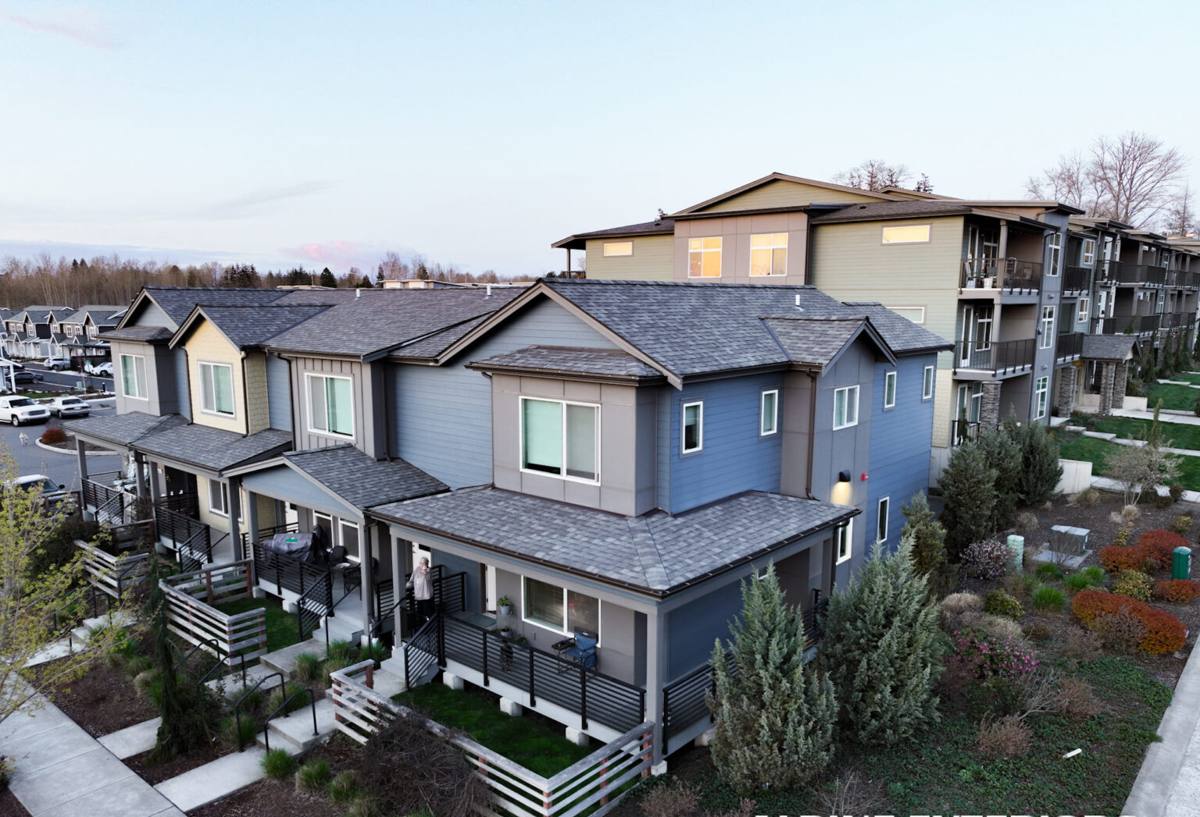
Sunnyland is an established, close-in Bellingham neighborhood with a mix of early-to-mid-20th-century homes and newer infill construction. On the older houses, it's common to find original single-pane wood windows, or a round of aluminum-frame replacements installed decades ago that were reasonable for their time but never designed for today's energy codes or for the marine exposure this area sees. On newer homes, we more often find early-generation vinyl windows nearing the end of their seal life, with foggy glass between the panes being the telltale sign.
We're not guessing at your specific house or street — every home is different, and we always start with an in-person look at your actual windows and openings. But across this neighborhood, the pattern is consistent enough that we plan for it: expect some degree of hidden moisture or wear around the opening itself, not just the visible window unit.
Choosing a Frame Material for a Marine Climate
Frame material is the single biggest decision in a custom window project, and it matters more in a bay-adjacent climate than almost anywhere else in Western Washington. There's no universally "best" material — each one is a different trade-off between upfront cost, maintenance, and long-term moisture performance.
| Frame Material | Moisture & Salt Air Performance | Maintenance | Typical Lifespan |
|---|---|---|---|
| Vinyl | Won't corrode or rot; performs well in humid, salty air | Low — occasional cleaning | 20–30 years |
| Fiberglass | Excellent; very stable in temperature and moisture swings | Low | 30–40+ years |
| Aluminum-clad | Good if properly finished, but exterior metal can pit near the bay over decades | Moderate — watch hardware and finish | 20–30 years |
| Wood (exterior exposed) | Weakest in this climate unless meticulously maintained | High — regular painting/sealing required | Varies widely with upkeep |
| Wood-clad (exterior-protected) | Good — cladding shields the wood from weather | Low to moderate | 25–35 years |
For most Sunnyland homes, we steer customers toward vinyl or fiberglass frames, or a wood-clad option when the homeowner wants a real wood interior with a protected exterior face. Bare exposed wood windows can still be the right call for a period-accurate restoration on an older home, but we're honest that it's a higher-maintenance choice this close to the water — that's a trade-off we lay out plainly, not something we talk anyone out of.
What a Correct Custom Window Installation Actually Involves
The window unit itself is only part of the job. Most of the leaks and rot we get called to fix trace back to installation shortcuts, not a bad product. A correct installation in this climate means:
- Removing the old window and fully inspecting the framed opening for rot, soft wood, or existing water damage before anything new goes in
- Repairing or rebuilding any damaged framing rather than sealing over it
- Installing a proper sill pan to direct any water that does get past the window back outside, instead of into the wall cavity
- Flashing the opening correctly — integrated with the house's existing weather-resistive barrier, not just caulked over the top
- Using sealants and backer rod rated for this climate at all joints, not just a bead of caulk around the trim
- Insulating the gap between the new frame and the rough opening properly, without over-packing it in a way that bows the frame
- Setting the window level, plumb, and square so it operates smoothly and seals evenly for its full lifespan
- Finishing exterior trim and capping in a way that sheds water and resists moss buildup on horizontal surfaces
If a contractor's quote doesn't account for flashing, sill pans, and opening inspection as standard parts of the job, that's worth asking about directly — those are the steps that determine whether the window holds up through a Bellingham winter or starts leaking in year three.
Our Process, Start to Finish
We keep the process straightforward and communicate at each stage, since a window job affects your home's interior as well as its exterior.
- On-site assessment. We inspect your existing windows and openings, check for hidden moisture or rot, and talk through your goals — energy performance, appearance, operability, or all three.
- Custom measurement and ordering. Every opening gets measured individually. We don't assume openings are square or identical, even in newer construction.
- Opening prep. Any rot or damage found during removal gets repaired before the new window goes in — this is never skipped to save time.
- Installation. Flashing, sill pans, insulation, and sealing are done to the standard described above, on every window, every time.
- Exterior finish work. Trim, capping, and paint or stain are completed to shed water and match your home's existing look.
- Walkthrough and cleanup. We test operation on every window, walk the job with you, and clean up fully before we consider it done.
What Affects the Cost of Custom Windows in Sunnyland
Costs vary by home, and we won't quote a number without seeing the actual openings — but these are the factors that move the price up or down on most jobs in this area.
| Factor | Why It Matters |
|---|---|
| Frame material | Vinyl is generally the most budget-friendly; fiberglass and wood-clad cost more upfront but often less over time in this climate |
| Glass package | Double-pane vs. triple-pane, and low-E coatings, affect both cost and energy performance |
| Window size and shape | Standard sizes cost less than custom or non-rectangular shapes |
| Condition of the existing opening | Rot or water damage found during removal adds repair work — this is common enough in older Sunnyland homes to plan for |
| Number of windows | Doing a full-house replacement at once is usually more cost-efficient per window than piecemeal projects |
| Access and site conditions | Second-story windows, tight side yards, or landscaping in the way can add labor time |
Why Hiring a Crew That Already Works in Sunnyland Matters
Window contractors who work all over Whatcom County, or come in from further south, don't always know how differently a bay-adjacent neighborhood behaves compared to homes further inland. We've seen the specific ways salt air ages hardware, how moss builds up on north- and west-facing sills here, and how far driving rain can push water into a poorly flashed opening. That local pattern recognition shapes how we spec and install every window — it's not something you get from a generic install manual.
There's also a practical side: a crew already working in this part of Bellingham can typically schedule and respond faster, and we're not learning your neighborhood's quirks on your dime.
If you're weighing a window replacement or repair for a Sunnyland home, we're happy to take a look and give you a straight answer — including telling you if a repair makes more sense than a full replacement. Reach out for a free, no-pressure estimate using the form below.