 Bellingham Siding
 Decking on a Hillside Neighborhood Is Its Own Job
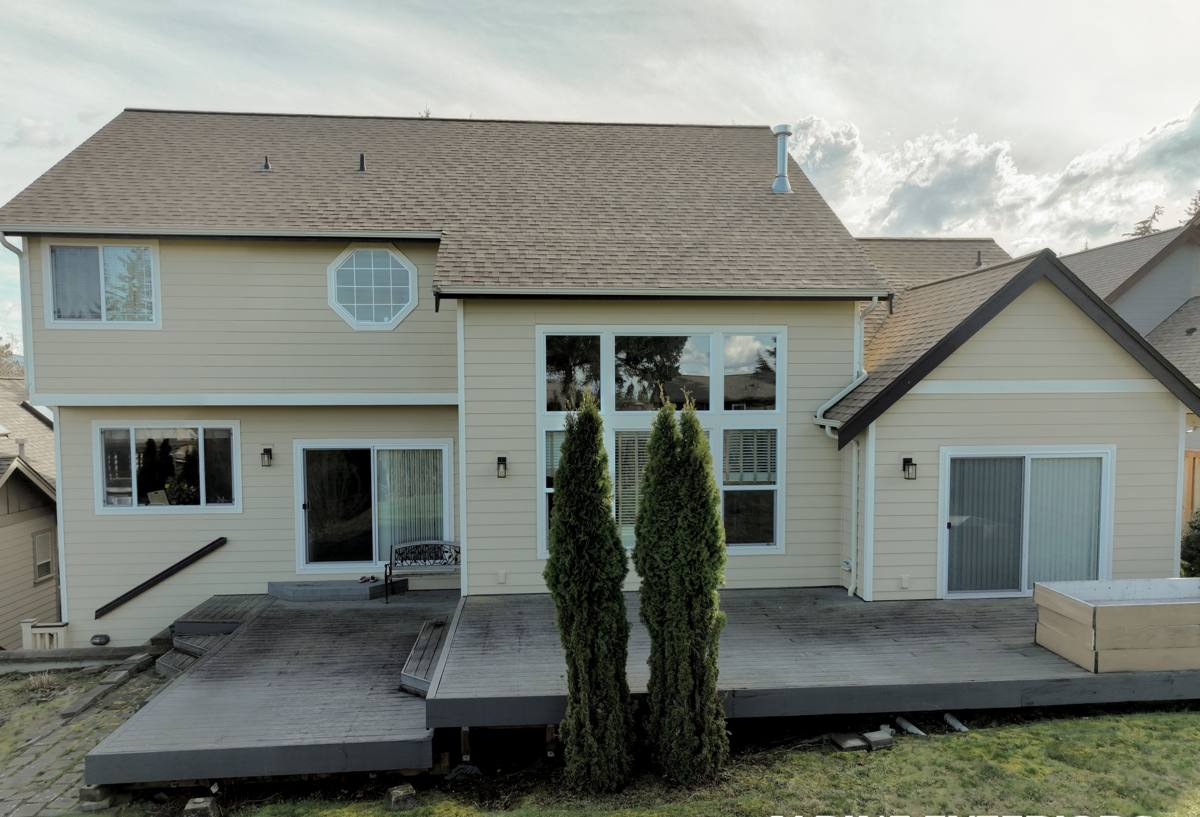
South Hill sits above downtown Bellingham on sloped ground, with mature tree canopy, older homes, and a mix of view lots and shaded lots depending on which side of the hill you're on. That terrain changes what a deck has to deal with. A flat backyard deck in a newer subdivision drains and dries differently than a hillside deck tucked under fir and maple cover, or a view deck catching wind and rain straight off Bellingham Bay. Composite decking can work well in both situations, but the substructure, drainage, and board choice that make it last are not identical from lot to lot.
We've installed and repaired decks across Whatcom County long enough to know that a deck built for a flat, open yard in Ferndale doesn't automatically hold up the same way on a shaded South Hill slope. The framing underneath, the airflow beneath the boards, and how water is directed off the structure all need to be worked out for the specific site, not just the specific product.
What Bellingham's Climate Actually Does to a Deck
Whatcom County weather is hard on outdoor structures in ways that are easy to underestimate. Salt air moving inland off the bay accelerates corrosion on fasteners, brackets, and any exposed metal hardware. Driving rain, common in fall and winter storms, doesn't just fall straight down — it gets pushed sideways into railings, ledger boards, and stair stringers, finding gaps that a calmer climate would never expose. And the long moss season, stretching from roughly October through May in shaded spots, means anything that stays damp and shaded for weeks at a time will grow something green on it if it isn't detailed correctly.
On a hillside lot with tree cover, all three of these show up at once: shade slows drying, wind-driven rain gets under railings and fascia, and salt-laden moisture speeds up hardware corrosion below the boards where you can't see it happening. A deck that looks fine on the surface can be quietly failing underneath if the substructure wasn't built with this combination in mind.
Where Problems Usually Start
- Ledger board attachment points where the deck meets the house — a common spot for hidden rot if flashing wasn't installed correctly
- Joist tops and end cuts that were never sealed, even under composite boards
- Post bases sitting in standing water or buried in soil contact
- Stair stringers exposed to direct, driving rain with no cover
- Shaded corners with poor airflow where moss and algae take hold first
Why Composite Makes Sense for This Neighborhood
Composite decking — a blend of wood fiber and recycled plastic, usually with a protective cap — doesn't absorb moisture the way solid wood does, doesn't need annual staining, and resists the kind of surface graying and splintering that wood decks in shaded, damp spots develop within a few years. For a South Hill property with tree cover and limited direct sun to dry things out, that's a meaningful advantage. It doesn't mean composite is maintenance-free, and we won't tell you it is — but it removes the sanding-staining-sealing cycle that wood demands, which matters a lot when a deck sits under trees for eight or nine months of soggy weather a year.
The trade-off is upfront cost and installation sensitivity. Composite performs exactly as well as the substructure and drainage plan underneath it — no better. A composite deck installed like a wood deck, without attention to airflow and moisture management, will still grow moss in the gaps and can still trap water against the framing. The product is only half the job.
Capped vs. Uncapped Boards
Most composite decking sold today is "capped" — a solid plastic shell wrapped around the wood-plastic core — which resists staining, fading, and moisture absorption far better than older uncapped composite boards, which can still take on water at cut ends and swell over time. For a shaded, damp lot like much of South Hill, we generally recommend fully capped boards, including capped edges, specifically because uncapped edges left exposed at stair nosings or picture-framed borders are where moisture gets in first.
Comparing Deck Materials for a Shaded, Wet Site
| Factor | Composite (capped) | Pressure-Treated Wood |
|---|---|---|
| Moisture absorption | Low — resists swelling in shaded, damp spots | Higher — absorbs and releases moisture with weather cycles |
| Moss/algae resistance | Better on the surface, but still needs airflow underneath | Prone to surface growth in shade without regular cleaning |
| Annual upkeep | Periodic washing; no staining or sealing | Cleaning plus re-staining/sealing every 1-2 years in this climate |
| Upfront cost | Higher material cost | Lower material cost |
| Fastener/hardware exposure | Hidden-fastener systems common, reducing surface hardware | Typically face-screwed, more exposed metal |
| Longevity in shaded, salt-air conditions | Long service life when substructure is built correctly | Shorter effective life without consistent maintenance |
What a Correct Installation Involves
The board is the visible 10% of the job. The substructure is the other 90%, and it's where a correct South Hill installation differs most from a standard flat-lot build.
Framing and Drainage
On sloped ground, footings and posts need to be sized and placed for the actual grade, not just set level and called done. Joists should be spaced to the board manufacturer's spec — composite typically needs tighter joist spacing than solid wood, especially at angles or on stairs — and every joist top should get a protective tape or coating, even though composite boards don't rot, because the framing underneath still can. Drainage matters more here than on an open lot: water shed off the deck surface needs somewhere to go that isn't back against the house foundation or pooling under a shaded, low-airflow section of the structure.
Flashing and Fasteners
Ledger board flashing where the deck attaches to the house is the single most important — and most commonly rushed — part of any deck build in this climate. Done right, it keeps driving rain from working its way behind the siding and into the wall framing over time. Fasteners and structural hardware should be corrosion-resistant hardware rated for coastal exposure; standard interior-grade screws and brackets don't hold up long-term with salt air moving through the area.
Railings and Stairs
Composite railing systems pair well with composite decking and avoid the paint upkeep of wood rail, but connection points still need to be sealed and backed with solid blocking. On a hillside lot, stairs often see more direct rain exposure than the deck surface itself, so stair stringers and treads get extra attention on drainage and fastening.
Our Process
- On-site walkthrough — we look at the existing structure (if replacing a deck), the slope, tree cover, sun exposure, and how water currently moves across the site.
- Honest scope and estimate — what needs replacing versus what can stay, board and railing options, and a written price with no surprise add-ons buried in fine print.
- Substructure first — footings, framing, flashing, and drainage are built to hold up under this climate, not just to pass a quick look.
- Board and railing installation — proper spacing, hidden fasteners where the product allows, and capped edges at all exposed cuts.
- Final walkthrough — we go over basic care with you before we consider the job finished.
Living With a Composite Deck Through Moss Season
A well-built composite deck in a shaded South Hill setting still needs some seasonal attention — it just needs less of it than wood, and none of it involves staining or sealing.
- Sweep leaves and needles off the surface regularly in fall — trapped organic debris holds moisture against the boards and feeds moss growth
- Wash the deck surface once or twice a year with a soft-bristle brush and a composite-safe cleaner; avoid pressure washers on close settings, which can damage the cap layer
- Check that gaps between boards stay clear so water can drain through instead of pooling
- Look under the deck once a year for standing water, debris buildup against posts, or corrosion on visible hardware
- Keep nearby shrubs and low branches trimmed back to improve airflow and sun exposure where possible
Permits and Local Considerations
Deck projects in the City of Bellingham typically require a building permit once the structure exceeds a certain height or size, and railing height and guard spacing follow standard building code regardless of material. On sloped South Hill lots, footing depth and setback from property lines can also come into play depending on the site. We handle the permitting conversation as part of the estimate so you know what's required before work starts, rather than finding out partway through.
Why Hire a Crew That Already Knows This Neighborhood
A deck built by a crew unfamiliar with hillside framing, coastal-grade hardware, or how shade and moisture behave on South Hill's slopes can look right for the first year or two and then start showing problems that trace straight back to the substructure. We've worked on homes throughout Bellingham and Whatcom County long enough to know which details actually matter here — where flashing gets skipped, where hardware corrodes first, and where moss takes hold if airflow wasn't part of the plan. That local experience shows up in how long the deck holds up, not just how it looks on installation day.
If you're planning a new composite deck or replacing an aging one on your South Hill property, we're happy to take a look and walk you through honest options for your specific site. Use the form below to request a free, no-pressure estimate.