 Bellingham Siding
 Decks in Silver Beach Face a Different Kind of Wear
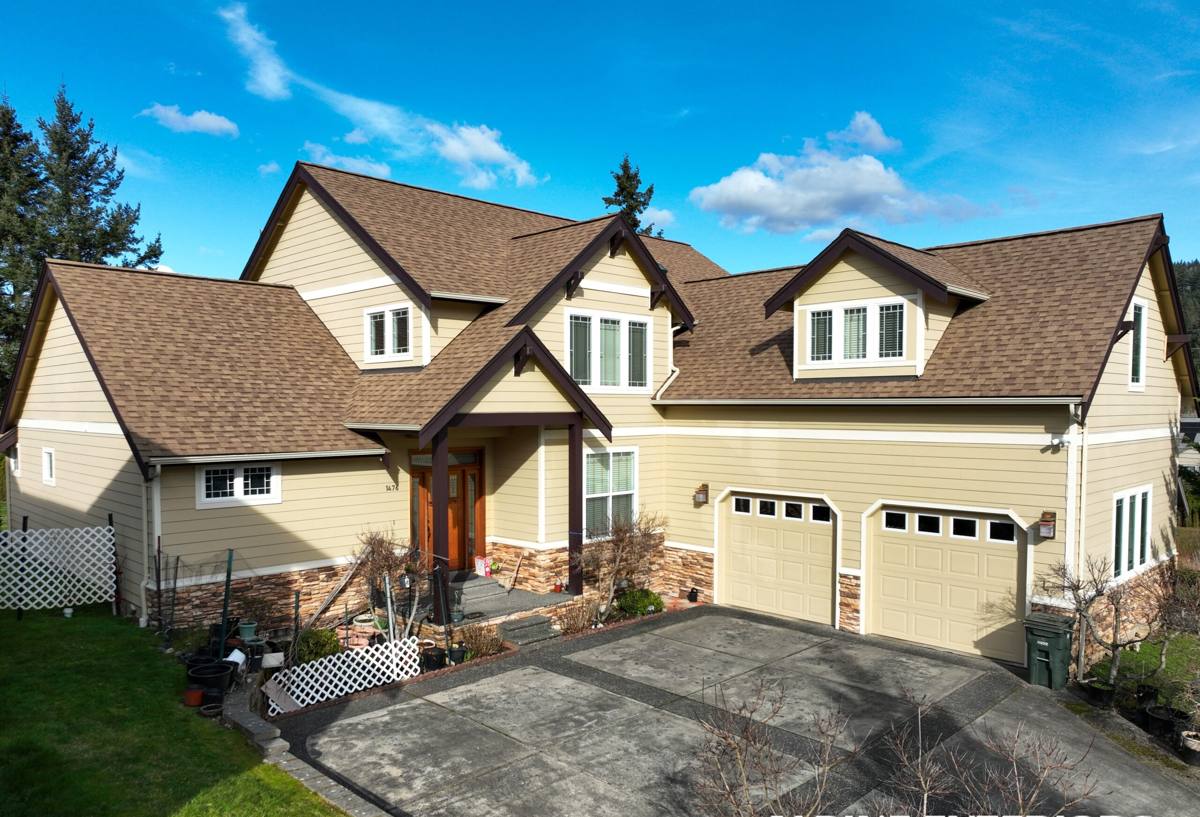
Silver Beach is one of Bellingham's quieter, more wooded neighborhoods, with a lot of homes tucked close to trees and, for many, within sight of Lake Whatcom. That setting is part of why people love living there, but it's also exactly the combination that ages a deck faster than a homeowner expects: shade that keeps boards damp longer after every rain, tree cover that drops needles and leaves into gaps and against ledger boards, and long stretches of gray Whatcom County weather that never quite let wood dry out completely between storms.
None of that means a deck in Silver Beach is doomed. It means the repair work has to account for moisture and organic buildup as the primary enemy, not just wear and tear from foot traffic. We've repaired enough decks in this part of Bellingham to know where the damage actually starts and where a quick cosmetic fix will fail again in a year or two.
What Bellingham's Climate Does to a Deck Over Time
Moisture that never fully leaves
Bellingham sits in a marine climate zone, with damp air moving in off the water and settling into low, shaded, tree-covered lots for much of the year. On a deck, that means water doesn't just fall and run off — it lingers in joints, under boards, and in end grain, especially on decks that don't get direct afternoon sun. Wood that stays wet for days at a time is wood that's on a slow path to rot, whether it's pressure-treated framing or a painted surface board.
Moss, algae, and the damage they hide
Whatcom County's long moss season isn't just a cosmetic issue. Moss and algae hold moisture directly against the wood surface, which accelerates decay underneath a layer that looks green and harmless from a few feet away. By the time moss is visibly thick on a deck board or the shaded side of a stair stringer, there's usually already softening happening beneath it. Regular moss removal is cheap; letting it build up for a few seasons is what turns a maintenance job into a repair job.
Freeze-thaw cycles, occasionally
Bellingham doesn't get extreme cold most winters, but we do get enough freeze-thaw swings to open up small cracks in fasteners, caulking, and end grain that trap water. Combined with the moisture load already sitting in the wood, that's often the tipping point that turns a hairline crack into a board that's visibly failing by spring.
Signs Your Silver Beach Deck Needs Repair
Most decks give warning signs well before anything becomes unsafe. Here's what we tell homeowners to watch for, especially on shaded or tree-covered lots:
- Boards that feel spongy, springy, or noticeably softer underfoot than the rest of the deck
- Persistent moss or dark staining that comes back within weeks of cleaning
- Visible gaps, rust streaks, or loose fasteners around joists and the ledger board
- Railings or stair posts that wiggle more than they used to
- Standing water that doesn't drain within an hour or two after rain
- A musty smell coming from underneath the deck or near the house connection
- Cracking or splitting concentrated near fastener holes and board ends
Any one of these on its own might just need attention to that specific spot. Several at once, or anything near the ledger board where the deck attaches to the house, usually means it's worth a full inspection before deciding what to fix.
Repair or Replace? How We Make That Call
Not every deck problem calls for a full rebuild, and we don't push a replacement when a targeted repair will hold up. The honest answer depends on where the damage is and how far it's spread.
| Factor | Usually Repairable | Usually Needs Replacement |
|---|---|---|
| Damage location | Isolated to a few boards or one section | Spread across the frame, ledger, or multiple support posts |
| Framing condition | Joists and beams are sound, sheathing intact | Structural framing is soft, cracked, or undersized for current code |
| Age of the deck | Under 15–20 years, built to a reasonable standard | Older deck with outdated hardware, no proper flashing, or unknown history |
| Cause of damage | Surface wear, moss staining, isolated fastener failure | Long-term moisture intrusion at the ledger or posts |
| Cost over time | Lower upfront cost, may need follow-up in a few years | Higher upfront cost, resets the clock on the whole structure |
We'll walk the deck with you, point out exactly what we're seeing, and give you a straight recommendation — including telling you when a repair is the right call even if a full replacement would be the bigger job for us.
What a Correct Deck Repair Actually Involves
Start with the structure, not the surface
A deck repair that only replaces visible boards without checking the framing underneath is a repair that's likely to fail again. We check joists, beams, posts, and the ledger board connection to the house first, because that's where moisture damage does the most structural harm and where it's least visible from the top.
Flashing and the ledger connection
The ledger board — where the deck attaches to the house — is the single most common failure point we see, and it's almost always a moisture problem rather than a wood-quality problem. Proper flashing directs water away from that connection instead of letting it wick into the house framing. If a deck was built or last repaired without adequate flashing, we address that as part of the repair, not as an upsell.
Fasteners and hardware
Standard fasteners corrode faster in a damp coastal climate than most homeowners expect, and corroding fasteners are a common cause of squeaky boards, loose railings, and staining that looks like rot but is actually rust bleed. We use hardware rated for exterior, ground-contact, or coastal conditions depending on the application, matched to the type of decking and framing involved.
The decking surface itself
Once the structure is sound, board replacement, resurfacing, or refinishing is the visible part of the job. We match spacing and fastening patterns to allow for drainage and airflow underneath, which matters more in a shaded, moss-prone yard than it does on a sunny, open lot.
Our Process for a Silver Beach Deck Repair
- Inspection — We check the deck from the ground up: posts, footings, joists, ledger connection, and surface, not just what's visible from the top.
- Honest assessment — We tell you what's failing, what's still sound, and what repair or replacement options actually make sense for your deck.
- Written estimate — Scope and cost in plain language, with the reasoning behind the recommendation, before any work starts.
- Repair work — Structural fixes first, then flashing and hardware, then surface repair or board replacement.
- Cleanup and walkthrough — We show you what was done and what to watch for going forward, including moss and moisture care specific to your lot.
Materials We Use and Why
Both wood and composite decking can work well in Bellingham's climate — the right choice depends on your existing deck, your budget, and how much upkeep you want to take on.
Pressure-treated lumber is a solid, cost-effective option for framing and can work for decking boards too, but it does require periodic sealing or staining to shed moisture well, especially in shaded spots where it stays damp longer. Composite decking costs more upfront and needs far less maintenance, but it still depends entirely on solid, properly flashed framing underneath — composite boards don't fix a moisture problem at the ledger, they just sit on top of it. Our standard is to never treat the decking material as a substitute for correct structural work; whichever surface you choose, the framing, flashing, and fasteners get the same attention.
Why a Crew That Already Works Silver Beach Matters
Deck repair done right depends on understanding how a specific property behaves — how much shade it gets, how close the tree line is, how quickly water actually drains off that particular lot. A crew that regularly works Silver Beach and similar Bellingham neighborhoods has already seen how decks in heavily shaded, tree-lined settings fail differently than decks in open, sunny yards elsewhere in Whatcom County. That's not a generic checklist — it's knowing to look harder at north-facing sections, at boards near overhanging branches, and at ledger connections on homes where moisture has had years to work its way in quietly.
Keeping Your Deck in Good Shape Between Repairs
- Sweep leaves and needles off the deck regularly, especially in fall and through the wet months
- Clean moss and algae off boards at least once a year, before it has time to hold moisture against the wood
- Keep planters and rugs from sitting directly on boards for long periods, since they trap moisture underneath
- Check railings and stair posts periodically for looseness rather than waiting for a visible problem
- Make sure gutters and downspouts near the deck are directing water away, not onto it
- Reseal or restain wood decking on a regular schedule rather than waiting until it looks worn
If you're noticing soft spots, recurring moss, or a deck that just doesn't feel as solid as it used to, we're happy to take a look and give you a straightforward read on what it needs. Estimates are free and there's no pressure either way — just an honest assessment of your deck and what it would take to get it right.