 Bellingham Siding
 Why Metal Roofing Comes Up So Often in Sehome
Sehome sits in central Bellingham, close enough to the Salish Sea that salt-laden air reaches every roof in the neighborhood, and rising toward Sehome Hill in a way that leaves plenty of homes under mature tree cover and shade for much of the day. That combination, salt air working on exposed metal, driving rain that gets pushed sideways more often than it falls straight down, and a moss season that can run most of the year on shaded, north-facing slopes, is exactly why more Sehome homeowners start asking about metal roofing once their existing roof is due for replacement. Metal isn't the right answer for every home or every budget, but for a house fighting this specific mix of coastal weather and shade, it solves problems that asphalt shingles only manage year to year.
This page focuses on metal roofing specifically for homes in Sehome: what the local climate actually does to a metal roof over time, what separates a correct install from one that causes problems within a few winters, and how we run the job from the first inspection through final cleanup.
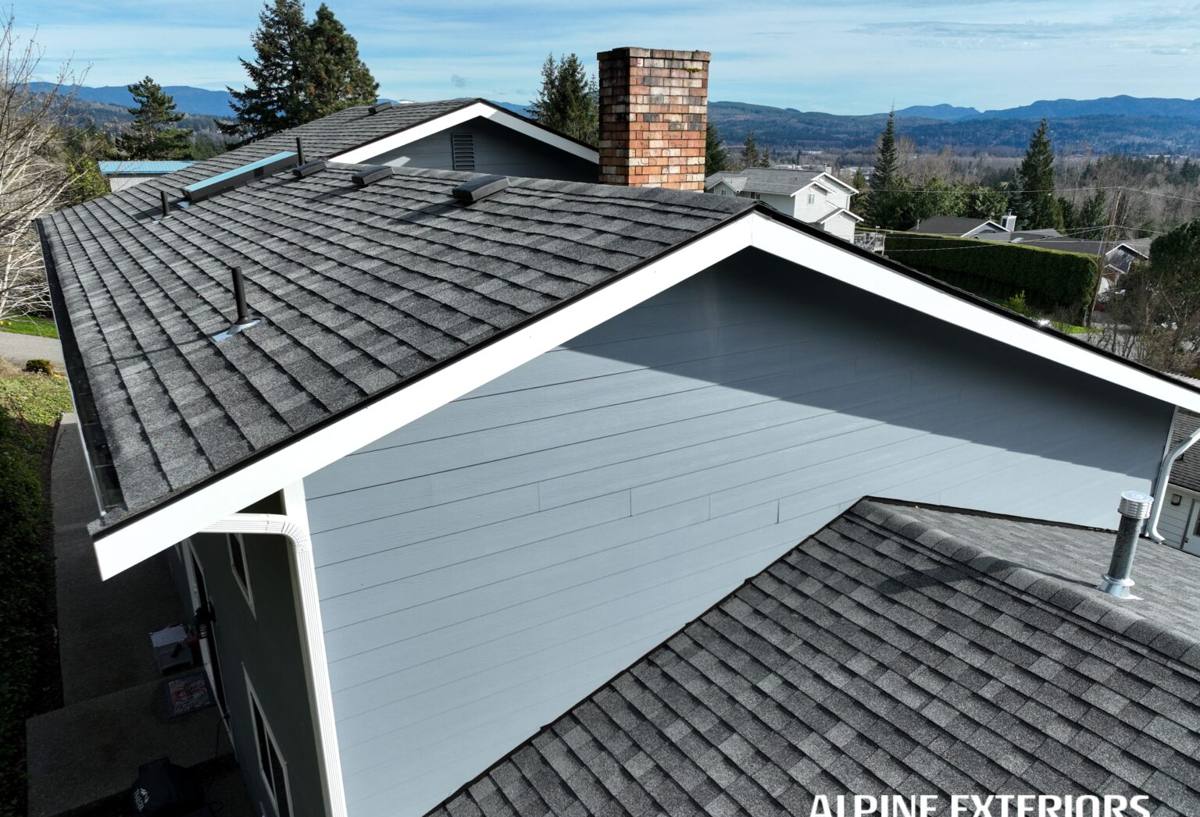
What Salt Air, Rain, and Moss Actually Do to a Metal Roof
Salt Air and Corrosion
Salt in the air moving through Bellingham off the Sound speeds up corrosion on any exposed metal, fasteners, flashing, panel edges, and cut ends, faster than it would in a drier inland climate. On a metal roof, coating quality and fastener material aren't cosmetic choices; they determine how many years pass before corrosion starts undermining the roof rather than just discoloring the surface. A panel with a thin or mismatched coating, or fasteners that aren't rated for coastal exposure, shows rust streaking and pitting well before a properly specified system would.
Driving Rain and Where Water Actually Goes
Rain in this part of Whatcom County tends to arrive on a wind rather than fall straight down, which pushes water sideways against seams, up under trim, and into any flashing detail that isn't fully lapped and sealed. Metal sheds water fast once it's installed correctly, but that speed cuts both ways: a poorly formed seam or an under-detailed valley moves water into the building just as efficiently as a correctly built one moves it off the roof.
Moss, Shade, and Sehome's Tree Cover
One real advantage of metal roofing in a neighborhood like Sehome, with its mature trees and shaded lots on the rise toward Sehome Hill, is that moss and algae have a much harder time getting a foothold on a smooth metal panel than they do on the textured surface of asphalt shingles. That doesn't make a metal roof maintenance-free in this climate. Needles, leaves, and other debris still collect in valleys and around penetrations, and left alone that debris holds moisture against the panel long enough to stain finishes and, given enough time, work on fasteners and cut edges underneath it.
Panel Types and What Actually Holds Up Here
Standing Seam vs. Exposed-Fastener Panels
Standing seam panels use concealed clips and interlocking seams, so there are no exposed fasteners punching through the panel face for wind-driven rain to work against over the life of the roof. Exposed-fastener panels cost less upfront, but every screw penetration is a spot where a rubber washer can compress, crack, or back out over time, and in a climate with this much sustained wind-driven rain, that becomes an ongoing maintenance item rather than a one-time install decision. We install standing seam on the large majority of metal roofing jobs in Sehome for that reason, and reserve exposed-fastener panels for outbuildings, additions, or budgets where that trade-off has been discussed and accepted upfront.
Gauge, Coatings, and Galvanic Corrosion
Panel thickness, or gauge, affects dent resistance and how well a roof holds its shape over decades, and coating type affects how long the finish resists fading and chalking under UV and salt exposure together. PVDF-based (Kynar-type) finishes hold color and chalk resistance longer than polyester coatings, which matters more here than in a drier climate because salt air and sun exposure are working on the finish at the same time. Just as important, and often overlooked by homeowners comparing bids, is galvanic corrosion: mixing incompatible metals, aluminum flashing against a steel panel, or a fastener alloy that doesn't match the panel, sets up a reaction that corrodes the less noble metal from direct contact, sometimes faster than either metal would corrode from weather exposure alone. Every metal and fastener on the roof has to be compatible with every other metal it touches, not simply rated individually for coastal use.
What a Correct Metal Roof Install Involves
A metal roof is a system, not a single product, and skipping any layer of that system shows up eventually as a leak, a corroded fastener, or a panel that's come loose from thermal movement it was never built to handle.
Deck Inspection Before Anything Goes Down
Metal roofing typically goes down over a solid, sound deck rather than directly over old shingles, so tear-off is also the point where we find rot, soft spots, or moisture damage that's been building quietly underneath the old roofing. That inspection matters more on older Sehome homes, where prior roofing layers or past repairs can be hiding deck damage that isn't visible from inside the attic.
Underlayment and High-Temperature Protection
Metal roofing needs a high-temperature synthetic or self-adhered underlayment underneath it — standard felt breaks down under a metal panel's heat cycling far faster than it does under shingles. Ice-and-water shield membrane at eaves, valleys, and other high-risk transitions adds a second line of defense exactly where wind-driven rain is most likely to find a way in.
Panel Layout, Seaming, and Thermal Movement
Metal expands and contracts with temperature swings more than asphalt shingles do, so standing seam panels are installed with clips that let each panel move independently rather than being pinned rigidly to the deck at every point. Skipping this detail, or spacing clips too far apart, leads to oil-canning, visible waviness across the panel face, or in worse cases seams that work loose after repeated thermal cycles through the year.
Flashing at Valleys, Walls, and Penetrations
The open field of a metal panel rarely leaks on its own. Almost every leak we trace back on a metal roof starts at a transition — a valley, a chimney or vent penetration, or where a roofline meets a wall — that wasn't flashed as part of the whole system. Flashing has to be formed to fit the specific panel profile and properly integrated with the underlayment beneath it, not caulked on top as an afterthought once the panels are already in place.
Metal Roofing vs. Asphalt Shingles for a Sehome Home
| Factor | Metal Roofing | Asphalt Shingles |
|---|---|---|
| Typical lifespan | 40-60+ years with a correct install | 20-30 years depending on grade |
| Moss and algae resistance | Strong on shaded, north-facing planes | Weaker; needs algae-resistant granules to compete |
| Upfront cost | Higher material and labor cost | Lower upfront cost |
| Performance in driving rain | Excellent when seams and flashing are done correctly | Good, relies more on shingle overlap and underlayment |
| Maintenance over time | Low if standing seam; debris clearing in valleys still needed | Periodic moss treatment and granule loss over time |
| Repairability | Panel-specific; matching finish years later can be harder | Individual shingles can be replaced fairly easily |
Neither option is universally "better." A lot of Sehome homes do perfectly well on a correctly installed asphalt shingle roof, and we install plenty of them. Metal tends to make the most sense for homeowners planning to stay long-term, for steep or heavily shaded roof planes where moss has been a recurring problem, or for anyone who's tired of budgeting for roof replacement every couple of decades.
Cost Factors on a Sehome Metal Roofing Project
| Factor | What It Affects |
|---|---|
| Panel type (standing seam vs. exposed-fastener) | Upfront cost, long-term maintenance, and expected lifespan |
| Gauge and coating (PVDF vs. polyester) | Dent resistance and how long the finish resists fading and chalking |
| Roof complexity (valleys, dormers, penetrations) | Amount of custom flashing work and labor time |
| Deck condition found at tear-off | Whether repair work is needed before panels go down |
| Roof pitch and access | Staging, safety requirements, and overall labor time |
| Color and finish selection | Material cost and how well the roof matches trim and siding |
Exact numbers depend on the specific home and roof, which is why we walk the property and inspect the attic in person before giving a real estimate rather than quoting a flat per-square rate over the phone.
How Our Process Works
- In-person inspection: We walk the existing roof and attic ourselves and document what we actually find, rather than estimating from a description or photo.
- Written, itemized estimate: You get a clear bid covering tear-off, underlayment, panel type and gauge, flashing scope, and cleanup, not a single vague line item.
- Scheduling around the weather: We build reasonable flexibility into the timeline, because wet-season delays are a normal part of working in this region, not an excuse we reach for later.
- Tear-off and deck repair: Old roofing comes off completely, and any deck damage we find gets repaired before underlayment or panels go down.
- Underlayment, flashing, and panel installation: Each layer goes on to manufacturer specification, with extra attention at valleys, penetrations, and wall transitions.
- Final walkthrough and cleanup: We review the finished roof with you in person and do a full site sweep before we consider the job done.
A Practical Checklist Before You Choose a Metal Roofing Contractor
- Do they specify panel type, gauge, and coating in writing, not just "metal roofing"?
- Is flashing work at valleys, chimneys, and walls explicitly written into the bid?
- Do they explain how they handle fastener and flashing metal compatibility to avoid galvanic corrosion?
- Do they carry current Washington contractor licensing, liability insurance, and workers' compensation?
- Can they point to recent, real metal roofing work in or near Bellingham?
- Does the estimate clearly separate the manufacturer's material warranty from the contractor's own workmanship warranty?
Signs a Sehome Roof Is Ready for a Metal Upgrade
- Repeated moss or algae treatments on the same shaded roof planes every year or two
- An asphalt roof nearing the end of its expected lifespan on a home you plan to keep long-term
- Granule loss, curling, or cracking shingles combined with a steep or heavily shaded roof pitch
- Rust staining or corrosion already visible on existing metal flashing, gutters, or trim
- A desire to stop budgeting for roof replacement every couple of decades
Why Hiring a Crew That Already Works in Sehome Matters
A crew that installs metal roofing across Bellingham regularly has already seen how salt air corrodes underspecified fasteners, how wind-driven rain finds its way through a poorly lapped valley, and which roof orientations in Sehome's shaded, tree-covered terrain hold moss or debris longest through the wet months. That experience shows up in small decisions made on the job itself — which panel profile actually fits a given roofline, where extra flashing attention is worth the time, and which fastener and flashing combinations to avoid given what salt air does to mismatched metals over years, not just months. A contractor who only occasionally installs metal roofing, or who hasn't worked this specific stretch of Whatcom County, is more likely to apply generic details that don't quite hold up against what this climate actually throws at a roof.
It also matters once the job is finished. A workmanship warranty is only as good as the company standing behind it years down the road, and a contractor with an established, ongoing presence in Bellingham is one you can actually reach if a question comes up later, not a name that's moved on.
If you're weighing metal roofing for a Sehome home, or want an honest second opinion on whether it's the right call for your specific roof, we're glad to take a look and give you a straightforward, no-pressure written estimate. Use the form below to schedule a free inspection.