 Bellingham Siding
 Siding Built for Sehome's Particular Mix of Weather
Sehome sits close enough to Bellingham Bay that salt-laden air is a daily fact of life for the neighborhood's siding, trim, and paint. Add Whatcom County's long wet season, driving rain that comes in sideways off the water, and a moss season that can stretch from fall through spring, and you have a climate that is genuinely hard on exterior materials. Homes here don't fail because owners neglect them — they fail because the siding wasn't matched to what this specific location throws at it year after year.
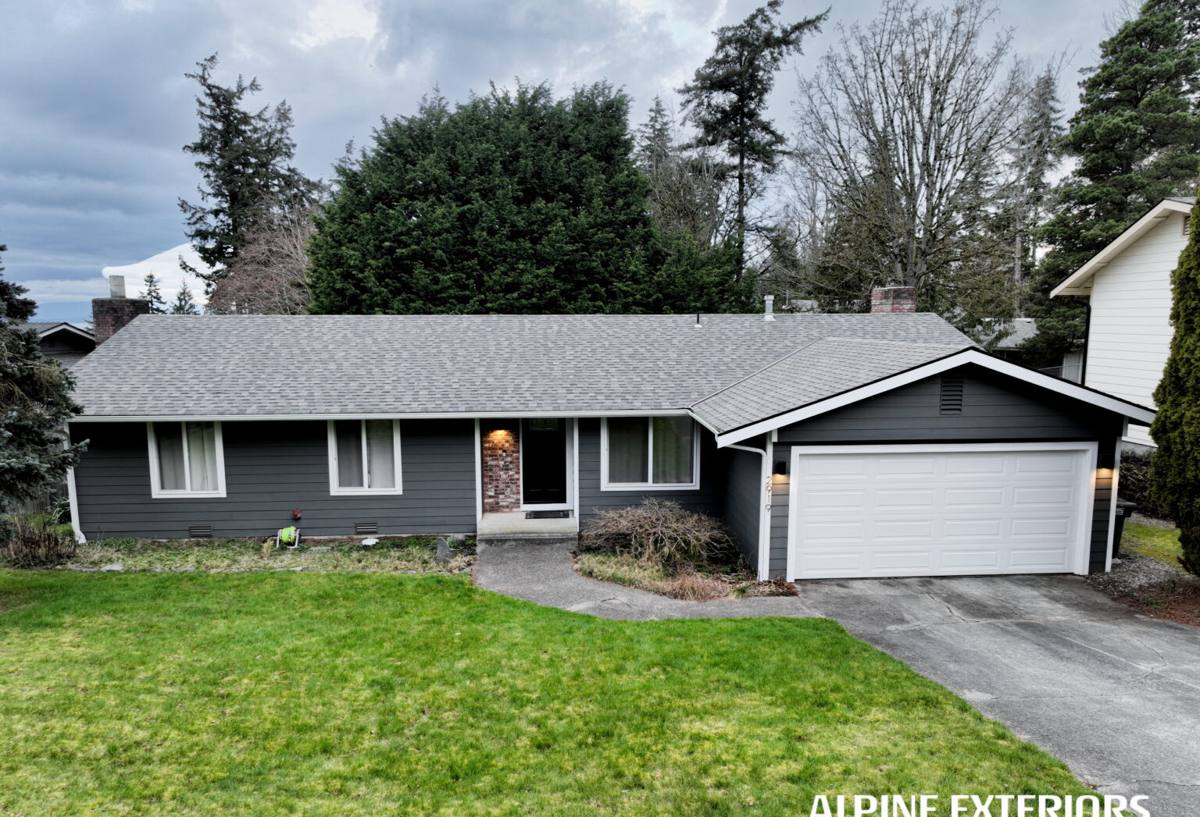
Older homes in Sehome, and the surrounding hillside and university-adjacent streets, were often sided with materials chosen for cost or convenience decades ago: cedar, primed wood, or vinyl. Those materials can perform fine in a dry inland climate. In a coastal, moss-prone, high-rainfall pocket like Sehome, they tend to show their limits early — cupping, moss colonization, paint failure, and moisture intrusion at seams and trim. Fiber cement siding, installed correctly, is built to resist all four of those failure modes at once.
What Salt Air, Rain, and Moss Actually Do to Siding
It helps to understand the mechanisms, not just the symptoms, because they explain why the fix has to be a system, not a product swap.
Salt Air
Airborne salt is hygroscopic — it pulls moisture out of the air and holds it against whatever surface it lands on. On wood and many composite products, that means the siding surface stays damp longer than it would a few miles inland, which accelerates paint breakdown, swelling, and rot at fastener points and butt joints.
Driving Rain
Rain that comes in at an angle, rather than straight down, gets forced up under laps, into unsealed joints, and behind poorly flashed penetrations (hose bibs, light fixtures, vents). A siding system's water-shedding details — lap geometry, flashing, house wrap integration — matter as much as the siding material itself.
Moss Season
Extended damp, shaded conditions on north-facing walls and under eaves let moss and algae take hold on porous or textured surfaces. Once established, moss holds moisture against the substrate continuously, which is exactly the condition that leads to rot in wood-based sidings and premature coating failure on lower-grade composites.
Why We Install Only James Hardie Fiber Cement
We've standardized on James Hardie siding for every home we side, in Sehome and across our Whatcom County service area, for reasons specific to this climate:
- Non-combustible core: fiber cement doesn't provide fuel or rot substrate the way wood-based products can.
- Engineered for the Pacific Northwest: Hardie's HZ10 product line is formulated for moisture- and moss-prone climates like ours, not a one-size-fits-all national spec.
- Factory-applied ColorPlus finish: the color and protective coating are baked on under controlled conditions, which holds up to salt air and UV exposure far better than field-applied paint on wood or lower-grade composite.
- Dimensionally stable: fiber cement doesn't swell, cup, or warp with repeated wet-dry cycles the way wood and some engineered wood products can.
- Strong transferable warranty: backed by a manufacturer with decades of track record, which matters when you eventually sell the home.
We don't install LP SmartSide, vinyl, Cemplank, Allura, primed spruce, or cedar. Each of those has legitimate uses elsewhere, but for the specific combination of salt exposure, driving rain, and moss pressure that Sehome homes face, we've found the long-term maintenance burden and moisture behavior don't hold up as well as Hardie's fiber cement system. That's a standard we apply to every job, not a sales pitch for any one house.
What a Correct Fiber Cement Installation Actually Involves
Fiber cement siding is only as good as the installation underneath it. A rushed or undertrained crew can put Hardie board on a wall and still leave it vulnerable to the exact problems it's designed to prevent. A correct job includes:
- Substrate inspection and repair — checking sheathing for existing rot or moisture damage before anything new goes up, especially on walls that faced years of driving rain.
- Weather-resistive barrier — a properly lapped and sealed house wrap or building paper behind the siding, so any water that does get past the cladding has somewhere to go.
- Rainscreen or drainage gap where appropriate — furring or a drainage mat that lets bulk water drain and air circulate behind the siding, reducing the damp conditions moss needs to establish.
- Correct flashing at every penetration — windows, doors, hose bibs, vents, and any wall-mounted fixtures, since these are the points where driving rain most often finds a way in.
- Manufacturer-spec fastening and clearances — proper nail placement, minimum ground clearance, and gaps at trim and butt joints, all per James Hardie's published installation guidelines.
- Factory-finished caulking and touch-up — using Hardie-compatible sealants and matching ColorPlus touch-up product so the factory finish integrity isn't compromised at cut edges.
Skipping any one of these steps doesn't show up on day one — it shows up in year three or four, as moisture staining, moss regrowth in the same spots, or premature caulk failure.
Our Process for Sehome Siding Projects
1. On-Site Assessment
We walk the home with you, looking specifically at north- and west-facing walls where moss pressure and driving rain tend to concentrate, and check for existing moisture damage around windows, trim, and grade-level siding.
2. Scope and Product Selection
We walk you through Hardie's plank, shingle, and panel options and help you choose profiles and colors that fit the home's style, then put together a clear, itemized scope — no vague allowances.
3. Tear-Off and Substrate Repair
Old siding comes off, sheathing gets inspected, and any rot or damage is repaired and documented before new material goes up — not papered over.
4. Weather Barrier and Drainage Detailing
House wrap, flashing, and drainage detailing go in first, since this layer does most of the actual work of keeping water out over the life of the siding.
5. Installation to Manufacturer Spec
Hardie fiber cement goes up per James Hardie's published fastening, clearance, and joint-treatment requirements, which is also what keeps the manufacturer warranty intact.
6. Final Walkthrough
We review the finished work with you, including caulking, trim details, and touch-up, before calling the job complete.
Why Local Experience in Sehome Matters
Siding crews that mostly work drier, inland areas can install a technically correct product and still miss climate-specific details — like where to prioritize drainage gaps, how much clearance to leave at grade on a sloped Sehome lot, or which walls need extra attention because of prevailing wind-driven rain off the bay. A crew that regularly works Bellingham and greater Whatcom County has already seen how these specific conditions play out on real homes, and builds those lessons into every install rather than treating this as a generic siding job.
Cost Factors for Sehome Fiber Cement Projects
Every home is different, but the factors that most often move the price on a Sehome fiber cement project are consistent:
| Factor | Why It Matters Here |
|---|---|
| Substrate condition | Homes with existing moisture damage from wood or vinyl siding often need sheathing repair before new siding goes on |
| Drainage detailing | Adding a rainscreen or drainage gap adds labor but meaningfully reduces future moss and moisture issues |
| Home height and access | Multi-story homes on Sehome's hillside streets can require more scaffolding or lift access |
| Trim and architectural detail | Homes with more windows, dormers, or trim features require more precise cutting and flashing work |
| Siding profile chosen | Lap, shingle, and panel profiles differ in material and labor cost |
Signs Your Sehome Home May Need New Siding Soon
- Moss or algae that keeps returning to the same wall sections no matter how often it's cleaned
- Paint that's peeling, bubbling, or chalking faster than it used to
- Soft spots, cupping, or visible warping in wood-based siding
- Staining or discoloration around window and door trim
- Visible gaps at butt joints or corner trim that weren't there a few years ago
- A musty smell or visible staining on interior walls that back up to exterior siding
Any one of these on its own isn't necessarily an emergency, but together they're a sign the current siding system is losing the fight against Sehome's climate.
Ready to Talk Through Your Home
If you're weighing your options for a Sehome home showing wear from salt air, rain, or moss, we're happy to take a look and give you an honest read on what's going on and what it would take to fix it right. Reach out for a free, no-pressure estimate — there's a form below to get started.