 Bellingham Siding
 Asphalt Shingle Roofing Built for Sehome's Conditions
Sehome sits close enough to Bellingham Bay to catch salt-laden air off the water, while its tree cover and hillside lots keep roofs shaded and damp for long stretches of the year. That combination is hard on asphalt shingles in ways that don't show up on a spec sheet. Salt air accelerates corrosion on exposed metal fasteners and flashing. Shade and moisture feed moss and algae growth that can lift shingle edges and trap water against the deck. And Whatcom County's driving, wind-blown rain finds every gap in flashing and underlayment that a fair-weather installation might get away with elsewhere.
A correctly installed asphalt shingle roof handles all of that — but only if it's built for this climate specifically, not installed the same way it would be in a dry, low-wind region. That's the difference between a roof that looks fine for a year or two and one that actually holds up through a decade of Pacific Northwest winters.
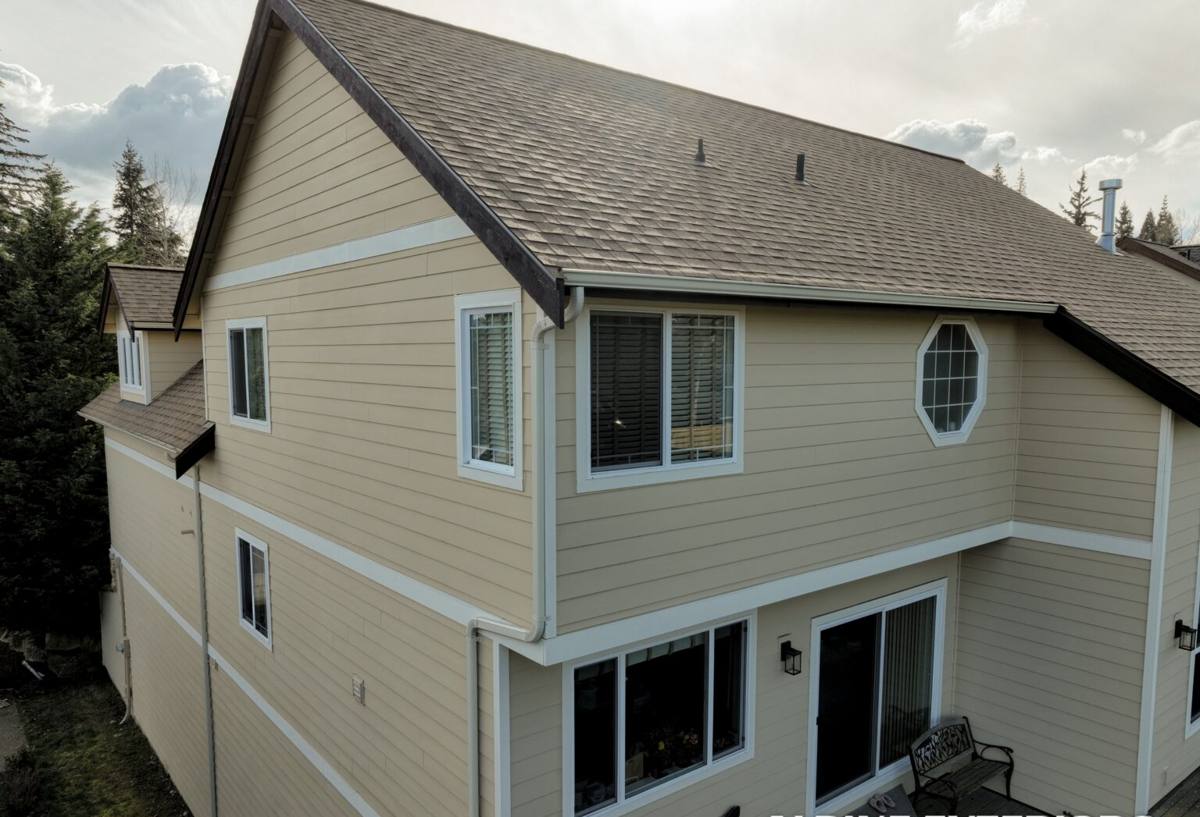
What Sehome Homes Actually Need From a Shingle Roof
Most of the roofing problems we see in this part of Bellingham trace back to a handful of climate-driven issues, not shingle quality alone:
Moss and Algae Pressure
Sehome's mix of mature trees and marine-layer humidity creates near-ideal moss conditions on north-facing and shaded roof slopes. Moss isn't just cosmetic — its root structure works into shingle granules and seams, and mats of moss hold moisture against the roof surface long after the rest of the neighborhood has dried out. Left alone through a full moss season, that trapped moisture works its way under shingle tabs.
Wind-Driven Rain
Storms coming off the Strait of Georgia and Bellingham Bay don't just fall straight down — they push rain sideways and upward under shingle edges and around penetrations like vents and chimneys. A roof that relies on gravity alone to shed water, with weak or missing underlayment at the vulnerable points, will eventually leak in exactly those spots.
Salt-Air Corrosion
Proximity to the bay means metal components — nails, flashing, vent stacks — corrode faster than they would inland. Roofs built with standard-grade fasteners and thin flashing show rust streaking and early failure sooner than homeowners expect, especially on the windward side of the house.
Freeze-Thaw and Temperature Swings
Whatcom County winters aren't brutally cold, but the freeze-thaw cycles that do happen stress any water that's already found its way into the shingle mat or decking. A roof with hidden moisture problems tends to fail faster here than the same roof would in a milder, drier climate.
What a Correct Asphalt Shingle Job Involves
A shingle roof is a system, not a single product. Skipping or cheapening any one layer undermines the whole thing, especially in a climate that punishes shortcuts. Here's what we consider non-negotiable on every Sehome roof:
- Full tear-off to bare decking — we don't install over existing layers. Overlaying traps moisture and hides deck damage that needs to be addressed first.
- Deck inspection and repair — any soft, delaminated, or water-stained sheathing gets replaced before a single shingle goes down. This is the step that gets skipped most often on rushed jobs, and it's the one that causes the biggest problems later.
- Ice-and-water shield at vulnerable areas — valleys, eaves, and roof-to-wall transitions get self-adhering waterproof membrane, not just felt paper, because these are exactly where wind-driven rain gets pushed under the shingle line.
- Synthetic underlayment across the field — a durable, water-resistant layer under the entire roof, not just a minimum-code afterthought.
- Corrosion-resistant fasteners and flashing — given the salt-air exposure this close to the bay, we don't cut corners on nail and flashing quality.
- Proper flashing at every penetration — chimneys, vent pipes, and skylights are where most leaks actually start, so these get individual attention rather than a generic wrap.
- Balanced attic ventilation — intake and exhaust venting sized to the attic, which controls moisture buildup underneath the deck and extends shingle life from the inside out.
- Manufacturer-spec nailing pattern — correct nail count and placement per shingle, which is what wind and warranty ratings are actually based on.
How Our Process Works
- On-site inspection. We walk the roof (or use a drone where pitch or access makes that safer) and check the deck, flashing, ventilation, and any problem areas like moss buildup or valley wear — not just the shingles themselves.
- Written estimate. You get a clear breakdown of scope, materials, and price before any work starts. No vague allowances that turn into surprise add-ons.
- Tear-off and deck check. Old roofing comes off down to the sheathing, and any damaged decking is identified and replaced.
- Underlayment and flashing installation. Waterproof membrane at vulnerable areas, synthetic underlayment across the field, and new flashing at all penetrations and transitions.
- Shingle installation. Installed to manufacturer spec for nailing pattern and exposure, which is what actually determines wind resistance and warranty eligibility.
- Ventilation check. We confirm intake and exhaust venting is balanced for the attic space, adding or adjusting as needed.
- Cleanup and magnetic sweep. Full jobsite cleanup, including a magnetic nail sweep of the yard and driveway.
- Final walkthrough. We go over the finished roof with you before calling the job done.
Choosing the Right Shingle for This Climate
Not every asphalt shingle product is a good fit for a shaded, moisture-heavy, salt-air-adjacent roof. The table below covers the main categories homeowners in this part of Bellingham typically weigh against each other.
| Shingle Type | Typical Lifespan | Wind Rating | Algae/Moss Resistance | Best Fit |
|---|---|---|---|---|
| 3-Tab | Shorter end of the range | Lower | Standard granules only | Budget-driven projects, secondary structures |
| Architectural (Dimensional) | Mid-to-long range | Higher, better in wind-driven rain | Available with algae-resistant granules | Most Sehome homes — the standard choice we recommend |
| Impact-Resistant (Class 4) | Long range | High | Available with algae-resistant granules | Homes wanting maximum durability and potential insurance benefits |
For most Sehome properties, an architectural shingle with algae-resistant (copper- or zinc-infused) granules is the right balance of cost, durability, and moss/algae resistance. We treat algae-resistant granules as a standard recommendation here, not an upsell — the shaded, humid conditions in this neighborhood make it worth the modest price difference over a standard shingle.
What Actually Drives the Cost of a Reroof
Every roof is priced individually after inspection, but the factors below are what move the number up or down on most jobs in this area.
| Cost Factor | Why It Matters |
|---|---|
| Number of existing layers | More layers to tear off means more labor and disposal before new material goes on |
| Roof pitch and access | Steep or hard-to-access roofs take longer and require more safety setup |
| Deck condition | Rotted or delaminated sheathing found during tear-off needs replacement before shingles can go down |
| Number of penetrations | Each chimney, vent, or skylight needs individual flashing work |
| Ventilation upgrades | Adding or correcting intake/exhaust venting protects the new roof from the inside |
| Shingle tier chosen | 3-tab, architectural, and impact-resistant products carry different material costs |
| Tree cover and moss remediation | Heavily shaded lots may need moss treatment or limb clearance as part of the scope |
Repair or Full Replacement? What to Look For
Not every roofing problem means a full reroof. A few isolated damaged shingles or a single flashing leak can often be repaired. But certain signs point to a roof that's past the point where patching makes sense:
- Granule loss heavy enough that shingles look bald or patchy, especially on south- and west-facing slopes
- Shingle edges curling, cupping, or lifting
- Moss or algae established across large sections rather than isolated patches
- Soft spots or sagging when walked on the roof
- Daylight visible through the attic decking, or water staining on attic sheathing or insulation
- Repeated leaks in different spots after prior repairs
- Shingles nearing or past their expected service life with widespread wear, not just one bad section
- Missing or failing flashing at multiple penetrations, not just one
If you're only seeing one or two of these, a repair is often the honest answer, and we'll tell you that. Full replacement makes sense once the damage is spread across the roof or the underlying deck and ventilation are compromised.
Why a Crew That Already Works Sehome Matters
Roofing is local work in a way that's easy to underestimate. A crew that regularly works the Sehome area already understands the tree cover and moss patterns specific to shaded, hillside lots, knows how Whatcom County permitting and inspection typically go, and has a feel for how wind and rain actually hit roofs in this part of Bellingham versus a more exposed or more sheltered part of town. That local familiarity shows up in small but meaningful decisions — where to add extra waterproofing, which slopes need algae-resistant shingles most, how to stage material and equipment on a tree-lined or sloped lot without damaging landscaping.
It also matters for response time. A roofing problem that shows up mid-storm needs a crew that can get to your property quickly, not one dispatching from across the region. Working locally means we can turn around estimates, inspections, and follow-up service without the delays that come from long drive times.
Maintenance That Extends Roof Life Here
Even a well-installed roof benefits from basic upkeep in this climate. A few habits make a real difference over the life of a shingle roof in Sehome:
- Keep gutters clear of needles and leaf debris so water isn't backing up under the eaves
- Have moss addressed before it spreads across a full slope, rather than after
- Trim overhanging limbs that keep sections of the roof shaded and damp longer than necessary
- Schedule a periodic visual inspection, especially after major windstorms
- Address small flashing or fastener issues early, before wind-driven rain turns them into interior leaks
None of this requires major work — it's the kind of light, consistent maintenance that keeps a properly installed roof performing for its full expected life instead of failing early.
Get a Straightforward Estimate
If your Sehome roof is showing wear, dealing with persistent moss, or you're just planning ahead, we're happy to take a look and give you an honest read on repair versus replacement. Reach out for a free, no-pressure estimate using the form below — no obligation, just a clear assessment of where your roof actually stands.