 Bellingham Siding
 Why Windows in Puget Take a Different Kind of Beating
Puget sits close enough to the water that homes here deal with a combination most inland Whatcom County neighborhoods don't have to think about: salt-laden air off the Sound, wind-driven rain that comes in sideways during winter storms, and long stretches of shade and dampness that keep moss and algae going nearly year-round. None of that is dramatic on its own, but together it's exactly the kind of slow, steady exposure that wears out windows faster than a sales brochure ever tells you.
Salt air is corrosive to hardware, fasteners, and some frame finishes over time. Driving rain finds every gap in flashing or sealant and pushes water where it shouldn't go. And moss doesn't just grow on roofs — it takes hold in window sills, tracks, and corners that stay damp and shaded, holding moisture against the frame long after the rain has stopped. Add in Bellingham's cool, heating-dominated climate, and a window that's underperforming isn't just a comfort problem — it's steadily costing you on the energy bill too.
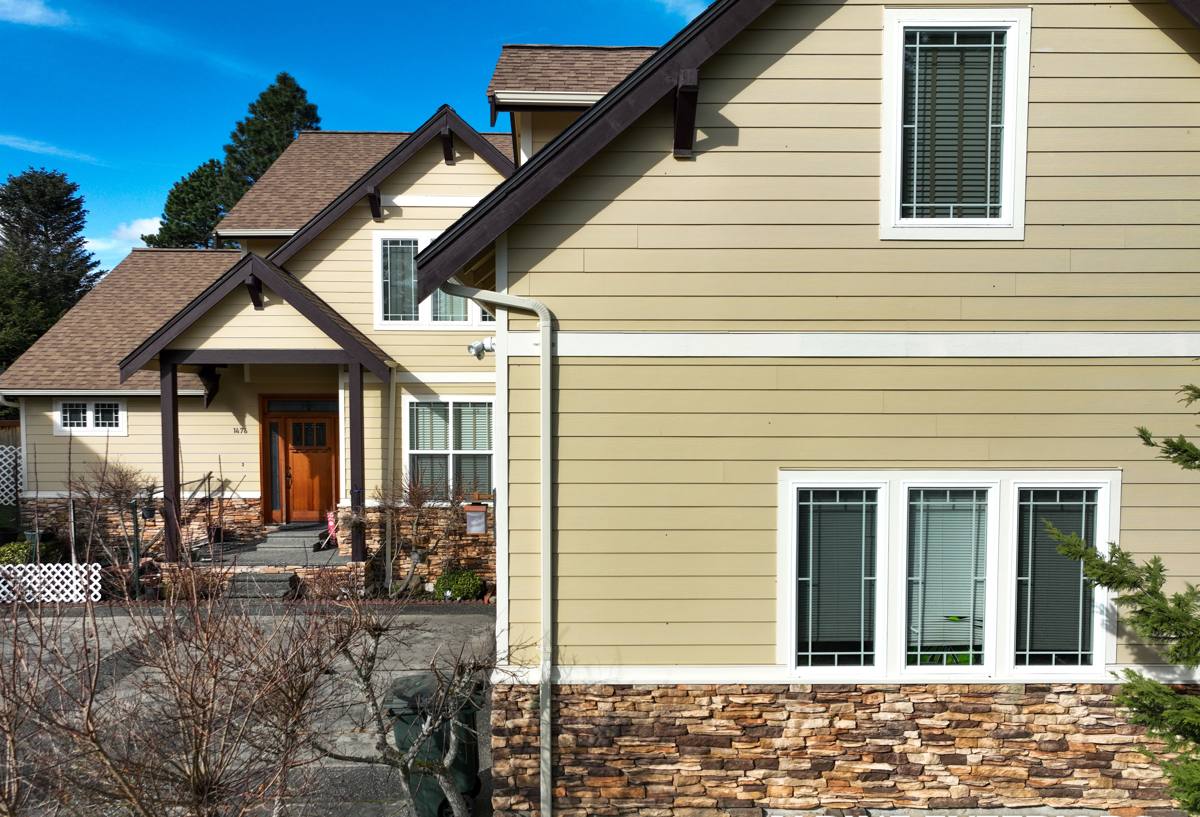
Signs Your Current Windows Are Working Against You
Most homeowners don't replace windows because they woke up wanting new windows — they replace them because something started bothering them enough to act. In this part of Whatcom County, the usual suspects are:
- Fogging or a hazy film between the panes — this means the seal on the insulated glass unit has failed and the gas fill (or air) has been compromised. It can't be cleaned away because it's inside the glass assembly.
- A noticeable draft near the frame, especially during winter storms with wind off the water.
- Condensation forming on the inside of the glass or on the sill, which points to poor insulating performance or interior humidity with nowhere to go.
- Soft or discolored wood at the sill or bottom corners — a sign moisture has been sitting there, sometimes for years, before it became visible.
- Moss or dark green growth building up in the tracks or on the exterior trim, which holds dampness against the frame.
- Windows that are hard to open, close, or lock — frames can swell, warp, or shift slightly as materials age and absorb moisture.
Any one of these on its own might not mean much. Several of them together, especially on a home that's had its original windows for 20+ years, usually means the windows are no longer doing their job — for comfort or for your utility bill.
What a Correct Window Replacement Actually Involves
Swapping glass and frame is the easy part to picture. The part that actually determines whether the new windows perform well in Puget's weather is everything around the window opening.
Water Management Comes First
Before a new window ever goes in, the opening needs a sill pan or sloped sill flashing so any water that gets past the exterior seal has somewhere to drain — out, not into the wall cavity. Housewrap or weather-resistive barrier needs to be properly lapped over the flanges, not just taped over gaps. This is the detail that separates a window that holds up through a decade of driving rain from one that starts showing interior staining after a few wet winters.
Integration With the Siding
Because we work on siding and windows together, we pay close attention to how the window flashing ties into the surrounding wall cladding — whether that's lap siding, shingles, or panel systems. A window installed correctly but sealed poorly against the siding around it is still a leak waiting to happen. This is one of the more common gaps we see when window work and siding work are handled by separate crews who never talk to each other.
Insulation and Air Sealing
The gap between the window frame and the rough opening needs to be filled with a low-expansion foam or backer rod and sealant — not stuffed with fiberglass batting, which does little for air sealing and nothing for moisture control. This detail affects both drafts and long-term energy performance, and it's invisible once trim goes back on, which is exactly why it matters who's doing the work.
Choosing Frame Materials and Glass for This Climate
There's no single "best" window for every home, but some materials are a more sensible fit for a marine climate with salt air and near-constant moisture exposure than others. Here's how the common options compare for this specific setting.
| Frame Material | How It Handles Salt Air & Moisture | Maintenance | Typical Fit |
|---|---|---|---|
| Vinyl | Doesn't corrode or rot; performs well in coastal, damp climates | Low — occasional cleaning | Most common choice for value and durability here |
| Fiberglass | Very stable in temperature swings and moisture; resists warping | Low | Good upgrade option, higher upfront cost |
| Wood / Wood-clad | Attractive but needs consistent upkeep to prevent moisture damage over time | Higher — periodic refinishing or sealing | Homes prioritizing a specific traditional look |
| Aluminum | Can be prone to corrosion near salt air and conducts more cold | Moderate | Generally not our first recommendation this close to the Sound |
We're not against any of these materials outright — it's a matter of matching the material to the maintenance a homeowner actually wants to do, and to the specific exposure a given side of the house gets. A window facing the prevailing weather off the water has different demands than one tucked under an eave.
Energy Efficiency: What Actually Matters in a Marine Climate
A lot of window marketing leans on numbers that matter more in hot, sunny climates than they do in Bellingham. Understanding a couple of terms helps you make a better decision instead of just picking the highest number on a sticker.
U-Factor Over Solar Heat Gain
U-factor measures how well a window prevents heat from escaping — lower is better, and it's the number that matters most in a heating-dominated climate like ours, where the bigger cost is keeping heat in during long, mild-but-persistent wet winters. Solar Heat Gain Coefficient (SHGC) matters more in climates fighting off intense summer sun; here it's a secondary consideration, not the headline number.
Double-Pane vs. Triple-Pane
Double-pane windows with a quality low-E coating and argon gas fill are the standard upgrade from older single-pane or early double-pane units, and for most Puget homes they deliver a solid balance of performance and cost. Triple-pane adds another layer of insulation and can be worth it for homes with a north or water-facing exposure that takes the brunt of winter wind, but the added cost doesn't pencil out for every wall of every house.
Spacers and Seal Quality
The spacer bar between panes of glass affects both the insulating value and how long the seal lasts before it can fail — this is directly relevant here, since failed seals from moisture cycling are one of the most common reasons we get called out to look at "old" windows that are really just failed ones. A warm-edge spacer performs better and resists condensation at the edge of the glass, which matters in a consistently damp climate.
Our Process for a Puget Window Replacement
We keep the process straightforward because the value is in the details, not in the sales pitch.
- On-site assessment — we look at existing windows, sills, and the surrounding siding and trim to understand what's failing and why, not just what's visible from the street.
- Honest recommendation — frame material, glass package, and scope based on your home's actual exposure, not an upsell script.
- Careful removal — protecting existing siding and interior finishes, and checking the rough opening for hidden moisture damage before anything new goes in.
- Correct flashing and installation — sill pan, weather barrier integration, and air sealing done in the right order, every time.
- Siding tie-in — trim and siding around the new window sealed and finished so water management is continuous, not patched.
- Walkthrough and cleanup — we show you the finished work and leave the site clean.
Why It Matters That We Already Work in Puget
A crew that mostly works inland doesn't always think about salt air corrosion on fasteners, or how much shade and moisture a particular lot holds onto compared to a home a few blocks away with more sun exposure. Working regularly in this part of Bellingham means we've already seen how these specific conditions play out on real homes over years, not just in a manufacturer's spec sheet. It also means we're used to coordinating window and siding work as one job instead of two separate trades that don't communicate — which is where a lot of leaks and callbacks actually start.
A Practical Checklist Before You Replace Your Windows
- Check for fogging or haze between panes on each window — note which ones and which side of the house they're on.
- Feel for drafts near the frame on a windy day.
- Look at sills and bottom corners for soft spots, discoloration, or moss buildup.
- Note which windows face the prevailing wind and rain versus which are more sheltered — they may not need the same solution.
- Ask any contractor how they handle sill flashing and siding integration, not just what brand of window they sell.
- Get a written scope of work, not just a window model number and a price.
If you're weighing whether it's time to replace windows in your Puget home, we're happy to take a look and give you a straightforward assessment — no pressure, no hard sell. Use the form below to request a free estimate.