 Bellingham Siding
 Ferndale's Climate Is Rougher on a Roof Than Most Homeowners Realize
Ferndale sits close enough to the water that homes here deal with a mix most inland Whatcom County properties don't: airborne salt moisture, near-constant damp air, and long stretches of low winter sun that never quite dries out a north-facing roof plane. Add in the driving rain that comes sideways off a winter storm and the moss that finds a foothold on anything that stays wet for more than a few days, and you've got a roofing environment that's genuinely more demanding than the marketing brochures assume.
Asphalt shingles were never really engineered around this combination. They tolerate rain fine, but the constant moisture cycle — wet, damp, wet again, rarely fully dry — is what accelerates granule loss, encourages moss and lichen growth under the tab edges, and shortens the practical service life of a shingle roof well below its rated years. Metal roofing handles that cycle differently, which is why we get asked about it so often on Ferndale homes specifically.
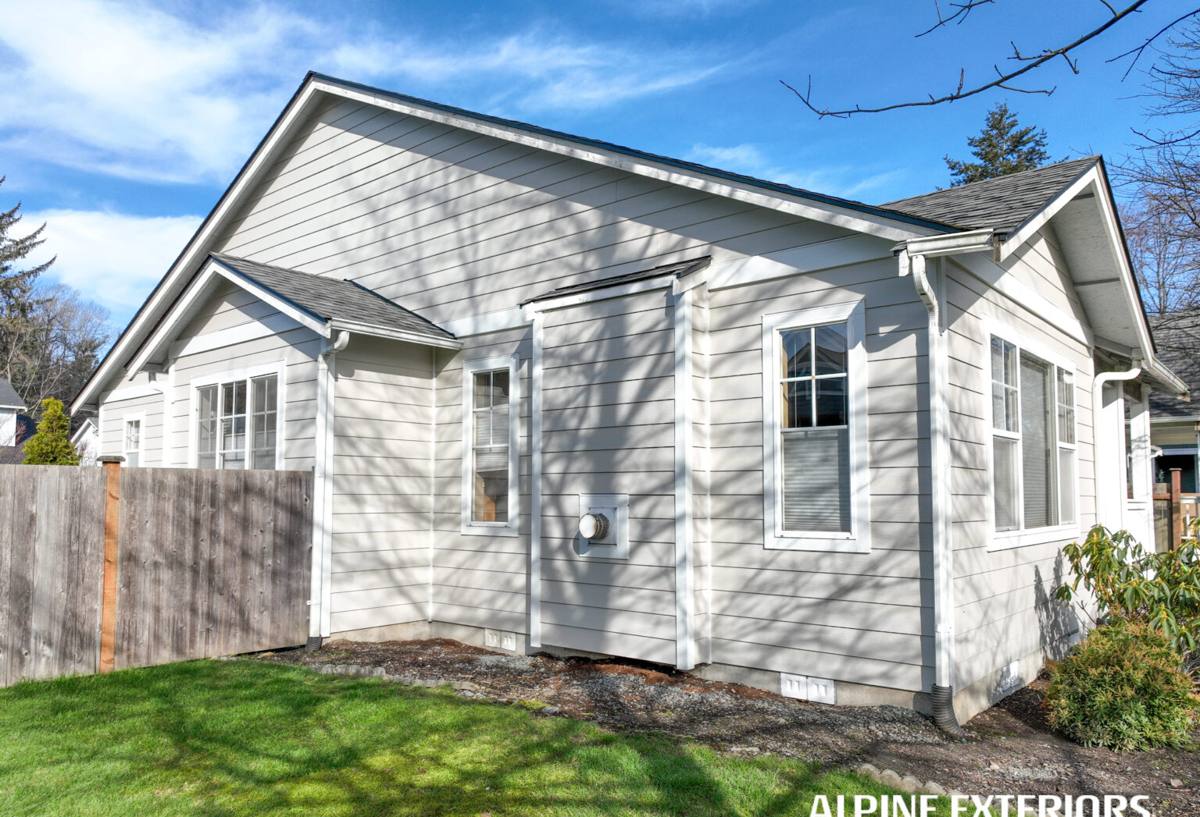
Why Metal Roofing Makes Sense for This Area
Metal isn't the right fit for every home or every budget, and we'll say that plainly. But for Ferndale properties dealing with salt-tinged air and a moss season that can run eight or nine months of the year, it solves a few problems at the source rather than requiring constant upkeep:
- Moss and lichen have a much harder time gripping a smooth metal surface than they do the textured, granulated surface of a shingle.
- Steep, slick panel surfaces shed rain fast, which cuts down the standing-moisture time that moss and algae need to establish.
- A correctly installed metal roof typically outlasts two or more shingle roofs over its service life, which matters when re-roofing a steep or complex roofline is disruptive and expensive.
- Metal handles wind-driven rain better when panels and flashing are lapped and sealed correctly, which matters on homes exposed to open weather off the water.
None of that means metal roofing is maintenance-free — nothing on a roof in this climate is — but it shifts the maintenance burden from constant granule and moss management to occasional inspection and cleaning.
The Metal Roofing Systems We Install
"Metal roof" covers a few genuinely different products, and the right one depends on the home's roofline, budget, and how close it sits to salt air exposure.
| System | How It's Attached | Best Fit | Trade-Offs |
|---|---|---|---|
| Standing seam | Concealed clips, no exposed fasteners on the panel face | Homes closer to the water, steep or highly visible roofs | Higher upfront cost, but nothing exposed for salt air or UV to work against |
| Exposed-fastener panel (e.g. corrugated or ribbed steel) | Screws with rubber washers driven through the panel | Outbuildings, garages, budget-conscious re-roofs | More affordable, but fastener gaskets are the long-term weak point and need periodic checking |
| Stone-coated steel | Interlocking panels styled to resemble shingle or tile | Homes wanting a traditional look with metal's durability | Heavier system, more installation detail around the coating edges |
We'll walk through which of these actually fits your roofline and budget rather than defaulting to one product — a low-slope addition and a steep primary roof often call for different answers on the same house.
Steel vs. Aluminum
Both are common choices. Steel panels are generally more affordable and very strong, and modern coatings resist corrosion well. Aluminum costs more but doesn't rust in the traditional sense at all, which is worth weighing for homes with more direct salt air exposure. Neither is automatically "the right one" — it's a conversation about your specific site and budget.
What a Correct Metal Roof Installation Actually Involves
Metal roofing fails early almost always because of installation shortcuts, not because the material itself gave out. A correct job in this climate includes:
- Full underlayment rated for metal roofing, not a leftover felt product meant for shingles.
- Fastener and flashing metal that's compatible with the panel metal — mixing dissimilar metals in a moist, salt-tinged environment causes galvanic corrosion at the contact points, which is one of the most common failure points we see on poorly matched installs.
- Proper panel overlap and sealed seams sized for wind-driven rain, not just standard drip conditions.
- Room for thermal expansion — metal panels move slightly with temperature swings, and fastening that doesn't account for it eventually causes oil-canning or fastener stress.
- Adequate roof ventilation so moisture from inside the home doesn't condense against the underside of the panels.
- Correct valley, ridge, and penetration flashing — the places roofs actually leak are almost never the flat panel field, they're the transitions.
Problems We Commonly See on Existing Metal Roofs Near Ferndale
When we're called out to look at an underperforming metal roof in this area, it's usually one of a short list of issues:
- Galvanic corrosion at fastener points from mismatched metals — small rust streaks radiating from screws or flashing seams.
- Loose or backed-out fasteners on exposed-fastener panels where the rubber gasket has hardened and stopped sealing.
- Moss and organic buildup in valleys and against dormers where debris collects and holds moisture even on an otherwise moss-resistant panel surface.
- Poor flashing details around chimneys, skylights, and roof-to-wall transitions — the panels themselves are fine, but the detail work around them wasn't.
- Condensation staining on the underside from inadequate ventilation, which shows up as rust or moisture damage that has nothing to do with the roof surface itself.
Our Process for a Ferndale Metal Roofing Project
We keep the process straightforward and put the decisions in your hands rather than pushing a single product:
- On-site inspection and measurement of the existing roof, decking condition, and any problem areas — valleys, penetrations, ventilation.
- Honest assessment of tear-off vs. overlay — some roofs can accept metal over existing material, others need a full tear-off to check decking and start clean, particularly if there's existing moisture damage.
- System and panel selection based on your roofline, budget, and exposure — walking through the trade-offs in plain terms.
- Written scope covering underlayment, fastener type, flashing approach, and ventilation before any work starts.
- Installation, with attention to the flashing and transition details that determine whether the roof performs for decades or leaks in five years.
- Site cleanup — old material, fasteners, and debris hauled off, not left for you to deal with.
Maintaining a Metal Roof in a Marine Climate
Metal roofing needs far less upkeep than shingles, but "none" isn't accurate for a property this close to the water. A short annual checklist covers most of it:
- Clear valleys, gutters, and any roof-to-wall transitions of leaves, needles, and debris before the fall rains set in.
- Look for early rust streaking at fasteners or flashing seams — caught early, it's a simple fix rather than a repair.
- Check for moss or algae buildup in shaded, low-slope areas where debris tends to sit longest.
- Confirm exposed fasteners are still snug and their rubber washers haven't hardened or cracked.
- Have attic or roof ventilation checked periodically, since condensation issues develop slowly and aren't visible from the ground.
What Affects the Cost of a Metal Roof in Ferndale
We won't quote a number without seeing the roof, but these are the factors that actually move the price, in rough order of impact:
| Factor | Why It Matters |
|---|---|
| Panel system chosen | Exposed-fastener panels cost meaningfully less upfront than standing seam or stone-coated steel |
| Roof complexity | Valleys, dormers, and multiple roof planes add labor and flashing detail regardless of panel type |
| Tear-off vs. overlay | Removing old roofing and checking decking adds cost but avoids covering up hidden damage |
| Decking condition | Rot or damage found underneath existing roofing needs repair before new panels go on |
| Metal type | Aluminum generally costs more than steel; coating grade also affects price |
| Access and pitch | Steep or hard-to-access rooflines require more safety setup and time |
As a broad range, expect metal roofing to cost more upfront than an asphalt shingle re-roof — the trade-off is a system built to outlast two or more shingle roofs and shrug off the moss and moisture cycle that wears shingles down here.
Why Local Experience Matters for This Job
A crew that mostly works drier inland climates can install a technically sound metal roof and still get the coastal details wrong — the wrong fastener metal, underestimating wind-driven rain at a valley, or skipping ventilation because it's never bitten them before. Working roofs across Bellingham and Whatcom County day in and day out means those lessons are already built into how we spec and flash a job, not learned on your roof.
It also means we're not guessing at how Ferndale's proximity to the water changes the calculus — we account for it in the materials and detailing from the start, rather than treating it as an afterthought.
If you're weighing metal roofing for a Ferndale home, we're happy to take a look and walk you through what actually makes sense for your roofline and budget. Use the form below to request a free, no-pressure estimate.