 Bellingham Siding
 Why Ferndale Homes Ask About Window Replacement
Ferndale sits close enough to saltwater that homeowners notice things a lot of window manufacturers never test for: hardware that pits and sticks, frames that hold onto moisture longer than they should, and glass that fogs up on the inside during the wet months. Add in wind-driven rain coming off the water and a moss season that can stretch from fall through spring, and it's easy to see why windows here age differently than windows fifty miles inland.
Energy-efficient windows are usually sold on the heating-bill savings, and that's real, but in Whatcom County the bigger issue is often moisture and air infiltration working together. A window that leaks a little air also tends to let in a little moisture, and a little moisture around a window opening — especially one tied into siding — is how rot gets started. We look at window replacement in Ferndale as much a moisture-management job as an energy job, because around here the two are the same problem.
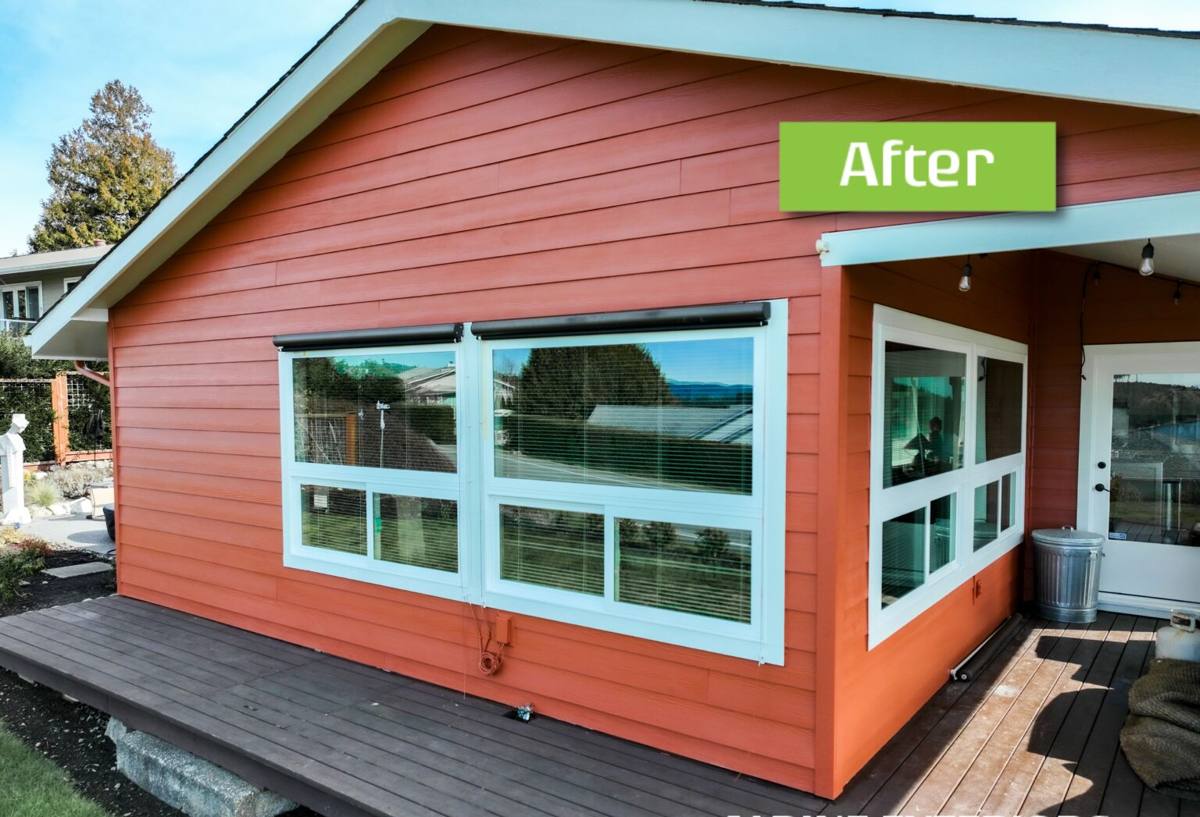
What "Energy-Efficient" Should Actually Mean Here
Energy ratings on a window box don't tell you much about how that window will hold up against a wet Pacific Northwest winter. A few things matter more locally than the sticker:
- Low U-factor — how well the window resists heat transfer. Lower is better for keeping heating costs down through our long cool season.
- Condensation resistance rating — this matters more here than in drier climates. A window with poor condensation resistance will sweat on the inside face during cold, damp stretches, and that moisture ends up on the sill and in the wall cavity.
- Proper gas fill and spacer systems — double- or triple-pane units rely on sealed gas fills and spacers to stay efficient. If the seal fails early — which happens faster in coastal, high-moisture environments — the efficiency gain disappears and you get visible fogging between the panes.
- Weatherstripping quality — driving rain off the Strait doesn't just test the glass, it tests every gasket and seal around the sash. Cheap weatherstripping degrades faster under constant damp-dry cycling.
None of this means you need the most expensive window on the market. It means the spec sheet needs to be read with our climate in mind, not a generic national average.
Signs Your Current Windows Are Working Against You
Most homeowners don't replace windows on a schedule — they replace them when something starts bothering them. In Ferndale, the usual complaints are:
- Fog or haze between the panes that won't wipe off (a failed seal, not a cleaning problem)
- Condensation on the inside of the glass most mornings, especially in bedrooms
- Windows that are hard to open, close, or lock — often from swollen or warped frames
- Visible gaps, drafts, or whistling during windy, wet weather
- Soft or discolored wood at the sill or the siding immediately around the frame
- Noticeably higher heating bills compared to similar-sized homes nearby
Any one of these on its own isn't an emergency. But a window that's already showing seal failure or sill softening is one more wet season away from becoming a siding and framing repair, not just a window swap.
What a Correct Installation Actually Involves
The window itself is only part of the job. How it's installed determines whether it performs for twenty-plus years or starts leaking within a few. A correct install includes:
- Removing the old unit carefully and inspecting the rough opening, sill, and surrounding sheathing for hidden rot or moisture damage before anything new goes in.
- Repairing what's found — there's no point sealing a new window into a damaged opening. Any soft wood or compromised sheathing gets addressed first.
- Installing a proper sill pan so any water that does get past the exterior seal has somewhere to drain instead of soaking into the framing.
- Integrating flashing with the weather-resistive barrier in the correct shingle-lap order (top piece overlapping the one below it) so water sheds outward and down, never behind the barrier.
- Sealing and insulating the gap between the window frame and the rough opening — using a low-expansion foam or backer rod and sealant, not just caulk around the outside.
- Tying the trim and siding back in cleanly so the window reads as part of the wall system, not a patch.
Because we work primarily as a siding contractor, this integration step is where we spend the most attention. A window installer who only does windows may set the unit correctly but leave the siding tie-in to whoever comes next — and that seam is exactly where coastal wind-driven rain finds its way in.
Choosing a Frame Material for a Coastal Whatcom County Home
| Frame Material | How It Handles Local Conditions | Maintenance |
|---|---|---|
| Vinyl | Good moisture resistance, no corrosion risk from salt air, stable performance in our humidity | Low — occasional cleaning, no painting |
| Fiberglass | Very stable through wet-dry and temperature cycling, strong resistance to warping | Low — durable finish, minimal upkeep |
| Wood-clad | Good insulating properties, but the interior wood core is vulnerable if any exterior seal fails in a high-moisture climate | Moderate to high — exterior cladding helps, but seal failures need prompt attention |
| Aluminum | Conducts cold and encourages interior condensation; hardware is more exposed to corrosion near saltwater | Low, but efficiency and condensation issues are harder to fix after install |
We generally steer Ferndale homeowners away from aluminum-framed replacements for this reason — it's not that aluminum windows are poorly made, it's that the material itself conducts heat and cold efficiently, which works against you in a cool, damp climate and tends to show up as condensation on the frame and sill. Vinyl and fiberglass are our default recommendations for most homes here because they handle the moisture-humidity cycle with the least maintenance burden.
Glass Packages
Double-pane, low-E glass is the standard baseline and performs well for most Ferndale homes. Triple-pane adds meaningful sound dampening and a modest efficiency bump, but it also adds weight and cost — worth it for a north-facing room that stays cold, less critical elsewhere. We'll walk through where triple-pane actually pays off in your specific home rather than upselling it across the board.
Our Process
Every window replacement we do in Ferndale follows the same sequence, whether it's one window or a whole house:
- On-site assessment — we look at every window opening, check for existing moisture damage, and measure for accurate ordering.
- Honest recommendation — frame material, glass package, and scope based on what your home actually needs, not a one-size sales pitch.
- Scheduling around the weather — we plan install days with our wet season in mind so openings aren't left exposed longer than necessary.
- Removal, inspection, and repair — old units come out, hidden damage gets addressed before anything new goes in.
- Installation with full flashing and barrier integration — including the siding tie-in work described above.
- Final walkthrough — testing operation, checking seals, and cleaning up the site.
What Affects the Cost
| Factor | Why It Matters |
|---|---|
| Number of windows | Per-window cost typically drops as the total job size increases |
| Frame material | Vinyl is generally the most budget-friendly; fiberglass and wood-clad cost more upfront |
| Glass package | Double-pane low-E is standard; triple-pane or specialty coatings add cost |
| Opening condition | Hidden rot or sheathing damage found during removal adds repair time before install can proceed |
| Access and window size | Upper-story, oversized, or hard-to-reach windows take more labor time |
| Trim and siding tie-in | Full integration with the surrounding siding takes more care — and more time — than a simple swap |
We give a written estimate after seeing the actual openings, not a phone-quote guess. If we find damage once we open things up, we tell you before we proceed, not after the invoice.
Why Hiring a Crew That Already Works in Ferndale Matters
Window flashing details that work fine in a drier climate can fail here within a few seasons. A crew that installs windows across a lot of different regions may default to a generic method that technically meets code but doesn't account for how much wind-driven rain a Ferndale-facing wall actually takes on, or how persistent moss and moisture buildup are during our wet months. Because we work as a siding contractor across Bellingham and the surrounding Whatcom County communities, window openings are something we deal with constantly as part of larger siding jobs — we see firsthand which flashing details hold up and which ones come back as callbacks a few years later.
That experience also means we're not guessing about how your new windows need to interface with your existing siding. Whether your home is due for siding work now or years from now, an installation done with that future tie-in in mind saves you from redoing trim and flashing twice.
Keeping New Windows Performing Long-Term
A correctly installed, energy-efficient window still benefits from basic upkeep, especially in our climate:
- Clear debris and moss buildup from sills and tracks each season
- Check exterior caulk lines annually and touch up any cracking before wet season
- Wipe down hardware periodically if you're close enough to the water to notice salt residue
- Watch for condensation between panes — it signals a seal failure, not a cleaning issue
- Keep gutters and downspouts clear so roof runoff isn't dumping extra water near window openings
If your windows are drafty, fogged, or just past their useful life, we're glad to take a look and give you a straightforward, no-pressure estimate — no obligation, just an honest read on what your home actually needs. Use the form below to get started.