 Bellingham Siding
 Why Birchwood Windows Wear Differently Than Windows Inland
Birchwood sits close enough to Bellingham Bay and the Salish Sea that salt-laden air reaches window frames, hardware, and weep holes on a regular basis. Add in Whatcom County's driving rain — wind-driven rain that hits glass and trim horizontally instead of just falling straight down — and the long stretch of gray, damp months each year that keep moss and algae established on shaded and north-facing exteriors, and you have a climate that is genuinely harder on windows than a drier inland location would be. Windows here don't fail because homeowners neglected them. They fail because the materials and installation methods weren't matched to this specific combination of salt, wind-driven moisture, and prolonged dampness in the first place.
That's the lens we bring to every window job in Birchwood: not "what window looks good," but "what window and installation method will actually hold up against what this neighborhood's weather does to a house year after year."
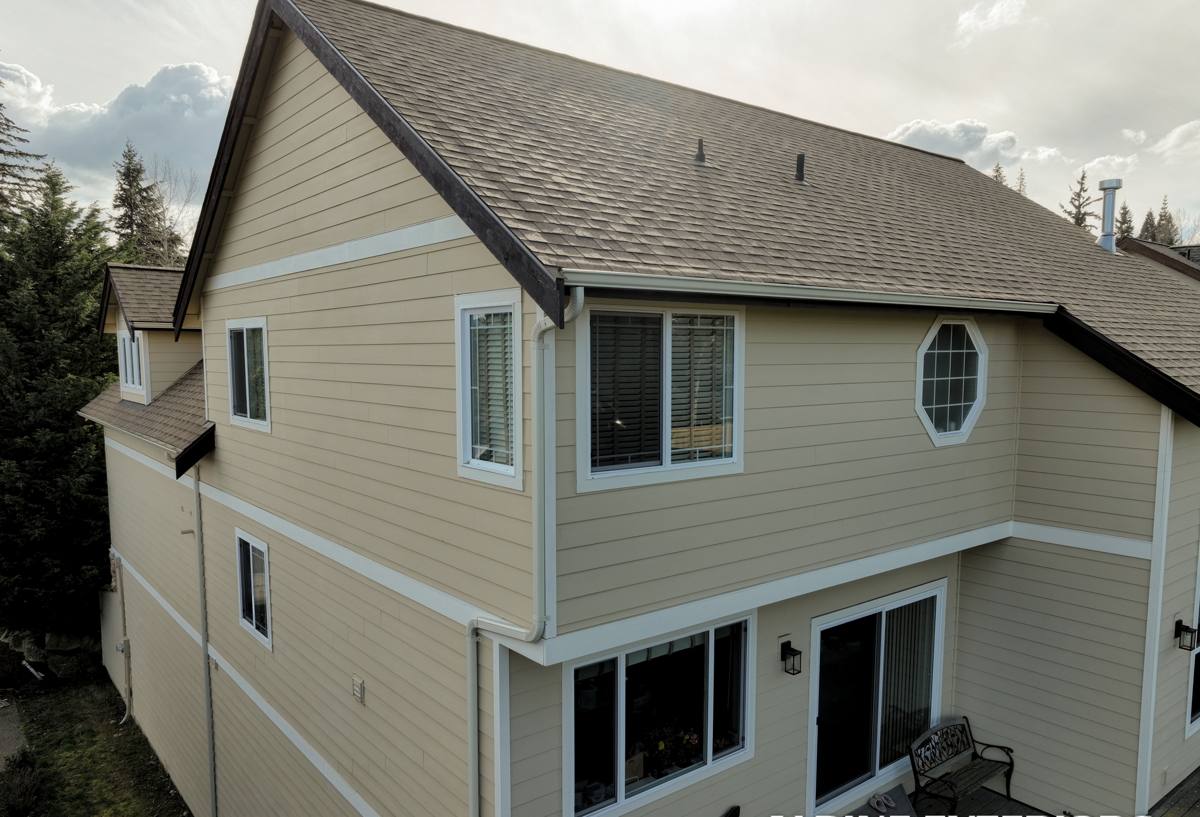
What This Climate Actually Does to a Window Over Time
Salt Air and Frame Corrosion
Salt in the air accelerates corrosion on any exposed metal — aluminum frames, steel reinforcement inside vinyl sashes, hinges, balance hardware, and screen frames. Older aluminum-frame windows in particular tend to pit, oxidize, and eventually seize up at the tracks or locks well before the glass itself gives out. Once hardware starts binding, homeowners often force windows open and closed, which speeds up wear on the frame and weatherstripping.
Driving Rain and Failed Seals
Wind-driven rain doesn't just test a window's seal against water falling on the sill — it pushes water sideways and even slightly upward under wind pressure. Windows and flashing details that would be fine in a calmer climate can leak here, especially once caulking ages, gaskets compress, or the original flashing wasn't lapped correctly with the house wrap. Once water gets behind the frame, it's rarely visible until it's already done damage to the sill, jack studs, or sheathing.
Moss Season and Trapped Moisture
Bellingham's long wet season keeps moss and algae established on shaded surfaces for much of the year, and window sills, tracks, and exterior trim are no exception. Moss and organic debris hold moisture directly against wood trim and sills, which is a slow but steady path to rot — especially on the north and west-facing windows that get the least sun exposure to dry out between rain events.
Signs Your Birchwood Home's Windows Are Due for Replacement
Most window failure in this climate is gradual, so homeowners often live with small problems for years before addressing them. Watch for:
- Fogging or a hazy film between the panes of a double-pane window (the seal has failed and the gas fill is gone)
- Windows that are hard to open, close, or lock, especially aluminum-frame units
- Soft, discolored, or spongy wood at the sill or lower frame corners
- Visible moss, black staining, or algae buildup on the sill or exterior trim
- Noticeable drafts or a cold spot near the window even when it's fully closed
- Condensation forming on the inside of the glass regularly during cooler months
- Peeling paint or bubbling on interior trim near the window, which usually points to moisture intrusion
Picking a Window Material That Actually Holds Up Here
There's no single "best" window material for every home — but in a salt-air, high-rain climate, some materials clearly outperform others in long-term maintenance and moisture behavior. Here's how the common options compare for a Birchwood home specifically:
| Material | Moisture & Salt-Air Behavior | Maintenance | Typical Cost Range |
|---|---|---|---|
| Vinyl | Won't corrode or rot; good seal life when installed correctly | Low — occasional cleaning | $ |
| Fiberglass | Excellent — very stable in temperature and moisture swings, resists corrosion | Low | $$$ |
| Wood-clad (exterior clad) | Good if cladding is intact; failure point is where cladding meets the sill | Moderate — watch sill joints | $$$ |
| Aluminum (uncladded) | Poor in salt air — prone to pitting and corrosion over time | Higher — hardware maintenance | $ |
For most Birchwood homes, we steer people toward vinyl or fiberglass frames for exposed elevations, and reserve aluminum for interior or fully sheltered applications where salt exposure isn't a factor. This isn't a knock on aluminum as a material — it has real advantages in slim sightlines and strength — it's simply a matter of matching the frame to what this specific coastal climate does to unprotected metal over a couple of decades.
Glass and Performance Ratings That Matter in This Climate
The frame is only half the equation. The glass package determines how well a window holds heat, resists condensation, and stands up to constant damp air.
- Low-E coatings reduce heat loss through the glass and help cut down on interior condensation during our cold, wet stretches — a real comfort difference in a house that stays damp outside for months at a time.
- Argon or krypton gas fill between panes improves insulation value over plain air-filled units, with only a modest cost difference.
- U-factor is the number to focus on for our climate — it measures how well the window resists heat loss, which matters more here than the solar heat gain coefficient that dominates window shopping in hotter, sunnier regions.
- Triple-pane glass adds meaningful insulation and condensation resistance but adds weight and cost — worth it on north-facing or particularly exposed walls, less necessary on sheltered elevations.
We also pay attention to condensation resistance ratings specifically, since a window that's technically energy-efficient on paper can still fog up constantly if it wasn't designed to handle sustained humidity, which is a very real condition for months at a stretch in Whatcom County.
Installation Is What Actually Determines Long-Term Performance
A well-rated window installed poorly will leak and underperform. A modest window installed correctly will often outlast it. In a driving-rain climate, the details that matter most are the ones nobody sees once the trim goes back on:
Flashing and Water Management
Every window opening needs a sloped sill pan so any water that does get past the exterior seal drains back out instead of pooling against the wood framing. Flashing tape needs to integrate correctly with the house wrap or weather-resistive barrier in the proper shingle-lap order — flashing installed out of sequence can actually direct water into the wall instead of away from it.
Sealant and Backer Rod
Exterior sealant needs the right joint depth and a proper backer rod behind it to flex with temperature changes without splitting — a common failure point on older installations where caulk was applied directly into a gap that was too deep or too shallow.
Shimming and Squaring
A window that isn't shimmed square will bind at the locks and won't compress its weatherstripping evenly, creating a gap that lets both air and wind-driven rain through even though the window itself is a good product.
This is the part of the job that separates a window installation that holds up for decades from one that needs recaulking within a couple of years.
Our Process, From Estimate to Final Walkthrough
We keep the process straightforward and don't pressure anyone into a decision on the spot:
- A no-pressure on-site assessment where we look at your current windows, sills, and framing condition — not just the glass
- A written estimate that lays out material options, glass packages, and the reasoning behind our recommendation for your specific elevations
- Careful removal of the old window with attention to what's underneath — sill condition, framing, and existing flashing
- Correct flashing and sill pan installation before the new window ever goes in the opening
- Proper shimming, squaring, and sealing, followed by interior and exterior trim work
- A final walkthrough where we test operation, locks, and seals with you before we consider the job done
Why Hiring a Crew That Already Works Birchwood Matters
Every neighborhood in Bellingham has its own quirks — the typical age and construction of the housing stock, how exposed different streets and elevations are to wind and salt air, and what kind of window issues tend to show up first. A crew that regularly works in and around Birchwood has already seen the common failure points on homes of this vintage in this specific microclimate, which means less guesswork and fewer surprises once we open up an old window opening. We're also familiar with Bellingham's permitting process for window replacement, so there's no scrambling to figure out requirements mid-project.
Just as important, we're a local crew — if a question comes up six months after installation, we're not a name from out of the area who's hard to reach. We stand behind our work because we live and work in this same climate ourselves.
Getting Started
If your Birchwood home has windows that fog, stick, draft, or show soft trim at the sill, it's worth getting an honest assessment before those small issues turn into a bigger repair. We offer free, no-pressure estimates — use the form below to get a time on the calendar and we'll walk your home's windows with you in person.