 Bellingham Siding
 Why South Hill Decks Wear Out the Way They Do
South Hill sits up on the slope above downtown Bellingham, which means most of the decks up here are doing a different job than a flat-lot deck across town. They're catching wind off the bay, they're shaded by mature trees for long stretches of the day, and they're built on a grade that sheds water differently than a level yard. Add in Whatcom County's wet season, which can run from October well into May, and you've got a structure that's rarely given a real chance to dry out between storms.
We see the same failure pattern on hillside Bellingham decks over and over: the top surface still looks okay from a distance, but the framing underneath has been quietly absorbing moisture for years. Ledger boards pull away from the house. Joist hangers rust. Support posts wick water up from the ground and soften at the base. By the time boards start feeling spongy or nails start popping, the structure has usually been compromised for a while.
Salt-laden air off Bellingham Bay speeds up corrosion on any exposed metal fastener, and moss doesn't just grow on roofs here — it takes hold on shaded deck boards and stair treads too, holding moisture against the wood and turning surfaces slick. A deck replacement in this neighborhood has to plan for all of that from the start, not patch around it later.
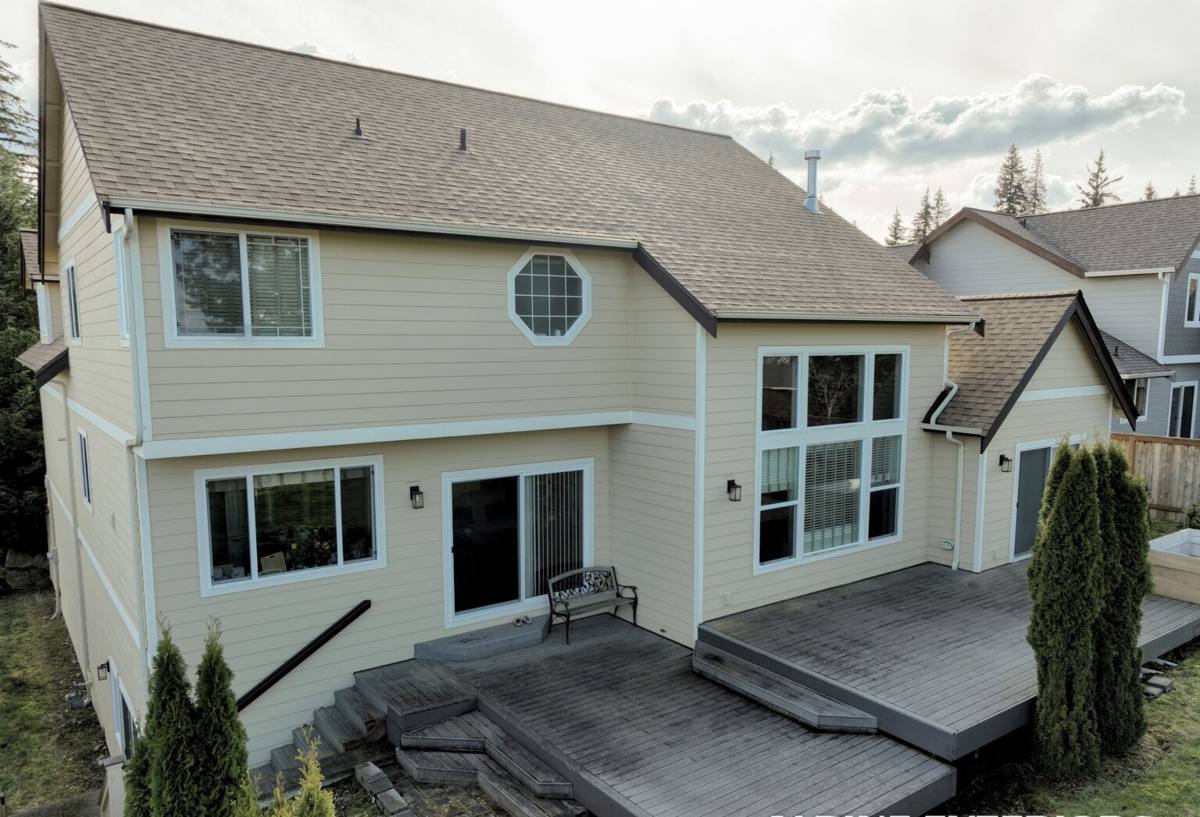
Repair, Resurface, or Full Replacement?
Not every tired-looking deck needs to come out entirely. But a lot of South Hill homeowners call us after paying for a resurface somewhere else, only to have the same soft spots and squeaks show up again a year or two later. That's usually a sign the problem was never in the boards — it was in the frame.
Signs You're Looking at a Repair
- A handful of individual boards are cupped, splintering, or soft, but the framing underneath is solid when probed
- Railings are loose at a few connection points but the posts themselves aren't rotted
- The deck is relatively young (under 10-15 years) and was built to a reasonable standard
Signs You're Looking at a Full Replacement
- Joists or the ledger board are soft, dark, or crumbling when tested with a screwdriver
- Support posts show rot at the base where they meet grade or a footing
- Multiple past repairs have already been done and the deck is still failing
- The ledger flashing is missing or was never properly installed against the house
- The deck was undersized or under-built for its actual use (grills, hot tubs, gatherings)
An honest assessment means getting under the deck and probing the framing, not just walking the surface. That's the first thing we do on any estimate.
What a Correct Deck Replacement Actually Involves
A deck replacement isn't just swapping old boards for new ones on the same frame. Done right, it starts at the house and works outward:
- Ledger connection and flashing — the point where the deck attaches to the house is the single most common source of hidden rot. Proper flashing directs water away from the band joist instead of letting it channel behind the ledger board.
- Footings and posts — footings need to sit below frost depth and bear on undisturbed or properly compacted soil. On sloped South Hill lots, this often means deeper or stepped footings to account for the grade.
- Framing — joist spacing, beam sizing, and hardware all need to match the actual load the deck will see, including snow load and anything permanent like a hot tub.
- Fasteners and hardware — in a marine air environment, hardware quality matters more than it does further inland. Cutting corners here is exactly where decks fail early.
- Decking surface — the visible layer, chosen for how it handles moisture, shade, and moss exposure specific to the site.
- Railings and stairs — code-compliant height, baluster spacing, and secure post-to-frame connections, not just cosmetic attachment.
- Drainage underneath — especially important on shaded, sloped lots where water needs somewhere to go besides pooling under the deck.
Decking Material Options for a Shaded, Wet Hillside Lot
There's no single "best" decking material — there's a best fit for your site, your sun exposure, and how much upkeep you actually want to do. Here's how the common options stack up for a South Hill-type lot with partial shade and regular rain:
| Material | Moisture & Moss Behavior | Maintenance | Typical Lifespan |
|---|---|---|---|
| Pressure-treated wood | Sheds water fine but shaded areas hold moss and mildew if not cleaned | Annual cleaning, periodic staining/sealing | 10-15 years with upkeep |
| Cedar | Naturally rot-resistant but still needs sealing in shaded, damp spots | Regular sealing to hold color and resist moss | 15-20 years with upkeep |
| Composite decking | Doesn't absorb water like wood, but can still get slick with algae/moss film in deep shade | Occasional wash-down, no staining or sealing | 25+ years, manufacturer-warrantied |
| PVC decking | Fully moisture-resistant surface; best option for constantly shaded, damp areas | Lowest maintenance of the group | 25-30+ years, manufacturer-warrantied |
We're upfront about trade-offs rather than pushing one product. Wood costs less up front but asks for real annual maintenance to hold up in this climate — skip a season of cleaning and sealing on a shaded board and moss gets a head start. Composite and PVC cost more initially but hand you back a lot of that maintenance time, which matters if your deck sits under tree cover most of the day. We'll walk your specific site with you and talk through what actually makes sense for your sun exposure and budget, rather than defaulting to whatever's easiest for us to install.
Permits, Setbacks, and Code Basics in Bellingham
Most deck replacements of any real size in the City of Bellingham require a building permit, and if your deck sits near a property line or a critical slope — which is a real consideration on hillside lots like South Hill — setback and grading rules can come into play. Guardrail height, baluster spacing, and stair rise/run also have to meet current code, even if the deck being replaced was built to an older standard.
We handle the permit process as part of the job rather than leaving it for the homeowner to sort out. It's a normal part of doing this correctly, not an upsell.
Where Older Decks Commonly Fall Out of Code
- Guardrail height below current minimums
- Baluster spacing wide enough for a small child to pass through
- Stair handrails missing or not graspable
- Ledger attachment relying on nails instead of proper lag bolts or structural screws
- Footings that don't meet current frost-depth or bearing requirements
Our Process, Start to Finish
We keep the process straightforward because most homeowners just want to know what's happening and when:
- On-site walkthrough — we inspect the existing deck from underneath, not just the surface, and talk through what we find in plain terms.
- Written estimate — a clear scope of work and pricing, with material options laid out honestly.
- Permit and scheduling — we pull the necessary permit and give you a realistic timeline, factoring in Bellingham's wetter months if that affects scheduling.
- Demo and disposal — the old deck comes out and old material is hauled off; we check the ledger area and framing as soon as it's exposed.
- Framing and flashing — new footings, posts, joists, and ledger flashing installed to current code.
- Decking, railings, and stairs — the visible finish work, installed to spec.
- Final walkthrough — we go over the finished deck with you before calling the job done.
Timing the Work Around Bellingham's Wet Season
Deck replacement can happen most of the year here, but there are real advantages to scheduling framing and footing work during drier stretches when the ground isn't saturated. We plan around Whatcom County's rain patterns rather than fighting them, which keeps the job moving and keeps freshly poured footings and exposed framing from sitting in standing water longer than they should.
Keeping a New Deck in Good Shape
Whatever material you choose, a little seasonal attention goes a long way in this climate:
- Sweep leaves and debris off the surface regularly, especially in shaded corners where moss gets a foothold first
- Rinse off moss and algae film before it builds up rather than after it's established
- Check that gaps between boards stay clear so water can drain instead of pooling
- Inspect under the deck once a year for any signs of moisture at the ledger or post bases
- Reseal wood decking on the schedule the product actually calls for, not just when it looks dry
Why It Matters to Hire a Crew That Already Works This Neighborhood
Hillside lots in South Hill come with their own set of practical problems — grade changes, tree root systems near footings, limited equipment access, and neighbors close enough that dust, noise, and staging matter. A crew that's already worked this part of Bellingham knows to plan for those things upfront instead of running into them mid-project. We also know what Whatcom County and City of Bellingham inspectors are actually looking for at each stage, which keeps the permit and inspection process from becoming its own separate headache.
Just as important, we've seen firsthand how South Hill's specific combination of shade, slope, and salt air ages a deck, so we're not guessing at material choices or flashing details — we're building to what actually holds up here.
If your deck is showing soft spots, loose railings, or just isn't something you trust anymore, we're happy to come take a look. Estimates are free, there's no pressure, and we'll give you an honest read on whether you're looking at a repair or a full replacement before you spend a dollar.