 Bellingham Siding
 Roof Repair in Cordata: What the Climate Actually Does to a Roof
Cordata sits close enough to Bellingham Bay to catch salt-laden air off the water, and far enough into the Whatcom County tree cover to sit in shade for long stretches of the year. That combination is harder on a roof than either factor alone. Salt air accelerates corrosion on exposed metal — flashing, fasteners, vent caps, gutter hardware — while shaded, damp conditions keep roof surfaces wet longer after every storm, which is exactly what moss, moss spores, and algae need to take hold.
Add in driving rain that comes sideways off Pacific storms rather than falling straight down, and you get water pushed up under shingle tabs and behind flashing in spots a roof was never really designed to shed water from. None of this means Cordata roofs fail faster than average. It means they fail in specific, predictable places — and a repair that doesn't account for those places is a repair that comes back in two years.
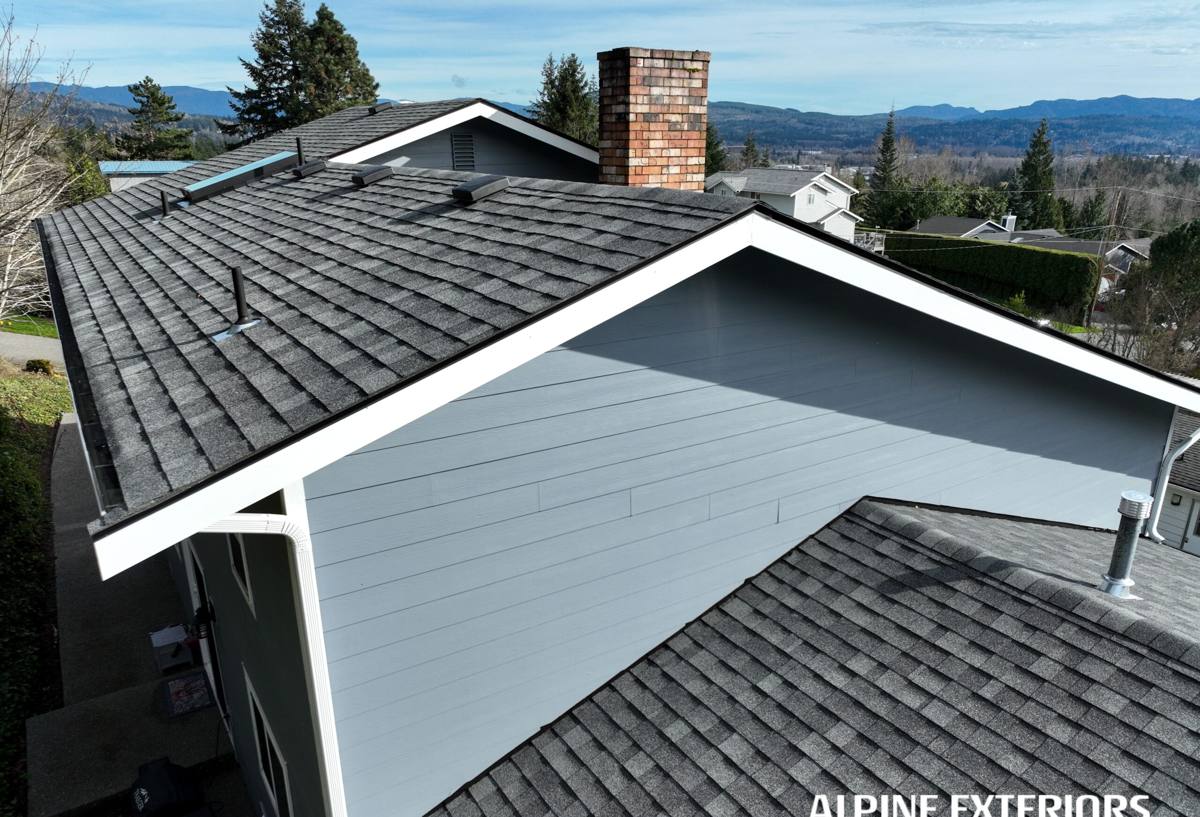
Signs a Cordata Roof Needs Repair, Not a Full Replacement
Most roofs don't die all at once. They fail in sections, and catching the right section early is what keeps a repair a repair instead of turning it into a replacement. Homeowners in this area should watch for:
- Dark streaking or green-black growth concentrated on the north-facing or shaded slopes
- Granule buildup collecting in gutters or at the base of downspouts
- Soft or spongy spots underfoot near valleys, chimneys, or skylights
- Daylight visible through the attic roof deck, especially around penetrations
- Water stains on interior ceilings that appear only during heavy or wind-driven rain
- Curling, cracking, or lifted shingle tabs, particularly on the roof's windward side
- Rust streaks below metal flashing or vent stacks
If the damage is limited to one slope, one valley, or the flashing around a single penetration, that's almost always a repair, not a tear-off. We'll tell you plainly when a section has gone past the point where patching makes financial sense — but that's the exception, not the default recommendation.
What a Correct Roof Repair Actually Involves
It starts above the shingles, not at them
A shingle that's failing is usually a symptom, not the root problem. Before we touch a single shingle, we check the underlayment beneath it, the condition of the roof deck, and whether the flashing around any nearby penetration is doing its job. Replacing a shingle over a compromised underlayment or rotted deck patch buys a season, not a fix.
Flashing gets the same attention as the shingles
Most leaks we're called out for in this area trace back to flashing, not shingle failure — around chimneys, skylights, dormers, and where a roof plane meets a wall. Salt air speeds up corrosion on lower-grade or aging flashing, so part of a proper repair is evaluating whether the flashing itself needs to be replaced along with the shingles around it, not just caulked over.
Ventilation is part of the repair, not an add-on
A roof deck that can't breathe traps moisture from the inside, which shows up as soft sheathing, mold, or premature shingle failure from underneath — damage that looks identical to storm damage from the outside but has a completely different cause. Where ventilation is clearly inadequate, we'll flag it as part of the diagnosis rather than repair the surface symptom and leave the underlying cause in place.
Roofing Materials Common Around Cordata and How Repair Differs by Type
| Roof Type | Typical Repair Focus | Climate-Specific Consideration |
|---|---|---|
| Composition (asphalt) shingle | Tab replacement, flashing resealing, granule loss patching | Most common; moss lifts tabs and traps moisture underneath if not cleared regularly |
| Cedar shake/shingle | Individual shake replacement, re-weaving around valleys | Shaded, damp conditions promote rot and moss faster than sunnier sites; needs consistent airflow |
| Standing seam or panel metal | Seam resealing, fastener replacement, panel section swaps | Salt air accelerates fastener and seam corrosion over time; regular inspection matters more than on inland roofs |
| Low-slope/torch-down or membrane | Seam and penetration resealing, patching membrane punctures | Standing water from prolonged rain finds any weak seam; flat sections need careful drainage checks |
Whatever material is on the roof, the repair approach has to match how that material actually fails — not a generic patch job applied the same way regardless of what's up there.
Our Roof Repair Process
- Inspection. We get on the roof (not just the ladder, weather permitting) and check the deck, flashing, ventilation, and shingle condition together, not in isolation.
- Honest diagnosis. We tell you what's actually causing the problem, what section is affected, and whether repair is the right call or replacement makes more sense.
- Written scope and estimate. You get a clear description of the work and the cost before anything happens — no surprise add-ons once the tear-off starts.
- Repair work. Deck repair where needed, correct underlayment, matched or compatible shingles/materials, flashing replaced where it's compromised, not just resealed.
- Cleanup and debris check. Old material, nails, and granules cleared from the roof, gutters, and ground — moss and algae debris don't get left behind to restart the problem.
- Walkthrough. We show you what was done and why, in plain terms.
Moss, Algae, and Debris: The Recurring Maintenance Factor
In a lot of the country, moss is a cosmetic nuisance. In Bellingham's shaded, moisture-heavy microclimates, it's a structural issue in slow motion. Moss holds water against the shingle surface long after the rest of the roof has dried, which softens the mat beneath the granules, lifts shingle edges, and gives wind-driven rain a place to get underneath. Over a long moss season, that's a lot of cumulative exposure.
Part of doing a repair right in this area is addressing what let the moss establish itself in the first place — usually overhanging branches, poor airflow, or valleys that collect debris — not just scraping the surface clean and leaving the same conditions in place. We'll point out where trimming back tree cover or clearing debris paths would meaningfully extend the life of the repair, even though that work is outside what a roofer typically does.
Repair vs. Replace: What Actually Drives the Decision
| Factor | Leans Toward Repair | Leans Toward Replacement |
|---|---|---|
| Affected area | Isolated to one slope, valley, or penetration | Multiple slopes or widespread granule loss |
| Roof age | Well within expected material lifespan | At or beyond the material's typical service life |
| Deck condition | Solid, no rot found during inspection | Soft or rotted decking in multiple areas |
| Leak history | First occurrence, clear single cause | Recurring leaks in different spots over time |
| Underlayment | Intact, still doing its job | Degraded or missing in large sections |
We'd rather do an honest $600 repair than talk you into a roof you don't need yet — and we'll say so directly when that's the situation.
Why a Crew That Already Works Cordata Matters
Roofing crews that mostly work drier, sunnier parts of the state don't always plan for how much moss maintenance, flashing corrosion, and driving-rain exposure factor into a Whatcom County roof's lifespan. A crew that regularly works Cordata and the surrounding Bellingham neighborhoods knows which slope orientations collect moss fastest, which flashing details tend to fail first in salt air, and how local permitting and weather windows affect scheduling. That's not a marketing point — it changes what gets checked during an inspection and what gets prioritized in the repair.
Local presence also means faster response when a leak shows up mid-storm and faster follow-up if a question comes up after the work is done.
Before You Hire Anyone for Roof Repair Work
- Confirm they carry current Washington contractor licensing and liability insurance, and ask to see proof
- Ask for a written scope of work, not just a verbal quote
- Ask specifically how they'll handle flashing and ventilation, not just shingles
- Ask what happens if they find deck rot once they open up the area
- Get the payment schedule in writing before work starts
- Ask how debris and moss removal will be handled, and whether it's included
A contractor who answers these plainly, without hedging, is usually the one who'll do the work plainly too.
Get an Honest Look at Your Roof
If you're seeing moss buildup, a stain on the ceiling, or just want a second opinion on a repair someone else quoted, we're happy to take a look. The estimate is free, there's no pressure, and if the honest answer is "this doesn't need repair yet," we'll tell you that too. Use the form below to get started.