 Bellingham Siding
 Decks Built for Barkley's Wet, Mossy Climate
Barkley sits inside Bellingham, and like every neighborhood in this part of Whatcom County, it deals with a long wet season, heavy moss growth, and the kind of persistent moisture that Puget Sound weather is known for. A deck here isn't just a place to put a grill and a couple of chairs — it's an exterior structure that spends most of the year damp, shaded at least part of the day by mature trees, and exposed to driving rain that comes in sideways more often than people expect. Add in the salt-tinged marine air that drifts through this whole region, and you have conditions that will find every weak point in a deck's design within a few wet seasons.
We build and replace decks in Barkley the way this climate requires: correct drainage under and around the structure, fasteners and hardware rated for damp coastal air, and material choices that hold up to moss rather than feeding it. A deck that looks fine in July can be hiding rot, soft framing, or a failing ledger connection by the following spring if it wasn't built with Whatcom County's climate in mind from day one.
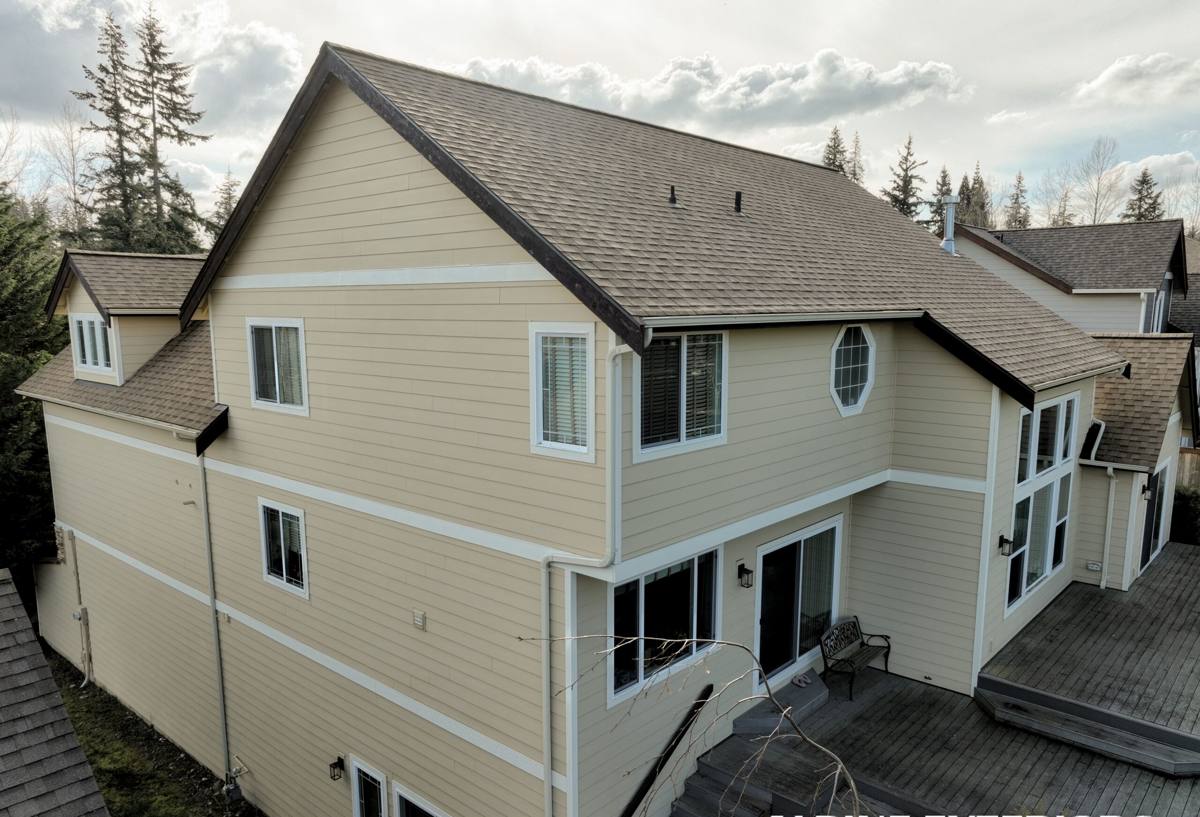
What Bellingham's Weather Does to a Deck Over Time
Most deck problems we find in this area aren't dramatic — they're slow. Moisture gets trapped somewhere it shouldn't, and by the time it's visible, the damage is already done underneath.
- Moss and algae buildup on decking boards, especially in shaded spots or under overhangs where sun never fully dries the surface
- Soft or spongy boards where standing water sits between deck boards spaced too tight or laid without a slight drainage gap
- Rot at the ledger board where the deck attaches to the house, often from missing or failed flashing letting water behind the siding
- Corroded fasteners and connectors when standard hardware was used instead of stainless or coated fasteners rated for wet, marine-influenced air
- Slick, unsafe surfaces from moss and algae that build up faster than most homeowners expect in a shaded Bellingham yard
- Warped or cupped boards, particularly with lower-grade lumber that wasn't given time to dry or wasn't sealed on all sides before install
None of these are signs of a "bad deck" so much as signs of a deck that wasn't detailed for this specific climate. The fix isn't just replacing boards — it's addressing why the moisture got trapped in the first place.
What a Correctly Built Deck Involves Here
Framing and Footings
Everything starts below the decking surface. Footings need to be set below frost depth and sized correctly for the soil conditions common around Bellingham, which can hold water longer than sandier soils elsewhere. Framing lumber should be pressure-treated and rated for ground contact where it's within a few inches of soil or in a location that stays consistently damp. We also build in a slight slope away from the house so water sheds off the deck surface instead of pooling against the ledger.
Ledger Flashing
The ledger board — where the deck bolts into the house framing — is the single most common failure point we see on older Barkley decks. Without proper flashing that directs water out and away from the house wall, moisture works its way behind the siding and into the rim joist, and you often don't see it until the deck starts to feel loose or the siding above it shows staining. Correct flashing here isn't optional in this climate; it's the difference between a deck that lasts decades and one that needs structural repair in ten years.
Board Spacing and Airflow
Decking boards need a consistent gap to let water drain through rather than sit on the surface, and the framing below needs enough clearance and airflow to actually dry out between rain events. A deck built low to the ground with no ventilation underneath will stay damp for days after a storm, which is exactly the environment moss and rot both need to take hold.
Decking Material Comparison
| Material | Moss & Moisture Resistance | Maintenance | Typical Lifespan Here |
|---|---|---|---|
| Pressure-treated wood | Good if sealed and maintained; absorbs water if neglected | Annual cleaning and resealing recommended | 15-20 years with upkeep |
| Cedar | Naturally moisture-resistant but still needs sealing | Periodic cleaning, oiling, or staining | 15-20 years with upkeep |
| Composite decking | Excellent — doesn't absorb water or rot | Occasional washing to remove surface moss/algae | 25-30+ years |
| PVC/capped polymer | Excellent — fully sealed surface | Low; simple rinsing keeps it clean | 25-30+ years |
There's no single "right" material for every project — it depends on budget, the look you want, and how much upkeep you're willing to do. Wood gives a natural look at a lower upfront cost but asks more of you over time. Composite and PVC cost more initially but shed water and resist moss without the annual sealing routine, which matters a lot in a neighborhood that stays damp as long as Barkley does.
Railings, Fasteners, and Hardware for Wet Climates
The hardware you can't see is often what determines how long a deck actually lasts. We use stainless steel or coated, corrosion-rated fasteners and structural connectors throughout — not because it's required by code everywhere, but because standard hardware corrodes noticeably faster in this region's damp, salt-tinged air. Railings, whether wood, metal, or composite, get the same attention: any post base or bracket sitting near ground level or exposed to constant runoff is a spot where cheap hardware fails first.
We also pay close attention to how railing posts are anchored to the frame. A loose or failing post connection is one of the more common safety issues we find on older decks, and it's almost always tied back to fasteners that weren't rated for long-term outdoor exposure in a wet climate.
Our Process for Barkley Deck Projects
- On-site assessment — we look at the existing structure (if there is one), grade and drainage around the area, sun exposure, and how the deck will be used
- Design and material discussion — honest conversation about wood versus composite, layout, railing style, and what fits your budget and maintenance preferences
- Permitting — we handle the permit process with the City of Bellingham where required, so footings, framing, and railings meet current code
- Demo of the old deck (for replacements) — including a check of the ledger area and house framing for hidden moisture damage before we build back
- Framing and structural work — footings, ledger flashing, joists, and beams built to hold up under our wet season, not just pass inspection
- Decking, railings, and finish work — installed with proper spacing, fastener choice, and attention to drainage details
- Final walkthrough — we go over the finished deck with you, including basic care guidance specific to the material you chose
Maintenance That Actually Matters in a Bellingham Winter
A well-built deck still needs some seasonal attention here — the climate simply asks more of outdoor structures than drier parts of the country. This checklist covers the basics that keep a deck safe and looking good through Whatcom County's wet stretch:
- Sweep leaves and debris off the surface regularly in fall — trapped organic matter is what feeds moss growth
- Wash the deck surface at least once a year to remove algae and moss before it gets a foothold
- Check for soft spots or discoloration near the house where the deck meets the ledger
- Inspect railing posts and stair connections for looseness, especially after a hard winter
- Reseal or restain wood decking on the schedule the product calls for — don't wait until it looks dry and gray
- Keep gutters and downspouts near the deck clear so runoff isn't dumping extra water onto or under the structure
Why Hire a Crew That Already Works in Barkley
Deck-building fundamentals don't change from region to region, but the details that make a deck last do. A crew that works regularly in Bellingham and Whatcom County already knows how much moss pressure a shaded Barkley lot typically sees, what flashing details actually hold up through our wet season, and which fastener and hardware choices are worth the extra cost versus which ones are just upselling. That local pattern recognition is what keeps small oversights — a missed flashing detail, the wrong fastener, a low spot in the framing — from turning into expensive repairs a few years down the road.
We also know the local permitting process and inspection expectations, which keeps projects moving instead of stalling on paperwork or rework.
Get a Straightforward Estimate for Your Barkley Deck
Whether you're replacing a deck that's showing its age or planning a new one from scratch, we're happy to take a look, talk through honest material options for our climate, and give you a clear estimate — no pressure, no upsell. Fill out the form below to get started.