 Bellingham Siding
 Roofing in York: A Neighborhood With Its Own Climate Demands
York is one of Bellingham's older, tree-canopied neighborhoods, and that character comes with a trade-off for roofs. Mature trees mean constant shade on north- and east-facing slopes, heavier leaf and needle litter in gutters and valleys, and roof surfaces that stay damp longer after every rain than they would on a more open lot. Add in Whatcom County's steady marine air moving in off Bellingham Bay and the Salish Sea, and you get a roofing environment that punishes shortcuts: driving rain that finds every weak seam, salt-tinged moisture that accelerates corrosion on exposed metal, and a moss season that can run eight or nine months of the year if a roof isn't set up to shed water and dry out.
None of that means York homes need exotic roofing. It means the fundamentals — ventilation, underlayment, flashing detail, and material choice — have to be done right the first time, because a roof here doesn't get long dry stretches to recover from a bad install.
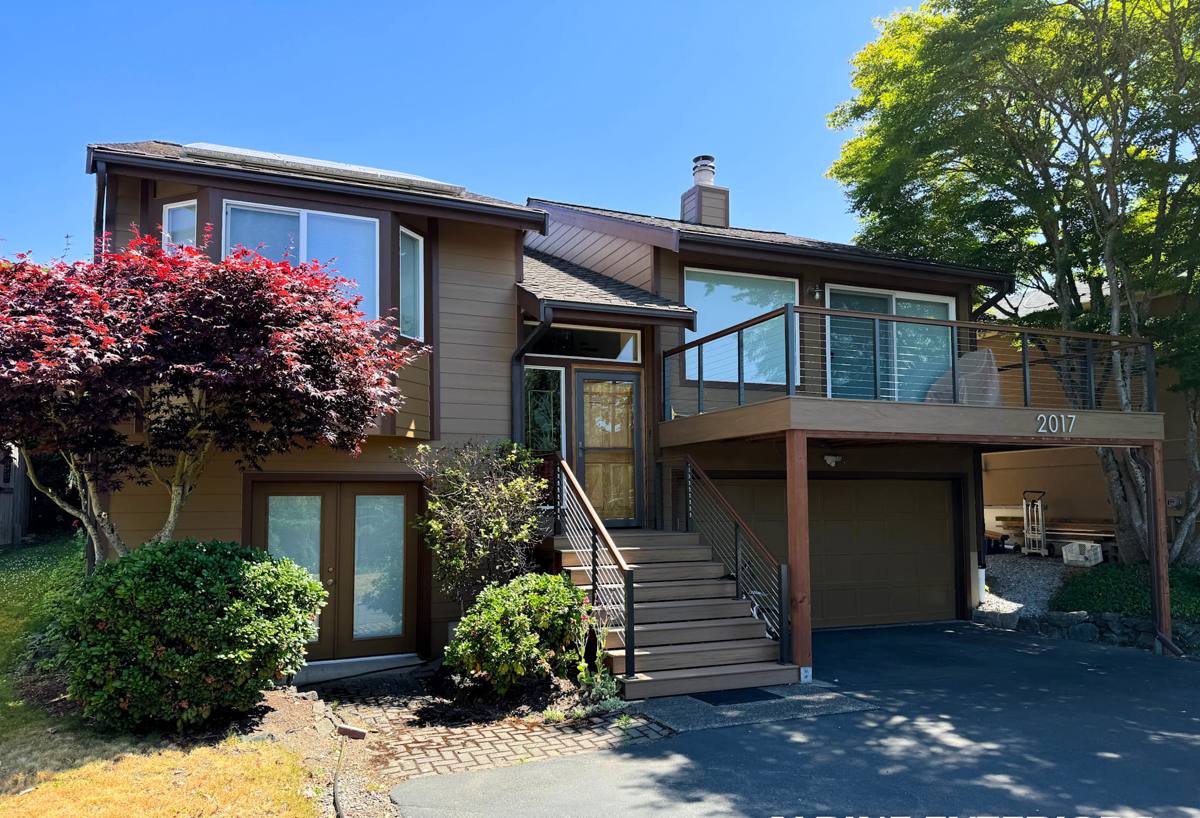
Signs a York Roof Is Due for Replacement
Most roofs in this neighborhood don't fail all at once. They show a pattern of small warnings first. Worth checking for, especially if your roof is 18-25+ years old (asphalt) or has visible moss coverage:
- Granules collecting in gutters or at downspout outlets, or shingles that look bald in patches
- Moss or dark algae streaking that keeps coming back within a season of cleaning
- Curling, cupping, or cracked shingle edges, especially on south- and west-facing slopes
- Soft or spongy decking felt underfoot in the attic, or daylight visible through the roof boards
- Water stains on interior ceilings near exterior walls, chimneys, or skylights
- Flashing that's rusted, lifted, or was caulked over instead of properly re-flashed
- Rising energy bills paired with a hot, poorly ventilated attic in summer
Any one of these can often be patched. Two or three together on an older roof usually means the underlayment and decking underneath are on borrowed time, and a repair just delays a bigger bill.
What a Correct Roof Replacement Actually Involves
Full Tear-Off, Not Overlay
We don't recommend layering new shingles over old ones. Overlays trap moisture, hide decking damage, and void most manufacturer warranties. A full tear-off lets us inspect every square foot of the deck, replace any rotten or delaminated plywood, and start the new roof system on a sound, dry surface — which matters more here than in drier climates, because trapped moisture under an overlay has no chance to escape.
Underlayment That Handles Driving Rain
Whatcom County storms don't always come straight down — wind-driven rain pushes water sideways under shingle tabs and around fasteners. We use synthetic underlayment across the full roof and self-adhered ice-and-water membrane at the vulnerable spots: eaves, valleys, around chimneys and skylights, and low-slope transitions. That membrane is the difference between a small leak staying contained and it tracking down into the wall assembly.
Ventilation Sized for the Roof, Not Guessed At
A roof with too little intake or exhaust ventilation traps heat and moisture in the attic year-round, which shortens shingle life and feeds moss growth from underneath. We calculate balanced intake (soffit) and exhaust (ridge or box vents) based on attic square footage, not a rule of thumb, and we correct undersized or blocked ventilation as part of the replacement rather than leaving it as-is.
Flashing Detail Around Every Penetration
Chimneys, skylights, plumbing vents, and roof-to-wall transitions are where the overwhelming majority of leaks actually start — not in the open field of shingles. Correct step flashing, counter-flashing, and pipe boots, properly integrated with the underlayment (not just caulked), are non-negotiable on every job.
Material Choices for a York Roof
There isn't one "right" material for every home — it depends on tree cover, roof pitch, budget, and how long you plan to own the house. Here's an honest comparison of the options we install most often in this climate:
| Material | Typical Lifespan | Performance in York's Climate | Maintenance |
|---|---|---|---|
| Architectural asphalt shingle | 25-30 years | Good with algae-resistant granules; needs solid ventilation to reach full lifespan under tree cover | Periodic moss/debris removal |
| Standing seam metal | 40-50+ years | Sheds moss and needles well due to smooth, steep surface; needs quality coating and proper fastening to resist salt-air corrosion near the bay | Low; occasional gutter/valley clearing |
| Synthetic (composite) shake/slate | 40-50 years | Resists moisture absorption better than wood; holds up well in shaded, damp conditions | Low |
| Cedar shake | 20-30 years with upkeep | Attractive but the most moisture-sensitive option; shaded, damp lots like much of York accelerate decay and moss unless upkeep stays consistent | High — regular treatment and cleaning required |
We'll walk through which of these actually fits your roof's pitch, sun exposure, and budget rather than pushing one product. For heavily shaded lots, we're often honest with homeowners that cedar shake carries a real maintenance burden here — not because the material is bad, but because Whatcom County's damp, tree-covered lots don't give it the drying time it needs to perform the way it can in a drier setting.
The Moss Problem, and Why It's a Ventilation and Design Issue, Not Just a Cleaning Issue
Pressure-washing moss off a roof every year or two treats the symptom, not the cause. Moss establishes where a roof surface stays damp longest — north slopes, valleys, areas under tree canopy, and roofs with weak airflow underneath. A replacement is the right time to address the root causes: we grade the tear-off toward proper drainage at valleys, install zinc or copper strips near the ridge on shingle roofs where appropriate, confirm gutters and downspouts are sized to handle the volume of a real Pacific Northwest storm, and make sure attic ventilation isn't leaving the underside of the deck warm and damp. None of this eliminates the need for occasional debris clearing on a shaded lot, but it meaningfully slows how fast moss comes back.
Our Process, Start to Finish
- On-site inspection. We walk the roof (or use a drone where pitch or access makes that safer) and the attic, and document what we find — decking condition, ventilation, flashing, and any interior signs of past leaks.
- Written estimate. A clear scope and price, material options explained honestly, and no pressure to decide on the spot.
- Scheduling around weather windows. We plan tear-off days for realistic dry stretches and stage materials so an open roof is never left exposed overnight.
- Tear-off and deck inspection. Old roofing removed, decking checked and repaired as needed, all with photos so you see exactly what was underneath.
- Underlayment, flashing, and new roofing installed to manufacturer spec, with ventilation corrected as part of the job.
- Site cleanup and magnetic sweep for nails and debris, plus a final walkthrough so you know what was done and what to watch for going forward.
Why a Crew That Already Works York Matters
Roofing crews that work regularly in a specific neighborhood pick up things a one-off visit won't surface: which streets have tree cover dense enough to change ventilation calculations, how a given block's roofs tend to age under that shade, and what permitting and disposal logistics look like on narrower, older-neighborhood lots. It also means we're a known, reachable business if a question comes up two years after the job — not a crew that worked the area once and moved on. For a homeowner, that translates into fewer surprises during the estimate and faster answers if something needs a look later.
What Affects the Cost of a York Roof Replacement
| Factor | Why It Matters |
|---|---|
| Roof size and number of planes | More material and labor; complex rooflines take longer to flash correctly |
| Pitch and access | Steep or hard-to-access roofs (common on older, tighter York lots) require more safety setup and time |
| Decking condition | Rot found at tear-off adds material and labor to replace; can't be known for certain until the old roof is off |
| Material selected | Asphalt, metal, and composite carry different material and installation costs and lifespans |
| Ventilation and flashing corrections | Fixing undersized or missing ventilation, or bringing old flashing up to standard, adds scope but pays off in roof life |
| Layers to remove | Tear-off of multiple existing layers takes more labor and disposal than a single-layer roof |
We won't quote a real number without seeing the roof — anyone who does is guessing. What we can say is that a properly ventilated, correctly flashed roof with the right material for your lot's sun and tree exposure will cost less over its lifespan than a cheaper install that needs early repairs.
A Quick Checklist Before You Hire Anyone
- Ask whether they do full tear-off or overlay, and why
- Ask specifically how they'll handle ventilation, not just shingles
- Get the underlayment and ice-and-water membrane spec in writing
- Confirm they carry current liability insurance and workers' comp, and ask to see it
- Ask how they handle decking repairs discovered mid-job, and how that's priced
- Get manufacturer warranty terms in writing, not just a verbal promise
- Ask for a realistic timeline that accounts for weather, not just labor days
If you're seeing granule loss, persistent moss, or interior water stains on a York home, it's worth getting a straight answer on where your roof actually stands. We offer free, no-pressure estimates — no obligation, just an honest look at the roof and what it needs. The form below is the fastest way to get one scheduled.