 Bellingham Siding
 Siding Installation in Sunnyland: Built for This Neighborhood's Climate
Sunnyland is one of Bellingham's older, tree-lined residential neighborhoods, and homes here face a specific combination of stressors that newer subdivisions on higher, more open ground don't deal with in the same way. Mature tree canopy keeps roofs and siding shaded and damp longer after a storm. Proximity to Bellingham Bay means salt-laden air moves through on a regular basis. And Whatcom County's marine climate delivers months of steady, driving rain followed by a moss season that can stretch from fall well into spring. None of that is unusual for this part of Washington, but it does mean siding installation in Sunnyland has to be treated as a system, not just a cosmetic upgrade.
A siding job done right here accounts for moisture management first, appearance second. That ordering matters more in Sunnyland than it does in a dry-climate market, because the consequences of getting it backward — trapped moisture, rot at trim and corners, moss colonizing north-facing walls — show up faster and cost more to fix than the siding itself.
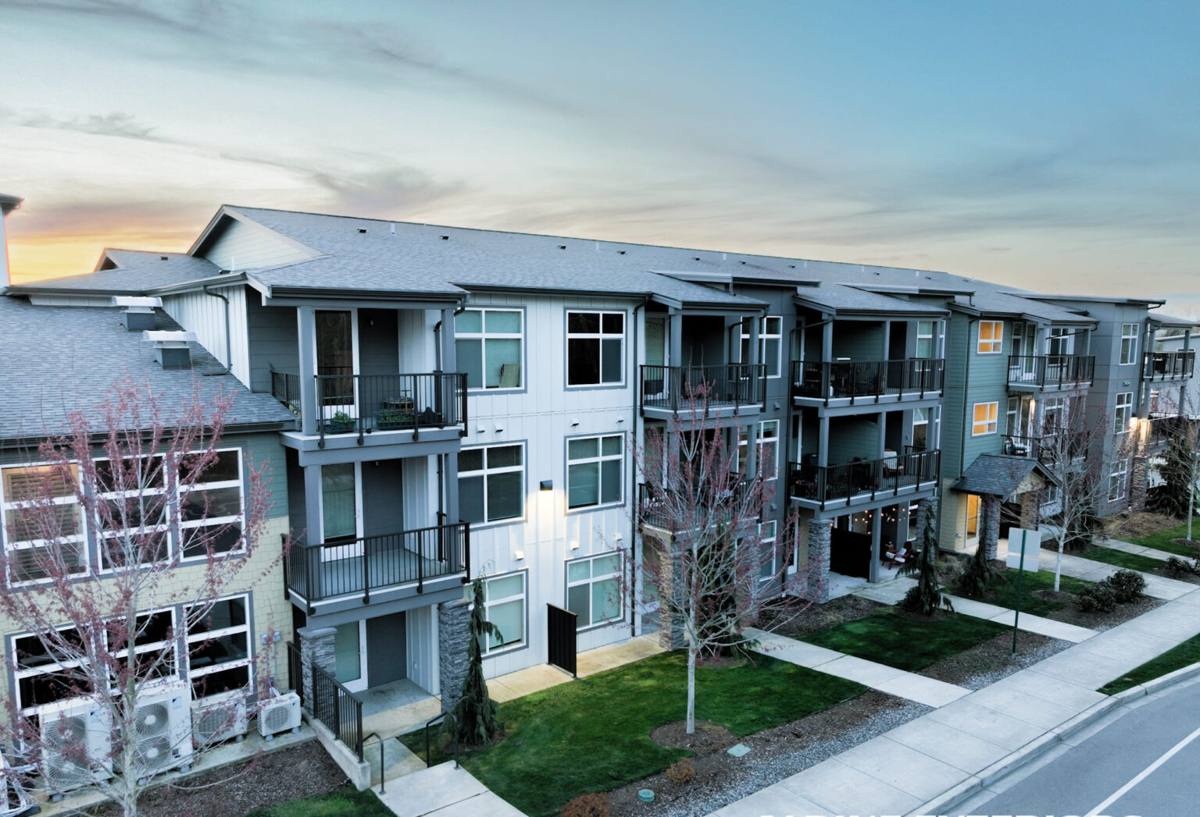
Why Sunnyland Homes Wear Out Siding Faster Than Expected
Salt Air and Metal Fasteners
Bellingham's proximity to salt water means airborne salt is a real, if often underestimated, factor for exterior materials. Salt accelerates corrosion in exposed fasteners, staples, and lower-grade trim hardware, and it degrades some paint and coating systems faster than manufacturers' inland warranties assume. Siding installed with the wrong fastener spec or an undersized coating system can show rust streaking and finish breakdown years ahead of schedule.
Driving Rain and Wind-Driven Moisture
Whatcom County storms frequently come with sustained wind, which pushes rain sideways into wall assemblies rather than letting it run straight down. That means siding, flashing, and the weather-resistive barrier behind it all have to work together as a drainage system. A siding product or installation that only handles vertical rainfall well will underperform here.
The Long Moss Season
Shaded, north- and east-facing walls in Sunnyland's mature-tree lots stay damp for extended stretches, which is exactly the condition moss and algae need to take hold. Once organic growth establishes on a wall, it holds moisture against the substrate underneath, which is a problem for wood-based products in particular and a maintenance headache for almost anything with a porous or textured surface.
What a Correct Siding Installation Actually Involves
Homeowners often assume siding installation is mostly about the visible panels. In practice, most of what determines whether a job lasts 10 years or 40 happens in layers you never see again once the siding goes up.
Weather-Resistive Barrier and Drainage Plane
A continuous, properly lapped weather-resistive barrier behind the siding is non-negotiable in a climate like this one. In Sunnyland's rain and humidity, we also install a drainage gap where the wall assembly calls for it, so any moisture that does get past the siding has somewhere to go instead of sitting against the sheathing.
Flashing at Every Penetration
Windows, doors, hose bibs, light fixtures, and vents are the places siding jobs fail first when flashing is skipped or done with tape alone. Correct flashing directs water down and out, shingle-style, at every single penetration — not just the obvious ones.
Fastening and Clearances
Fastener type, spacing, and depth all affect long-term performance, especially with fiber cement, which has specific nailing patterns that differ from wood or vinyl. Ground clearance and clearance from roof lines, decks, and hardscaping also matter — siding installed too close to grade or to a roof surface stays wet longer and invites the moss and rot problems that are already a challenge in this neighborhood.
Caulking and Sealant Discipline
Sealant belongs at specific joints, not everywhere, and it has to be the right product for the substrate. Over-caulking traps moisture in just as often as under-caulking lets it in.
Why We Install Only James Hardie Fiber Cement
We standardized on James Hardie fiber cement siding for every job we take on, including here in Sunnyland, and we don't install vinyl, LP SmartSide, cedar, primed spruce, or other fiber cement brands. That's a deliberate choice based on how those products perform over time in a wet, marine climate versus how Hardie performs.
Fiber cement is non-combustible, which matters for wildfire-adjacent insurance considerations and simply for peace of mind. It doesn't absorb water the way wood-based products do, so it's far more resistant to the rot and swelling that shaded, damp Sunnyland lots can cause over time. Hardie's ColorPlus factory-applied finish is baked on under controlled conditions and backed by a stronger finish warranty than field-applied paint typically gets, which matters in a climate where repainting every few years isn't realistic for most homeowners. Hardie also engineers specific product lines (their HZ5 line, for example) for climates with more moisture exposure, which is directly relevant to Whatcom County.
None of this means other products are without merit — vinyl is inexpensive and low-maintenance in mild climates, engineered wood products have real fans, and cedar has genuine visual appeal. But we've made a professional judgment, based on what holds up in this specific climate over decades rather than years, that fiber cement is what we're willing to warranty our labor against. We'd rather install one product exceptionally well than spread ourselves across five product lines and get mediocre at all of them.
Comparing Siding Materials for Sunnyland's Climate
| Material | Moisture Resistance | Salt Air Durability | Maintenance | Typical Lifespan |
|---|---|---|---|---|
| James Hardie Fiber Cement | Very good — doesn't absorb water like wood | Strong with correct fasteners/flashing | Low — factory finish, occasional wash | 30-50 years with proper install |
| Vinyl Siding | Good, but can trap moisture behind panels | Can become brittle/discolored over time | Low, but limited repair options if damaged | 20-30 years |
| Cedar / Wood | Poor without diligent upkeep | Prone to salt-accelerated weathering | High — regular staining/sealing needed | 15-30 years, highly upkeep-dependent |
| LP SmartSide (Engineered Wood) | Moderate — edge/cut-end sealing critical | Coating can wear faster in marine air | Moderate — finish maintenance over time | 20-30 years, install-sensitive |
This table reflects general material behavior, not a guarantee for any individual home — installation quality, sun/shade exposure, and maintenance history all shift these numbers in either direction. It's also why we don't sell siding as a commodity; we sell it as a system that has to be installed correctly for any of these lifespan figures to be realistic.
What Affects the Cost of a Siding Installation in Sunnyland
Every home is different, but a few factors consistently move the price of a siding installation in this neighborhood:
- Extent of existing damage: Rot at corners, window trim, or sheathing found during tear-off adds repair scope before new siding can go on.
- Home size and complexity: Multiple stories, dormers, and cut-up wall lines take more time and material than a simple rectangular footprint.
- Siding profile and accessories: Lap width, trim style, and any accent details (board and batten sections, shakes) affect both material cost and labor time.
- Access and site conditions: Mature landscaping, narrow side yards, and fencing common on older Sunnyland lots can affect scaffolding and material staging.
- Underlying moisture barrier condition: If the existing weather-resistive barrier needs full replacement rather than a patch, that adds scope.
We give a firm, written estimate after an in-person assessment rather than a rough phone quote, because the difference between a straightforward re-side and one with hidden rot repair can be significant, and we don't want to surprise anyone mid-project.
Our Process, Start to Finish
Assessment
We walk the exterior with you, check for signs of moisture intrusion, rot, and existing flashing problems, and talk through which Hardie profile and color fit the home and your goals.
Preparation and Tear-Off
Old siding comes off, the sheathing gets inspected, and any rot or damaged framing is repaired before anything new goes up. This is the stage where problems that have been hidden for years typically surface — we document what we find and review it with you before proceeding.
Weather Barrier and Flashing
A new, continuous weather-resistive barrier goes on, with flashing correctly integrated at every window, door, and penetration — the step that determines how the whole system performs in Bellingham's rain.
Installation
Hardie panels or lap siding go on to manufacturer specification for fastening, clearance, and joint treatment, with trim and accessory work finished to match.
Final Walkthrough and Cleanup
We walk the finished job with you, address anything that needs adjustment, and clean the site thoroughly before we consider the job done.
Signs Your Sunnyland Home May Need New Siding
- Visible cracking, warping, or bubbling on wall surfaces
- Moss or algae growth that returns quickly after cleaning, especially on shaded walls
- Soft spots or discoloration around window and door trim
- Paint that won't hold or keeps peeling in the same spots
- Rising energy bills that suggest failing insulation or air sealing behind the siding
- Visible gaps, loose panels, or fastener rust streaks
Any one of these on its own isn't necessarily an emergency, but a home showing two or three of these signs together is usually further along than it looks from the ground.
Why Local Experience in This Neighborhood Matters
A crew that already works in Sunnyland and the surrounding Bellingham area understands the practical realities of these lots — mature trees that keep walls shaded, older homes with a mix of original and previously-modified wall assemblies, and a climate that punishes shortcuts in flashing and drainage detail. That local pattern recognition matters when we're diagnosing what's behind an existing wall before we ever cut into it. It also means we're not guessing at how a given Hardie color or profile will actually look against Bellingham's grey-sky months versus a sunny sales photo — we've installed it here, in this light, on homes like yours.
If your Sunnyland home is due for new siding, or you're just trying to figure out whether what you're seeing is cosmetic or structural, we're happy to take a look. Reach out for a free, no-pressure estimate using the form below.