 Bellingham Siding
 Deck Replacement Built for Sunnyland's Climate
Sunnyland is one of Bellingham's older, well-established neighborhoods, and a lot of its homes still carry the original deck or a patched-together replacement from decades ago. That's not unusual for Whatcom County. What is unusual, compared to drier parts of the country, is what our climate does to a deck over time. Salt-tinged air off Bellingham Bay, long stretches of driving rain, and a moss season that can run from fall clear through spring put more stress on outdoor structures here than most manufacturers' warranties ever account for. A deck that would last decades in a dry inland climate can start failing structurally in Whatcom County in half that time if it wasn't built or maintained correctly.
This page is about one job in one neighborhood: replacing a worn-out or failing deck for a Sunnyland home, done in a way that actually holds up to the conditions here. Not a generic overview of decking materials — a straight look at what your deck is up against, what a correct replacement involves, and how we handle the work from first look to final walkthrough.
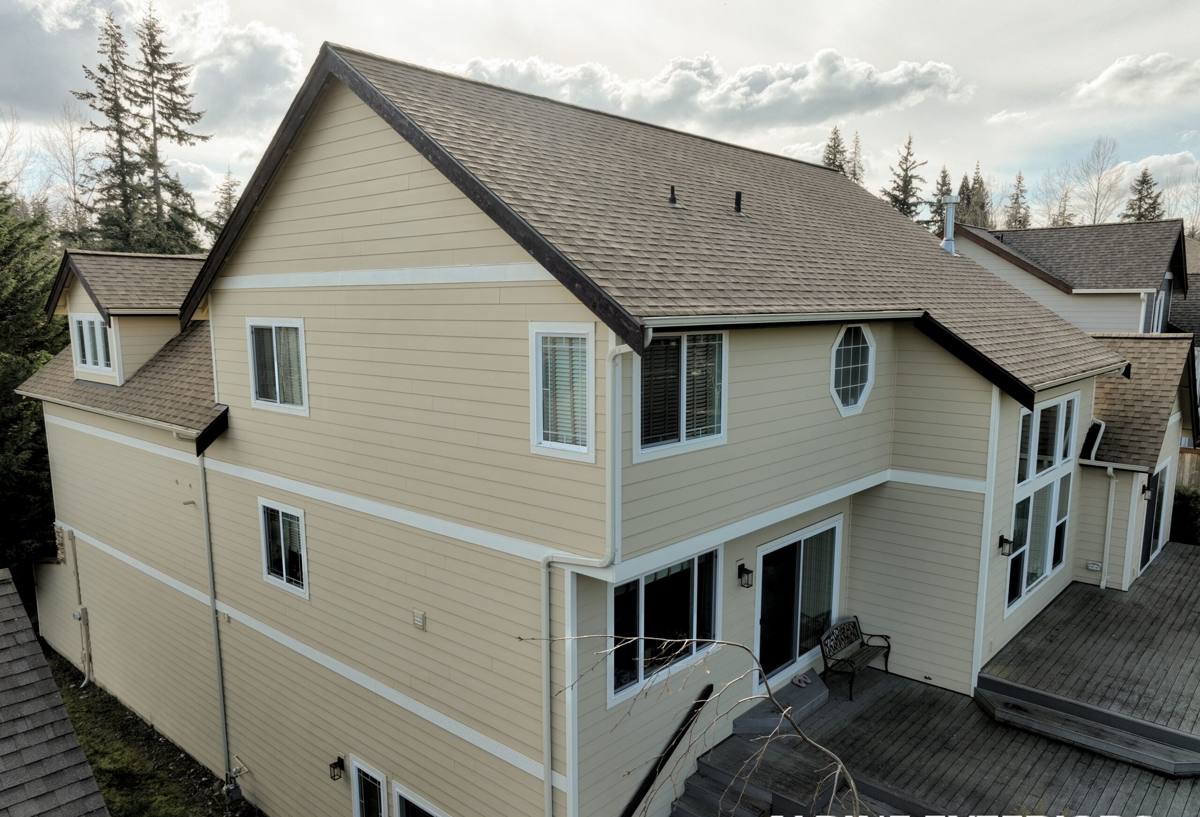
What Sunnyland's Climate Does to a Deck
Three things drive most of the deck problems we see in this neighborhood, and they compound each other.
Moisture That Doesn't Let Up
Bellingham gets a lot of rain, and a lot of it falls as a fine, steady drizzle that soaks into wood grain rather than running off the way a heavy downpour does. Ledger boards, joists, and the underside of decking take the brunt of it, especially where a deck sits close to grade or under tree cover, which is common on Sunnyland's older, more mature lots. Wood that stays damp for weeks at a time is exactly where rot gets started, usually from the inside out, well before it shows on the surface.
Moss and Organic Growth
Moss doesn't just look bad — it holds moisture directly against decking boards and fasteners, which accelerates rot underneath a surface that can still look fine from a distance. In this part of Whatcom County, moss season is long enough that a deck without proper drainage, spacing, and airflow is fighting a losing battle almost year-round. By the time moss is visibly established on the boards, it's usually already working on the wood underneath.
Salt Air and Metal Fatigue
Proximity to Bellingham Bay means a steady low-level exposure to salt-laden air, which is hard on anything metal — fasteners, joist hangers, structural connectors. Standard, uncoated hardware corrodes faster here than it would inland, and corroded hardware is a structural problem, not a cosmetic one. A deck can look solid on top while its connections are quietly weakening below.
Signs Your Sunnyland Deck Needs Replacing, Not Patching
Not every tired-looking deck needs a full replacement. But there's a point where repairs stop making sense and become money spent on a structure that's still failing underneath. Here's what tells us it's time for a full replacement rather than a repair:
- Soft, spongy, or spring-back decking boards, especially near the house or in shaded areas
- Rot or discoloration at the ledger board where the deck attaches to the house
- Rusted, corroded, or missing joist hangers and structural fasteners
- Posts that have shifted, settled, or show rot at the base near grade contact
- Persistent moss or algae that returns within weeks of cleaning
- A railing system that flexes or feels loose under normal weight
- A deck more than 20-25 years old that was never rebuilt to current code
If you're seeing two or more of these, a repair is usually a temporary fix on a structure that's already compromised. A full replacement lets us correct the underlying issues — drainage, hardware, ledger attachment — instead of building new boards on top of an old problem.
What a Correct Deck Replacement Actually Involves
A deck replacement done right in this climate isn't just swapping old boards for new ones. The parts of the structure you don't see are what determine whether the new deck lasts 10 years or 30.
Ledger Board and House Connection
This is the single most common failure point on decks in wet climates. The ledger board needs proper flashing to keep water from wicking behind it into the house's rim joist — a detail that's easy to get wrong and expensive to ignore. We treat this connection as the foundation of the whole project, not an afterthought.
Framing and Structural Hardware
We use corrosion-resistant, code-rated hardware throughout — joist hangers, structural screws, post bases — sized and rated for the actual loads the deck will carry. Given the salt air exposure common in Sunnyland, we don't cut corners on fastener quality; it's one of the cheapest parts of the job to get right and one of the most expensive to fix later.
Drainage and Airflow
Proper joist spacing, ventilation underneath the deck, and grading away from posts all reduce how long moisture sits against the structure. This is the single biggest factor in how fast moss and rot come back after a rebuild — a deck that can breathe and drain stays healthier far longer than one that traps water underneath it.
Decking Material Selection
Wood and composite decking each have real trade-offs in this climate, and we'll walk you through them honestly rather than push whatever has the best margin.
| Material | Moisture & Moss Behavior | Maintenance | Typical Lifespan Here |
|---|---|---|---|
| Pressure-treated wood | Absorbs moisture; needs sealing to resist moss and rot | Annual cleaning, periodic staining/sealing | 10-15 years with upkeep |
| Cedar | Naturally moisture-resistant but still needs sealing in this climate | Regular cleaning and re-oiling to hold appearance | 15-20 years with upkeep |
| Composite decking | Doesn't rot, but moss and algae can grow on the surface in shaded, damp spots | Periodic washing; no staining or sealing needed | 25-30+ years |
There's no universally "right" choice — a shaded, moisture-heavy lot common in older Sunnyland yards often points toward composite for the surface, paired with pressure-treated framing underneath, but a sunnier, more open lot might make wood a perfectly reasonable option. We'll give you our honest read based on your specific site, not a one-size answer.
Design Choices That Matter in a Wet Climate
Beyond material, a few design decisions have an outsized effect on how well a deck holds up here:
- Board spacing wide enough to let water drain through rather than pool
- Railing systems that don't trap moisture against posts or balusters
- Stair stringers and post bases set with proper standoff from grade, not buried in soil or mulch
- Fastener patterns that avoid face-screwing where possible, reducing water entry points on the board surface
- Skirting, if used, installed with enough gap for airflow underneath rather than sealing the space shut
None of these add significant cost to a project, but skipping them is exactly how a deck ends up needing another rebuild in half the time it should have lasted.
Our Process for a Sunnyland Deck Replacement
- On-site assessment. We look at the existing deck's framing, ledger connection, and posts — not just the surface boards — to understand what's actually failing and why.
- Honest scope and estimate. You'll get a clear breakdown of what needs replacing, material options with real trade-offs, and a written estimate before any work starts.
- Demo and structural correction. Old decking, framing, and hardware come out; ledger flashing, drainage, and any grading issues get corrected as part of the rebuild, not left as-is.
- Framing and hardware installation. New framing goes in with corrosion-resistant fasteners and code-rated connectors sized for the deck's actual load.
- Decking, railing, and finish work. Your chosen decking and railing system are installed with the spacing and standoff details that keep moisture from becoming a repeat problem.
- Final walkthrough. We go over the finished deck with you, including any maintenance recommendations specific to the material you chose.
Why Local Experience in Sunnyland Matters
Decks in this neighborhood tend to share a common set of problems tied to lot age, tree cover, and proximity to the bay — patterns that show up over and over once you've worked enough properties in the area. A crew that already understands how Sunnyland's older lots drain, how much moss pressure a shaded yard is likely to see, and where salt air does the most damage to hardware doesn't have to guess. That familiarity translates into fewer surprises during demo and a design that's already accounting for the conditions your deck will actually face, rather than a generic build that happens to be located in Bellingham.
It also means realistic timelines. Whatcom County's wet season affects scheduling and cure times for things like footings, and a local crew plans around that instead of promising a timeline that doesn't hold up once the weather turns.
What to Expect Cost-Wise
Every deck replacement is priced around size, framing condition, material choice, and site access — there's no honest flat number that applies to every project. In general terms, pressure-treated wood decks tend to run at the lower end of the cost range, cedar sits in the middle, and composite decking with matching railing systems runs higher upfront but lower over the deck's lifetime once you factor in maintenance. Structural issues discovered during demo, like a rotted ledger or failed posts, can affect the final cost either direction depending on what we find — which is exactly why we assess before we quote, not after.
Ready for an Honest Look at Your Deck?
If your Sunnyland deck is showing its age — soft boards, persistent moss, rusted hardware, or a railing that doesn't feel as solid as it used to — we're happy to come take a look and give you a straightforward assessment of what it actually needs. There's no pressure and no obligation. Use the form below to request a free estimate, and we'll walk you through your options in plain terms.