 Bellingham Siding
 Composite Decking in Sunnyland: Why the Climate Changes the Job
Sunnyland is one of Bellingham's older, well-treed residential neighborhoods, and that shade is a mixed blessing for outdoor living space. The same mature canopy that keeps homes cool in July also keeps decks damp, shaded, and slow to dry for a good chunk of the year. Add Whatcom County's marine air, near-constant fall and winter rain, and a moss season that can stretch from October into May, and you've got a climate that is genuinely hard on wood decking and unforgiving of a rushed composite installation. This page is specifically about installing and maintaining composite decking for Sunnyland homes — not composite decking in general — because the details that matter here (drainage, ventilation, board spacing, fastener choice) are shaped directly by this neighborhood's conditions.
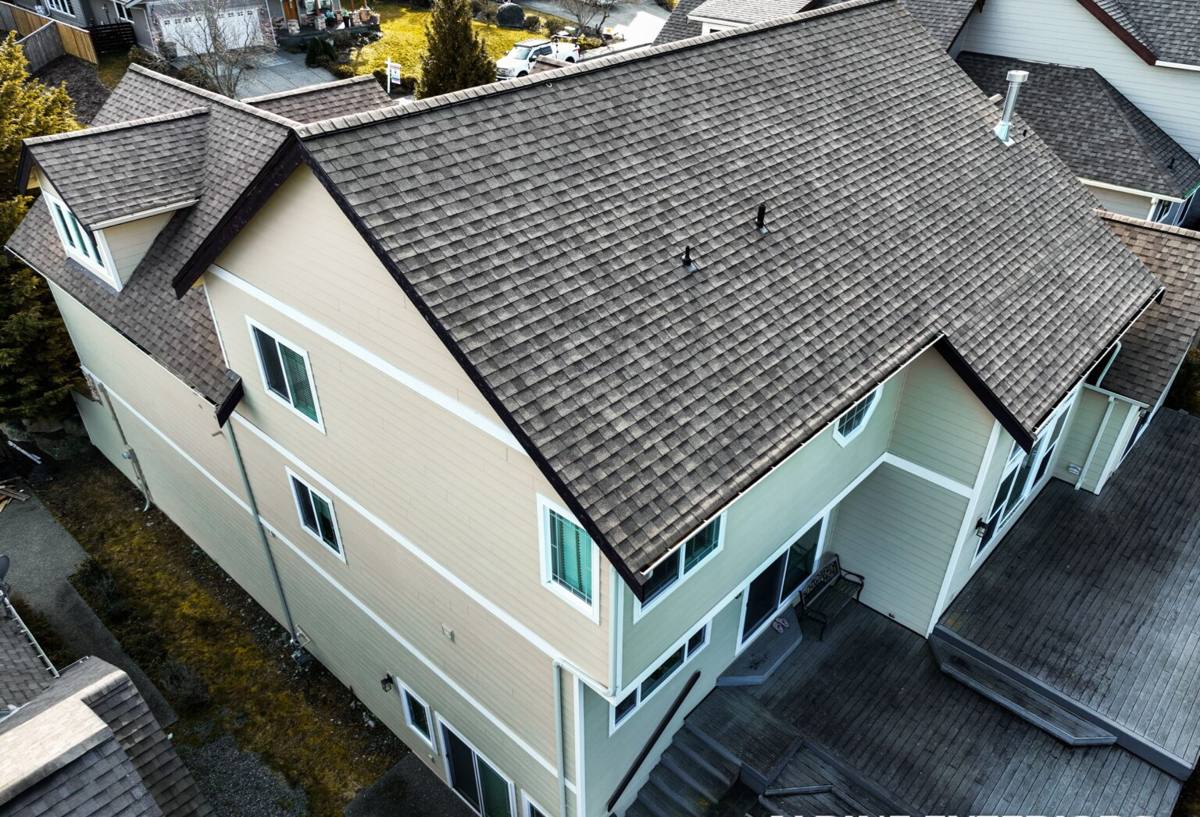
What Bellingham's Weather Actually Does to a Deck
Whatcom County sits in a temperate marine climate: mild temperatures, but a lot of moisture moving through the air almost year-round. In Sunnyland specifically, tree cover and closer-set lots mean less direct sun and airflow than a deck out on open, exposed property. That combination creates three specific problems for any deck surface:
- Slow drying time. Shaded, tree-lined lots hold moisture on deck boards and in the gaps between them far longer after rain than an open lot would.
- Moss and algae growth. Spores need moisture and shade to establish, and Sunnyland's yards provide both. Left unaddressed, moss turns a deck surface slick and, on wood, starts breaking down fibers.
- Driving rain intrusion. Wind-driven rain off the Sound doesn't just fall on a deck — it gets pushed sideways into ledger boards, stair stringers, and any gap where flashing or fasteners aren't doing their job.
None of this means a deck in Sunnyland can't hold up for decades. It means the build has to account for moisture from day one instead of treating it as an afterthought.
Why Composite Decking Fits This Neighborhood
Wood decking can absolutely work in Bellingham, but it demands a maintenance schedule most homeowners don't stick to — annual cleaning, periodic sealing, and vigilance about moss before it stains or rots the boards. Composite decking was developed largely to solve exactly this problem: a surface that doesn't absorb water the way wood fibers do, doesn't require yearly staining, and resists the surface mildew and moss staining that shaded Pacific Northwest lots produce so readily.
| Factor | Wood Decking | Composite Decking |
|---|---|---|
| Moss/algae resistance | Low — porous surface holds moisture, needs regular cleaning and sealing | High — capped boards shed surface moisture, resist staining |
| Maintenance in shaded lots | Annual cleaning, periodic sealing/staining, board replacement over time | Occasional washing; no staining or sealing required |
| Behavior with driving rain/splashback | Prone to cupping, checking, and rot at fastener points if not maintained | Stable dimensionally; won't rot, though substructure still needs protection |
| Upfront material cost | Lower | Higher |
| Typical lifespan in this climate with proper install | 10-15 years with diligent upkeep | 25-30+ years, most backed by manufacturer warranty |
The trade-off is upfront cost — composite boards cost more than pressure-treated lumber. For a lot of Sunnyland homeowners, especially on shaded lots where a wood deck would need constant attention just to stay safe underfoot, that cost evens out over the life of the deck.
What Composite Decking Doesn't Solve on Its Own
Composite boards resist moisture at the surface, but they don't protect a poorly built substructure. If the framing underneath isn't pressure-treated, properly flashed, and ventilated, you can still end up with a rotting frame under a perfectly good-looking composite deck surface. This is the single most common shortcut we see on decks we're asked to repair or rebuild — good boards laid over an undersized or unprotected frame.
What a Correct Installation Involves in This Climate
A composite deck built for Sunnyland's conditions needs more attention to a handful of details than the same deck built in a drier climate would:
- Joist spacing matched to the board manufacturer's spec — composite boards flex differently than wood and most require tighter joist spacing, especially on angled or diagonal layouts.
- Joist tape or flashing on every joist top — this is what actually protects the framing lumber from the moisture that inevitably works down through board gaps.
- Proper ledger flashing where the deck meets the house — this is the single most common point of water intrusion into a home's framing, and it matters more here given how much wind-driven rain the area gets.
- Consistent board gapping — composite boards need airflow between them to shed water and dry out; gapping that's too tight traps moisture and encourages moss and mildew right at the seams.
- Under-deck ventilation — especially important on shaded, low-clearance decks where airflow underneath is already limited by tree cover and lot layout.
- Corrosion-resistant fasteners and hardware — coastal-influenced air in Whatcom County accelerates corrosion on standard hardware faster than most homeowners expect.
Skipping any one of these doesn't show up as a problem on day one. It shows up two or three winters later as soft framing, a spongy stair stringer, or moss establishing itself in board gaps that were never wide enough to dry out.
Our Process, Start to Finish
- On-site walk and measure. We look at the existing structure (if replacing an old deck), sun/shade exposure, drainage path, and how the deck ties into the house.
- Material and layout discussion. We go over board options, color, and layout given your lot's specific shade and moisture exposure — a deeply shaded corner lot gets a different recommendation than a more open one.
- Written estimate. Clear scope, materials, and price before any work starts — no surprise add-ons once we're on site.
- Permitting. Most deck work in Bellingham requires a permit; we handle that process rather than leaving it to the homeowner.
- Demo (if applicable) and framing. Old decking and any compromised framing comes out; new framing goes in to current code and to the composite manufacturer's structural requirements.
- Flashing, tape, and hardware installation. This is the unglamorous step that determines how the deck ages — done before a single board goes down.
- Composite board installation. Hidden fastener systems where the product supports it, consistent gapping, and attention to expansion gaps at the perimeter.
- Final walk-through. We go over the finished deck with you, including what maintenance (if any) the specific board line needs.
Choosing the Right Composite Board
Not all composite decking is built the same way, and the differences matter more in a wet, shaded climate than a dry one.
Capped vs. Uncapped Composite
Capped composite boards have a polymer shell wrapped around a wood-plastic core, which is what actually gives them their moisture and stain resistance. Uncapped composite is less expensive but more prone to surface moisture absorption and staining over time — a real consideration in a neighborhood where boards spend a lot of the year shaded and damp. For Sunnyland lots with heavy tree cover, we generally steer homeowners toward fully capped boards specifically because of how much longer they resist moss and algae staining.
Grooved vs. Square Edge
Grooved-edge boards allow hidden fastener systems, which give a cleaner look and eliminate the small pockets where debris and moisture collect around exposed screw heads. Square-edge boards are typically fastened face-down and cost less in labor, but require more attention to sealing each fastener point against water intrusion.
Color and Heat Considerations
Darker composite boards handle Bellingham's mild summers fine, but on the rare open, sun-exposed lot they can run noticeably hotter underfoot than lighter tones. For most Sunnyland properties with partial shade, this is a minor factor — worth mentioning, not a deciding one.
Living With a Composite Deck Here: Realistic Maintenance
Composite decking is low-maintenance, not no-maintenance. In a neighborhood with this much shade and moisture, a little seasonal attention keeps the deck looking and performing the way it should for its full warranty period.
- Sweep off leaves, needles, and debris regularly in fall — trapped organic matter is exactly what moss needs to get started.
- Wash the surface with soap and water (or a composite-safe cleaner) once or twice a year, more often on heavily shaded sections.
- Keep gutters and downspouts near the deck clear so runoff isn't dumping extra water onto or under the deck.
- Check and clear board gaps of debris so water and air can move through them as designed.
- Trim back overhanging branches where practical to improve airflow and sun exposure on the worst-shaded sections.
- Inspect fasteners, ledger flashing, and stair connections annually, especially after a hard winter.
What Drives the Cost of a Sunnyland Composite Deck
Every deck is different, so exact pricing depends on your specific project, but these are the main factors that move the number up or down:
| Factor | Why It Matters |
|---|---|
| Deck size and shape | More square footage and complex angles (curves, multiple levels) increase both material and labor |
| Substructure condition | Reusing sound existing framing costs less than a full tear-out and rebuild |
| Board tier chosen | Uncapped composite costs less than fully capped, premium lines |
| Fastening method | Hidden fastener systems add labor time versus face-screwed boards |
| Railing and stairs | Composite or metal railing systems and stair complexity add to overall scope |
| Site access | Tight, tree-lined Sunnyland lots can slow material staging and demo compared to open lots |
| Permitting requirements | Height, attachment to the home, and guard requirements affect what's required |
We give a written, itemized estimate before any work begins so you know exactly what's driving the number for your specific project.
Why It Matters to Hire a Crew That Already Works in Sunnyland
A crew that regularly works this neighborhood already knows how the tree canopy and lot layouts here affect drainage and drying, what Bellingham's permitting process actually requires, and how to sequence a build around the area's rain patterns instead of getting caught mid-project by them. That local familiarity shows up in small decisions — where to add extra ventilation, which board tier actually earns its price on a shaded lot, how to flash a ledger board against wind-driven rain — that a crew unfamiliar with Whatcom County's climate might not think twice about.
If you're planning a new composite deck or replacing a tired wood one in Sunnyland, we're happy to come take a look, walk the site with you, and put together a clear, no-pressure estimate. There's no obligation — just a straight conversation about what your specific lot and home actually need. The form below gets us started.