 Bellingham Siding
 Why Blaine Roofs Take a Different Kind of Beating
Blaine sits right where the Salish Sea meets the Canadian border, and that location shapes everything about how a roof ages here. You've got salt-laden air coming off the water, long stretches of driving rain instead of the occasional downpour, and winters where cold outflow winds funnel down out of the Fraser Valley in British Columbia and hit the coast with a lot more force than most of Western Washington ever sees. None of that is dramatic on its own. It's the combination, repeated year after year, that wears a roof down faster than the manufacturer's warranty paperwork suggests it should.
A roof in a drier, more sheltered part of Whatcom County might go a decade between real issues. A Blaine roof exposed to open water and wind corridors often needs attention sooner — not because the materials are bad, but because the environment is asking more of them. Storm damage repair here isn't just "fix the shingle that blew off." It's understanding why that shingle blew off in the first place and making sure the fix holds up to the next round of weather, not just the last one.
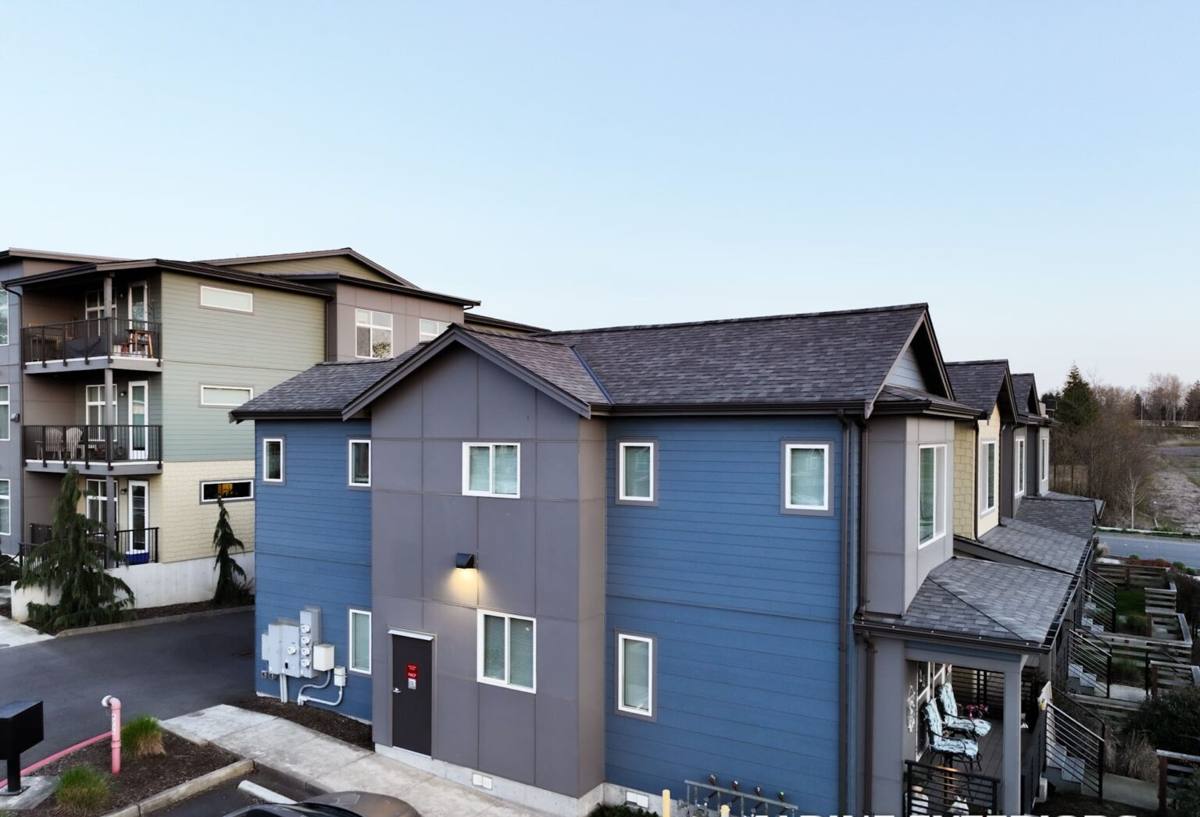
Signs Your Blaine Home Has Storm-Related Roof Damage
Storm damage isn't always obvious from the ground. Some of it announces itself right after a windstorm; some of it shows up months later as a stain on a ceiling. Homeowners in Blaine should watch for:
- Shingles that are missing, cracked, curled at the edges, or creased from wind flex
- Bare or dark streaks where granules have been stripped off, often on the side of the roof that faces the water
- Soft spots, sagging, or discoloration on interior ceilings after a heavy rain event
- Gutters full of granules, or gutters and downspouts pulled loose or dented
- Flashing around chimneys, vents, or skylights that looks bent, lifted, or gapped
- Moss buildup along ridge lines and in shaded valleys, especially on north-facing slopes
Any one of these on its own might not be urgent. Several at once, especially after a windy or wet stretch, usually means water has found a way in even if you haven't seen a leak yet.
What a Correct Storm Damage Repair Actually Involves
A quick patch job can hide a problem for a season and let it come back worse. A correct repair starts with figuring out how the water or wind actually got in, not just covering the visible damage.
Start With the Attic, Not Just the Roof Surface
Wind-driven rain in a coastal town like Blaine doesn't always enter through an obvious hole. It can be pushed sideways, under shingle edges and up under flashing, by sustained wind pressure during a storm. That means a proper inspection includes checking the attic and roof deck from underneath — looking for staining, damp insulation, or rusted fasteners — not just walking the roof surface and calling it done.
Match Materials, Not Just Color
Replacing a damaged section with mismatched shingle profiles or a lighter-gauge flashing than what's already installed creates a weak point that will fail again, often at the seam between old and new. A correct repair matches the existing material's type, weight, and installation pattern as closely as possible, so the repaired section performs the same as the rest of the roof.
Rebuild the Flashing Details Properly
Most storm-related leaks in this area trace back to flashing, not the shingles themselves — chimney step flashing, valley flashing, and the flashing around roof penetrations are where wind-driven rain concentrates. Repairing the shingle above a flashing failure without correcting the flashing itself is one of the most common shortcuts we see, and it's why the same leak often reappears within a year or two.
Moss: The Slow Storm Damage No One Talks About
Wind and rain get the attention, but moss does quieter, longer-term damage that's just as costly. Whatcom County's damp climate and Blaine's tree cover and shade patterns give moss a long growing season on roofs that don't get much direct sun. Moss holds moisture against the shingle surface, works its way under shingle edges as it grows, and can lift tabs enough that wind gets underneath them during the next storm. A roof with heavy moss going into a windy season is more likely to lose shingles than a clean one, simply because the moss has already loosened the seal.
Moss removal after storm damage isn't just cosmetic. Pressure washing or scraping moss off incorrectly can strip granules and shorten a roof's remaining life, so it needs to be done with the right technique and, where appropriate, followed by a treatment that slows regrowth without damaging the shingles.
Salt Air and Metal Roof Components
Being close to open saltwater affects more than the shingles. Metal flashing, fasteners, gutter hardware, and any exposed metal roofing components corrode faster in a salt-air environment than they would further inland. Storm damage repairs in Blaine should use fasteners and flashing rated for coastal exposure, not standard-grade hardware that will start rusting within a few seasons. A repair that looks fine going in but uses the wrong-grade metal is a repeat service call waiting to happen.
Our Process for Storm Damage Repairs
We keep the process straightforward because storm damage is stressful enough without added confusion:
- Inspection. We check the roof surface, flashing, gutters, and attic to find every point water or wind got through — not just the spot you noticed first.
- Documentation. We photograph the damage clearly, which matters if you're filing an insurance claim.
- Written scope and estimate. You get a clear description of what needs to be repaired and why, with pricing before any work starts.
- Repair. We match materials, rebuild flashing correctly, and address the root cause — not just the visible symptom.
- Cleanup and walkthrough. We clear debris, check gutters, and walk the work with you before we consider the job done.
Repair vs. Replacement: How We Help You Decide
Not every storm-damaged roof needs a full replacement, and not every repair is worth doing on a roof that's already near the end of its life. The table below covers the general factors that go into that decision — actual recommendations depend on what we find during inspection.
| Factor | Leans Toward Repair | Leans Toward Replacement |
|---|---|---|
| Roof age | Under roughly two-thirds of expected lifespan | Nearing or past expected lifespan |
| Extent of damage | Isolated section or single slope | Multiple slopes or widespread granule loss |
| Underlying deck condition | Solid, dry decking under damaged area | Soft, rotted, or repeatedly wet decking |
| Moss and algae history | Light, recent, treatable | Heavy, long-term, shingles already lifting |
| Flashing condition | Sound except at the damaged area | Rusted, brittle, or failing in several spots |
Insurance and Storm Claims: What to Know
Wind and storm damage is often covered under homeowners insurance, but coverage details and deductibles vary by policy, so we're not the ones who can tell you what your specific plan pays for — your insurer is. What we can do is document the damage clearly with photos and a written scope of work that you can submit with a claim, and answer straightforward questions about what we found and why it needs repair. We'd rather give you an honest assessment you can take to your insurer than inflate a scope to match what a policy might cover.
A Quick Post-Storm Checklist for Blaine Homeowners
- Do a visual check from the ground after any windstorm — don't climb onto the roof yourself
- Look at gutters and the ground below the eaves for shingle granules or debris
- Check ceilings and attic spaces for new stains, especially after a wind-driven rain event
- Note the date and general conditions of the storm for your records
- Get an inspection before the next storm system arrives, not after a small leak becomes a bigger one
- Avoid tarping or DIY patch jobs on steep or wet roofs — it's not worth the fall risk
Why a Crew That Already Works Blaine Matters
Storm damage repair isn't the same job in every climate. A crew that mostly works drier, inland areas may not think to check for wind-driven rain intrusion under flashing, or may not know how aggressively moss grows on a shaded, damp roof this close to the water. Working regularly in Blaine and the surrounding Whatcom County coastline means we're used to diagnosing damage caused by this area's specific mix of salt air, sustained rain, and outflow wind events — and we know which fixes actually hold up here versus which ones just look fine until the next storm.
It also means faster response. After a significant windstorm, roofing crews get busy fast, and homeowners who wait too long to get a tarp or repair scheduled risk more interior damage. Being established locally means we're not coming from out of the area to reach you.
If your roof took a hit in a recent storm, or you're seeing signs of slower damage from moss or salt air, we're glad to take a look. Reach out for a free, no-pressure estimate through the form below and we'll tell you honestly what we find.