 Bellingham Siding
 Deck Repair Built for South Hill's Climate and Older Housing Stock
South Hill is one of Bellingham's older, more established neighborhoods, with mature tree cover, sloped lots, and a mix of homes ranging from early-1900s originals to mid-century additions. That combination — shade, slope, and age — is exactly what shortens a deck's life in Whatcom County. Decks here don't usually fail because of one dramatic event. They fail slowly, from moisture that never fully leaves the wood, moss that holds water against boards, and salt-laden air off Bellingham Bay that speeds up corrosion on every metal fastener holding the structure together.
We repair decks in South Hill regularly enough to know which parts of a deck give out first in this specific setting, and which fixes actually hold up through another wet season instead of just covering up a symptom.
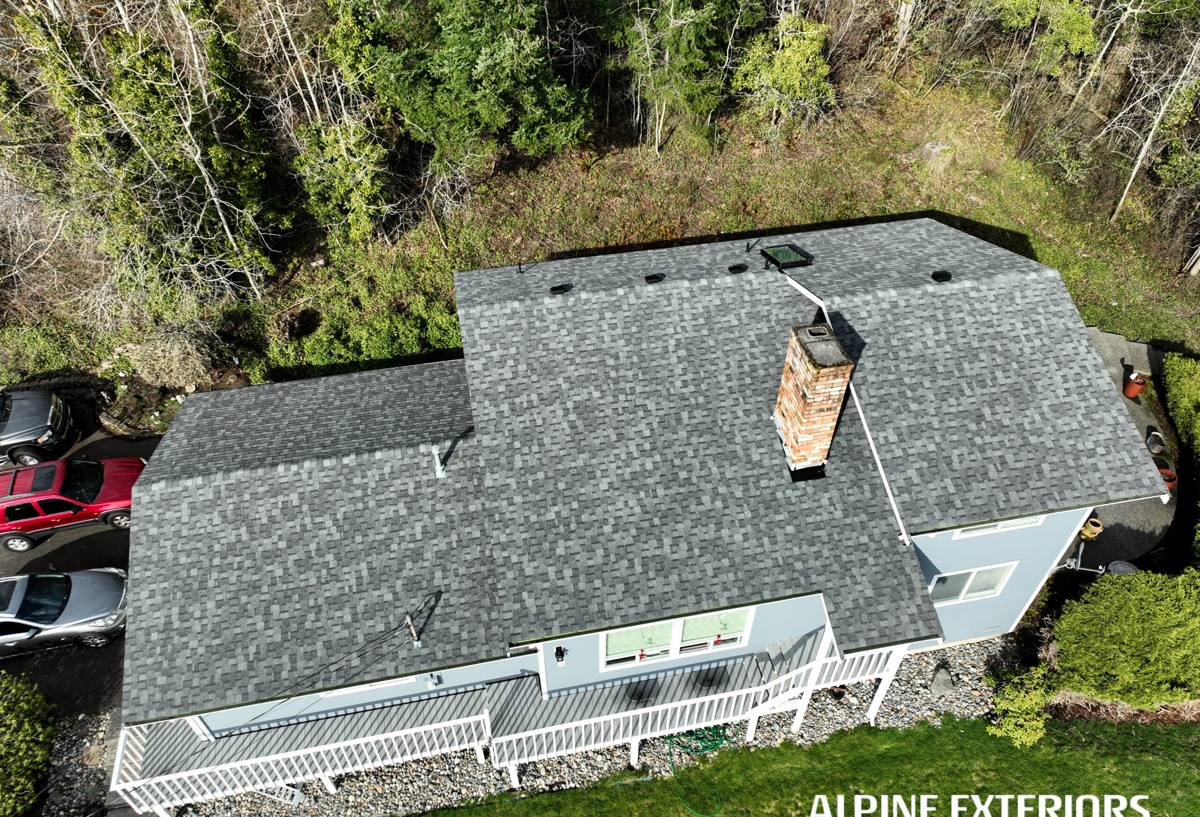
Why Decks in This Part of Bellingham Wear Differently
Salt Air and Driving Rain
Proximity to the water means South Hill decks take on airborne salt in addition to ordinary rainfall. Salt accelerates corrosion on nails, screws, joist hangers, and any exposed metal railing hardware. Combine that with driving rain that gets pushed sideways into ledger boards and stair stringers, and you get moisture intrusion in places a dry-climate deck would never see trouble — tucked-away joints, the underside of ledger flashing, and the end grain of deck boards where water sits longest.
A Long Moss Season
Whatcom County's moss season runs long, and shaded, tree-covered lots like many in South Hill make it worse. Moss on a deck surface isn't just a slip hazard — it holds moisture against the wood around the clock, which is a major driver of rot in deck boards, especially where boards run close together or where drainage was never quite right to begin with.
Older Homes, Older Deck Framing
A lot of South Hill's housing stock predates current deck-building codes. That means older decks in the neighborhood are more likely to have undersized ledger connections, missing or inadequate flashing, and framing that was never rated for today's expected loads. A repair on a deck like this isn't just cosmetic — it's often a chance to correct a structural shortcut from decades ago before it becomes a bigger problem.
What a Correct Deck Repair Actually Involves
A repair that's done right starts with figuring out why a section failed, not just replacing what looks bad. We open up suspect areas — pull a few boards, check behind ledger flashing, probe framing members with a screwdriver or awl — before we quote anything. That tells us whether we're dealing with surface wear, isolated rot, or a structural issue that needs more than a board swap.
- Structural inspection of ledger board attachment, joists, beams, and posts
- Moisture and rot testing at ledger connections, stair stringers, and board ends
- Hardware inspection — checking for corroded, undersized, or missing joist hangers and fasteners
- Flashing review where the deck meets the house, a common failure point in driving rain
- Railing and guard post inspection for looseness, rot at the base, or inadequate anchoring
- Surface assessment — board cupping, splitting, moss buildup, and finish failure
Once we know what's actually happening, the repair plan matches the scope of the problem: targeted board replacement, ledger and flashing correction, framing reinforcement, hardware upgrades to better-rated corrosion-resistant fasteners, or a combination of these.
Common South Hill Deck Repairs, Ranked by What We See Most
| Issue | What Causes It Here | Typical Fix |
|---|---|---|
| Rotted deck boards | Moss retention, shade, board-to-board contact with poor drainage | Selective board replacement, improved board spacing/drainage |
| Ledger board rot or separation | Driving rain intrusion behind inadequate or aging flashing | Ledger repair or replacement with correct flashing detail |
| Corroded fasteners and hangers | Salt air acceleration on older or non-coated hardware | Replace with corrosion-resistant, code-rated hardware |
| Loose or unsafe railings | Rot at post base, undersized original anchoring | Post reinforcement or replacement, proper anchoring to framing |
| Soft or spongy stair stringers | Water pooling on treads, poor stringer ventilation | Stringer sistering or replacement |
| Persistent moss and slickness | Tree canopy, shaded northern exposures common on the hill | Surface cleaning, drainage correction, finish upgrade |
Repair vs. Replacement: How We Make That Call
Not every deck with problems needs to be torn out. As a general rule, if the structural framing — posts, beams, and joists — is sound and the ledger connection is solid or repairable, targeted repair is usually the more cost-effective path. If rot has spread through multiple framing members, or the deck was undersized and under-built for its actual use from the start, replacement often ends up costing less over time than repeated repairs to a structure that keeps failing.
We'll walk you through what we find and give you an honest read on which category your deck falls into. We're not going to talk you into a full rebuild if a repair will genuinely hold up, and we're not going to patch something that's going to need the same fix again in two years.
Signs a Repair Is Usually Enough
- Rot is limited to a few boards or one area, not spread through the framing
- The ledger connection to the house is intact or has isolated damage
- Posts and beams test solid when probed
- The issue is mostly surface-level: moss, cupping, finish failure
Signs Full Replacement Should Be on the Table
- Rot is present in multiple structural members, not just decking boards
- The original build lacks proper flashing and it's caused repeat ledger damage
- Framing was undersized for the deck's actual size or use
- You've already had one or more repairs to the same area in recent years
Our Process for South Hill Deck Repairs
- Walkthrough and inspection. We look at the whole deck, not just the area you called about — a problem in one spot often points to a cause somewhere else.
- Honest scope and estimate. You get a clear explanation of what's actually wrong, what it will take to fix, and what it costs, in writing.
- Repair work. We match materials and fasteners to what the site actually demands, given the exposure and shade conditions of your specific lot.
- Drainage and flashing correction. Where moisture intrusion caused the original problem, we fix the underlying path — not just the symptom — so the same failure doesn't come back.
- Final walkthrough. We show you what was done and what to keep an eye on going forward.
Materials and Hardware Choices That Matter Here
Given the salt air and long wet season, we lean toward corrosion-resistant fasteners and hangers rated for coastal exposure rather than standard interior-grade hardware — the cost difference is small relative to the cost of redoing a repair in a few years because the hardware failed first. For decking material, whether we're matching existing wood or discussing composite alternatives, the deciding factors are moisture behavior, maintenance the homeowner is realistically willing to do, and how the material handles a shaded, moss-prone environment specifically — not just appearance out of the box.
We'll talk through the trade-offs honestly: wood is repairable board-by-board and can be refinished, but needs regular maintenance to resist moss and moisture in this climate. Composite reduces some maintenance but has its own installation sensitivities, particularly around ventilation and moisture drainage underneath the boards, that matter more here than in drier regions.
A Quick Homeowner Checklist for South Hill Decks
- Check for soft or spongy spots when you walk the deck barefoot, especially near the house
- Look at railing posts for any wobble, particularly where they meet the deck surface
- Sweep moss off regularly during fall and winter rather than letting it build up
- Look at fastener heads and hardware for rust streaking on the surface below
- Check where the deck meets the siding for gaps, staining, or soft trim — early signs of ledger moisture
- Have a deck older than 15-20 years professionally inspected even if nothing looks obviously wrong
Why Local Experience Matters for This Repair
A deck repair crew that mostly works drier inland areas will often underbuild for what South Hill actually experiences — less flashing than the exposure calls for, standard fasteners instead of corrosion-resistant ones, or a repair plan that doesn't account for how much shade and moss pressure a given lot really has. Working in Bellingham and Whatcom County regularly means we size the repair to the actual conditions on your property, not a generic spec sheet.
If your deck has a soft spot, a loose railing, persistent moss, or just feels like it's not what it used to be, we're happy to take a look and give you a straight answer. Reach out for a free, no-pressure estimate using the form below.