 Bellingham Siding
 Building Decks for South Hill's Elevation and Weather
South Hill sits above much of Bellingham, and that elevation is exactly why the neighborhood is popular — open views toward Bellingham Bay, more light than the lower, tree-covered streets, and a real sense of separation from downtown traffic. But that same exposure changes what a deck has to survive. Homes up here take wind and salt-laden air straight off the water, along with the driving, sideways rain that Whatcom County sees for a good chunk of the year. Add in a long moss season that stretches from fall through spring, and you have a set of conditions that punishes a deck built to a generic, one-size-fits-all spec.
A deck built for South Hill needs to handle three things well: corrosion from salt air, water that doesn't fall straight down, and moss and algae that thrive in shade and standing moisture. Get any one of those wrong and you're looking at rust stains, soft framing, or a slick, slippery surface within a few seasons — long before the wood or composite itself would normally wear out.
Salt Air and Metal Fatigue
Fasteners, brackets, post bases, and hidden hardware take the brunt of salt exposure on elevated, view-facing lots. Standard hot-dip galvanized hardware can hold up for a while, but on a home that catches marine air directly, it's often not enough over the long term. We build with stainless steel or high-grade coated fasteners rated for coastal exposure, particularly at ledger connections, joist hangers, and any hardware that's difficult to inspect or replace later.
Driving Rain and Water Management
Rain that comes in at an angle finds its way into places vertical-only flashing details were never designed to handle. Ledger boards, the point where a deck attaches to the house, are the single most common failure point we see on rebuilds — water gets behind the ledger, the rim joist rots from the inside, and nobody notices until the deck starts to feel spongy. Correct flashing, proper standoff from the siding, and joist tape on every cut edge are not optional extras here; they're the difference between a deck that lasts and one that needs structural repair in under a decade.
Moss, Algae, and Shade
Decks that sit under tree cover or face north stay damp longer after every rain, and Whatcom County gives moss and algae plenty of time to take hold. Beyond looking neglected, a mossy deck surface is a real slip hazard on stairs and landings. Board spacing, airflow underneath the deck, and the decking material itself all affect how fast moss becomes a problem — and how hard it is to keep off.
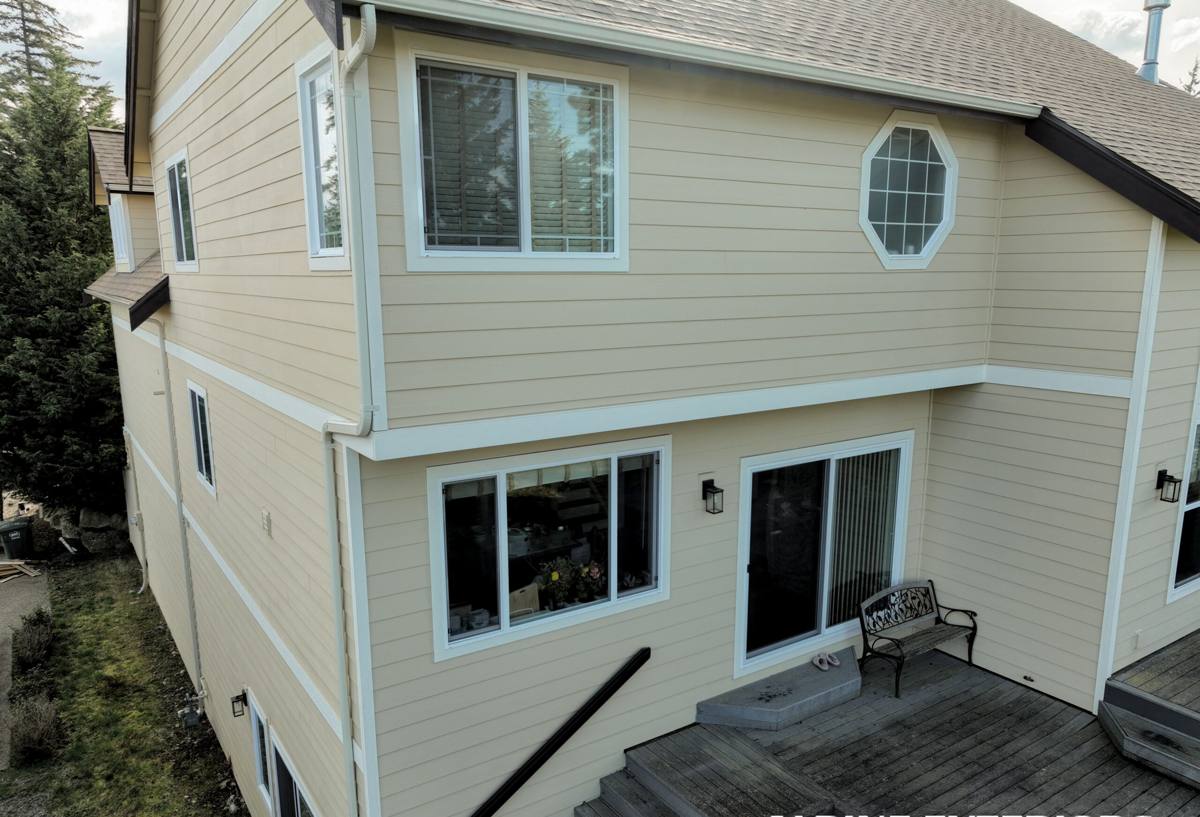
What a Correctly Built Deck Requires in This Climate
Regardless of the decking material a homeowner chooses, the structure underneath has to be built to a standard suited to this climate, not the regional minimum. That means:
- Footings set below frost depth and sized for the actual load, including any hot tub, built-in seating, or roof structure planned for the deck
- Ledger boards properly flashed and fastened with lag bolts or through-bolts rated for the connection — never just nailed
- Joist tape over every joist top to stop water from wicking into end grain and fastener holes
- Stainless or coated fasteners at all exposed and hard-to-reach connections
- Proper board spacing and airflow underneath so the structure can dry out between storms
- Drip edge and flashing details behind fascia boards and at any point the deck meets the house
None of this is unusual or premium — it's simply what a deck in a wet, salt-exposed climate needs to actually hold up. Skipping any of it doesn't save much time on install day, but it shortens the life of the deck considerably.
Choosing the Right Decking Material for South Hill
There's no single "best" decking material — the right choice depends on how much maintenance a homeowner wants to take on, the budget, and how exposed the deck is to shade, rain, and salt air. Here's how the common options compare for a South Hill property specifically:
| Material | Moisture & Salt Resistance | Moss/Algae Resistance | Maintenance | Typical Lifespan |
|---|---|---|---|---|
| Cedar | Good if sealed regularly; naturally rot-resistant | Moderate — needs periodic cleaning and re-sealing | Annual cleaning and re-staining recommended | 15-20 years with upkeep |
| Pressure-Treated Fir/Pine | Fair — treatment protects against rot, not surface weathering | Low — prone to moss in shaded, damp spots | Regular sealing and cleaning needed | 10-15 years with upkeep |
| Composite | Very good — doesn't absorb moisture like wood | Good — but can still grow moss/algae film in deep shade | Occasional washing, no staining or sealing | 25-30 years |
| PVC/Capped Composite | Excellent — fully sealed surface | Very good — least hospitable surface for moss | Lowest — soap and water as needed | 25-30+ years |
We don't push any one product as the "right" answer for every home. Cedar looks great and plenty of South Hill homeowners want that natural material on an older house, but it asks for a real annual maintenance commitment in a climate this wet. Composite and PVC decking cost more up front but trade that for a much lower maintenance burden — which matters a lot on a deck that sits in shade for half the day. We'll walk through the honest trade-offs for your specific site rather than defaulting to whatever's easiest to install.
Structural Considerations for South Hill's Terrain
South Hill's sloped lots are part of what makes the views possible, but slope adds real structural considerations that flatter neighborhoods don't deal with as often:
Tall Support Posts and Engineering
Decks built out from a hillside or over a walkout basement often need taller support posts than a typical ground-level deck, which changes the bracing and footing requirements. Beyond a certain height, that generally calls for engineered post-to-beam connections and diagonal bracing to keep the structure rigid under wind load — not just deeper posts.
Footings on Sloped or Fill Soil
Footing depth and placement need to account for the actual soil conditions on a slope, which can vary a lot from one part of a lot to another. We check this on-site rather than assuming a flat-lot footing plan will work as-is.
Guardrails and Fall Protection
Any deck with a significant drop-off needs code-compliant guardrails, and on a hillside lot that's not just a formality — it's a real safety requirement. We build guardrail height, baluster spacing, and post attachment to current code, every time, regardless of how the deck looks from below.
Permits and Local Requirements
Most decks attached to a home, or built above a certain height, require a permit through the local jurisdiction before work starts. Requirements can shift based on deck height, size, and proximity to property lines, so we don't guess — we pull the specifics for your address and handle the permitting process as part of the job rather than leaving it for the homeowner to sort out. If your lot has any slope, setback, or view-corridor considerations specific to South Hill, that gets factored into the plan before we ever cut a board.
Our Deck Building Process
- On-site assessment — we walk the site, check slope and drainage, look at sun/shade exposure, and talk through how you actually plan to use the deck
- Design and material selection — layout, decking material, railing style, and any built-ins are decided together, with honest cost and maintenance trade-offs laid out
- Permitting — we prepare and submit what's required for your specific address and deck size
- Framing and structural work — footings, posts, beams, and joists are built to the loads and exposure of your site, not a generic minimum
- Decking, railing, and finish work — boards, railings, stairs, and any trim or lighting go in with attention to drainage and airflow underneath
- Final walkthrough — we go over the finished deck together and cover the maintenance your specific material needs going forward
Maintenance in a Wet, Mossy Climate
Even a well-built deck needs some seasonal attention here. A short list of what actually matters:
- Sweep debris off the deck surface regularly — wet leaves trapped between boards hold moisture against the wood or composite
- Rinse or scrub shaded areas and stair treads where moss tends to establish first
- Check and clear gaps between boards so water can drain instead of pooling
- Inspect the ledger board area and any visible fasteners once a year for rust staining or softness
- Re-seal or re-stain wood decking on the schedule the product actually needs — not just when it looks faded
- Keep gutters and downspouts near the deck clear so runoff isn't dumping extra water onto the structure
Repair or Rebuild: Signs Your Deck Needs Attention
Not every problem deck needs to be torn out completely, but a few signs mean it's worth a professional look sooner rather than later: soft or spongy spots underfoot, rust streaks running down from fasteners or brackets, visible gaps or rot at the ledger connection to the house, wobbly railings or stair stringers, and persistent moss that comes right back no matter how often it's cleaned. Some of these are repairable in isolation; others point to a structural issue underneath that a surface fix won't solve. We'll give you a straight answer on which situation you're in.
Why Hire a Crew That Already Works South Hill
Building a deck that holds up here isn't about following a national how-to guide — it's about knowing how this specific hillside, this specific weather pattern, and this specific building department actually work. A crew that already builds on South Hill's slopes knows what footing depths and bracing actually hold up on this terrain, has already worked through the local permitting process, and has seen firsthand which fastener and flashing choices last through a Whatcom County winter and which ones don't. That local experience shows up in the details you don't see once the deck is finished — the ones that determine whether it's still solid in fifteen years.
If you're planning a new deck or dealing with an aging one on South Hill, we're happy to come take a look and give you a straightforward, no-pressure estimate. Use the form below to get started.