 Bellingham Siding
 Storm Damage Roof Repair Built for Silver Beach's Microclimate
Silver Beach sits close to Lake Whatcom, tucked among mature trees on sloped, wooded lots — a setting that's beautiful most of the year and hard on roofs the rest of it. Between wind funneling off the water, heavy limb and debris drop during fall and winter storms, and a moss season that runs longer here than in more open parts of Bellingham, roofs in this neighborhood take a specific kind of beating. A generic storm repair — patch the visible hole, replace a few shingles, call it done — often misses what actually caused the damage and what will cause the next round of it.
This page covers what storm damage repair should actually involve for a Silver Beach home: how to tell real storm damage from routine wear, what a correct repair looks like given the local climate, and why a crew that already works this specific neighborhood catches things a first-time visitor won't.
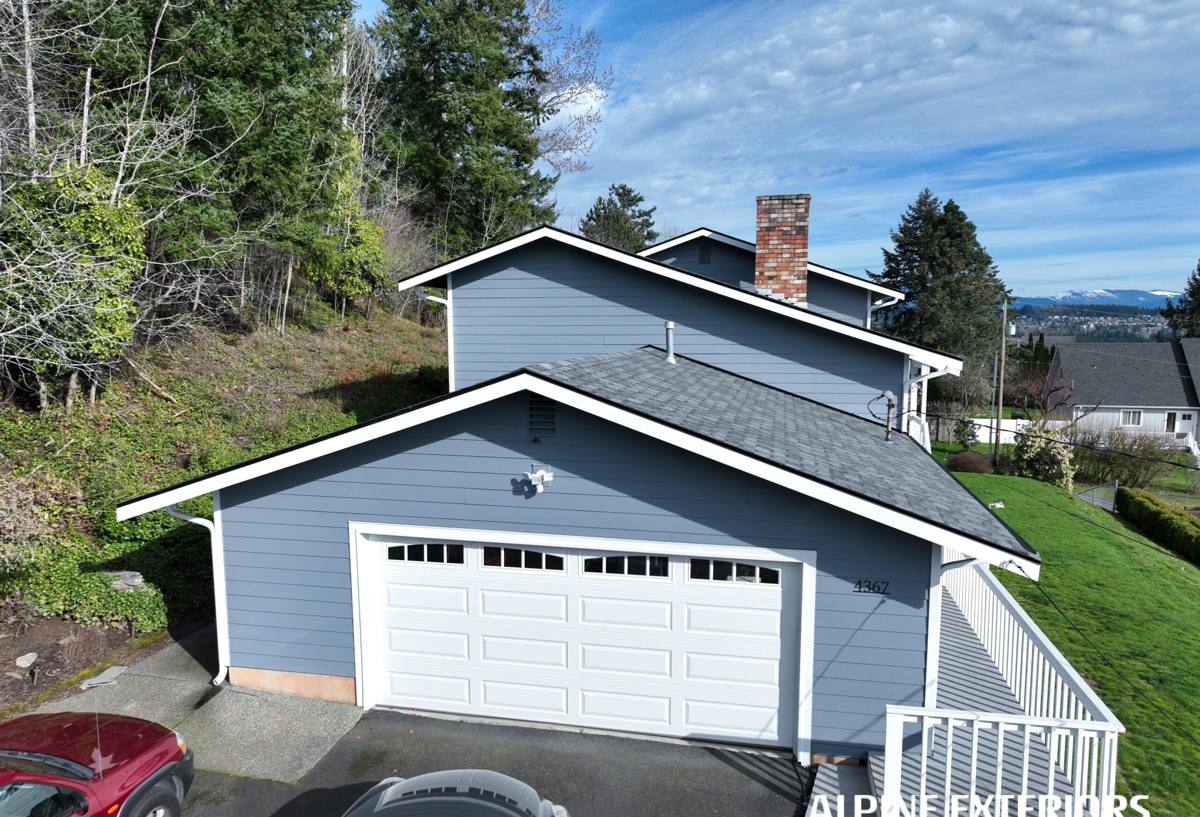
Why Silver Beach Roofs Take Storm Damage Differently
Lake-Effect Wind and Tree Cover
The combination of lake proximity and tree density means wind doesn't just hit a Silver Beach roof head-on — it gusts unpredictably around tree lines and drops limbs and branches during the same windstorms that stress the shingles or metal panels underneath them. A single storm event can leave both wind-lifted roofing material and impact damage from falling debris, and treating those as separate problems (or missing one entirely) leads to repeat leaks.
Moss and Moisture Season
Whatcom County's wet season runs long, and the shade from surrounding trees means roof surfaces in Silver Beach stay damp longer after a storm than roofs in more open, sun-exposed parts of Bellingham. That extended moisture window is exactly what moss needs to establish. Moss isn't just cosmetic — it holds water against the roofing material, works into shingle laps and seams, and accelerates granule loss and rot in ways that turn a storm-damaged section into a much larger repair if it's ignored over a wet winter.
Salt Air's Slow Contribution
Bellingham's coastal air carries salt that gradually attacks exposed fasteners, flashing, and metal roofing components. On its own it's a slow process, but on a roof that's already been stressed by wind or impact damage, corroded fasteners and flashing seams fail faster — which is why storm repairs here need to check metal components and fastener condition even outside the immediate damage area.
Signs You Have Storm Damage, Not Just Wear
Not every roof issue after a windstorm is storm damage in the insurance or repair sense, but several signs are worth a prompt inspection:
- Shingles that are cracked, creased, or missing entirely, especially in a pattern that lines up with wind direction
- Granules collecting in gutters or downspouts after a storm (more than the normal gradual shedding)
- Visible dents or displaced material where a branch or debris made contact
- New or worsening interior water stains on ceilings or upper walls following a storm event
- Flashing around chimneys, vents, or valleys that's been lifted, bent, or separated
- Soft or spongy spots underfoot on a walked inspection, which can indicate saturated decking beneath intact-looking shingles
Some of these are obvious from the ground. Others — especially decking saturation under moss-covered or shaded sections — only show up on a hands-on inspection, which is why we walk the roof rather than assess from a photo or the driveway.
What a Correct Storm Damage Repair Involves
1. Full Inspection, Not Just the Obvious Spot
We start by inspecting the whole roof, not just the area the homeowner flagged. Wind and falling debris rarely damage just one spot, and a repair that only addresses the visible problem often leaves a second weak point that shows up as a leak a few storms later.
2. Decking Assessment
If water has been getting in — even slowly, even for a short time — the decking underneath needs to be checked before new roofing goes back on. Repairing over compromised decking is a short-term fix that fails again, often in the same spot, within a season or two.
3. Matching Materials Correctly
Repairs should match the existing roofing material's type, profile, and where reasonably possible, color and age-weathering, so the repaired section performs — and looks — consistent with the rest of the roof rather than sticking out as an obvious patch.
4. Flashing and Fastener Check
Given the salt-air factor on fasteners and flashing, we check the condition of these components in and around the repair area, not just the roofing material itself. A new section of shingles installed over corroded flashing just relocates the next leak.
5. Moss and Debris Clearing
Where moss or built-up debris contributed to moisture retention near the damaged area, we clear it as part of the repair, not as a separate line item to be scheduled later — leaving it in place undermines the repair before it's even finished.
Our Process for Silver Beach Storm Repairs
- Inspection and documentation. We assess the full roof, document the damage (useful if you're filing an insurance claim), and identify contributing factors like moss buildup or compromised flashing.
- Honest scope and estimate. You get a clear picture of what's storm damage, what's pre-existing wear the storm exposed, and what the repair will involve — no inflated scope, no downplaying real problems either.
- Decking and structure check. Before any new material goes down, we confirm the decking underneath is sound.
- Repair with matched materials. Roofing, flashing, and fasteners suited to the existing roof and to Bellingham's coastal, wet conditions.
- Final walk-through. We show you what was found and what was done, in plain terms.
Storm Damage vs. Roof Replacement: How We Decide
Not every storm-damaged roof needs replacing, and not every roof that "just needs a patch" is actually a good repair candidate. The table below outlines the general factors that push a decision one way or the other — every roof is different, and this is a starting point for the conversation, not a substitute for an on-site look.
| Factor | Favors Repair | Favors Replacement |
|---|---|---|
| Age of roof | Roof is well within its expected service life | Roof is already near or past typical lifespan |
| Extent of damage | Damage is localized to one or two areas | Damage is spread across multiple roof planes |
| Decking condition | Decking is dry and sound | Decking shows rot or saturation in multiple spots |
| Moss/moisture history | Isolated moss growth, recently addressed | Long-term moss coverage with underlying material breakdown |
| Material availability | Matching material is readily available | Roofing is discontinued or badly mismatched from prior repairs |
Insurance Claims: What's Useful to Know
Many storm damage repairs in Silver Beach involve a homeowner's insurance claim, especially after a significant wind event or tree limb impact. We're not a public adjuster and don't represent your insurance company, but we can provide clear documentation of the damage — photos, a written scope, and an honest assessment of cause — which is the kind of information adjusters generally need to process a claim. We recommend homeowners contact their carrier promptly after storm damage, before moisture has time to compound the problem.
Preventing Repeat Damage After the Repair
A storm repair that ignores the conditions that made the damage worse in the first place tends to need a repeat visit. For Silver Beach homes specifically, that usually means:
- Keeping overhanging branches trimmed back where reasonably possible, to reduce future impact risk
- Scheduling moss treatment or removal on a regular cycle given the neighborhood's shaded, damp conditions
- Having gutters and downspouts checked after major storms, since debris buildup here tends to be heavier than in more open parts of Bellingham
- Periodic flashing and fastener checks, given the slow corrosive effect of coastal salt air over time
Why a Crew That Already Works Silver Beach Matters
Roofing crews unfamiliar with this specific pocket of Bellingham sometimes underestimate how much the lake proximity, tree cover, and extended moss season affect what a "complete" repair actually requires. A crew that's worked this neighborhood before knows to check decking under shaded, moss-prone sections even when the surface damage looks minor, to expect flashing and fastener wear ahead of schedule, and to price and schedule around Whatcom County's storm patterns rather than a generic seasonal template. That local familiarity is part of what keeps a repair from turning into a callback.
If your Silver Beach home has recent storm damage — or you're not sure whether what you're seeing is storm-related or just wear — we're happy to take a look. Reach out using the form below for a free, no-pressure estimate.