 Bellingham Siding
 Siding Replacement for Silver Beach, Bellingham
Silver Beach sits close enough to Bellingham Bay and the Strait of Georgia that the weather off the water shows up on siding faster than it does a few miles inland. Homes in this part of Bellingham take a steady mix of salt-carrying air, wind-driven rain, and long stretches of shade and dampness that keep moss and mildew active for most of the year. When siding starts failing here, it's rarely one problem — it's usually years of moisture exposure finally catching up with a material that wasn't built for this specific combination of stresses.
This page covers what siding replacement actually involves for a Silver Beach home: what the local climate demands of the material and the installation, what a correct job looks like, how our process works, and why it matters to hire a crew that already knows this stretch of Whatcom County rather than a general contractor working from a one-size-fits-all playbook.
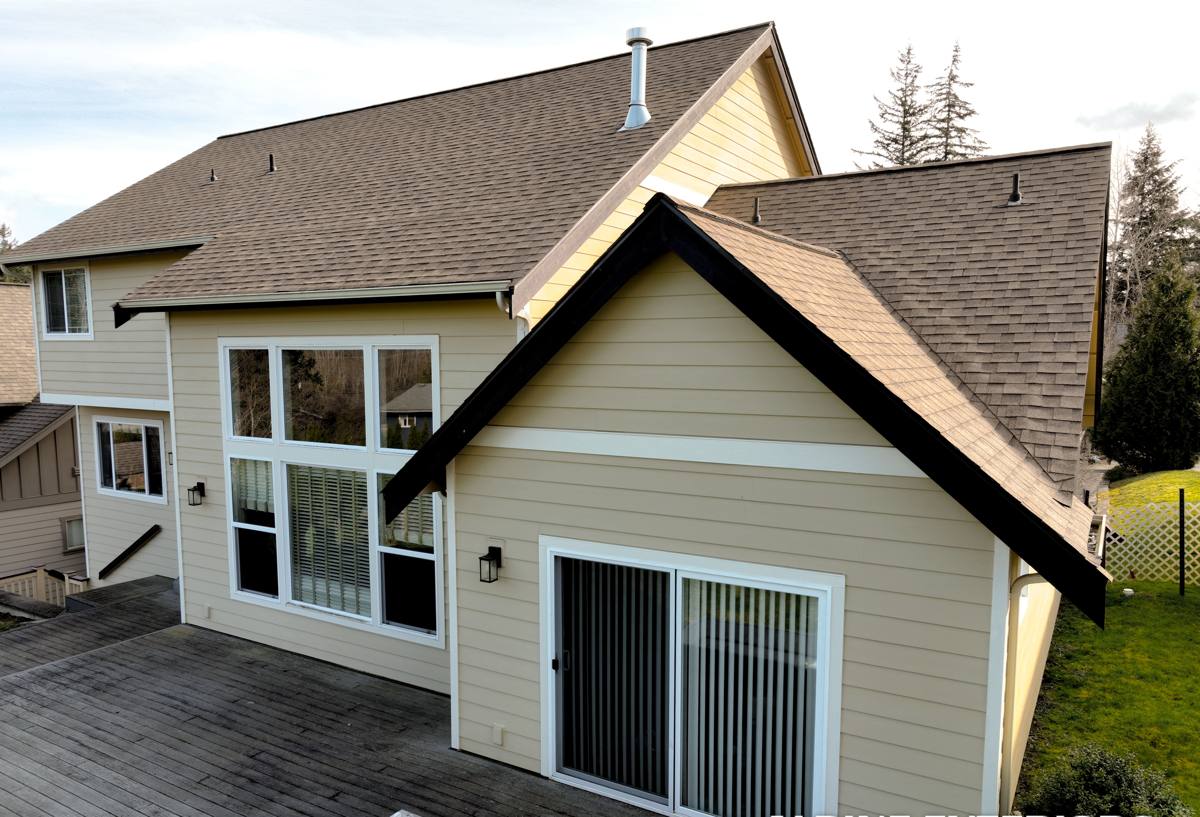
What Bellingham's Climate Does to Siding in Silver Beach
Salt Air and Marine Exposure
Proximity to saltwater accelerates corrosion on fasteners, trim, and any flashing that isn't properly rated or protected. Salt-carrying air also settles into porous or poorly sealed siding surfaces and holds moisture against the wall longer than it would a few blocks further from the water. That constant, low-grade exposure is a big part of what separates a Silver Beach home's maintenance needs from a home in a drier, inland part of the county.
Driving Rain and Wind-Driven Moisture
Storms off the water don't always fall straight down. Wind pushes rain sideways into siding laps, seams, and trim joints, which means water intrusion here is as much about lap coverage, caulking, and flashing detail as it is about the siding material itself. A product or an installation approach that would hold up fine in a calmer climate can still fail here simply because it wasn't detailed for wind-driven rain.
Moss, Mold, and a Long Wet Season
Shade from mature trees, combined with months of overcast, damp weather, keeps many north- and west-facing walls wet longer than they get a chance to dry. That's the recipe for moss and mildew growth on siding surfaces, and for wood-based or wood-adjacent products, it's also the recipe for hidden rot underneath a finish that still looks fine from the street.
Signs a Silver Beach Home Needs Siding Replacement
Some of these show up gradually, and homeowners often assume a pressure wash or fresh coat of paint will fix them. A few are worth a closer look before you spend money on cosmetic fixes that won't hold:
- Soft, spongy, or crumbling siding when you press on it, especially near the bottom courses and around windows
- Persistent moss or dark streaking that comes back within a season of cleaning
- Paint or caulking that keeps failing in the same spots year after year
- Visible gaps, warping, or buckling in lap siding, particularly on the sides that face prevailing wind and rain
- Rust streaks below fasteners or trim, a sign that moisture is reaching metal it shouldn't be reaching
- Rising interior humidity, musty smells near exterior walls, or peeling interior paint on an outside wall
- A noticeably higher heating bill without a clear cause, which can point to moisture-compromised insulation behind the siding
Any one of these can be a minor repair. Several together, especially on a home that's had the same siding for fifteen-plus years in this climate, usually means it's time to talk about replacement rather than another round of patching.
Why We Install Only James Hardie Fiber Cement
We don't install vinyl, LP SmartSide, Cemplank, Allura, primed spruce, or cedar. That's a deliberate standard, not a lack of options. Each of those products has real strengths, but none of them holds up as well against the specific combination Silver Beach deals with — salt air, sideways rain, and a long wet season — without a maintenance burden we're not willing to hand a homeowner without saying so upfront. Wood-based products need ongoing painting and sealing to keep moisture out, and once water gets behind that finish, rot can spread before it's visible. Vinyl handles moisture fine on its own but relies almost entirely on flawless installation and caulking to keep wind-driven rain from getting behind it, and it can warp or crack under wide temperature swings and impact. Other fiber cement brands are a closer comparison to what we install, but we've standardized on one manufacturer, one set of installation specs, and one warranty structure so every job we do is consistent and every homeowner knows exactly what they're getting.
| Factor | James Hardie Fiber Cement | Vinyl / Wood-Based Alternatives |
|---|---|---|
| Moisture behavior | Non-combustible, engineered to resist moisture-driven warping and rot | Vinyl resists rot but not warping; wood-based products absorb moisture without diligent sealing |
| Salt air / coastal exposure | Formulated to hold up under sustained coastal humidity and salt exposure | Wood needs frequent recoating near saltwater; vinyl can chalk and fade faster in marine air |
| Finish | Factory-applied ColorPlus finish, baked on and warranted separately from the substrate | Field-painted finishes wear unevenly and need repainting on a shorter cycle |
| Fire performance | Non-combustible material | Combustible (wood, vinyl can melt/deform under heat) |
| Long-term upkeep | Occasional washing; no routine repainting required | Regular painting/sealing (wood) or replacement of brittle sections (vinyl) |
ColorPlus Finish and Warranty
James Hardie's ColorPlus finish is baked on at the factory under controlled conditions rather than field-applied on a ladder in variable weather, which is one of the reasons it holds color and resists fading better than a job-site paint job. Hardie also backs its siding with a strong transferable limited warranty, which matters to homeowners who plan to sell — a warranty that transfers cleanly is worth more at closing than one with murky terms.
What a Correct Siding Replacement Involves
Replacing siding is not just pulling off old material and nailing up new panels. Done right, it's a full envelope inspection and rebuild of the water management system behind the siding, not just the siding itself:
- Full removal of the old siding and a hands-on inspection of the sheathing underneath for rot, soft spots, or prior water damage
- Repair or replacement of any compromised sheathing before anything new goes up — covering rot instead of fixing it just delays the same problem
- Installation of a proper weather-resistant barrier, lapped and sealed correctly so water sheds down and out instead of behind the wall
- Correct flashing at windows, doors, and any wall penetrations — this is where wind-driven rain finds its way in if it's rushed or skipped
- James Hardie panels or lap siding installed to the manufacturer's fastening and clearance specs, using the climate-engineered HZ product line suited to this region
- Proper caulking and sealing at joints and trim, using products compatible with the ColorPlus finish
- A final walk-through to check reveals, fastener patterns, and finish consistency before calling the job done
Skipping or rushing any one of these steps is usually where a siding job goes wrong, and it's rarely visible until years later when moisture has already done its damage behind the wall.
Our Process, Start to Finish
- Inspection and estimate: We walk the exterior with you, look at the current siding, trim, and any visible damage, and give you a clear, honest estimate — no pressure, no inflated scope.
- Planning and product selection: We help you choose the right James Hardie profile and color for your home and confirm the scope, including any sheathing repair we expect to find.
- Prep and protection: Landscaping, walkways, and windows get protected before removal starts, and we coordinate timing around Bellingham's weather rather than fighting it.
- Removal and inspection: Old siding comes off and we inspect the sheathing before anything new goes up, flagging any repairs needed.
- Weather barrier and flashing: We install and detail the water-resistant barrier and flashing correctly the first time, since this is the layer that actually keeps water out.
- Installation: Hardie siding goes up to manufacturer spec, with attention to fastening, clearances, and clean, consistent reveals.
- Final walk-through and cleanup: We review the finished work with you, answer questions, and leave the site clean.
Cost Factors for Silver Beach Siding Replacement
Every home is different, and we won't quote a number without seeing the house, but these are the factors that move the price most:
| Factor | Why It Matters |
|---|---|
| Home size and stories | More square footage and multi-story access both add material and labor time |
| Condition of existing sheathing | Hidden rot found during tear-off adds repair scope that isn't visible in an initial walk-around |
| Siding profile and trim detail | Lap siding, panel siding, and trim-heavy designs each take different amounts of labor |
| Number of windows, doors, and penetrations | Each one needs individual flashing and trim work |
| Site access | Tight lots, slopes, or limited staging area near the water can affect labor time |
| Color and finish choice | Factory ColorPlus options vs. field-applied custom finishes can shift cost |
Why a Crew That Already Works Silver Beach Matters
A crew that already works this part of Bellingham knows how the wind off the bay tends to hit certain elevations, knows how long moss takes to come back on a shaded wall in this neighborhood, and has already seen what happens to different siding materials after a few winters this close to the water. That local track record shows up in the small decisions — where to pay extra attention to flashing, which walls need the most careful sealing, how to sequence a job around Bellingham's weather patterns rather than fighting them. It also means we're not learning on your house; we're applying what's already worked on homes like yours nearby.
If your Silver Beach home is showing signs of siding failure, or you're just planning ahead before it becomes a bigger repair, we're happy to take a look and walk you through what we see — no pressure, no obligation. Reach out for a free estimate using the form below.