 Bellingham Siding
 Why Silver Beach Decks Wear Out Faster Than People Expect
Decks in the Silver Beach area take a beating that homeowners inland don't always deal with. Between salt-laden marine air, driving rain that comes in sideways off the water more often than most people expect, and a moss season that can stretch from October well into spring, an outdoor deck here is under near-constant moisture stress for most of the year. Wood that would last two decades in a drier climate can start showing structural problems in half that time if it wasn't built — or maintained — with this exposure in mind.
We've replaced enough decks in this neighborhood to know the failure patterns are consistent: rot starting at the ledger board where the deck meets the house, joist hangers rusting from the inside out, and decking boards that look fine on top but are soft or spongy underneath. None of that is unusual for the area. It's just what happens when a deck wasn't detailed for the conditions it actually has to live in.
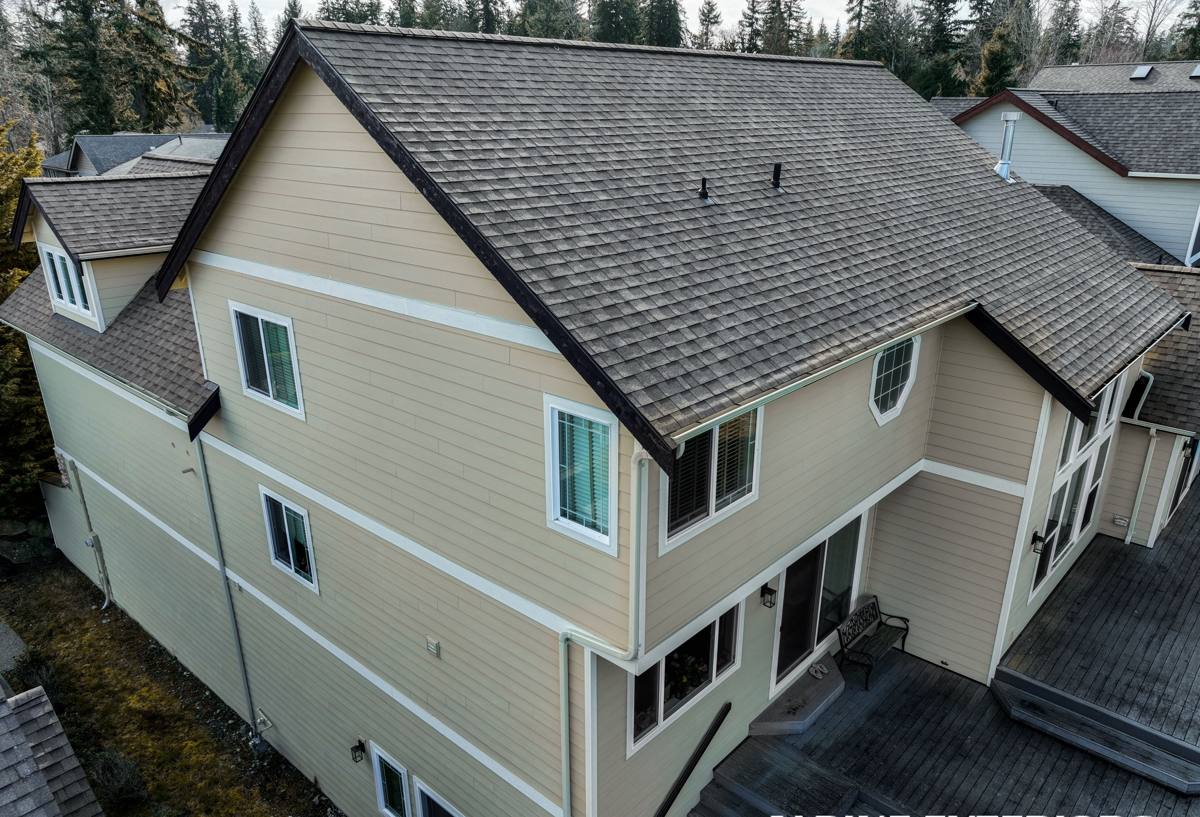
Signs Your Deck Needs Replacement, Not Just Repair
Not every deck problem means a full teardown. But there's a point where patching individual boards or sistering a joist stops making sense — the money is better spent on a new deck built correctly from the ground up. Here's how we tell the difference on a site visit.
- Soft or spongy spots when you walk across the decking, especially near the house or stair landings
- Visible rot, dark staining, or fungal growth at the ledger board or support posts
- Persistent moss or algae film that returns within weeks of cleaning
- Rust streaking below fasteners or joist hangers
- Railings that flex or feel loose even after tightening hardware
- Gaps between boards that have closed up (a sign of swelling) or widened unevenly (a sign of shrinkage and movement)
- A deck more than 20-25 years old that has never been rebuilt, only resurfaced
If you're only seeing one or two of these on a deck that's otherwise solid, repair may still make sense. When several show up together, especially anything involving the ledger or the support structure underneath, replacement is almost always the more honest recommendation — and usually the more affordable one over a five-to-ten-year horizon, since a rebuilt deck starts that clock over instead of chasing recurring repairs.
What a Correct Deck Replacement Actually Involves
A deck is only as good as what you can't see once it's finished. The parts that fail first in this climate are the same parts that get rushed on a low-bid job.
Ledger Board and Flashing
The ledger board — where the deck attaches to the house — is the single most common failure point we find on older decks in this area. If it isn't flashed correctly to shed water away from the house framing, moisture works its way behind the board and rots both the ledger and the wall framing behind it, often long before it's visible from outside. On every replacement, we install proper flashing at this connection and use fasteners rated for the pressure-treated lumber they're going into, since untreated or mismatched hardware corrodes quickly in a damp coastal climate.
Footings and Structural Support
Footings that are too shallow, undersized, or were never properly set will shift over time, especially with our freeze-thaw cycles and saturated soil in the wetter months. We size and set footings to support the actual load of the deck, not just to pass a quick visual check.
Joist Hangers, Fasteners, and Hardware
This is where a lot of decks quietly fail from the inside. Standard fasteners react with modern pressure-treated lumber and corrode over a few seasons, especially with salt air in the mix. We use hardware rated for treated lumber and coastal exposure — hot-dip galvanized or stainless, depending on the application — so the connections stay sound long after the surface decking has been resurfaced once or twice.
Drainage and Airflow Underneath
Standing water and poor airflow under a deck are what turn a normal amount of Pacific Northwest rain into a rot problem. Correct board spacing, grading beneath the structure, and keeping vegetation clear of the underside all matter more here than they would in a drier region.
Choosing the Right Decking Material for This Climate
There's no single "best" decking material — there's the right material for how you'll use the deck, your maintenance tolerance, and your budget. Here's how the common options actually perform in a wet, moss-prone environment like Silver Beach.
| Material | Moisture Performance | Maintenance | Typical Lifespan |
|---|---|---|---|
| Pressure-treated lumber | Good, if properly sealed and maintained | Annual cleaning and re-sealing recommended | 15-20 years with upkeep |
| Cedar | Naturally rot-resistant, but surface still needs protection | Sealing every 1-2 years to prevent graying and moss buildup | 15-20 years with upkeep |
| Composite decking | Excellent — doesn't absorb water or rot | Periodic washing to prevent moss/algae film; no sealing | 25-30+ years |
We install all three, and we're upfront about the trade-offs rather than pushing whichever is easiest to sell. Pressure-treated and cedar cost less upfront but need real maintenance discipline in this climate to avoid the moss and staining that shorten their life. Composite costs more initially but largely removes moisture absorption from the equation, which matters if you'd rather spend a weekend on the water than resealing a deck every spring.
Our Deck Replacement Process
- On-site assessment. We inspect the existing deck, ledger connection, and substructure to confirm whether replacement or repair is the right call, and explain what we find in plain terms.
- Design and material selection. We talk through decking material, railing style, and layout based on how you actually use the space and what you want to maintain long-term.
- Permitting. We handle the permit application for the jurisdiction the home falls under, since deck replacements involving structural changes typically require one.
- Demolition and disposal. The old deck is removed and hauled off, including a check of the framing and ledger area behind it for hidden rot or water damage.
- Structural rebuild. Footings, framing, ledger flashing, and hardware are installed to current standards, not just matched to what was there before.
- Decking, railing, and finish work. Decking is installed with proper spacing for drainage, followed by railings, stairs, and any trim or finish details.
- Final walkthrough. We walk the finished deck with you, cover basic maintenance for the material you chose, and make sure everything meets what was agreed on before we call it done.
Permits and Local Considerations
Most deck replacements that involve rebuilding the structure — not just swapping decking boards on an existing frame — require a building permit, particularly when the deck is elevated or attached to the house. Requirements can vary depending on whether a property falls within Bellingham city limits or unincorporated Whatcom County, and on the deck's height, size, and proximity to property lines. We handle this as part of the job so you're not left tracking down requirements yourself, and we won't start structural work without the proper permit in hand.
Cost Factors for a Silver Beach Deck Replacement
Every deck is different, so we don't quote sight-unseen, but the price of a replacement is driven by a consistent set of factors. Knowing them ahead of time makes it easier to plan your budget before we ever set foot on site.
| Factor | Why It Affects Cost |
|---|---|
| Deck size and shape | Larger footprints and multi-level or angled designs require more materials and labor |
| Decking material | Composite typically costs more upfront than pressure-treated lumber; cedar falls in between |
| Height and structural complexity | Elevated decks need more substantial framing, footings, and often stairs or additional railing |
| Extent of hidden damage | Rot found at the ledger or framing during demolition adds repair scope beyond the deck itself |
| Railing style | Cable, glass, and custom railing systems cost more than standard wood or composite balusters |
| Permit and site access | Difficult site access or additional permitting requirements can add time and cost |
As a broad guideline, a straightforward, ground-level deck replacement in pressure-treated lumber tends to sit at the lower end of the cost range for the area, while a larger elevated deck in composite material with upgraded railing sits well above it. The only way to get a number you can actually rely on is a site visit — square footage alone doesn't capture what's driving the price.
Keeping Your New Deck in Good Shape
A well-built deck still needs some seasonal attention in this climate, especially through the wetter months when moss and algae growth is at its worst. A little consistency goes a long way toward getting the full lifespan out of the materials you paid for.
- Sweep debris and standing leaves off the deck regularly, especially in fall
- Rinse or lightly wash the surface a few times a year to prevent moss and algae buildup before it takes hold
- Check for gaps or blockages in drainage areas beneath and around the deck
- Reseal wood decking on the schedule appropriate to the product — don't wait until graying or cracking is already visible
- Inspect railings and stair connections annually for looseness
- Trim back vegetation that shades the deck surface or restricts airflow underneath, since shade and poor airflow are what let moss establish in the first place
Why Local Experience with Silver Beach Homes Matters
A deck built to a generic national spec doesn't always hold up the same way here as it would somewhere drier. Fastener selection, flashing details, footing depth, and even board spacing all need to account for the amount of moisture this area sees year-round. A crew that already works in and around Silver Beach and the greater Bellingham area has seen firsthand which shortcuts cause problems in two years instead of twenty, and builds accordingly from the start rather than learning that lesson on your deck.
We're not interested in cutting corners that show up as your problem down the road. We'd rather walk you through the real trade-offs — material, structure, and maintenance — and build a deck that's actually suited to Whatcom County's climate, not just to a spec sheet written somewhere else.
If your deck is showing its age or you're ready to replace one that's past saving, we're happy to take a look and give you a straight assessment. Request a free, no-pressure estimate using the form below, and we'll walk the property with you and talk through what a correct replacement would involve for your home.