 Bellingham Siding
 Siding Built for South Hill's Hillside Exposure
South Hill sits above much of Bellingham, and that elevation cuts both ways. The views are real, but so is the weather that comes with them. Homes up here catch wind and driving rain off Bellingham Bay with less buffering than properties tucked into lower, more sheltered parts of town, and the older housing stock that makes up a lot of the neighborhood was often built and re-sided in eras before anyone was thinking hard about moisture management or Whatcom County's specific climate demands. When we get called out to South Hill for a siding estimate, we're usually looking at one of two things: siding that's failing because it was never suited to this exposure in the first place, or siding that's simply reached the end of its service life and is starting to let water in at the seams.
Replacing siding on a South Hill home isn't just a cosmetic upgrade. Done right, it's the single biggest thing you can do to protect the structure underneath — the sheathing, the framing, the insulation — from the specific combination of salt-laden air, sustained rain, and heavy moss growth that defines a Bellingham winter.
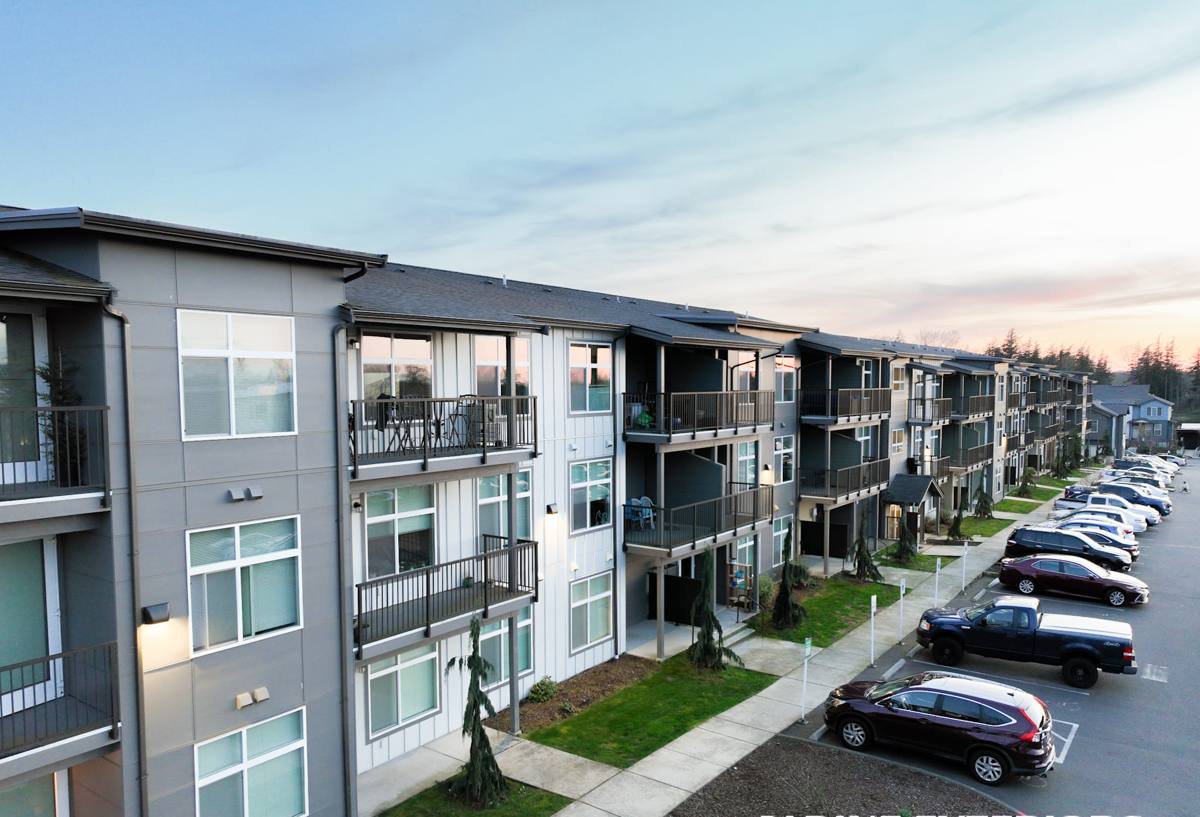
What This Climate Actually Does to Siding
Salt Air
Proximity to Bellingham Bay means airborne salt is a constant, low-grade factor on homes throughout the city, and elevated, exposed lots on South Hill often get more of it than properties further inland. Salt air accelerates corrosion of fasteners and metal trim, and it degrades certain paint and finish systems faster than a dry inland climate would. Siding materials and finish systems that aren't engineered for coastal-adjacent exposure tend to chalk, fade, or break down at the surface years ahead of schedule.
Driving Rain
Bellingham doesn't just get rain — it gets rain pushed sideways by wind off the water, and hillside lots like the ones on South Hill often see more wind-driven exposure than sheltered valley lots. Driving rain finds every gap: unsealed seams, poorly lapped joints, caulk that's shrunk and cracked, fastener holes that were never properly sealed. Once water gets behind the siding plane, it doesn't dry out quickly in a climate this damp — and that's when sheathing rot and framing damage start.
Moss Season
Whatcom County's moss season runs long — realistically, most of the year the conditions are right for it. Moss and algae hold moisture directly against the siding surface, which is a problem for any material that isn't dimensionally stable or that swells when wet. On shaded, north-facing walls (common on hillside lots with mature landscaping), moss growth can be aggressive enough to visibly darken and texture a wall within a couple of seasons if the surface and the coating aren't up to it.
Signs South Hill Homeowners Should Watch For
- Soft or spongy spots when you press on the siding, especially near the bottom courses and around window and door trim
- Persistent moss or algae staining that comes back within months of cleaning
- Visible cupping, warping, or separation at seams and joints
- Paint that's peeling, bubbling, or chalking off on your hand when you touch it
- Rusted or corroded nail heads bleeding through the paint film
- Rising interior heating bills with no other explanation — a sign the wall assembly may be compromised
- Visible daylight or drafts at siding penetrations (hose bibs, vents, electrical)
Any one of these on its own might be minor. Several together, especially on a home more than 15-20 years past its last siding work, usually means it's time for a real evaluation rather than another round of caulk and paint.
What a Correct Siding Replacement Involves
Siding replacement isn't just stripping old material and nailing up new. On a South Hill home, given the exposure this neighborhood sees, the work underneath the visible surface matters as much as the product on top.
Tear-Off and Inspection
We remove the existing siding and inspect the sheathing and framing underneath for rot, soft spots, or prior water damage. This is the point where problems that have been hidden for years finally show themselves — and it's far better to find and fix them now than to bury them under a new wall.
Weather-Resistive Barrier
A correctly installed water-resistive barrier (housewrap or equivalent) goes on before the new siding, with all seams, laps, and penetrations properly taped and flashed. Given how much wind-driven rain a South Hill lot can see, this layer is not optional and not a place to cut corners.
Flashing and Trim Detail
Windows, doors, and any wall penetrations get proper flashing so water is directed out and down, not into the wall cavity. This is one of the most common places we find deficiencies on older Bellingham homes — flashing that was skipped, undersized, or installed backward.
Siding Installation to Spec
Correct fastener spacing, correct nailing pattern, correct clearances from grade, decks, and rooflines, correct gaps at butt joints for the material's expansion characteristics. Manufacturer installation instructions exist for a reason, and skipping them is the single biggest cause of premature siding failure we see in this region.
Caulking and Sealant
Sealant at joints and trim needs to be applied correctly and sparingly, in the right locations — over-caulking can trap moisture just as easily as under-caulking lets it in.
Why We Install Only James Hardie Fiber Cement
We don't install vinyl, LP SmartSide, primed spruce, cedar, or other fiber cement brands like Cemplank or Allura. That's a deliberate standard, not a limitation of what we're capable of installing.
Fiber cement as a category holds up to wet, coastal-adjacent climates better than wood-based or vinyl products because it doesn't swell, rot, or provide the same food source for moss and mildew that organic materials do. Within fiber cement, we standardized on James Hardie specifically for three reasons: their HZ5 product line is engineered for climate zones with exactly this combination of rain and humidity, their ColorPlus factory finish is baked on under controlled conditions rather than field-painted (which matters enormously for long-term color and finish stability in a climate that's hard on paint), and their warranty structure is transferable and well-documented, which protects a homeowner's investment if the home sells.
We're not going to tell you other products are junk — plenty of them have a place. But when we're the crew installing it and standing behind it, we want a material engineered for weather like South Hill sees, not one that's a compromise on it.
Cost Factors for South Hill Siding Replacement
| Factor | Why It Matters Here |
|---|---|
| Home size and wall complexity | Multi-story hillside homes with dormers, bump-outs, or steep rooflines take more labor and material than a simple rectangular footprint |
| Sheathing condition | Rot found during tear-off adds repair cost, but skipping the repair guarantees a shorter siding lifespan |
| Siding profile and plank width | Lap width, texture, and trim detail all affect material cost and installation time |
| Access and site conditions | Steep or terraced South Hill lots can require additional staging, scaffolding, or equipment |
| Trim and flashing scope | Homes with more windows, doors, and penetrations need more detail work at each opening |
| Color and finish | Factory-applied ColorPlus finishes cost more upfront than field-painted options but last significantly longer |
Why a Crew That Already Works South Hill Matters
South Hill's mix of hillside lots, mature landscaping, and older housing stock creates real, practical differences from a flat, newer-construction neighborhood. A crew that's already worked this neighborhood knows what to expect from access and staging on steep or terraced lots, has a realistic sense of what's usually hiding under the existing siding on homes of a certain age, and understands how much wind and rain exposure a given orientation on the hill is actually going to see. That familiarity shows up in fewer surprises mid-project and a tighter, more accurate estimate up front.
It also matters for accountability. A local crew that plans to keep working in this neighborhood has every reason to do the job right the first time and stand behind it if a question comes up later.
Our Process, Start to Finish
- Free on-site evaluation of your current siding, trim, and any visible problem areas
- Honest assessment of whether replacement or targeted repair makes more sense
- Written estimate covering material, labor, and any anticipated sheathing or flashing work
- Tear-off, inspection, and repair of any damaged sheathing before new material goes on
- Installation of weather-resistive barrier, flashing, and James Hardie siding to manufacturer spec
- Final walkthrough so you understand exactly what was done and what maintenance, if any, to expect
Maintaining Your New Siding on South Hill
Even a well-installed, climate-engineered product benefits from basic upkeep in this environment. A rinse-down once or twice a year helps keep salt residue and early moss growth from taking hold, and it's worth doing a quick visual check of caulking and trim after major storms. Because ColorPlus finishes are factory-applied and don't need repainting on the same cycle as field-painted siding, the maintenance burden on a correctly installed Hardie system is genuinely lower than what most South Hill homeowners are used to from older siding.
If your South Hill home's siding is showing its age or you just want an honest opinion on where it stands, we're happy to take a look. The estimate is free, there's no pressure, and you'll get a straight answer about what your home actually needs — use the form below to get started.