 Bellingham Siding
 Siding Repair in York: What Bellingham's Climate Actually Demands
York is one of Bellingham's older, established neighborhoods, which means a lot of its homes have siding that's been through decades of Pacific Northwest weather. That's not a knock on the neighborhood — it's just a fact that shapes how we approach every repair call we get from homeowners here. Whatcom County sits close enough to Bellingham Bay that salt-laden air is a real factor on exterior materials, and it's layered on top of the region's defining weather pattern: long stretches of driving rain followed by cool, damp shoulder seasons where moisture never fully leaves the wall assembly.
That combination is hard on siding in a specific way. Salt air accelerates corrosion on fasteners, flashing, and any exposed metal trim. Driving rain — rain pushed sideways by wind rather than falling straight down — finds every gap in a lap joint, every under-caulked seam, and every spot where old paint has failed. And Whatcom County's moss season, which can run from fall through spring, means organic growth gets a long runway to take hold on siding that stays shaded or doesn't dry out between storms. On a lot of York's older homes, we see all three of these forces acting on the same wall at once.
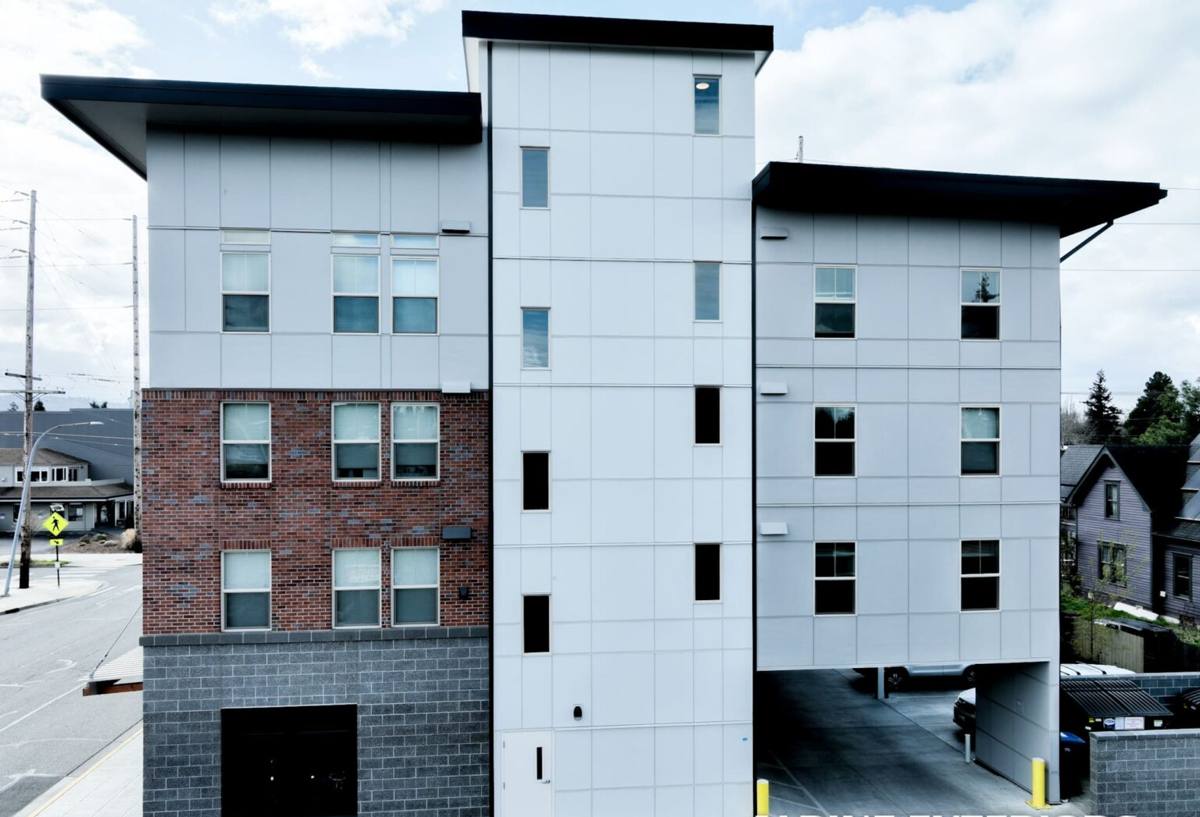
Common Siding Damage We See in York Homes
Because York has a mix of housing ages and siding types — original wood lap siding, older vinyl, and various generations of fiber cement — the repair calls we get aren't one-size-fits-all. That said, a few patterns show up again and again:
- Moisture damage at butt joints and corners — the seams where siding pieces meet are the most common entry point for water, especially on older installations where caulking has dried out or was never installed correctly to begin with.
- Soft or swollen boards near ground level and roof lines — splash-back from downspouts and roof runoff concentrates moisture in these zones, and it shows.
- Moss and algae staining on shaded or north-facing walls — cosmetic at first, but moss holds moisture against the siding surface, which shortens the life of whatever's underneath it.
- Cracked or warped panels from age and UV exposure — sun and moisture cycling causes older wood and some composite sidings to crack, cup, or pull away from the wall.
- Corroded or failing fasteners and flashing — salt air speeds this up, and once fasteners fail, siding sections can loosen even if the panel itself is still sound.
What a Correct Siding Repair Actually Involves
A lot of siding "repairs" done in this region are really just cosmetic patches — caulk over a gap, a coat of paint over a stain, a new panel nailed over rotted sheathing without anyone checking what's behind it. That approach might buy a season or two, but it doesn't address the reason the damage happened in the first place, and in a climate like ours, the underlying problem keeps working even after the surface looks fine.
A repair done right starts with finding out why the siding failed at that specific spot. That usually means pulling back the damaged section to check the water-resistive barrier, sheathing, and flashing underneath — not just the visible panel. If the sheathing is soft or the barrier is compromised, replacing siding over it without fixing that first just guarantees a repeat call in a year or two.
Steps we don't skip
- Inspect behind the damaged panel for moisture intrusion into the sheathing
- Check flashing at windows, doors, and roof-to-wall transitions near the repair area
- Confirm proper drainage plane and house wrap integration before new material goes on
- Match reveal, profile, and fastening pattern to the existing siding so the repair blends in
- Re-caulk and seal joints with products rated for sustained wet exposure, not just a quick surface bead
Repair vs. Replacement: How We Make the Call
Not every damaged section needs full replacement, and not every homeowner needs to be sold on a bigger job than they actually have. We look at the extent of the damage, the condition of the material around it, and how much of the wall assembly has been compromised before recommending either path.
| Factor | Favors Repair | Favors Replacement |
|---|---|---|
| Extent of damage | Isolated to one or two sections | Spread across multiple walls or elevations |
| Sheathing condition | Dry, structurally sound | Soft, delaminated, or water-stained over a wide area |
| Siding material | Still available or closely matchable | Discontinued, badly faded, or a product we no longer install |
| Age of siding | Relatively recent, isolated failure | Original siding nearing or past its practical service life |
| Underlying cause | One-time or fixable issue (bad caulk joint, one failed fastener) | Systemic — poor original installation, chronic moisture path |
When damage is localized and the rest of the siding is sound, a targeted repair is the honest recommendation — we're not in the business of upselling a full re-side when it isn't needed. But if we open up a wall and find the same moisture problem repeating along a whole elevation, we'll tell you that plainly, along with why patching it again wouldn't be a good use of your money.
Our Process for a York Siding Repair
Because we already work in this neighborhood, our process is built around getting an accurate answer fast rather than a generic estimate.
1. On-site inspection
We look at the damaged area and the surrounding siding, checking for signs the problem extends further than what's visible from the ground — staining patterns, soft spots you can feel by hand, and gaps at trim and penetrations.
2. Diagnosis, not just a patch quote
We explain what caused the damage — moisture path, fastener failure, age, or a combination — and what it will take to actually fix it, not just cover it.
3. A clear, written scope
You get a straightforward explanation of what's being repaired, what material will be used, and why, before any work starts.
4. Repair matched to the existing siding
Wherever possible we match profile and reveal so the repaired section doesn't stand out. Where matching isn't realistic — discontinued products, heavily faded material — we'll say so and talk through the options honestly.
5. Follow-up
We stand behind the work and want to know if anything looks off after the next round of Whatcom County weather puts it to the test.
Why We Use James Hardie for Repair Work
When a repair calls for new siding material — whether it's a full section replacement or bringing a wall up to a standard that will actually hold up here — we install James Hardie fiber cement exclusively. We don't install LP SmartSide, vinyl, Cemplank, Allura, or bare wood siding, and that's a deliberate standard, not an oversight.
For repair work specifically, this matters because fiber cement doesn't absorb water the way wood-based products can, and it holds up to the freeze-thaw and moisture cycling that's common in a marine climate like Bellingham's. Hardie's ColorPlus factory finish also means a repaired section can be color-matched more reliably than field-painted alternatives, and the product is engineered in HZ5 formulations specifically for wet, moderate climates like ours. When we patch a wall, we want that patch to outlast the rest of the siding around it, not become the next weak point.
Signs Your York Home May Need a Siding Repair Inspection
Most siding problems in this area don't announce themselves with a dramatic failure — they show up as small signs that are easy to write off for a season or two. Worth a look if you're seeing any of the following:
- Dark streaking, green or black staining, or moss growth that keeps coming back after cleaning
- Soft spots when you press on the siding, especially near the ground or under roof lines
- Visible gaps, cracks, or separation at panel seams and corners
- Paint that's peeling or bubbling in a localized area rather than uniformly across the house
- Rust streaks below nail heads or trim fasteners
- A musty smell or visible staining on interior walls that back up to exterior siding
- Warping, cupping, or bowing in individual boards or panels
Catching these early is almost always cheaper than waiting — a small repair now is a fraction of the cost of dealing with rotted sheathing later.
Why Hiring a Crew That Already Works in York Matters
Siding repair isn't just about the material — it's about knowing how a specific neighborhood's housing stock tends to fail. A crew that's worked on homes in York has a feel for the age range of the housing, the common original siding types, and the specific moisture and moss patterns tied to this part of Bellingham. That local pattern-recognition means fewer surprises once a wall is opened up, and a more accurate estimate before any work begins.
It also means faster turnaround. We're not learning the neighborhood on your job — we're already familiar with what Whatcom County's rain, salt air, and moss season do to siding over time, and we bring that experience to every repair estimate.
What Affects the Cost of a Siding Repair
Repair costs vary widely depending on the scope, so we won't quote a number that doesn't mean anything without seeing the damage. What we can tell you is what drives the cost up or down:
| Cost Factor | Why It Matters |
|---|---|
| Size of damaged area | Larger sections require more material and labor, obviously — but also more time to properly inspect what's behind them |
| Sheathing condition | If sheathing needs replacement, that's additional work beyond the visible siding |
| Accessibility | Second-story or hard-to-reach sections take longer and may require additional equipment |
| Material matching | Matching an existing profile, color, or reveal can add time versus a straightforward panel swap |
| Underlying cause | Fixing a chronic moisture source (flashing, drainage) costs more upfront but prevents repeat repairs |
If you're seeing damage, staining, or soft spots on your York home's siding, we're happy to take a look and give you a straight answer about what's going on and what it would take to fix it right. There's no pressure and no obligation — just fill out the form below for a free estimate.