 Bellingham Siding
 Siding Installation Built for Puget's Weather, Not Just Its Looks
Homes in the Puget neighborhood sit close enough to Bellingham Bay and the broader Whatcom County waterfront that siding here works harder than siding fifty miles inland. Salt-laden air moves off the water, Pacific storm systems push driving rain sideways against north and west-facing walls, and the tree cover and cloud ceiling that make this area beautiful also mean siding spends a lot of the year damp. None of that is unusual for western Washington. But it does mean the installation itself — not just the product on the truck — is what decides whether a siding job holds up for twenty years or starts failing at year seven.
We install James Hardie fiber cement siding exclusively, and we install it specifically for this climate. That means water management details get the same attention as the finished look, because in Puget, water management is what actually protects the house.
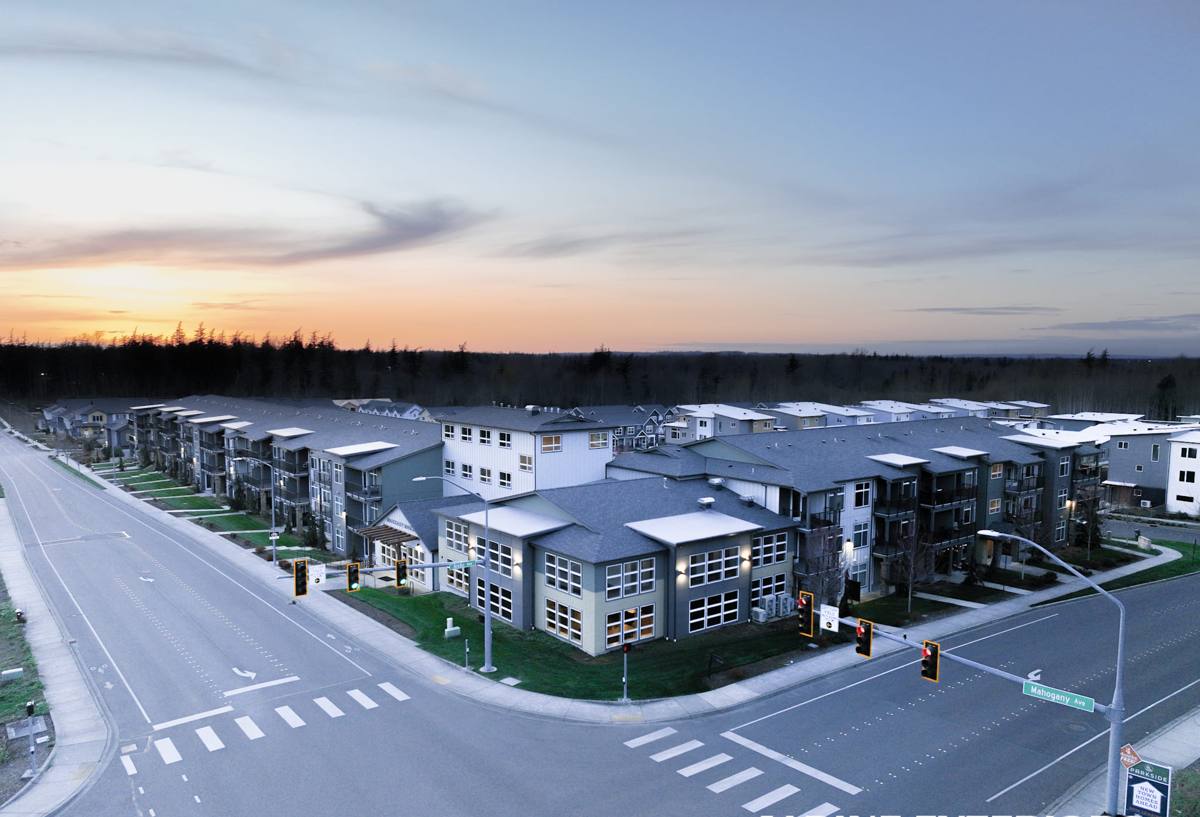
What Puget Homes Need From Their Siding
A few things about this location shape how we approach every installation:
Salt Air and Coastal Moisture
Proximity to Bellingham Bay means airborne salt settles on exterior surfaces and accelerates corrosion of unprotected metal — fasteners, flashing, and trim. It also means moisture in the air is a near-constant condition, not an occasional storm event. Siding and the fasteners holding it need to be rated for that, and the assembly behind it needs to let any moisture that does get in dry out again.
Driving Rain
Wind-driven rain off the Strait and Bay doesn't fall straight down — it hits walls at an angle, which pushes water up under laps and around penetrations that would stay dry in a calmer climate. This is where installation detailing (lap exposure, caulking discipline, flashing at windows and trim) matters more than which siding brand is on the wall.
Long Moss and Algae Season
Shade, humidity, and mild temperatures give moss, algae, and mildew a long growing season on north-facing and tree-shaded elevations — common throughout this part of Bellingham. Siding that stays visibly damp for weeks at a time needs a factory finish that resists organic growth and a gap for airflow behind it, not just a coat of paint that will need to be redone in a few years.
Why We Install Only James Hardie Fiber Cement
We don't install vinyl, LP SmartSide, primed wood, or other fiber cement brands — not because those products can't work somewhere, but because we've standardized on what performs best under Puget's specific conditions and what we're willing to stand behind.
- Non-combustible core: fiber cement doesn't feed a fire the way vinyl or wood-based siding can, which matters for insurance and long-term risk regardless of location.
- ColorPlus factory finish: baked-on color resists the fading, chalking, and moss staining that plain paint struggles with in a wet, shaded climate — and it means no repainting cycle every 5-8 years.
- Climate-engineered HZ product line: Hardie's HZ5 formulation is engineered for wetter, colder regions like the Pacific Northwest, with moisture and freeze-thaw performance that generic fiber cement isn't tested against.
- Dimensional stability: fiber cement doesn't expand and contract with humidity the way wood-based products do, so laps, seams, and caulk joints stay tighter over time — critical when driving rain is testing every seam.
- Transferable warranty: a real, honest warranty backing the product, which matters to future buyers if the home sells.
Vinyl can crack in a hard freeze and warp under direct sun exposure on south walls. LP SmartSide is a wood-strand product — better than raw wood, but still an engineered wood product that depends on flawless caulking and paint maintenance to keep moisture out over decades of Puget rain. Primed spruce and cedar look great on day one and then become an ongoing maintenance commitment — repainting, caulking, and watching for rot — that most homeowners underestimate until they're living it. We'd rather put a product on your home that doesn't ask you to fight the climate every few years.
What Correct Siding Installation Actually Involves
The material is maybe half the equation. The other half is what happens behind it, and it's where most siding failures we see actually start — not with the siding itself, but with shortcuts taken during installation, often by crews unfamiliar with how wet this climate really is.
Tear-Off and Substrate Inspection
Before anything new goes up, we remove the old siding and inspect the sheathing underneath for rot, soft spots, or prior water damage — common on older Bellingham-area homes where a failed water barrier went unnoticed for years. Any damaged sheathing gets replaced before we move forward; installing new siding over compromised substrate just hides the problem.
Water-Resistive Barrier
A properly lapped, sealed weather-resistive barrier goes on next. In a climate with this much driving rain, the barrier is doing real work — it's the layer that stops any water that gets past the siding from reaching the sheathing.
Flashing at Every Penetration
Windows, doors, hose bibs, vents, and any other wall penetration get flashed and integrated with the water barrier using proper shingle-lap technique, so water is always directed outward and down, never trapped behind the siding.
Correct Fastening and Clearances
Hardie siding has specific fastening patterns, nail penetration depth, and clearance requirements from grade, roof lines, and other surfaces. Corrosion-resistant fasteners matter here specifically because of the salt air — the wrong fastener can rust and stain the siding face within a few years.
Rain Screen Gap
Where conditions call for it, we build in a drainage gap behind the siding so any moisture that does get past the outer layer has somewhere to go and can dry out, rather than sitting against the sheathing — especially important on shaded, north-facing walls where things stay damp longest.
Our Process for a Puget Installation
- On-site assessment: we walk the exterior, check current siding and substrate condition, note shaded and rain-exposed elevations, and talk through what your home actually needs.
- Written estimate: a clear scope and price, no pressure, no vague allowances.
- Tear-off and substrate repair: old siding removed, sheathing inspected and repaired as needed.
- Water barrier and flashing: installed and integrated before a single piece of Hardie board goes up.
- Hardie installation: fastened, lapped, and finished to manufacturer spec, with corrosion-resistant hardware throughout.
- Final walkthrough: we go over the finished job with you, elevation by elevation.
Why It Matters to Hire a Crew That Works This Area
A contractor who installs siding across a wide range of climates can still do a technically correct job elsewhere and get water management wrong here, because "correct" changes with the weather. A crew that regularly works Bellingham and Whatcom County already knows which elevations of a Puget-area home take the worst of the driving rain, how long moss season really runs, and how much detailing salt air demands from fasteners and trim. That local pattern recognition is hard to fake and easy to skip if it's not something a crew deals with every week.
Cost Factors for Siding Installation
| Factor | Why It Affects Cost |
|---|---|
| Home size and elevation count | More wall area and more corners, gables, and penetrations mean more material and labor |
| Substrate condition | Rot or moisture damage found during tear-off requires sheathing repair before siding goes up |
| Siding profile and accessories | Lap width, trim style, and corner details vary in material and labor cost |
| Existing siding removal | Tear-off and disposal of old material adds labor beyond a straightforward re-side |
| Access and site conditions | Steep grades, tight setbacks, or landscaping near the home can affect staging and labor time |
We give you a real number after seeing your home, not a phone estimate — every Puget-area property is a little different once you factor in shade, exposure, and existing condition.
Questions to Ask Before You Hire
- Do you install to James Hardie's written installation specifications, including fastening and clearance requirements?
- Will you inspect and repair sheathing before installing new siding, not just cover it?
- What water-resistive barrier and flashing details do you use at windows and penetrations?
- Are you a licensed and insured contractor in Washington State?
- Can you explain how your approach differs on shaded or rain-exposed elevations?
- What does your warranty cover, and is it separate from the manufacturer's product warranty?
Maintenance After Installation
A correctly installed James Hardie siding system asks relatively little of you compared to wood or vinyl, but a little seasonal attention goes a long way in this climate. Rinse off accumulated grime and organic growth once or twice a year, especially on shaded north walls. Keep an eye on caulking at trim joints and penetrations, and have it touched up if it starts to crack or pull away. Keep gutters clear so runoff isn't sheeting down the siding face. None of this is a heavy lift — it's the difference between a siding job that looks good for twenty-plus years and one that starts showing its age early.
If you're in the Puget neighborhood and thinking about a siding replacement, we'd be glad to take a look at your home and give you a straightforward, no-pressure estimate — no scare tactics, just an honest read on what your house needs and what it would take to do it right.