 Bellingham Siding
 Why Sehome's Weather Is Harder on Siding Than It Looks
Sehome sits close enough to Bellingham Bay that salt-laden air reaches the neighborhood's siding year-round, and the wooded, hillside character of many Sehome lots means shade, humidity, and slow-drying wall surfaces are a fact of life. Add Whatcom County's long wet season — driving rain that comes in sideways off the water, followed by months where surfaces barely get a chance to dry — and you get a climate that's genuinely tough on exterior materials. Moss and algae don't need much encouragement here; a shaded north wall or a section tucked behind mature trees can stay damp for weeks at a time.
That combination — salt exposure, sustained moisture, and low sun angles for much of the year — is exactly the kind of environment that exposes weak siding installations. Caulk joints fail faster. Wood substrates that stay wet too long start to soften. Finishes that aren't factory-baked chalk and fade unevenly. None of this is unique to any one house in Sehome; it's the baseline every exterior on this side of Bellingham has to deal with.
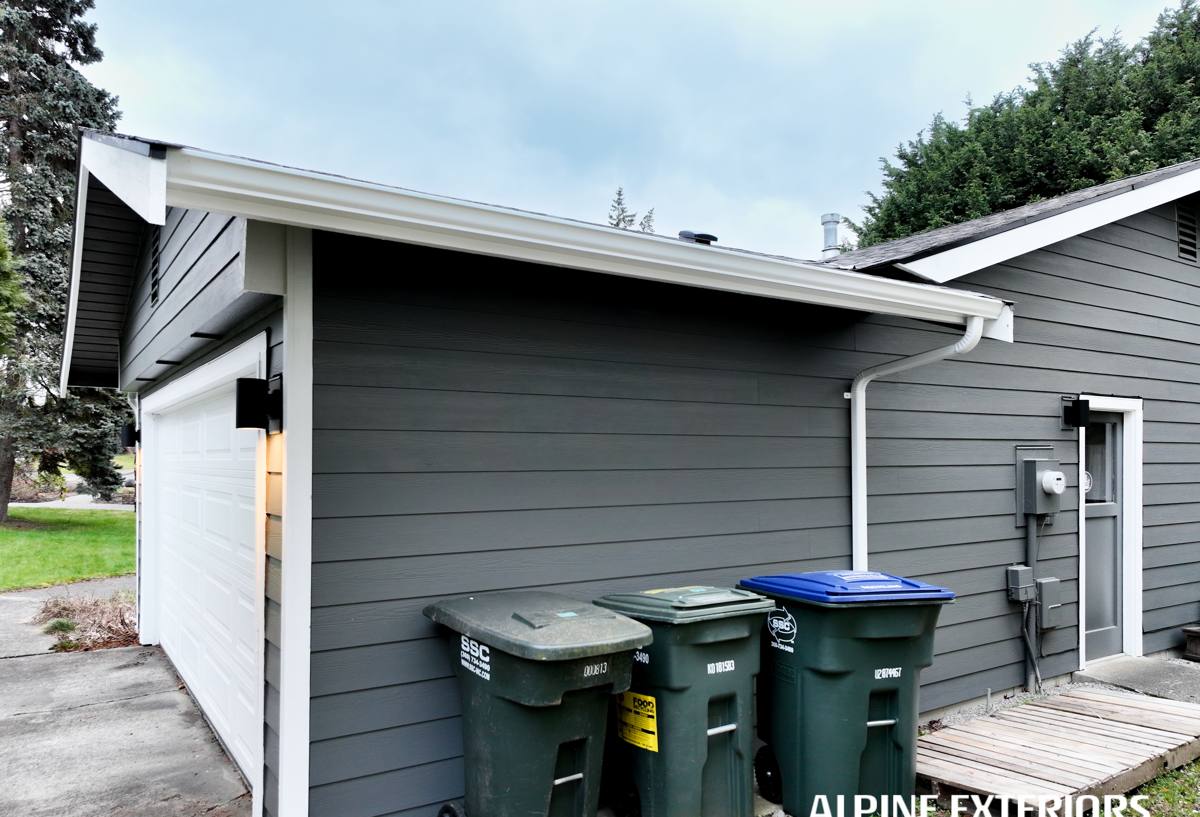
What a Correct James Hardie Installation Actually Involves
James Hardie fiber cement siding is engineered to handle wet, coastal Pacific Northwest conditions, but the material only performs as well as the installation behind it. A correct job is mostly invisible — it's in the details you don't see once the siding is up.
Flashing and Water Management Come First
Before a single plank goes on, windows, doors, and any wall penetrations need proper flashing, and the wall needs a continuous weather-resistive barrier underneath. In a climate that gets as much driving rain as this one, the siding itself is really the second line of defense — the water management system behind it is what actually keeps a wall assembly dry over decades.
Clearances and Fastening
James Hardie's installation specs call for specific gaps at the ground, roofline, and any hard surfaces like decks or walkways, plus correct fastener type, spacing, and placement. Skipping these details doesn't show up on day one — it shows up as trapped moisture, buckling, or premature paint failure years later, often after the crew that installed it is long gone.
Factory Finish vs. Field Painting
James Hardie's ColorPlus finish is baked on at the factory under controlled conditions, which gives it more consistent coverage and better fade resistance than a field-applied paint job done outdoors in variable weather. It also comes with its own finish warranty, separate from the substrate warranty on the siding itself.
Choosing the Right James Hardie Product Line for a Sehome Home
Sehome's housing stock is a mix of older homes near the university area and newer construction, and the right Hardie product depends on the style of the home, not just personal preference.
- HardiePlank lap siding — the most common choice, available in several plank widths and textures (smooth, cedarmill), suited to traditional and craftsman-style homes.
- HardiePanel vertical siding — often used for board-and-batten looks or as an accent on modern and farmhouse-style exteriors.
- HardieShingle siding — a straight-edge or staggered shingle profile for homes that want a cottage or shingle-style look without the maintenance of real wood shakes.
- HardieTrim — matching trim boards that keep corners, fascia, and window surrounds consistent with the field material.
James Hardie also engineers its products by climate zone. In Western Washington, that means HZ5 formulations, which are built specifically for regions with sustained damp, moderate-temperature conditions rather than the hot, dry Southwest or freeze-heavy Midwest. That distinction matters more than most homeowners realize — it's part of why we don't treat "fiber cement" as a single interchangeable category.
How James Hardie Compares to Other Siding Materials Here
We get asked fairly often why we install only James Hardie rather than offering vinyl, cedar, or other fiber cement brands. The honest answer is in how these materials actually perform under Sehome's specific conditions over time.
| Factor | James Hardie Fiber Cement | Vinyl | Cedar / Wood |
|---|---|---|---|
| Moisture resistance | Engineered to resist moisture-driven damage when installed to spec | Resists moisture itself but can trap it behind the panel | Absorbs moisture; needs consistent maintenance to prevent rot |
| Moss/algae resistance | Factory finish resists staining better than raw or painted wood | Can stay damp against the wall, encouraging growth behind panels | Prone to moss and mildew without regular treatment |
| Salt air durability | Non-combustible, dimensionally stable in coastal air | Can become brittle over time; seams are a weak point | Salt air accelerates weathering and finish breakdown |
| Finish maintenance | ColorPlus finish rarely needs repainting; long fade resistance | Color is baked in but can chalk and fade unevenly | Needs repainting or restaining every few years |
| Typical lifespan (installed to spec) | Multiple decades | Multiple decades, but seams and warping shorten practical life | Shorter without diligent upkeep |
Vinyl and wood both have legitimate uses elsewhere, and we're not going to tell you either one is junk. But for the specific combination of salt air, sustained rain, and shaded, slow-drying walls that Sehome deals with, James Hardie is the material we're willing to put our name behind.
Our Process, From First Look to Finished Wall
Every Sehome job follows the same basic sequence, whether it's a full re-side or a repair after storm damage.
- On-site assessment — we look at existing siding condition, sheathing, trim, window flashing, and any problem areas like north-facing walls or spots near mature landscaping.
- Tear-off and substrate check — old siding comes off and we inspect the sheathing underneath for rot or soft spots before anything new goes up.
- Weather barrier and flashing — a continuous water-resistive barrier and correctly lapped flashing at every window, door, and penetration.
- Hardie installation — planks, panels, or shingles installed to manufacturer clearance and fastening specs, not shortcuts.
- Trim, caulking, and touch-up — finish details that keep water from finding a way in at the edges.
- Final walkthrough — we go over the finished job with you before calling it done.
We also carry the manufacturer-backed warranty coverage that comes with a proper Hardie installation, which matters more in a wet climate than in a dry one — warranty claims tend to hinge on whether the installation followed spec, so doing it right the first time protects that coverage.
Living With Moss, Algae, and Salt Air Once the Siding Is On
No siding material is entirely maintenance-free in Whatcom County, but the maintenance burden differs a lot by material. With James Hardie, the routine is simple: an occasional gentle rinse to keep moss and pollen from building up, keeping gutters and downspouts clear so water isn't sheeting down the wall, and maintaining a few inches of clearance between siding and soil, mulch, or dense plantings so air can circulate. None of this involves repainting or restaining on any regular schedule, which is the main maintenance gap between fiber cement and wood.
Shaded and north-facing walls — common on tree-lined Sehome lots — will always be more prone to moss than a sun-exposed south wall. That's just the geography of the neighborhood. Correct installation with proper clearances reduces how bad it gets, but it doesn't eliminate the need for the occasional wash-down.
Signs Your Current Siding Is Already Losing the Fight
If you're not sure whether your Sehome home's siding needs attention now or can wait, these are the warning signs worth taking seriously:
- Soft or spongy spots when you press on the siding, especially near the bottom courses
- Paint that's peeling, bubbling, or chalking heavily in patches
- Persistent moss or dark staining that comes right back after cleaning
- Visible gaps, warping, or buckling in panels or planks
- Cracked or missing caulking around windows and trim
- A musty smell or visible staining on interior walls that share an exterior wall
- Siding that's original to a home built decades ago and has never been replaced
Any one of these on its own might be minor. Several at once, especially combined with an older home, usually means water has already found its way past the surface.
Why a Crew That Already Works in Sehome Makes a Difference
Siding work in this part of Bellingham isn't the same job as siding work in a dry inland climate, and it isn't identical to siding work in a completely different Puget Sound neighborhood either. A crew that regularly works Sehome and the surrounding Bellingham area already understands the local permitting process with the city, knows what kind of exposure and drainage issues show up on hillside and tree-shaded lots, and has seen firsthand how different wall orientations hold up over a Whatcom County winter. That familiarity shows up in the details — where extra flashing attention matters, which product lines fit the neighborhood's housing styles, and how to sequence a job around the rainy season instead of fighting it.
If you're weighing a siding project in Sehome — whether it's a full replacement or you're trying to figure out if repair is still an option — we're happy to take a look and walk you through what we find, with a free, no-pressure estimate and no obligation to move forward.