 Bellingham Siding
 Board & Batten Siding Built for How Sehome Actually Weathers
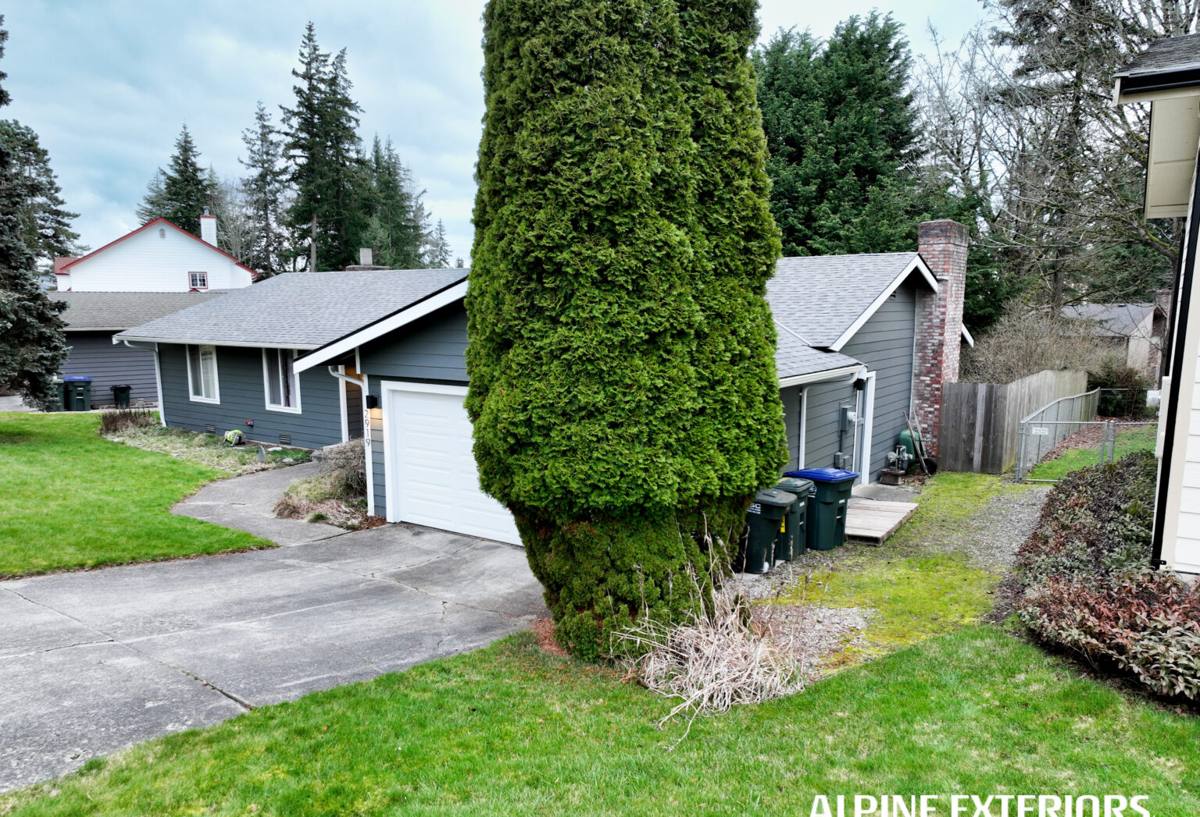
Sehome sits in one of Bellingham's more tree-covered, hillside pockets — a mix of older homes and newer infill near Western Washington University and Sehome Hill Arboretum, with mature tree canopy shading a lot of rooflines and wall sections most of the year. That shade is part of what makes the neighborhood attractive, and it's also exactly the condition that turns ordinary siding into a moss farm. Add in the driving, wind-pushed rain that comes off Bellingham Bay through the wet season, and a faint but real dose of salt air working on fasteners and finishes, and you've got a climate that is genuinely harder on exterior materials than most homeowners realize until something starts failing.
Board and batten is a strong style choice for Sehome's mix of craftsman bungalows, mid-century homes, and newer modern-farmhouse builds — the vertical lines read clean against sloped lots and wooded backdrops. But board and batten is also a siding profile with more seams, more fastener penetrations, and more places for water to find a way in than a standard horizontal lap job. Done right, it's beautiful and durable for decades. Done wrong — or done in a material that wasn't built for this climate — it's a maintenance headache within a few years. This page covers what a correct board and batten installation actually requires in Sehome's conditions, and why we install it only in James Hardie fiber cement.
What Whatcom County's Climate Does to Vertical Siding Specifically
Board and batten has a different exposure profile than lap siding, and Bellingham's climate hits those exposures hard:
Driving rain and vertical seams
Every batten strip creates a vertical seam line running down the wall. In a light-rain climate that's a non-issue. In Whatcom County's wind-driven storms, water gets pushed sideways and upward against the wall, not just down it — which means those batten seams need real flashing and drainage behind them, not just caulk holding the joint together. Caulk is not a waterproofing strategy on its own; it's a detail, and it fails first when it's asked to do the job of proper flashing and a drainage plane.
Moss, algae, and shaded exposures
Sehome's tree cover means north- and east-facing walls, and anything shaded by mature trees, stay damp longer after every storm. That's the exact condition moss and algae need to establish on a wall surface. Softer or more porous siding materials give moss something to grip and grow into; a hard, factory-finished fiber cement surface gives it much less to hold onto, though periodic gentle cleaning is still part of ownership in a neighborhood this shaded.
Salt air and fastener corrosion
Bellingham's proximity to the bay means a low but constant level of airborne salt, which accelerates corrosion on exposed metal — fasteners, flashing, trim caps. On a board and batten wall, where there are more nail penetrations per square foot than a standard lap job, fastener quality and placement matter more, not less.
What a Correct Board & Batten Installation Actually Involves
A lot of what determines whether board and batten siding lasts 10 years or 40 years happens before a single board goes up, and in details that aren't visible once the job is finished.
- A drainage plane behind the siding. A weather-resistant barrier (WRB) installed and lapped correctly, so any moisture that gets past the battens has a path to drain out rather than sitting against the sheathing.
- A rainscreen gap where conditions call for it. In a climate this wet, furring strips that create a small air gap behind the siding let the wall dry out between storms instead of staying saturated — especially important on shaded, slow-drying elevations common in Sehome.
- Correct fastener type, spacing, and depth. Fiber cement board and batten requires specific nail placement — too few fasteners or the wrong type and boards can work loose over time; too many or poorly placed and you create extra points of water entry.
- Expansion gaps at every board end. Fiber cement moves slightly with temperature and moisture. Boards installed tight against each other or against trim, with no room to move, are a common cause of buckling and cracked caulk lines a few years down the road.
- Flashing at every horizontal interruption. Window and door heads, roof-to-wall intersections, and any point where a horizontal surface meets the vertical siding needs metal flashing, not just sealant, to shed water outward.
- Factory-finished color, not field-painted seams. Touch-up paint on cut edges should be the factory-matched product, applied per spec, so the finish doesn't weather unevenly compared to the rest of the board.
The James Hardie Board & Batten System We Install
We install board and batten exclusively in James Hardie fiber cement — we don't offer it in vinyl, LP SmartSide, or primed wood, because none of those materials hold up the same way against this specific climate over the long run. Two Hardie approaches cover most board and batten looks:
HardiePanel vertical siding with battens
Large-format fiber cement panels installed vertically, with battens fastened over the panel seams. This is the most common way to achieve the board and batten look efficiently while keeping the number of horizontal joints to a minimum — fewer horizontal joints means fewer places for wind-driven rain to test.
True board-on-board construction
Individual fiber cement boards installed with narrower battens covering each seam, giving a more traditional, deeper-shadowed board and batten profile. It takes more installation labor and more fasteners than the panel-and-batten approach, but it's the right call on homes where the architecture calls for that heavier, more traditional look.
Both use Hardie's ColorPlus factory finish, which is baked on and warranted separately from the substrate — it holds color and resists the fading and chalking that field-applied paint shows first, particularly on sun-exposed elevations. And because it's non-combustible fiber cement, it doesn't carry the moisture-swelling or pest vulnerability that comes with wood-based or wood-adjacent siding products in a climate this wet.
How We Approach a Board & Batten Job in Sehome
- On-site assessment. We walk the home, check which elevations get the most shade and wind-driven rain, look at the current wall assembly, and identify any existing moisture damage before we quote anything.
- Tear-off and sheathing check. Old siding comes off and we inspect the sheathing underneath. Rot or soft spots get addressed before anything new goes up — covering a problem with new siding just hides it.
- WRB and rainscreen installation. The weather barrier goes on correctly lapped, with furring strips added where the wall assembly and exposure call for a drainage gap.
- Flashing at every penetration. Windows, doors, roof lines, and any other break in the wall plane get properly flashed before siding covers them.
- Panel or board installation. Hardie panels or boards go up to spec — correct fastener schedule, correct expansion gaps, plumb and true batten lines.
- Trim, caulk, and touch-up. Factory-matched caulk and touch-up paint at cut edges, trim installed to shed water rather than trap it.
- Walkthrough and cleanup. We review the finished work with the homeowner and clear the site of debris and old material.
What Board & Batten Costs Depend On
Every board and batten job is priced around the specifics of the home, but the same handful of factors drive most of the variation we see on Sehome properties:
| Cost Factor | Why It Matters |
|---|---|
| Tear-off vs. new construction | Removing and disposing of old siding, and repairing any sheathing damage found underneath, adds labor beyond a bare-wall install |
| Panel-and-batten vs. board-on-board | True board-on-board uses more material and fastening labor than large-format panels with battens over the seams |
| Home height and hillside access | Sehome's sloped lots and multi-story homes can require staging or lift equipment that a flat single-story lot wouldn't |
| Trim and detail complexity | Multiple gables, dormers, or window styles mean more flashing and cutting labor than a simple rectangular wall |
| Color selection | Standard ColorPlus colors are typically more economical than custom or premium finish options |
| Existing moisture damage | Sheathing or framing repairs found during tear-off are priced separately from the siding install itself |
Why a Crew That Already Works Sehome Matters
Board and batten hides its mistakes well for the first year or two — a rushed rainscreen or a skipped flashing detail doesn't usually show up until the second or third wet season, when it's a much bigger repair than it would have been to do correctly the first time. A crew that has already worked the shaded, hillside lots and tree-heavy lots typical of this part of Bellingham knows where moss tends to establish first, which elevations take the worst of the wind-driven rain, and how much drainage detail a given wall actually needs versus what's overkill. That's not something a crew unfamiliar with Whatcom County's specific rain-and-shade pattern picks up on a first job in the neighborhood.
Keeping Board & Batten Siding Looking Right in Sehome's Climate
Fiber cement board and batten is low-maintenance compared to wood, but "low-maintenance" isn't "no-maintenance" in a climate this wet and shaded. A short list of what actually matters:
- Rinse shaded and tree-covered elevations periodically to keep moss and algae from establishing, especially on north-facing walls
- Keep gutters clear so overflow doesn't run down the wall face and saturate battens and seams
- Trim back tree branches and shrubs that hold moisture against the siding or block airflow and sun exposure
- Inspect caulk lines at trim and penetrations every year or two and have any cracked or failed sections redone
- Address any soft spots, staining, or bubbling promptly rather than waiting — moisture problems in a board and batten wall get more expensive the longer they sit
If you're planning a siding project in Sehome and want a straight answer on what your home actually needs, we're happy to take a look and walk you through it. Reach out for a free, no-pressure estimate — there's a form below to get started.