 Bellingham Siding
 Roofing in Happy Valley: A Different Set of Demands
Happy Valley sits close enough to Bellingham Bay that salt-laden air is a fact of life, and like most of this part of Whatcom County, it gets more wet-season days than sun. That combination is hard on a roof. Salt air accelerates corrosion on exposed metal fasteners and flashing. Driving rain off the Sound finds every weak seam, nail pop, and gap in flashing that a drier climate would never expose. And the long, damp shoulder seasons here mean moss and moisture-loving growth get a real foothold on roofs that don't shed water and dry out quickly.
None of this means Happy Valley homes need anything exotic. It means the roof needs to be built and installed correctly for these specific conditions, with materials and details chosen to handle sustained moisture rather than the occasional storm. A roof replacement done right here should look unremarkable for twenty-plus years. Done wrong, the same roof can start showing problems in five.
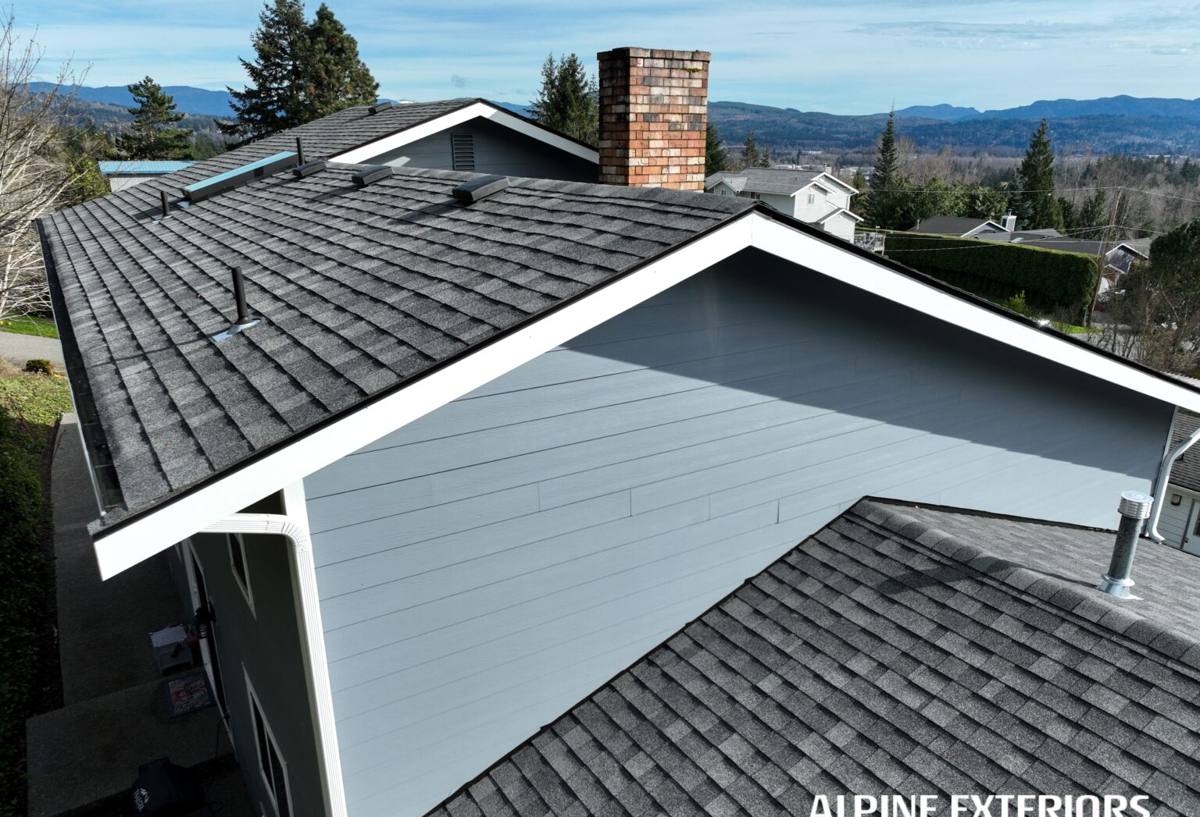
Signs a Happy Valley Roof Is Due for Replacement
Roofs rarely fail all at once. In our climate, the warning signs tend to show up gradually, and homeowners often chalk them up to "just how roofs look here" until a leak forces the issue. Worth checking for:
- Granule loss showing up in gutters or at downspout outlets — a sign the shingle surface is wearing thin
- Shingles that are curling, cupping, or lifting at the edges, especially on south- and west-facing slopes
- Moss or dark algae streaking that keeps coming back within a year of cleaning
- Soft or spongy decking felt underfoot in the attic, or daylight visible through the roof deck
- Rusted, lifting, or missing flashing around chimneys, skylights, and roof-to-wall transitions
- Interior water stains on ceilings or in the attic near valleys, vents, or penetrations
- A roof that's 20+ years old and has never had a full tear-off, only patch repairs
One or two of these on their own might mean a repair is enough. Several together, especially combined with age, usually mean the roof system as a whole is past the point where patching makes financial sense.
What a Correct Roof Replacement Actually Involves
It Starts Below the Shingles
The shingle is the part everyone sees, but the layers underneath it do most of the work of keeping water out. In a climate with as much sustained rain as ours, we don't treat underlayment as an afterthought. A synthetic underlayment with good water resistance, properly lapped and fastened, is the baseline. In vulnerable spots — valleys, eaves, around chimneys and skylights — a self-adhering ice-and-water membrane adds a second line of defense where wind-driven rain is most likely to work its way backward under the shingle edge.
Flashing Is Where Roofs Actually Fail
Most roof leaks don't happen through the field of the shingles — they happen at flashing: chimneys, sidewalls, valleys, pipe boots, and skylights. Salt air speeds up corrosion on cheap or undersized flashing, so we use flashing sized and formed correctly for each transition, not just caulked over gaps. Caulk is a maintenance item, not a waterproofing strategy, and any roofer who leans on it instead of proper flashing geometry is setting the homeowner up for a callback.
Ventilation Matters More Than Most Homeowners Realize
A roof deck that can't breathe traps moisture, which shows up as premature shingle failure from underneath, mold on the sheathing, and higher moss growth on the surface because the roof stays damp longer after every rain. Balanced intake and exhaust ventilation — soffit vents paired with ridge or roof vents — keeps air moving through the attic space so both the deck and the shingles dry out between storms instead of sitting wet.
Choosing the Right Material for This Climate
There's no single "best" roofing material — the right choice depends on the home's roof pitch, budget, and how long the owner plans to stay in the house. Here's how the common options actually perform under Bellingham's rain and moss pressure:
| Material | Typical Lifespan | Moss/Moisture Behavior | Considerations |
|---|---|---|---|
| Architectural asphalt shingle | 25–30 years | Good with proper ventilation; benefits from algae-resistant granules | Best value; wide color/style range; most common choice locally |
| 3-tab asphalt shingle | 15–20 years | Wears faster in sustained wet conditions | Lower upfront cost, shorter service life; less common on replacements now |
| Standing seam metal | 40–50+ years | Sheds water and dries fast; sheds moss well due to smooth surface and slope | Higher upfront cost; needs a fastener/coating spec suited to coastal air |
| Composite/synthetic shake | 30–40 years | Good moisture resistance; low moss uptake compared to real wood | Mid-to-upper cost; good option where a shake look is wanted without wood's upkeep |
We don't install cedar shake roofing, and that's worth explaining honestly rather than glossing over. Real wood shake demands a maintenance schedule most homeowners can't keep up with in a climate this wet — regular treatment, cleaning, and moisture monitoring — and it's simply more failure-prone here than the alternatives above. We'd rather steer a homeowner toward a composite shake product that gives a similar look with far less long-term risk than sell something we know will cause problems in five years.
Our Roof Replacement Process
- On-site inspection. We look at the whole roof system — decking, flashing, ventilation, and the shingles themselves — not just the surface, and check the attic from inside where access allows.
- Written estimate. Scope, materials, and pricing are spelled out before any work starts. No verbal-only agreements.
- Tear-off and deck inspection. Old roofing comes off completely so we can see the actual condition of the decking. Any soft or rotted sheathing gets replaced before anything new goes down — this isn't optional, and it's not something you can see or verify once the new roof is on.
- Underlayment and flashing installation. Ice-and-water membrane at vulnerable areas, synthetic underlayment across the field, new flashing at every transition.
- Ventilation check and correction. We confirm intake and exhaust are balanced, adding or adjusting vents where the existing setup falls short.
- Shingle or panel installation to manufacturer specification, which is what keeps the material warranty valid.
- Cleanup and final walkthrough. Magnetic sweep for nails, debris removal, and a walkthrough so you know exactly what was done.
Living With a Roof in a Damp, Salty Climate
Even a well-built roof needs some basic upkeep here. Keeping gutters clear so water doesn't back up under the eaves, trimming back overhanging branches that keep shingles shaded and damp, and having moss growth addressed before it works into the shingle mat all extend a roof's service life. A correctly installed roof with good ventilation will resist moss far better than an older or poorly ventilated one, but no roof in Whatcom County is completely moss-proof — it's a matter of managing it, not eliminating it.
We'd also point out that pressure-washing a roof, while tempting as a quick fix, can strip granules and shorten a shingle's life. Moss and algae removal should be done with the right technique and, ideally, a treatment that discourages regrowth rather than a method that damages the surface it's cleaning.
Why It Matters to Hire a Crew That Works This Area
A roofing crew that regularly works Happy Valley and the surrounding Bellingham neighborhoods has already seen how homes here age under this specific mix of salt air, rain volume, and shade cover. That translates into practical judgment calls — how much ice-and-water membrane a given roof pitch really needs, which flashing details tend to fail first on homes in this area, how ventilation should be set up on a roof shaded by mature trees. It's the difference between a generic install and one built for how this roof will actually be used for the next several decades.
It also means being reachable after the job is done. A roof replacement should come with a clear workmanship warranty and a contractor who's still local and answering the phone if a question comes up two or five years down the road — not a crew that worked the area for one season and moved on.
What Affects Roof Replacement Cost
Every roof is different, but the main cost drivers on a Happy Valley home tend to be the same handful of factors:
| Factor | Why It Matters |
|---|---|
| Roof size and pitch | Steeper roofs take longer to work safely and use more material per square foot of coverage |
| Number of layers being removed | Tear-off of multiple existing layers adds labor and disposal cost |
| Decking condition | Rotted or soft sheathing found during tear-off requires replacement before new roofing goes on |
| Material choice | Asphalt, metal, and composite shake carry different material and labor costs |
| Roof complexity | Valleys, dormers, skylights, and multiple penetrations all add flashing work |
Because of these variables, we don't quote roof replacement pricing sight-unseen — a proper estimate comes from an on-site look at the actual roof.
Get a Straightforward Estimate
If you're weighing repair versus replacement, or just want an honest read on how much life is left in your current roof, we're happy to take a look. The estimate is free, there's no pressure to move forward, and you'll get a clear explanation of what we find and why — use the form below to get started.